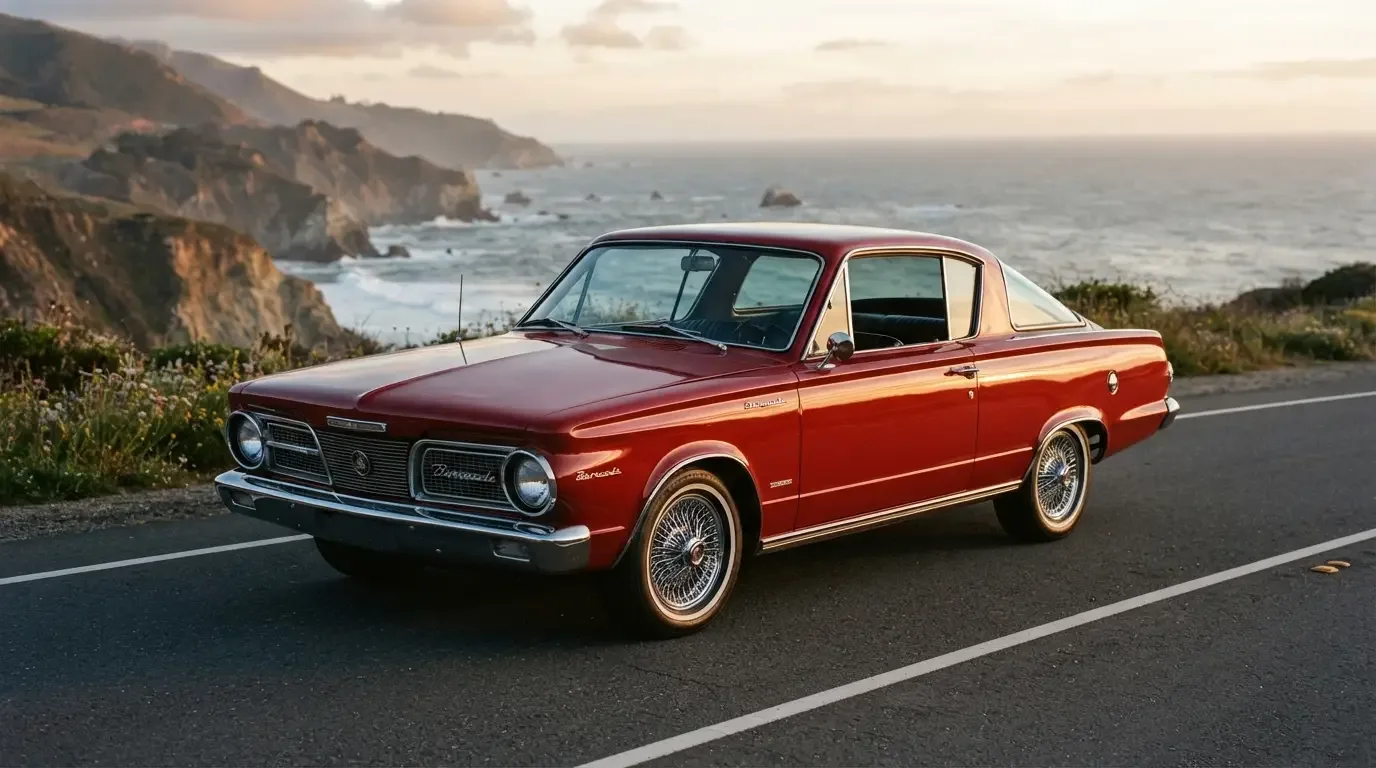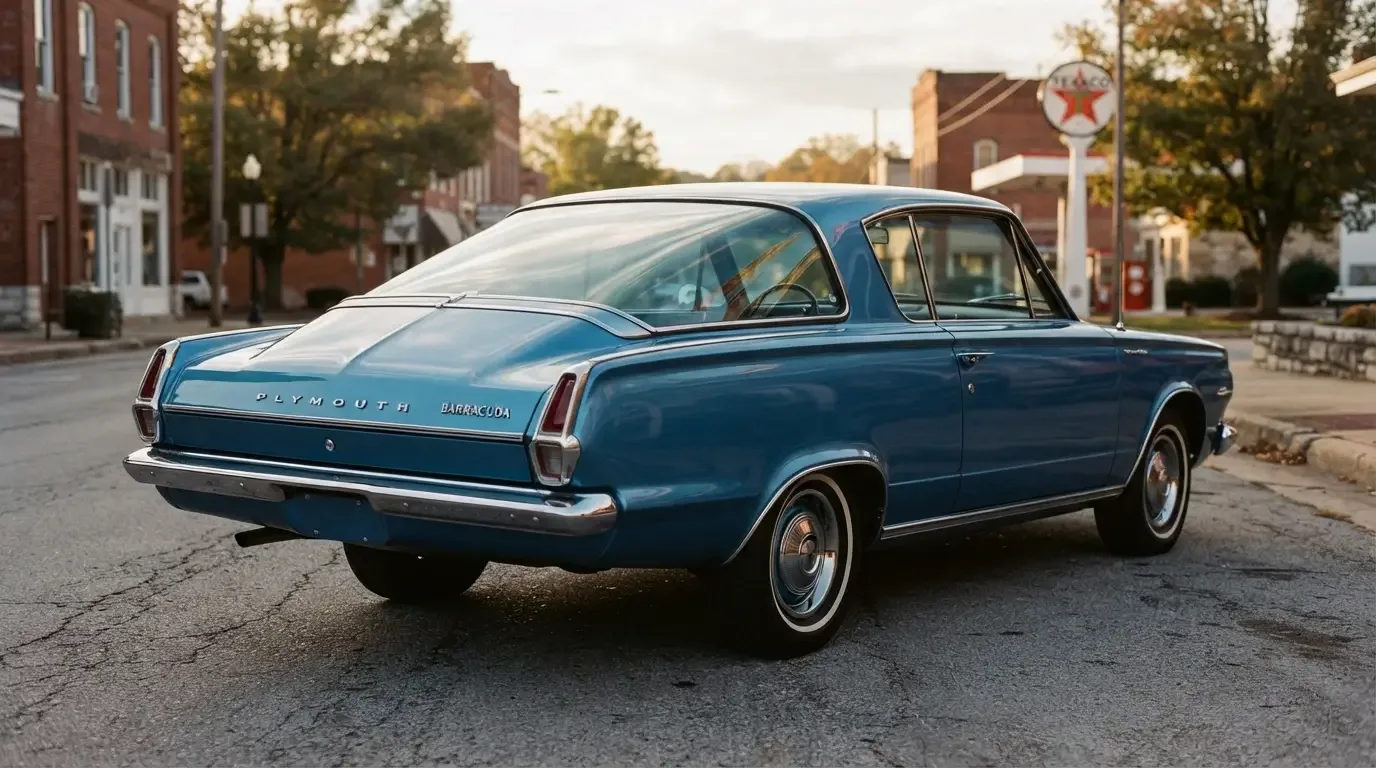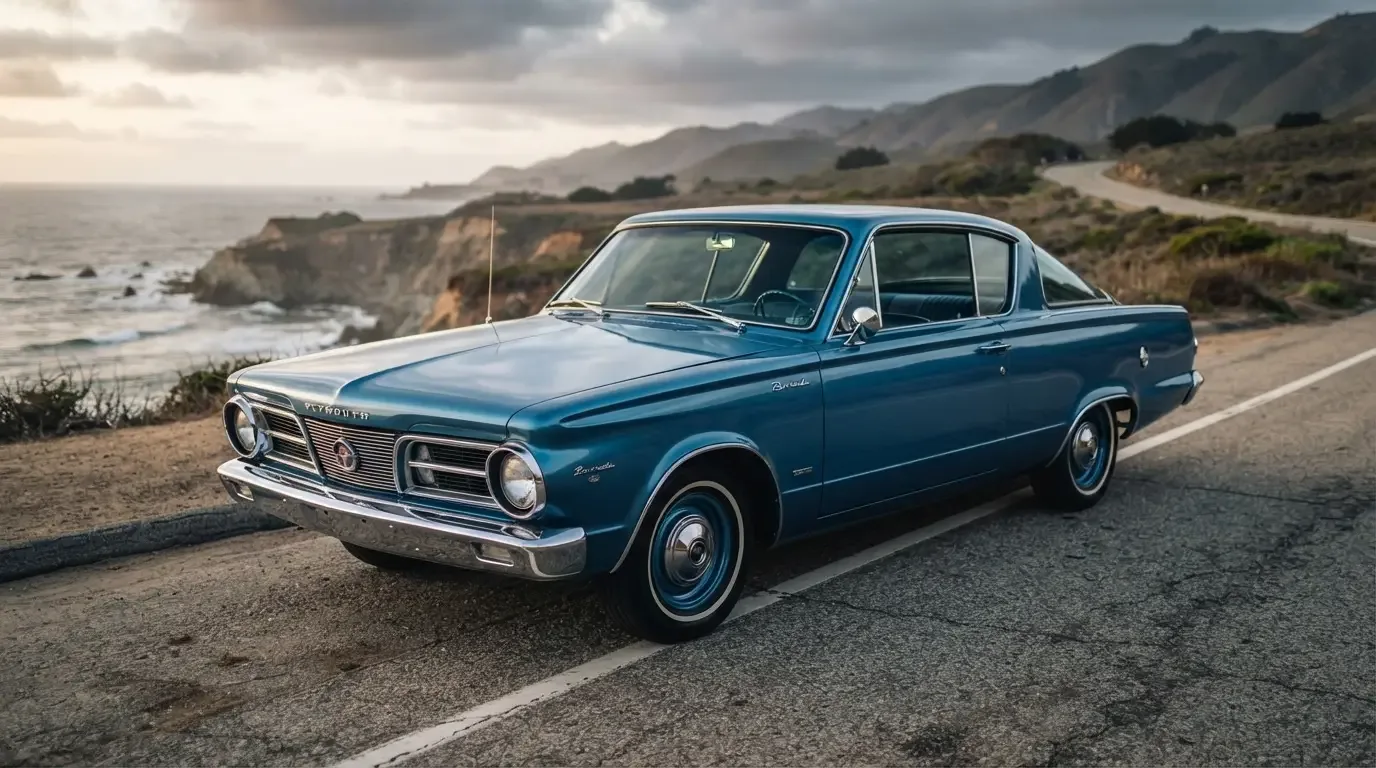
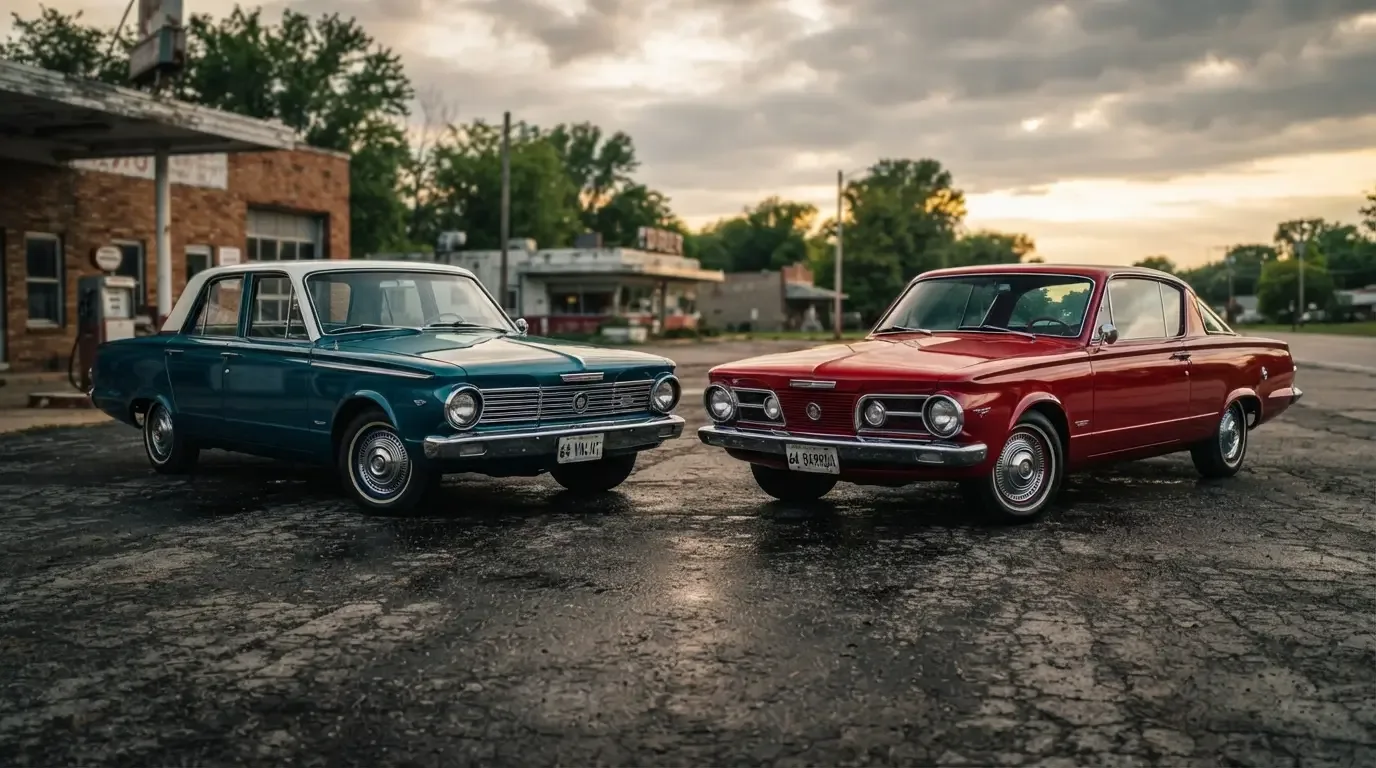
Strip the badges off a 1964 Barracuda and a 1964 Valiant Signet and park them side by side, and a lot of casual buyers would need a minute to sort out which is which from the doors forward. That is not an insult to either car. It is just the honest truth about the barracuda valiant connection, a relationship Plymouth never hid and one that explains almost everything about how this car was built, priced, and maintained for its entire first generation.
Same bones, different jacket
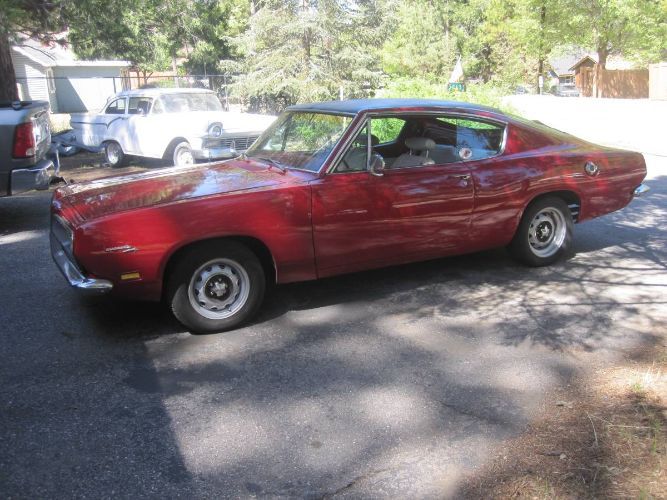
The Barracuda rode on the Valiant's A-body platform, sharing its floor pan, front subframe, and most of its running gear. Wheelbase was identical at 106 inches. The doors, windshield, and cowl came straight off the Valiant tooling. What Plymouth's stylists changed was everything from the beltline back, swapping the Valiant's conventional trunk for that dramatic fastback roofline and the enormous wraparound rear glass the car became known for. From the driver's seat forward, though, you are sitting in a Valiant with a sportier steering wheel.
I have pulled enough of these cars apart over the years to say this plainly, the shared parts are a gift to anyone doing their own maintenance. Suspension bushings, brake components, and a lot of the drivetrain hardware interchange directly with contemporary Valiants, which means a part that would be a special-order nightmare on a rarer Detroit product is often sitting on a shelf at a normal parts counter because a Valiant needs the same one.
Why Plymouth went this route instead of building something new
Chrysler did not have the budget or the time to engineer a standalone sporty compact from scratch in the early 1960s, not on the timeline product planners were working against once word got around that Ford had something new coming. Reusing the Valiant's platform was not a compromise dressed up as a strategy, it was the only strategy that could actually get a competitive car to market inside eighteen months. You can read the background on how that timeline actually played out if you want the full sequence of decisions that led here, because the shortcuts Plymouth took in 1963 and early 1964 shaped this car's entire personality.
The upside of borrowing so heavily from an existing platform is that the Valiant's underpinnings were already proven. The slant six engine, the torsion bar front suspension, the basic unibody structure, all of it had already logged real miles in customer hands by the time the Barracuda showed up wearing a fastback roof over the top of it. Plymouth was not gambling on unproven engineering to hit a launch date. It was gambling on styling and glass to make familiar mechanicals feel new.
What this means for anyone working on one today
If you own a first-generation Barracuda and you are chasing a part that seems impossible to find under the Barracuda name, check the Valiant parts books before you assume you need a custom reproduction. Front suspension components, many interior switches, and a good chunk of the electrical system cross over cleanly. That is not true of every panel or trim piece, the fastback-specific sheet metal and the rear glass are Barracuda-only and priced accordingly, but the mechanical guts of the car are far less exotic than the styling suggests.
This also matters at the buying stage. A Barracuda advertised as "all original" should have drivetrain and suspension components that match known Valiant part numbers for the era, and a seller who cannot answer basic questions about that overlap is either inexperienced with the car or hasn't looked closely at what they own. Either way, it is worth doing your own homework before you take their word for anything.
"People act surprised when I tell them half the parts under a Barracuda came off a Valiant parts shelf. I don't know why. Detroit didn't have money to waste in 1964 any more than it does now."
- Mike Sullivan
The relationship that gets overlooked
Because the Barracuda gets remembered for its styling and its place in pony car history, the Valiant connection sometimes gets treated as a footnote or, worse, as evidence the Barracuda was somehow a lesser or cobbled-together car. That reading misses the point. Sharing a proven platform let Plymouth focus its limited 1964 budget on the parts buyers would actually see and feel, the roofline, the glass, the trim, while betting that a well-sorted compact chassis underneath would do its job quietly. It did. For a deeper look at how that first year came together, the 1964 plymouth barracuda is worth a look too, and if you are hunting for one of these cars today, plenty of sellers who shop classic Barracuda listings understand the Valiant overlap well enough to price a car fairly on that basis alone.
Where the shared parts actually help at a swap meet
Anyone who has spent a Saturday morning at a Mopar swap meet knows the difference between a booth stacked with Barracuda-labeled boxes and a booth full of loose Valiant parts nobody has bothered to sort. The Valiant boxes are cheaper, deeper, and far more common, because a lot more Valiants were built and a lot more of them got parted out over the decades. Learning which Barracuda components actually started life on a Valiant parts list turns those cheap, plentiful boxes into a real resource instead of something you walk past.
Brake drums, wheel cylinders, and a good share of the front end bushings are the easiest wins here, since Chrysler kept those parts identical across both nameplates for most of the first generation. Trim pieces and anything stamped specifically for the fastback roofline are a different story entirely, and no amount of Valiant digging will turn up a correct rear quarter panel. Knowing where that line sits before you start shopping saves a lot of wasted mileage driving to swap meets for parts that were never going to be there in the first place.
The same logic applies online now as much as it did at a folding table forty years ago. Search listings under the Valiant name and you will often find the exact same brake hardware or suspension bushing at half the price of an identical part listed under the Barracuda banner, simply because sellers know Barracuda buyers will pay a premium for the name attached to the listing. It is not dishonest, it is just supply and demand doing what it always does, and a buyer who understands the underlying parts commonality can save real money without ever touching a part that is anything other than correct.
Bottom line for buyers and owners
Do not let anyone tell you the Valiant relationship makes the Barracuda a parts-bin special in a bad sense. It made the car buildable at all, on the schedule Plymouth needed, without gambling the whole project on unproven mechanicals. Sixty years later, that same relationship is why keeping one of these cars running is genuinely more manageable than owning something rarer and more exotic from the same era, and that is worth more to most owners than bragging rights ever will be.