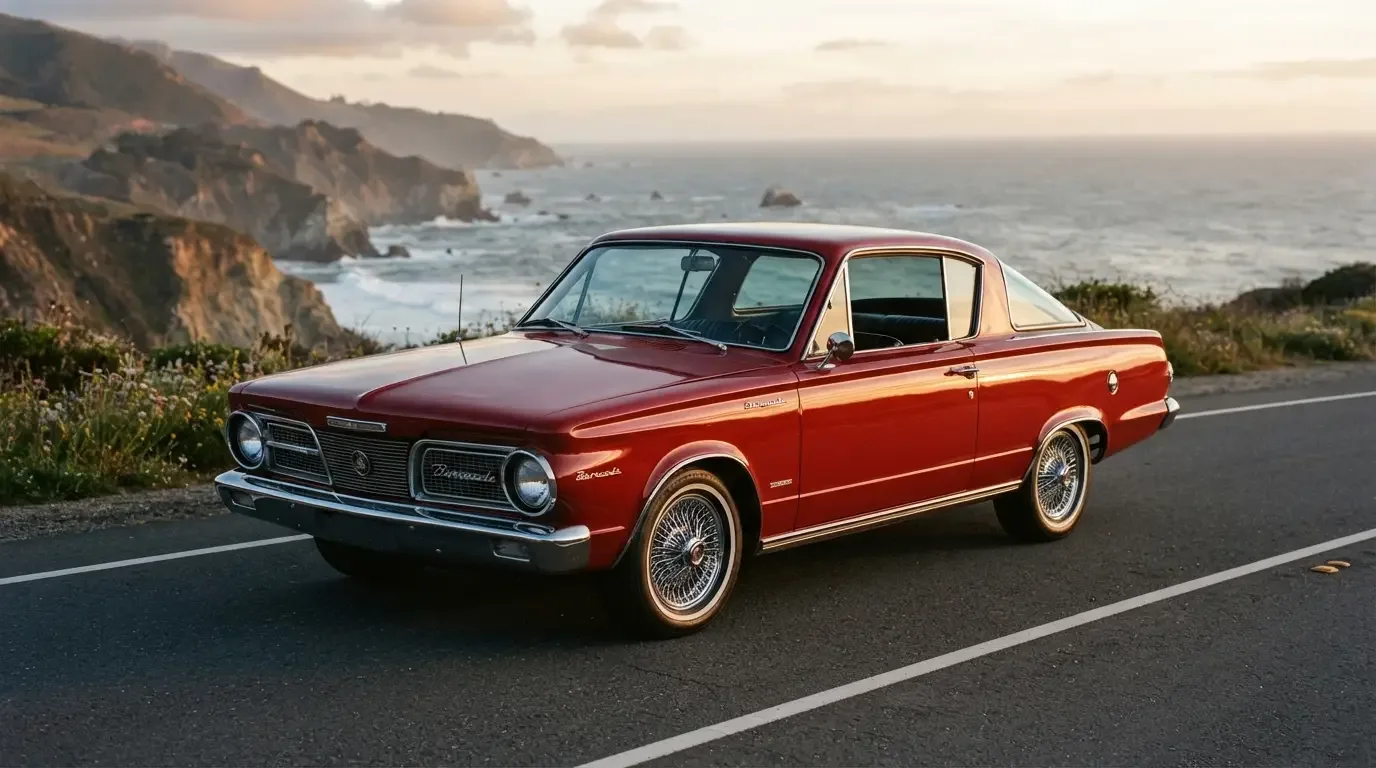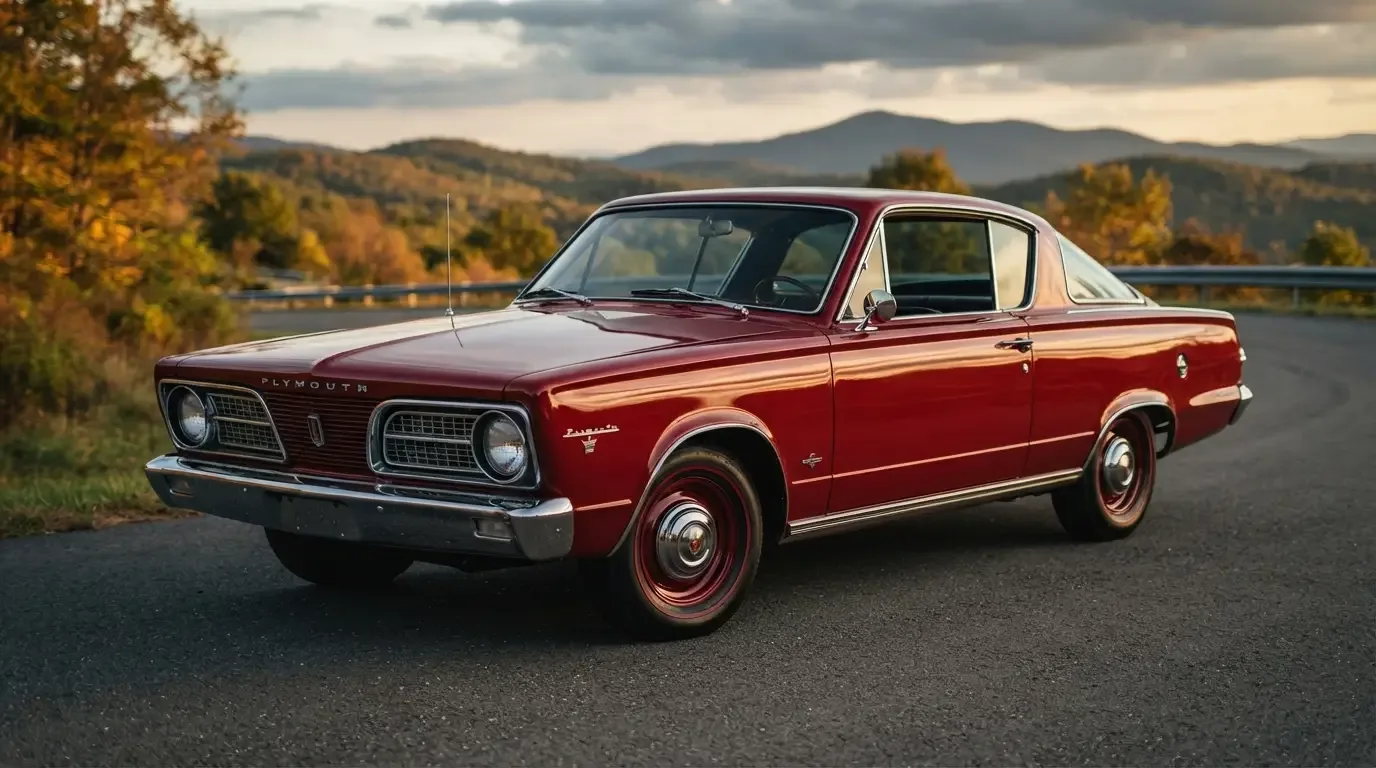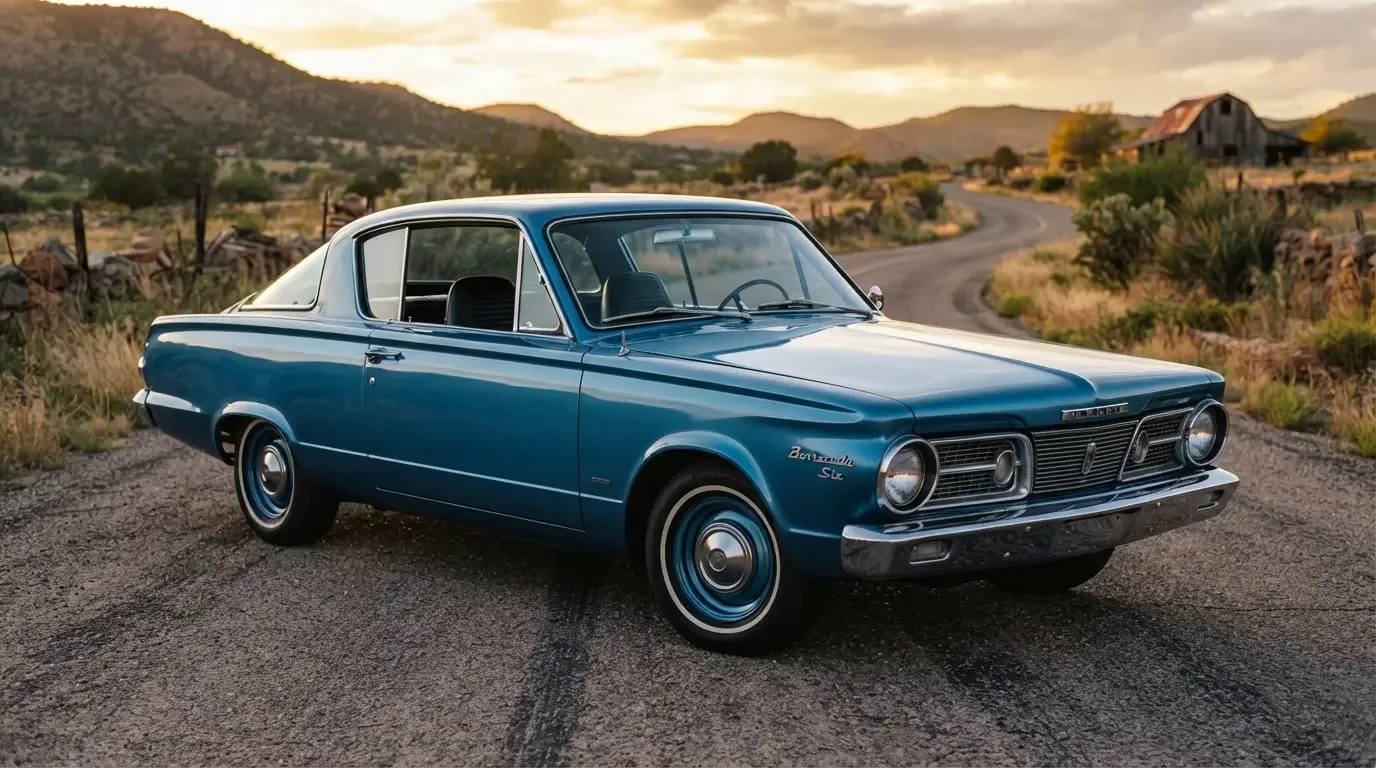
Picture a Plymouth dealer's showroom floor in the spring of 1964. A young engineer from Chrysler's powertrain division is walking a salesman through the option sheet for the new Barracuda, and he pauses at one line item longer than the rest. The 273 cubic inch V8 was not the headline feature of that launch, not compared to the fastback roofline and the enormous rear glass everyone was talking about, but it was the option that would decide whether the Barracuda could be taken seriously as anything more than a good-looking commuter car.
An engine built for a different job, repurposed at speed
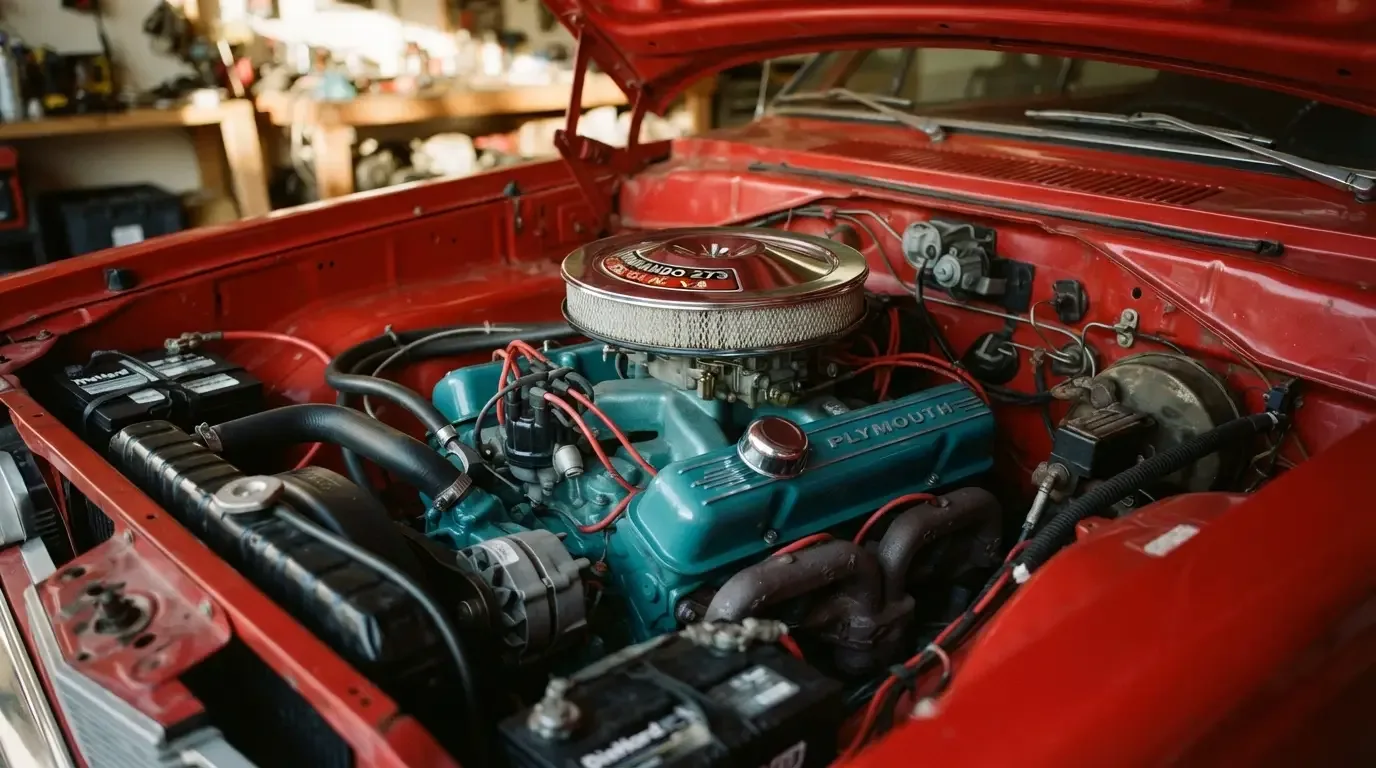
The 273 was a compact-block V8, Chrysler's newest small displacement engine at the time, originally engineered with an eye toward fitting under the hoods of the company's more modest models without demanding major structural changes. When Plymouth needed a V8 option for the rushed Barracuda program, the 273 was sitting right there, already sized correctly for the Valiant-based engine bay the Barracuda shared. In its initial 1964 tune, the engine produced 180 horsepower, respectable for a compact-displacement V8 of the era but hardly the stuff of legend on paper alone.
What made the 273 matter was not a single dramatic spec, it was timing. Without a V8 option at all, the 1964 Barracuda would have entered the pony car conversation as a six-cylinder-only proposition, a nonstarter against a rival that offered V8 power from its very first year. The 273 kept Plymouth in that conversation, even if it would take another model year before the engine's output climbed to something genuinely competitive.
1965 sharpens the argument considerably
For 1965, the 273 got a real workout as part of the new Formula S package, arriving in a higher output 4-barrel Commando tune that pushed the rated figure to 235 horsepower, a meaningful jump that finally gave magazine testers something to write home about. Paired with the Formula S suspension upgrades, the 273-powered Barracuda became a legitimately different car to drive than the six-cylinder version most buyers were actually choosing, and period road tests reflected the improvement with noticeably warmer language than the base car had earned a year prior.
| Spec | 273 V8 detail |
|---|---|
| Displacement | 273 cubic inches |
| 1964 output | 180 hp |
| 1965 Formula S output | 235 hp (4-barrel Commando) |
| Engine family | Chrysler small block, LA series |
| Availability | Optional across 1964 to 1966 Barracuda |
Why the small block matters more than its numbers suggest
Nobody is going to argue the 273 belongs in the same conversation as the big-inch engines that would eventually define Mopar muscle later in the decade. That was never its job. Its job was to be small enough to fit an existing engine bay designed around a six-cylinder Valiant, light enough not to ruin the car's handling balance, and strong enough to give Plymouth a credible V8 answer while the company figured out its longer-term performance strategy. On all three counts, it delivered exactly what was asked of it, and the fact that later, larger engines eventually overshadowed it in enthusiast memory does not erase how important the 273 was at the moment the Barracuda actually needed it.
For buyers who wanted a six-cylinder car with lower running costs instead, a related story covers that side of the lineup, since the two engine families genuinely represented different philosophies of ownership within the same body style rather than simply a budget option and a performance option.
"The 273 never gets the credit the big blocks do, but somebody has to be the engine that shows up on time and does the job asked of it. That was the 273's whole career, and it did it well."
- Patrick Walsh
What it felt like from behind the wheel
Owners who have driven both the six-cylinder and 273-powered versions of the same model year describe a difference that goes beyond straight-line acceleration. The V8's added weight over the front axle changes the car's balance in a way that period suspension tuning had to account for, which is exactly why the Formula S package bundled firmer springs and shocks alongside the stronger engine rather than selling the V8 as a stand-alone option. A six-cylinder Barracuda feels light and eager in a way that flatters the car's fastback proportions. A well-sorted 273 car feels planted in a way the six-cylinder never quite manages, trading some of that lightness for genuine confidence when the road turns.
That tradeoff is worth understanding before assuming more power is automatically the better choice for every buyer. Someone chasing a purely original driving experience closer to what most 1964 buyers actually chose might prefer the six. Someone who wants the car Plymouth's engineers were clearly building toward by 1965, a genuinely composed small-displacement V8 pony car, should be looking specifically for the 273, and ideally for the Formula S version of it rather than a standard 273 fitted without the accompanying suspension work.
Fuel economy told its own honest story too. The 273 never pretended to sip fuel the way the slant six did, and period owners who cross-shopped the two options were making a real tradeoff between everyday running costs and weekend enthusiasm, not simply picking a bigger number off a brochure. That honesty about tradeoffs, rather than blanket bragging about horsepower, is part of what made the 273 feel like a credible engineering decision rather than a marketing afterthought.
Finding a genuine 273-powered car today
A 273-equipped first-generation Barracuda, particularly a documented Formula S example from 1965 or 1966, occupies a sweet spot for buyers who want genuine period performance without chasing the rarest and most expensive big-block variants that came later in Mopar history. Verifying the engine's authenticity means matching casting numbers and date codes against the fender tag, a straightforward check for anyone who takes the time. For the fuller context on how this engine option fit into Plymouth's first three model years, our 1964 plymouth barracuda retrospective lays out the complete picture, and shoppers ready to act will find that Barracudas for sale now occasionally include well-documented 273 cars that represent real value against their more famous big-block siblings.
Do not overlook casting numbers stamped into the block itself when doing that verification, since the same basic 273 architecture went into plenty of other Chrysler products during these years and a swapped engine, even a period-correct one, is not the same thing as the numbers-matching original that came with the car when it left the factory. A patient buyer who checks these details before falling for a good story will end up with a car whose value actually holds up under later scrutiny, which is worth far more over time than the momentary satisfaction of a quick, undocumented purchase.