Fuel crisis barracuda is a phrase that gets tossed around like it explains everything, and it does not, not by itself. I have wrenched on enough of these cars to know the fuel crisis was the final shove, not the whole push. The Barracuda was already wobbling before October 1973. The embargo just made sure it did not get back up.
What actually happened in late 1973
Chrysler had already spent two years detuning engines for emissions and dropping compression ratios before the embargo ever hit. That earlier round of changes had nothing to do with fuel supply. It had to do with lead phase-out and smog rules. So when the actual fuel crisis arrived, the Barracuda was already a weaker performer than its early 1970s ancestors, running lower compression on regular gas instead of the high-octane fuel the original 1970 Cuda expected. Buyers who remembered the earlier cars felt the difference even before gas got expensive.
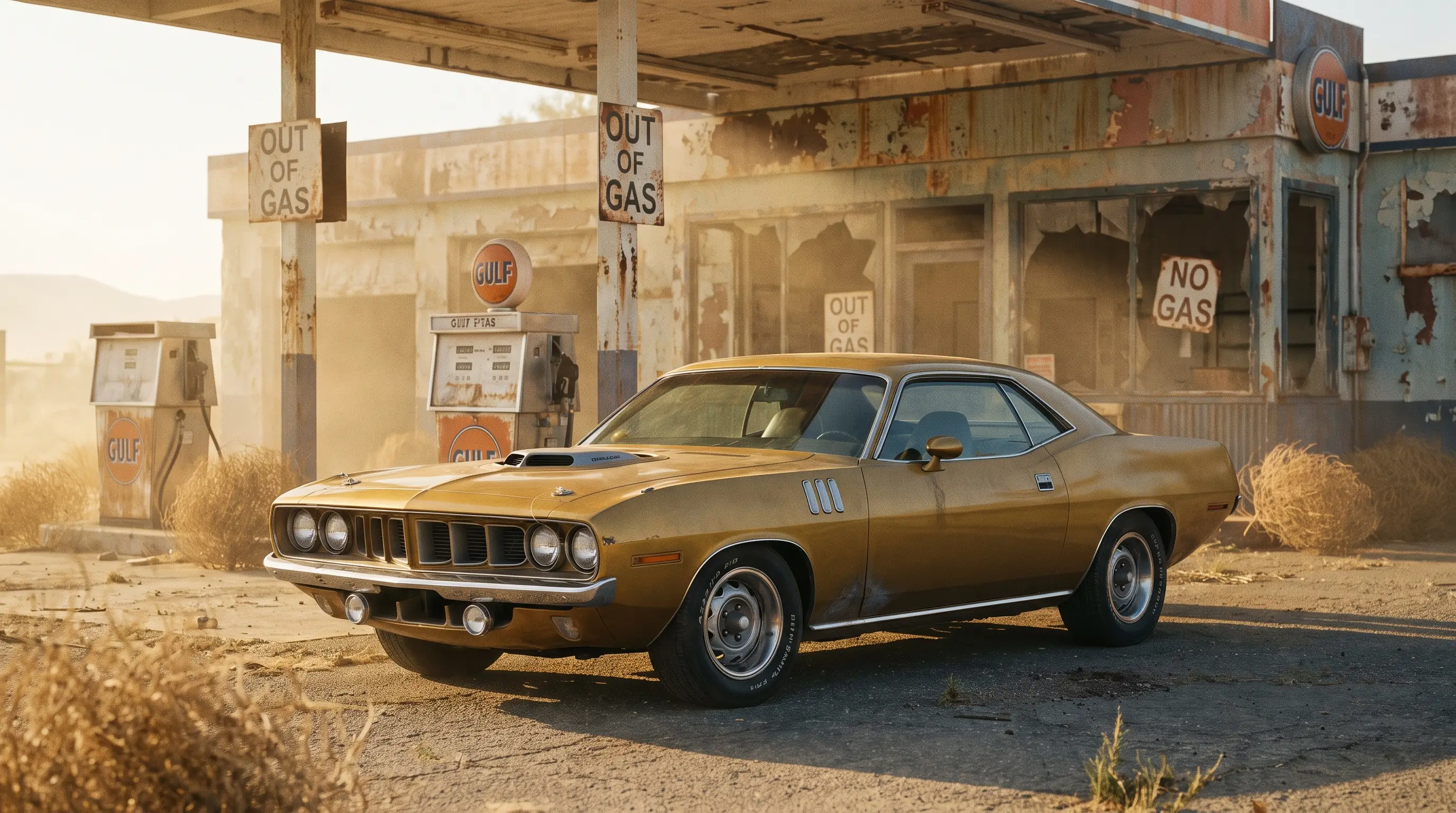
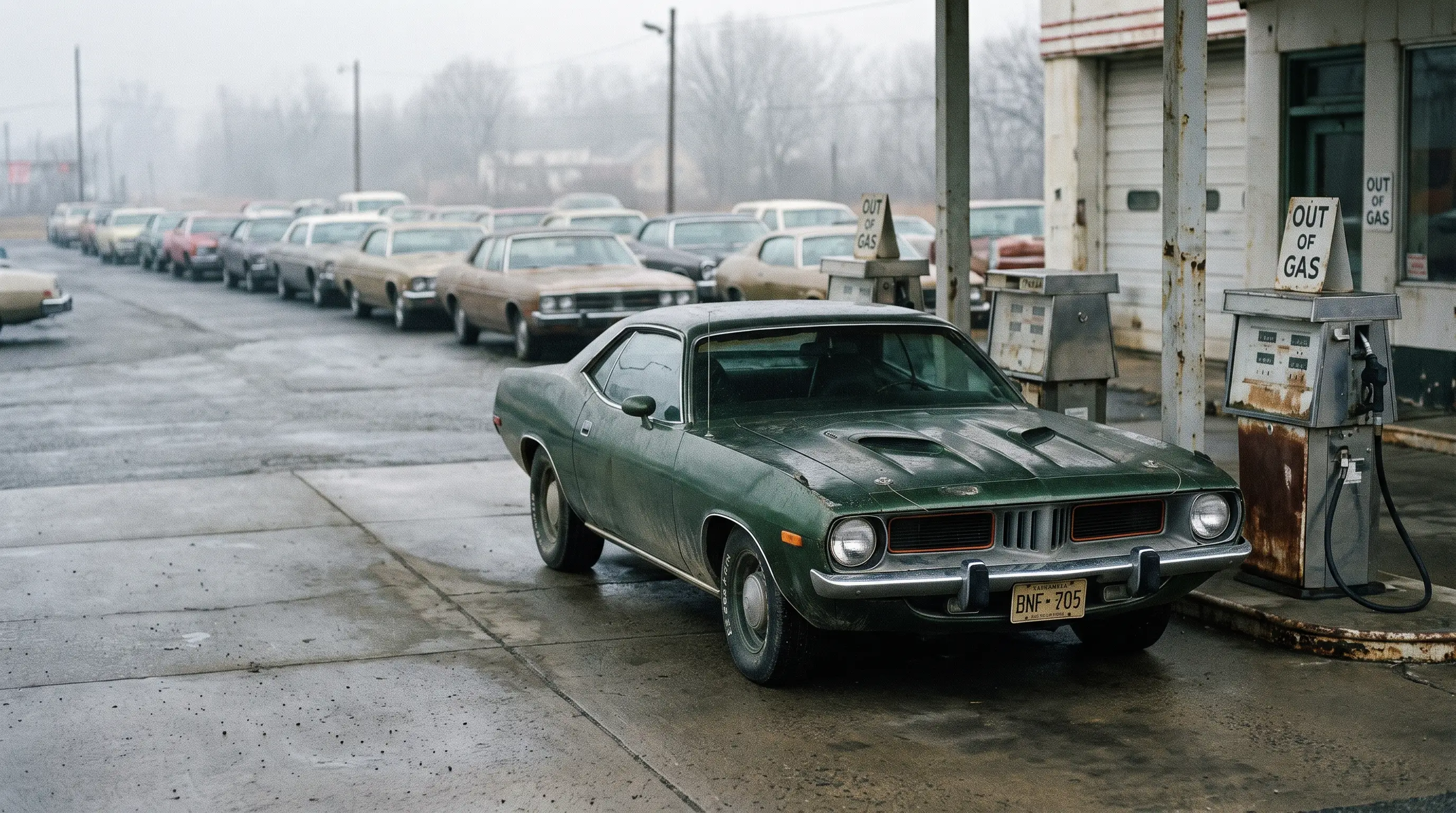
OPEC's oil embargo hit in October 1973, and within weeks American drivers were sitting in gas lines that stretched around city blocks. Prices at the pump jumped hard and fast. For a two-door with a V8 and single-digit city mileage, that is about the worst possible news a manufacturer can get mid-cycle. Plymouth was selling the Barracuda into a market that, almost overnight, started rewarding anything with better fuel economy and punishing anything that looked thirsty.
The Cuda's engine lineup by this point was already down to the 340 and the newer 360, both small blocks by muscle car standards, but none of that mattered to a buyer standing in line for gas. Perception moved faster than spec sheets. A car that got mediocre mileage looked like a liability regardless of which V8 sat under the hood.
Why the Barracuda specifically could not absorb the hit
Plymouth already had a cheaper, lighter, better-mileage alternative sitting right next to the Barracuda on the same showroom floor. The Duster and Valiant used many of the same engines but in a lighter, more efficient package that cost less to buy and less to run. When gas got expensive and scarce, a buyer standing in a Plymouth dealership had almost no reason to pick the Barracuda over its own cheaper stablemate. Chrysler was effectively competing against itself, and the practical car won.
That is the part that gets skipped when people blame the fuel crisis alone. The Barracuda did not just lose to imports or to economy cars from other brands. It lost inside its own manufacturer's lineup to a car built on cheaper tooling that did the daily-driver job better for less money.
"The embargo did not kill the Barracuda by itself. It just made sure buyers noticed what they had already been thinking for a year or two. Why pay more to drive something that drinks more."
- Mike Sullivan
The 1974 model year felt the full weight
Production numbers for 1974 dropped noticeably from 1973, landing at 11,734 units for the final model year. Some of that drop was planned, since Chrysler already knew the E-body's run was ending. But the timing lines up too cleanly to ignore. The embargo hit right as Chrysler was deciding whether the platform earned another year of investment, and a shrinking market for thirsty two-doors made that decision easier to make.
Anyone who wants the whole picture on how these final years played out should read how the entire 1972 to 1974 stretch fits together, since the fuel crisis was only the last of several pressures stacking up on this car.
What this meant for the cars themselves, not just the sales chart
On the shop floor, the fuel crisis changed what buyers wanted worked on. Fewer people were paying to build bigger engines. More were asking about tune-ups aimed at economy rather than power. Dealers reported softer demand for the highest-optioned Cudas specifically, the cars with the biggest engines and the worst mileage, while base Barracudas with the smaller V8 held up relatively better through the worst of the crisis.
None of that is glamorous history. It is just what happens when the price of gas doubles and then keeps climbing. People do not stop wanting fast cars. They stop being able to justify buying one.
How dealers actually handled it
I have talked to old-timers who worked Plymouth lots through 1973 and 1974, and the story they tell is consistent. Incentives showed up on Barracudas that had never needed them before. Salesmen who used to lead with horsepower numbers started leading with monthly payment figures instead, because that is what buyers were actually asking about. A car that sold itself on attitude in 1970 needed a sales pitch about practicality by 1974, and that is an uncomfortable shift for any performance nameplate to survive.
Some dealers held onto leftover 1974 stock into the following year, discounting cars that would not move at sticker. None of that inventory was treated as special or collectible at the time. It was just slow-moving stock that needed to clear the lot before the next model year's cars arrived, fuel crisis or not.
The lesson that outlasted the crisis
The 1973 oil embargo passed within a few months, but the buying habits it triggered did not fully reverse. American car buyers stayed more mileage-conscious through the rest of the decade, and Detroit spent years afterward chasing smaller, lighter, more efficient designs. The Barracuda simply did not survive long enough to be part of that next chapter. It went out right as the industry it belonged to started changing shape around it.
If this history has you curious about what survives from that era, shop classic Barracuda listings and see what real cars from these final years look like today.
Fifty years on, the irony is that the same trait that hurt Barracuda sales in 1973 and 1974, a thirsty V8 in a two-door body, is exactly what collectors chase today. Nobody buying a classic Cuda now is worried about the price at the pump. They want the engine note and the attitude the fuel crisis buyers were actively running away from. History has a way of flipping a car's biggest liability into its biggest selling point once enough time passes, and the late Barracuda is as clean an example of that flip as this segment has to offer.