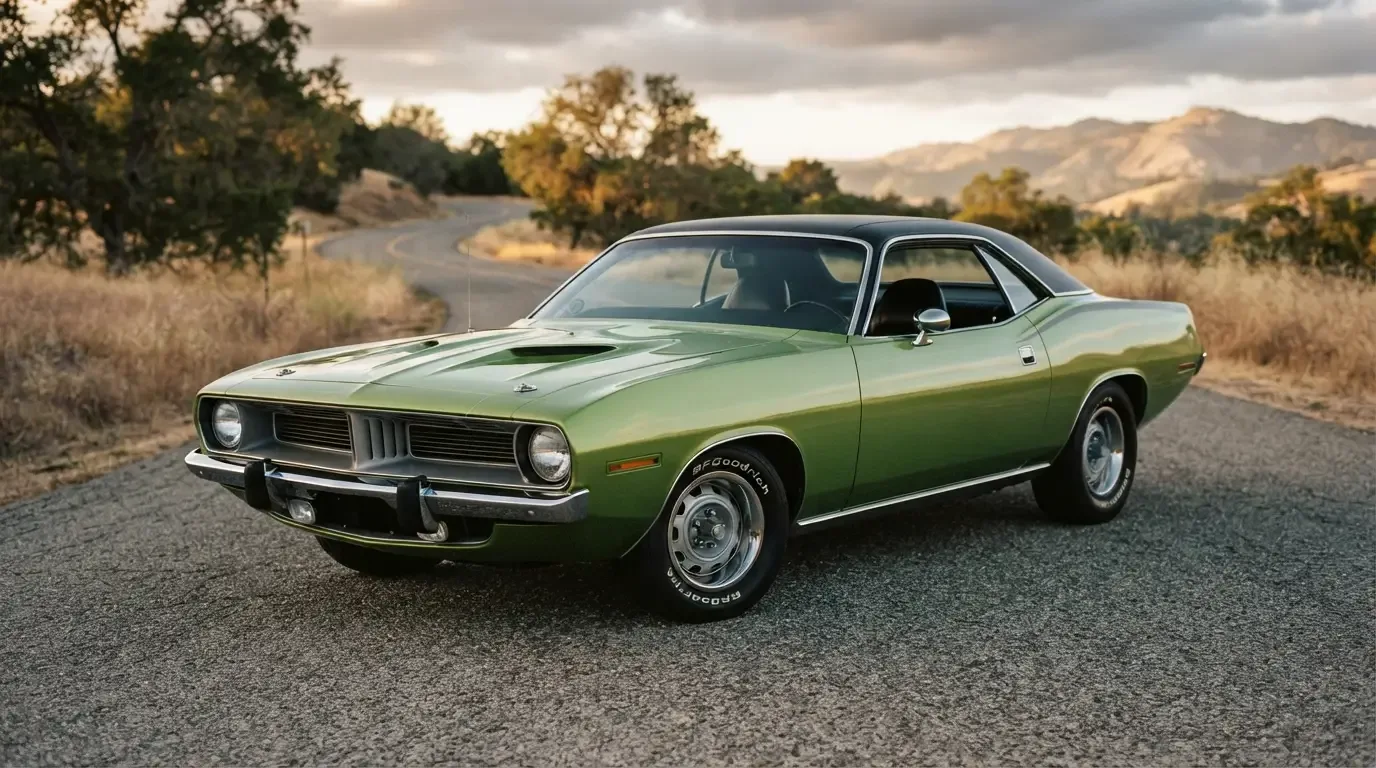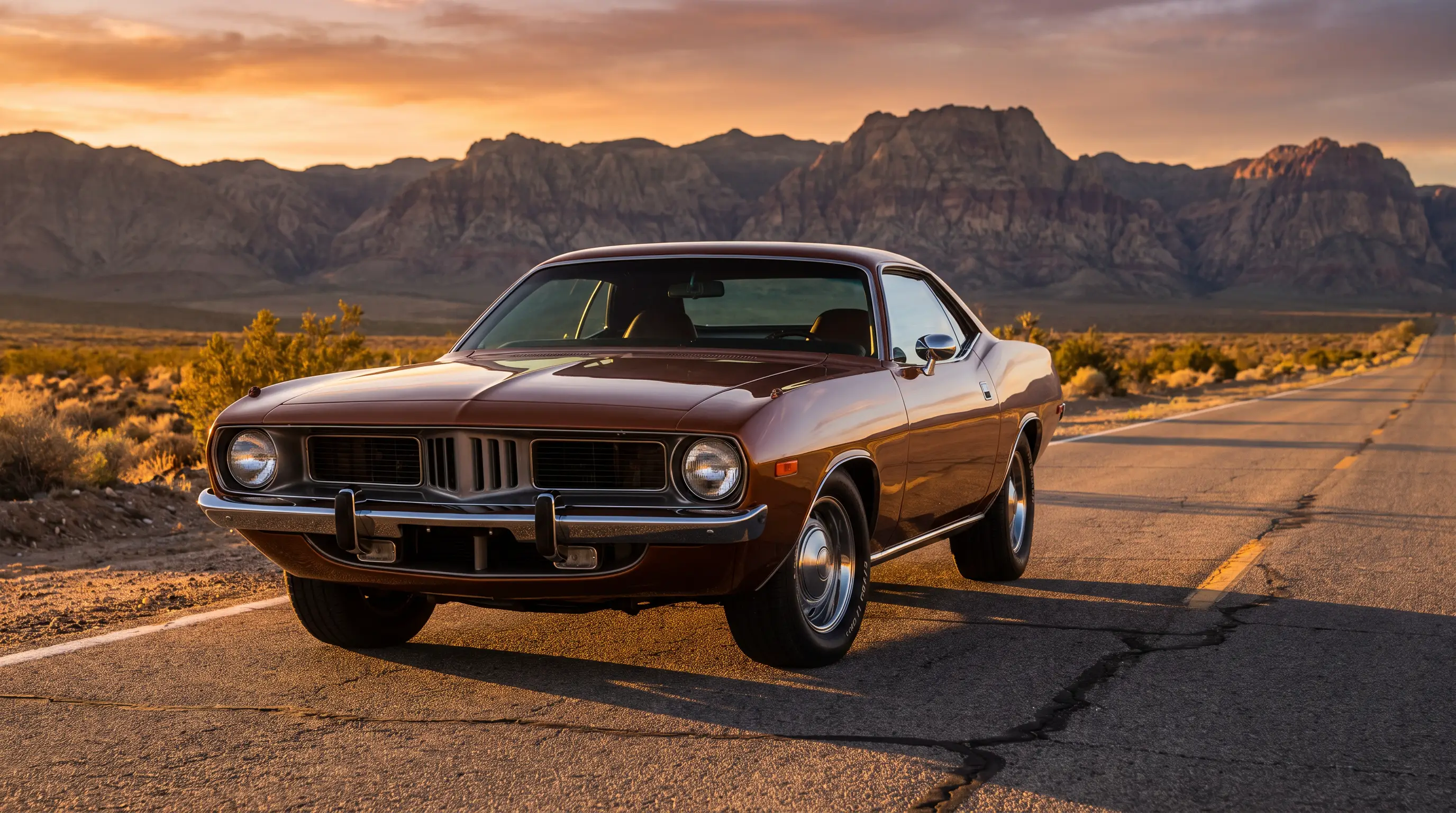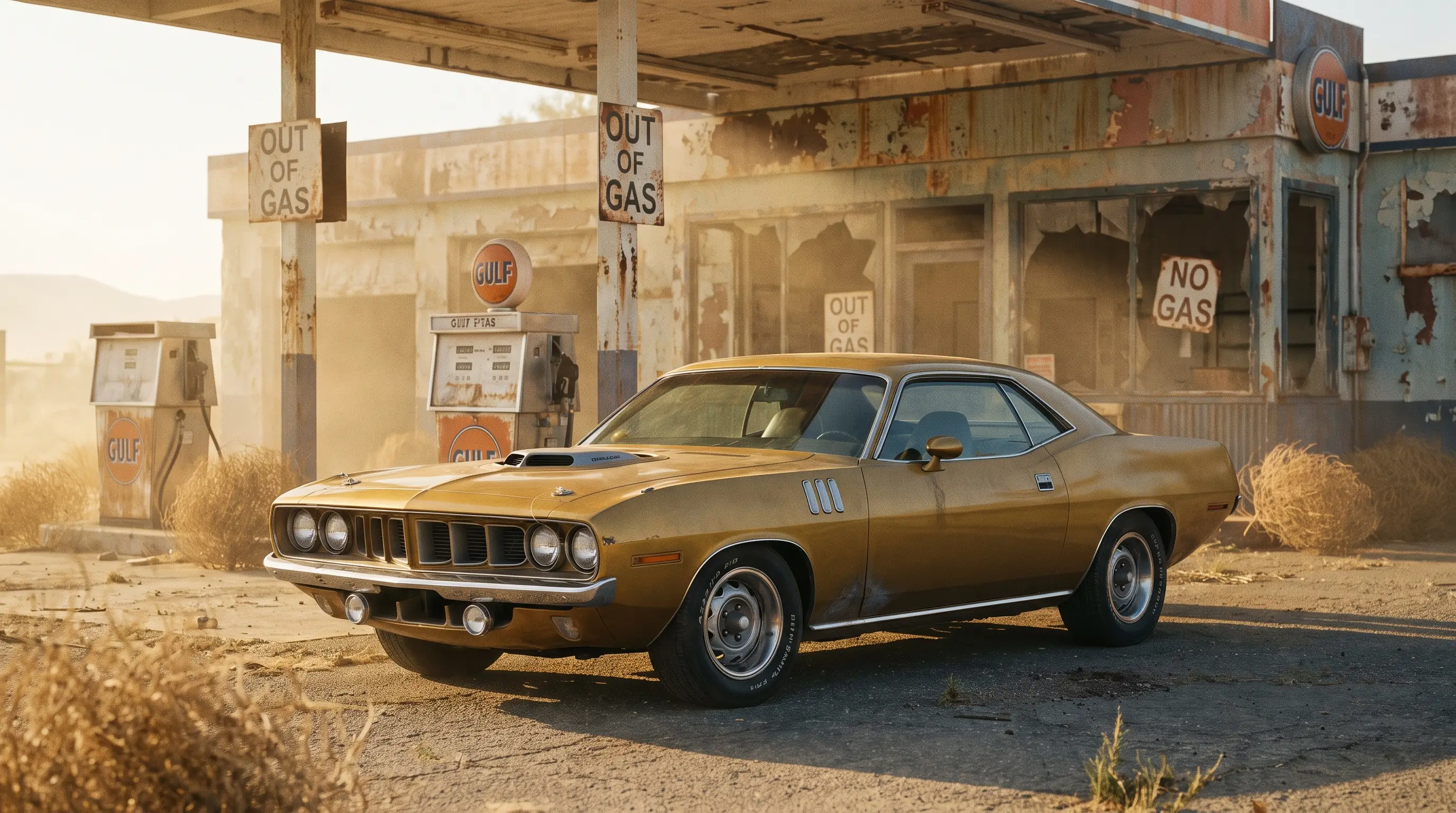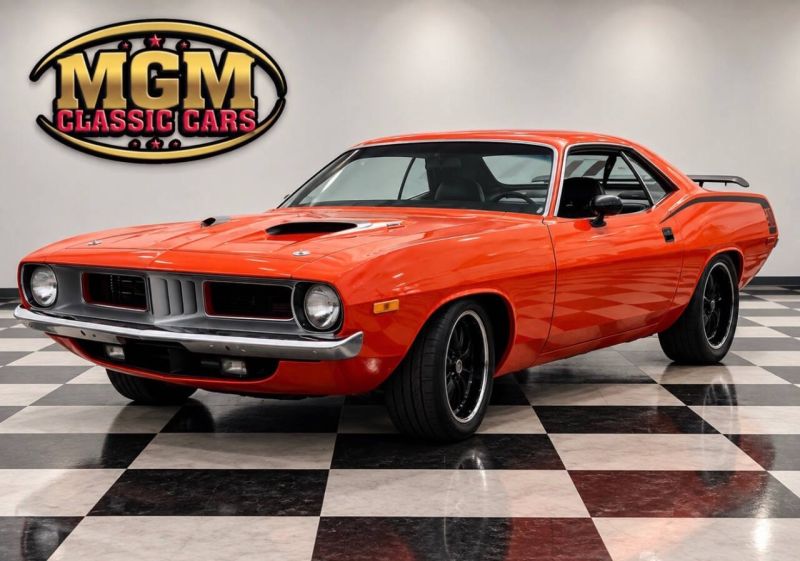
The 1973 barracuda production run does not get talked about much at car shows, and that is exactly the problem Tom Ramirez wants to fix. Plymouth built its E-body Barracuda from 1970 through 1974, and the last three years, 1972 to 1974, get treated as an afterthought sandwiched between the famous 1970-71 cars and the model's quiet end. The paperwork tells a different story, one of a factory adjusting on the fly to rules nobody had written yet.
What actually changed for 1972
Plymouth trimmed the Barracuda lineup hard for 1972. The convertible was gone. The base Barracuda and the performance-oriented Cuda carried on, but the options sheet had been rewritten by insurance actuaries and emissions engineers as much as by product planners. Compression ratios dropped across the board to run on lower-octane, lower-lead fuel. Horsepower ratings also shifted to the new SAE net standard, which on paper made every engine look weaker even when the hardware barely changed.
The 340 cubic inch V8 remained the volume performance choice, and Chrysler's 440 was gone from the Barracuda order form after 1971, a fact that still surprises people who assume every Cuda came with a big block. By 1972 the largest engine available was the 340, later replaced by the 360 as Chrysler's small block family was reworked for the mid-1970s.
1973: the numbers actually went up
Here is the part that trips up casual observers. 1973 barracuda production climbed from the year before, not fell. Plymouth built somewhere in the neighborhood of 22,000 cars for the model year, a modest bump helped along by a Cuda package that still looked and drove like a muscle car even as the rest of the industry was softening. Federal bumper standards arrived for 1973, forcing heavier front bumpers onto the Barracuda's nose, and the car gained weight it never really lost for the rest of its life.
The 360 cubic inch V8 became available partway through this era, filling the gap left by the departed 440 and giving buyers a genuine step up from the 340 without going back to a big block that Chrysler no longer offered in this body. Buyers cross-shopping a Cuda against a Mustang or Camaro in 1973 were choosing between cars that all had less bite than their 1970 ancestors, a fact that shaped how the whole segment aged.
"Every production number from 1972 to 1974 has an emissions regulation or an insurance memo standing behind it. You cannot read these years as a story about horsepower. You have to read them as a story about compliance."
- Tom Ramirez
Where 1974 fits in the run
1974 was the Barracuda's last model year, and production fell back down to 11,734 units, including 4,989 Cuda models, as the fuel crisis that started in late 1973 reshaped what buyers wanted. Nobody at Chrysler was under any illusion that pony cars had a bright future in a country suddenly nervous about gas lines. The Barracuda name would not return to a production car for decades.
Anyone looking to understand how this final chapter connects to the car's broader arc should read our 1972 to 1974 Barracuda retrospective, which lays out the generational context that makes these final three years make sense as a sequence rather than a footnote. Buyers curious about that specific transitional year can also browse 1972 Barracuda listings to see how these cars are valued today.
Reading the build sheet
Collectors chasing a real 1973 or 1974 Cuda need to know what to expect on a fender tag rather than what a seller claims. Trim codes, engine codes, and the transmission call-out all narrow down exactly what left the plant, and because these late cars were built in smaller numbers than the 1970-71 peak, a correctly documented example is worth more attention than its sticker price might suggest.
For readers chasing the discontinuation story directly, a related story covers why Plymouth pulled the plug entirely rather than reworking the Barracuda again for a fifth generation. There is also real inventory to consider if the history has you thinking about ownership: Barracudas for sale now gives a look at what is actually on the market today.
The Cuda name in its final years
Plymouth kept the Cuda package alive right through 1974, but it no longer meant what it meant in 1970. Gone were the days of ordering a 440 six-barrel or a Hemi in a Barracuda body. The 1972 to 1974 Cuda was a handling and appearance package built around the 340 and later the 360, with strobe stripes, a shaker hood scoop on some trims, and bucket seats that still looked the part even as the underlying performance numbers softened year over year. Dealers still sold these cars as the sporty option in the Plymouth lineup, and buyers who wanted the visual drama of a Cuda without chasing a big block engine found the late cars a reasonable compromise.
Paint and stripe combinations also shifted for these years, with several colors introduced specifically for 1973 and 1974 that never appeared on earlier Barracudas. Collectors sometimes assume any bold color scheme points to an earlier car, when in fact some of the loudest factory paint codes only exist on these final model years. That is one more reason a fender tag matters more than a photograph when someone is trying to date a specific example.
Why these years matter to collectors now
Because the 1972 to 1974 Barracudas sold in smaller numbers than the 1970-71 cars and get less attention at auction, well-documented examples can be surprisingly good value relative to their rarity. A correctly optioned 1973 Cuda with the 360 and factory air is not a common find, and buyers who understand the regulatory backdrop of these years tend to make smarter purchases than those chasing nameplate recognition alone.
The story of the late Barracuda is not a story of decline so much as a story of a car company trying to keep a performance nameplate alive while the rules around it changed every single year. That tension, more than any single spec sheet, is what makes 1972 to 1974 worth a second look.
It also helps to remember these were the last Barracudas Plymouth would ever build. The nameplate did not carry into the next generation of pony cars the way the Camaro or Mustang did, which means every 1972, 1973, and 1974 car is a genuine endpoint rather than a stepping stone to something later. That finality is part of what makes the production paperwork from these three years worth studying closely instead of skimming past it on the way to the more famous early cars.
Sources and notes
- 440 Magnum Network: Plymouth Barracuda Production Numbers 1964-1974
- 440 Magnum Network: 1973 Plymouth Barracuda Production Numbers
- 440 Magnum Network: 1974 Plymouth Barracuda Production Numbers
- Wikipedia: Plymouth Barracuda
- Muscle Car Facts: 1973 Plymouth Barracuda
- HotCars: 1974 Plymouth Barracuda With 360 V8