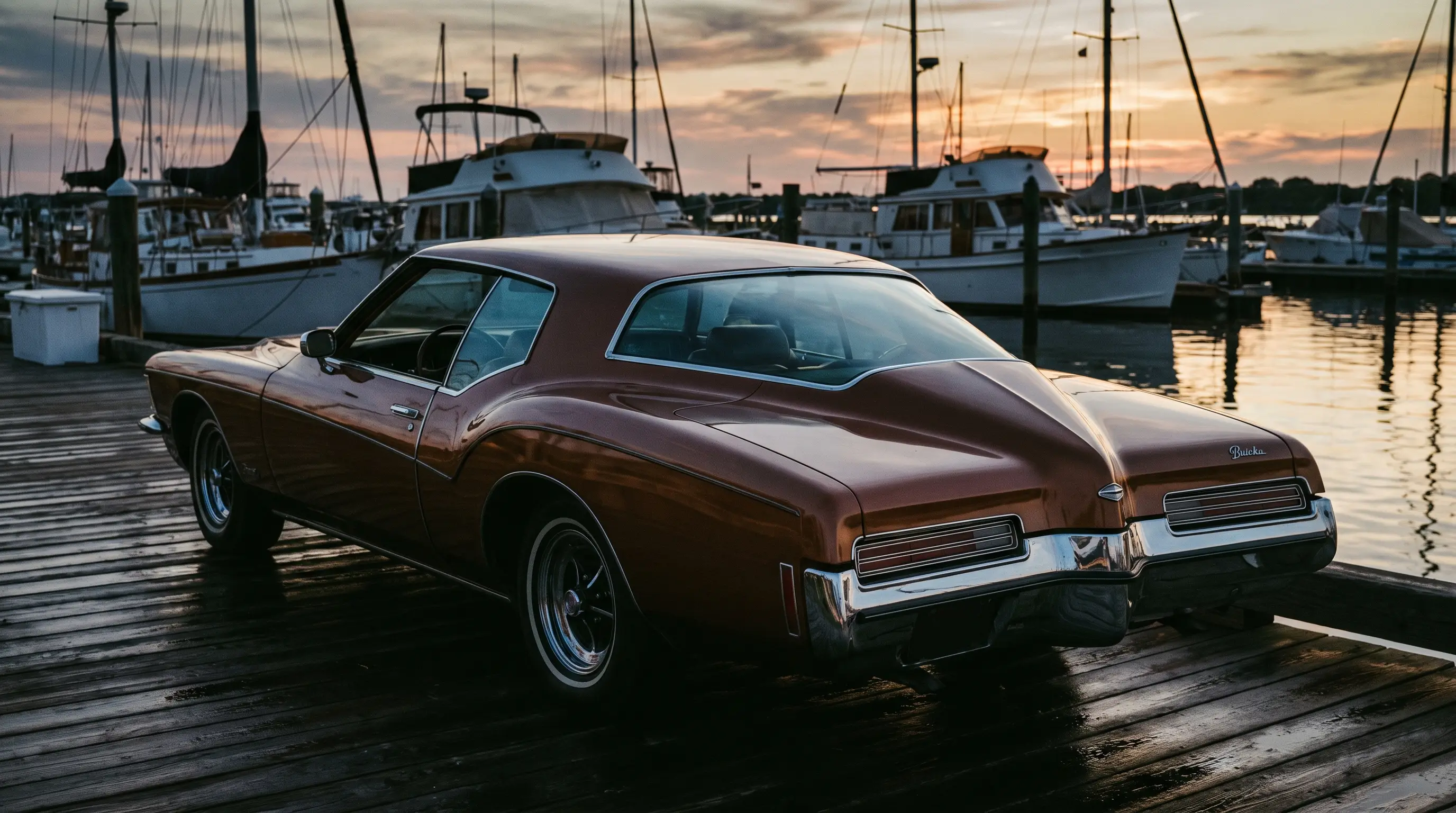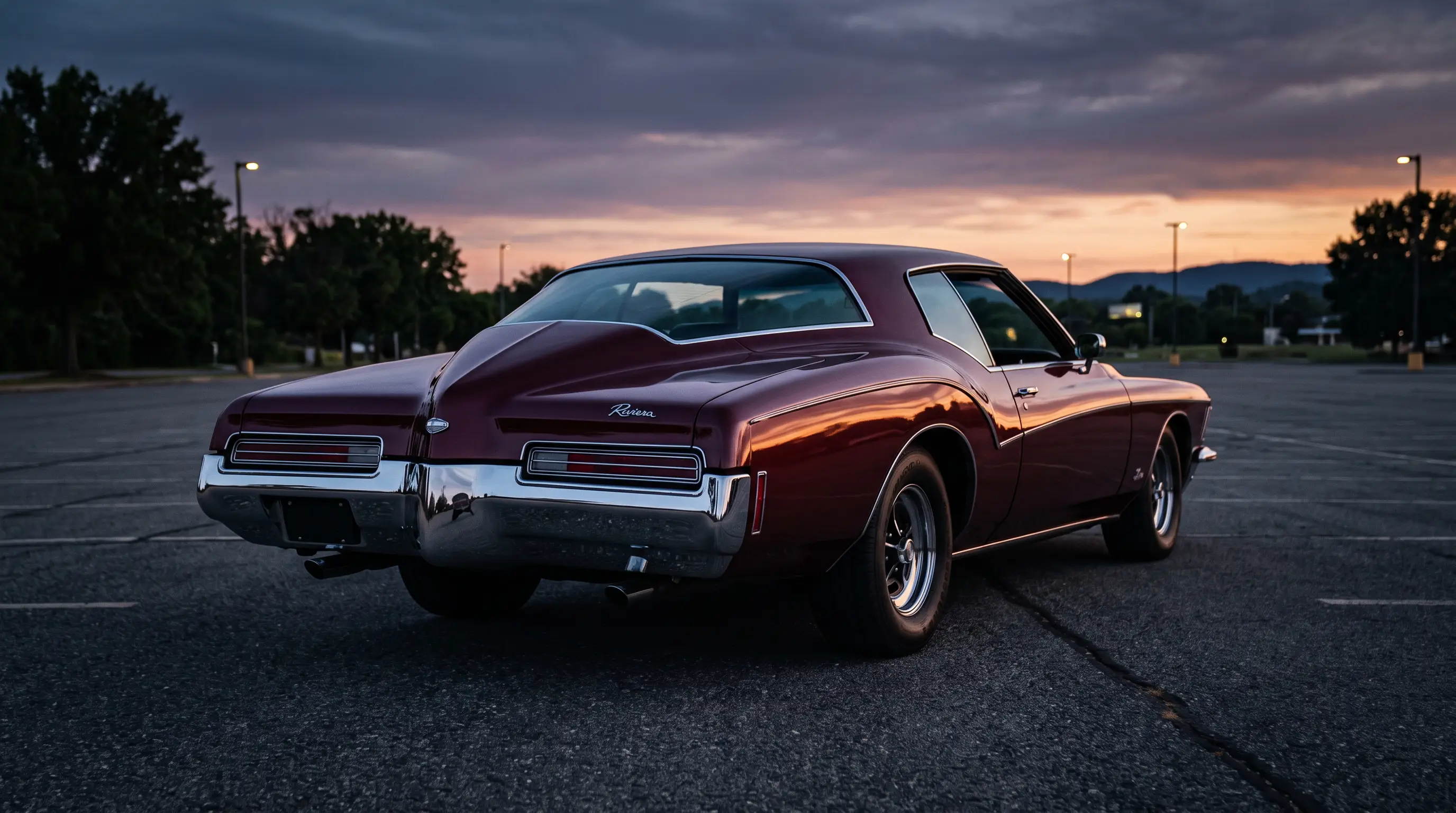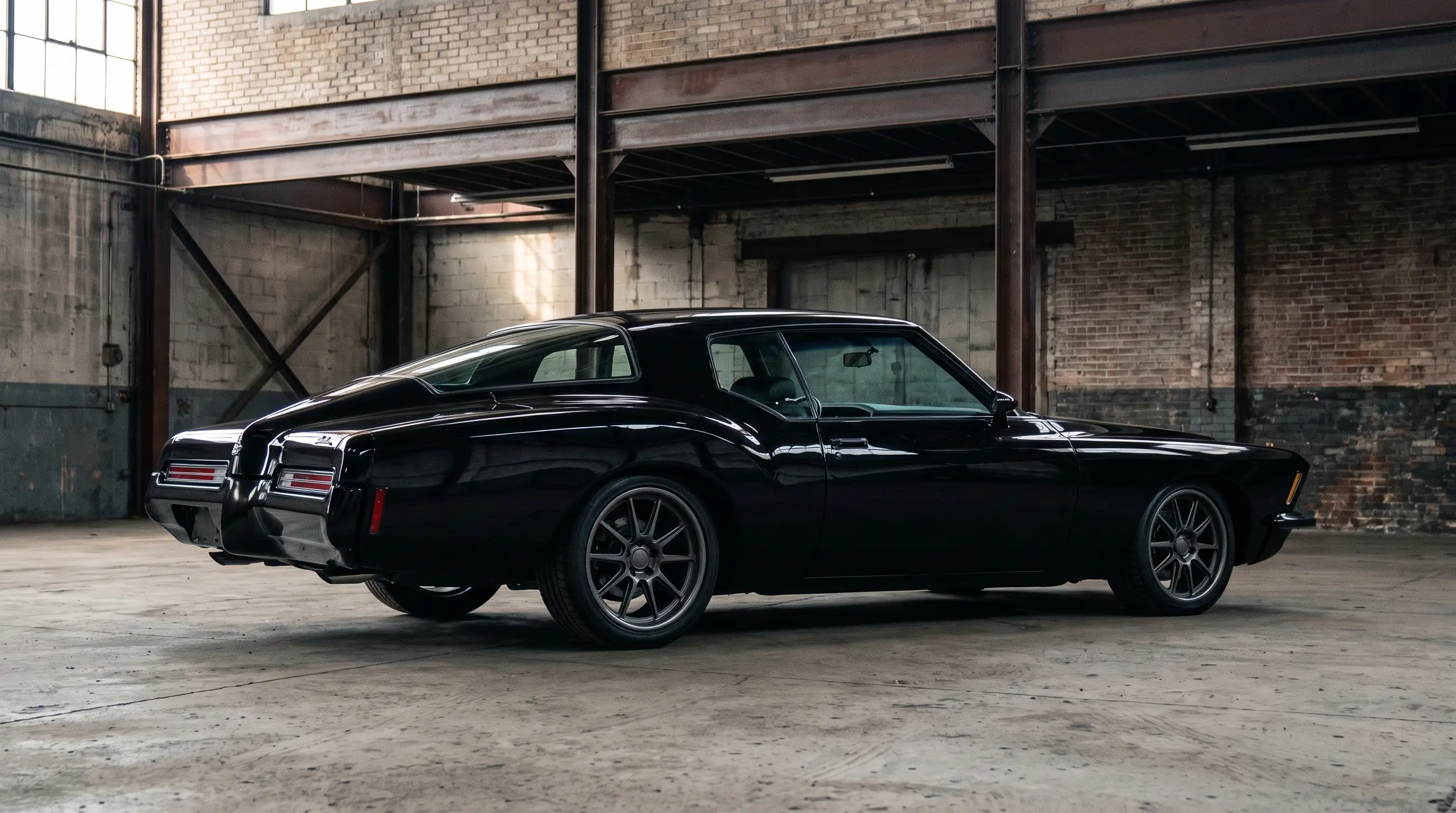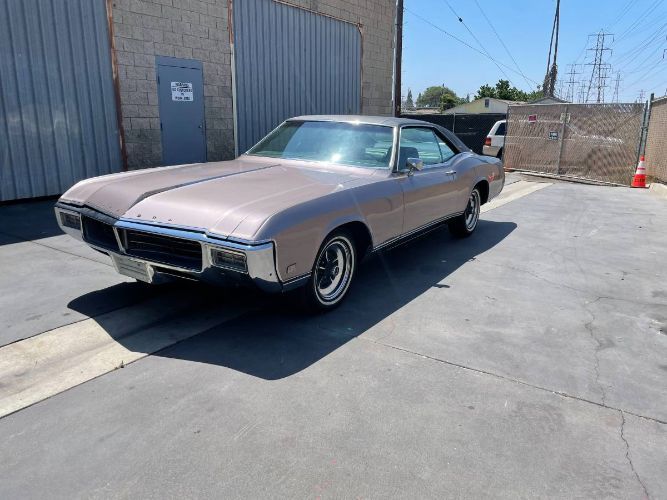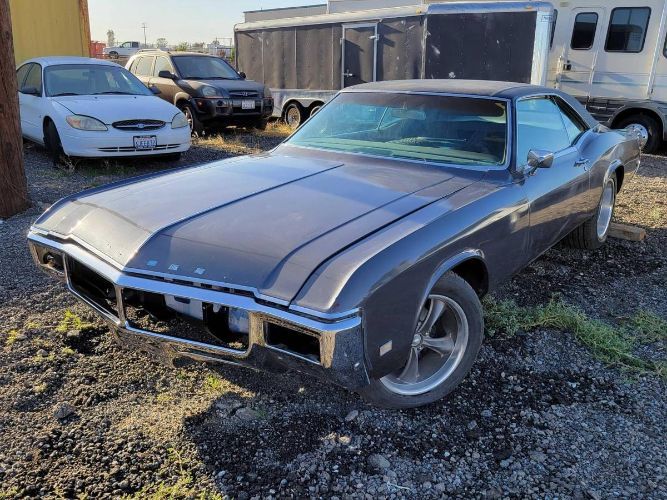
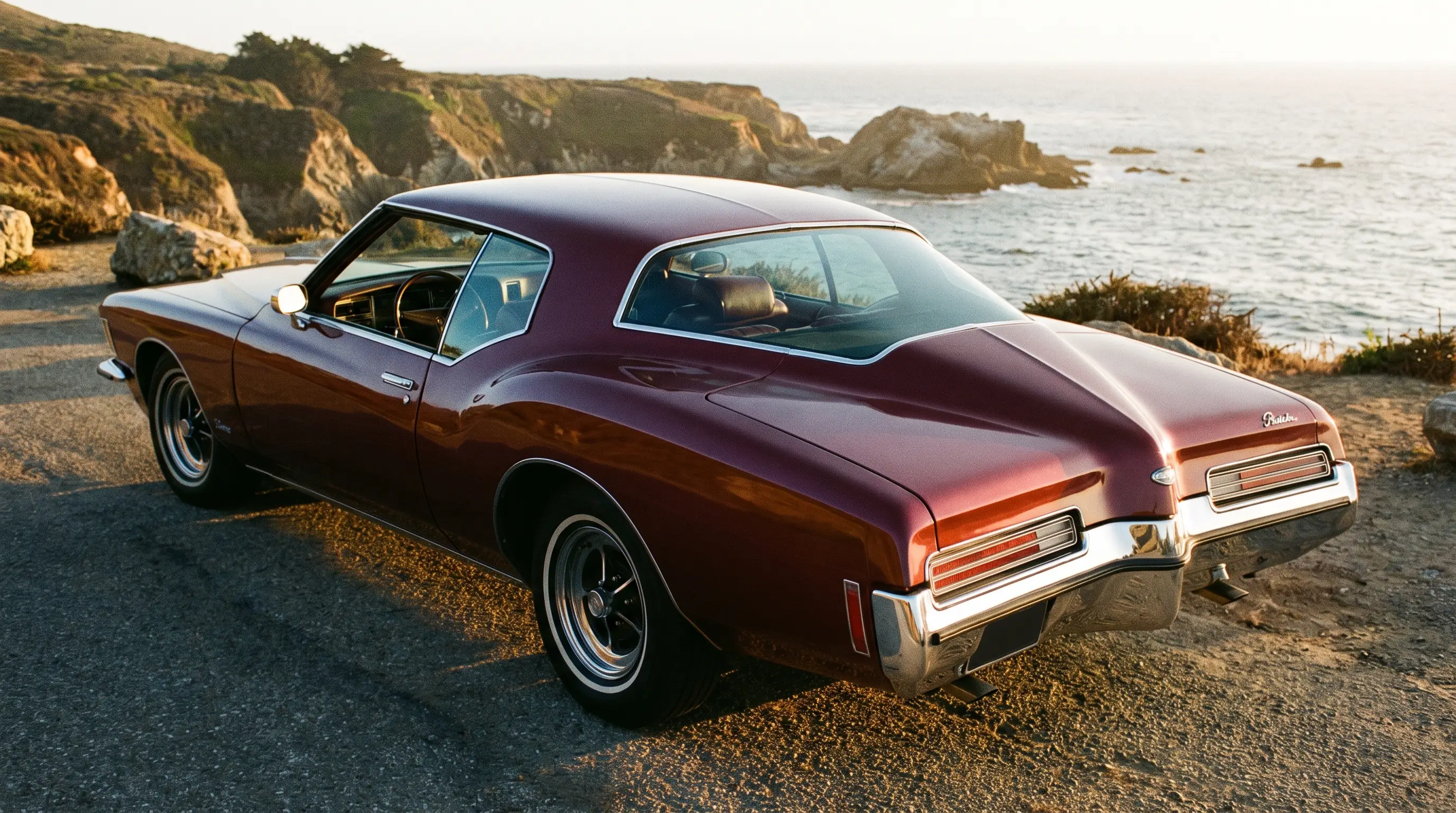
Ask ten collectors which classic Buick they would put money into and a surprising number will point straight at the buick riviera boattail most collectible look rather than anything wearing a muscle car badge. That is not sentiment talking. It is a read on scarcity, distinctiveness, and a design that has aged into exactly the kind of visual signature the current collector market rewards.
Why distinctiveness drives value here
Collector demand tracks distinctiveness more reliably than raw performance numbers, and the boattail Riviera scores high on distinctiveness in a way few American coupes from this era can match. Nobody mistakes that tapering rear deck for anything else on the road, not even its own platform mates from Cadillac and Oldsmobile. That visual uniqueness matters more to long term value than a horsepower figure that any number of period muscle cars could match or beat.
The market has increasingly rewarded cars that look like nothing else over cars that were simply fast for their era, and the boattail benefits directly from that shift in collector taste over the last decade or so.
Production numbers and what they mean for scarcity
Buick built the boattail Riviera across three model years, 1971 through 1973, in production numbers that were never enormous to begin with, running around 33,810 cars in 1971 and roughly 33,728 in 1972 with a comparable number in 1973, and those totals have only shrunk further through decades of attrition, accident damage, and rust claiming cars that were never treated as future collectibles when they were simply used, secondhand personal luxury coupes.
| Model Year | Standout trait | Collector read |
|---|---|---|
| 1971 | Purest tapering rear deck, tucked bumper | Most sought after by design purists |
| 1972 | Minor trim and grille updates | Strong middle ground, slightly overlooked |
| 1973 | Heavier federally mandated rear bumper | Less pure shape, often the value entry point |
How condition and documentation move the number
As with any collector car in this price range, condition and paperwork move the final number more than any single spec ever will. A boattail with matching numbers, original color combination, and a clean ownership history commands a real premium over a repainted, mismatched example even if both cars drive identically. The Gran Sport package, where documented, adds another layer of desirability, since it signals the original buyer chose the sportier tuning on top of an already bold design statement.
Buyers should be honest with themselves about what they are actually purchasing. A boattail bought for the shape alone, without matching numbers or strong documentation, is still a legitimate collector car, just one priced closer to the middle of the market than to the top of it.
The Gran Sport premium and how it holds up
The Gran Sport package deserves a closer look on its own, since it sits at an interesting intersection of performance credibility and design purity within this model. A documented Gran Sport boattail, with the dual exhaust, firmer suspension tuning, and correct badging intact, tends to draw interest from two different buyer types at once. Performance minded collectors want the sportier tuning, while design purists want the visual completeness of a car wearing every trim piece Buick originally specified for the package. That overlap in demand is part of why Gran Sport cars command a consistent premium over standard boattail Rivieras in the same condition.
The catch for buyers is verification. Gran Sport badging and trim pieces get added to non Gran Sport cars often enough that documentation matters as much as the parts on the car themselves. A buyer paying a Gran Sport premium without production records or a clear paper trail is taking on real risk that the car is not quite what its badges claim.
Reading auction results with a critical eye
Auction results for this model swing more than buyers expect between nearly identical looking cars, and the gap almost always traces back to the same handful of factors: matching numbers, original paint versus repaint, interior originality, and whether the car carries a clean or a repaired history on that complex tapering rear sheet metal. Two boattail Rivieras that look similar in auction photos can sell tens of thousands of dollars apart once a knowledgeable bidder examines panel gaps and underbody condition in person. Recent results bear this out: a 1972 GS brought $44,000 at Mecum in Los Angeles while a 1973 GS sold for around $8,650 in poorer condition, and the top recorded sale for a boattail Riviera has reached $71,500, a spread that has nothing to do with the two cars looking similar in a listing photo.
That spread is exactly why I tell buyers not to shop this car purely off a price average pulled from auction aggregator sites. The range within this single model is wide enough that the average number tells you almost nothing useful about what a specific car in front of you is actually worth.
Where the boattail sits against its rivals today
Compared against the Cadillac Eldorado from the same years, the boattail Riviera has quietly become the more actively chased design object among collectors who prioritize visual distinctiveness over badge prestige, even though the Eldorado sold in stronger numbers when both cars were new. That gap between original sales volume and current collector enthusiasm is exactly the kind of setup that tends to reward patient buyers who bought before wider recognition caught up to a genuinely distinctive design.
I would not call the boattail undervalued at this point. Enough of the collector world has caught on to what makes this shape special that prices reflect real demand rather than an overlooked opportunity. But relative to some contemporaries with less distinctive styling and higher production numbers, the boattail still represents a fair trade of dollars for genuine design significance.
"Distinctiveness ages better than horsepower. The boattail Riviera is one of the clearer proofs of that rule in the entire personal luxury segment, and the market has been slowly catching up to it for years."
- David Mercer
What this means for a buyer today
If you are shopping this car as a long term hold rather than a quick flip, prioritize an early production 1971 example in original color with documented history over a later, heavier bumpered 1973 car at a lower price, unless budget genuinely forces the compromise. The design purity gap between those two model years is real, and the market has consistently priced that difference into auction results and private sale figures over the last several years.
If you want more on the buick riviera boattail, the full design history explains exactly why the earliest cars carry the premium they do. For the broader story of the Riviera nameplate that set this whole personal luxury lineage in motion, our complete history covers the ground this specific model year comparison does not. And if any of this has you ready to shop seriously, there are classic Rivieras on the market worth evaluating against everything above before you write a check.
Sources and notes
- Buick's Boattail Boulevard Cruiser Is Finally Catching On - Hagerty Media
- Boattail Beauty: A 1973 Buick Riviera - Hagerty Insider
- 1971 Buick Riviera Valuation - Hagerty
- 1973 Buick Riviera Valuation - Hagerty
- Buick Riviera 3rd Gen Market - Classic.com
- Das Boattail: The 1971-1973 Buick Riviera - Ate Up With Motor