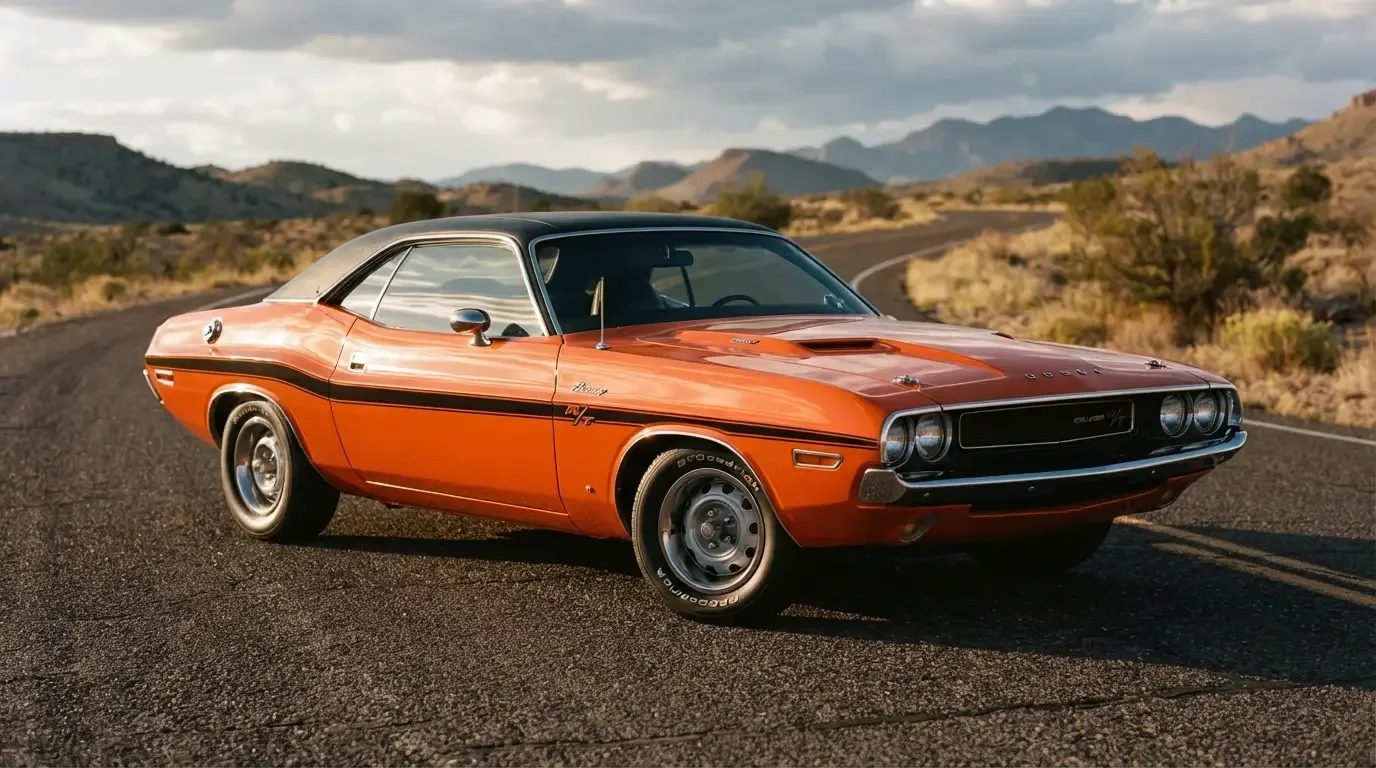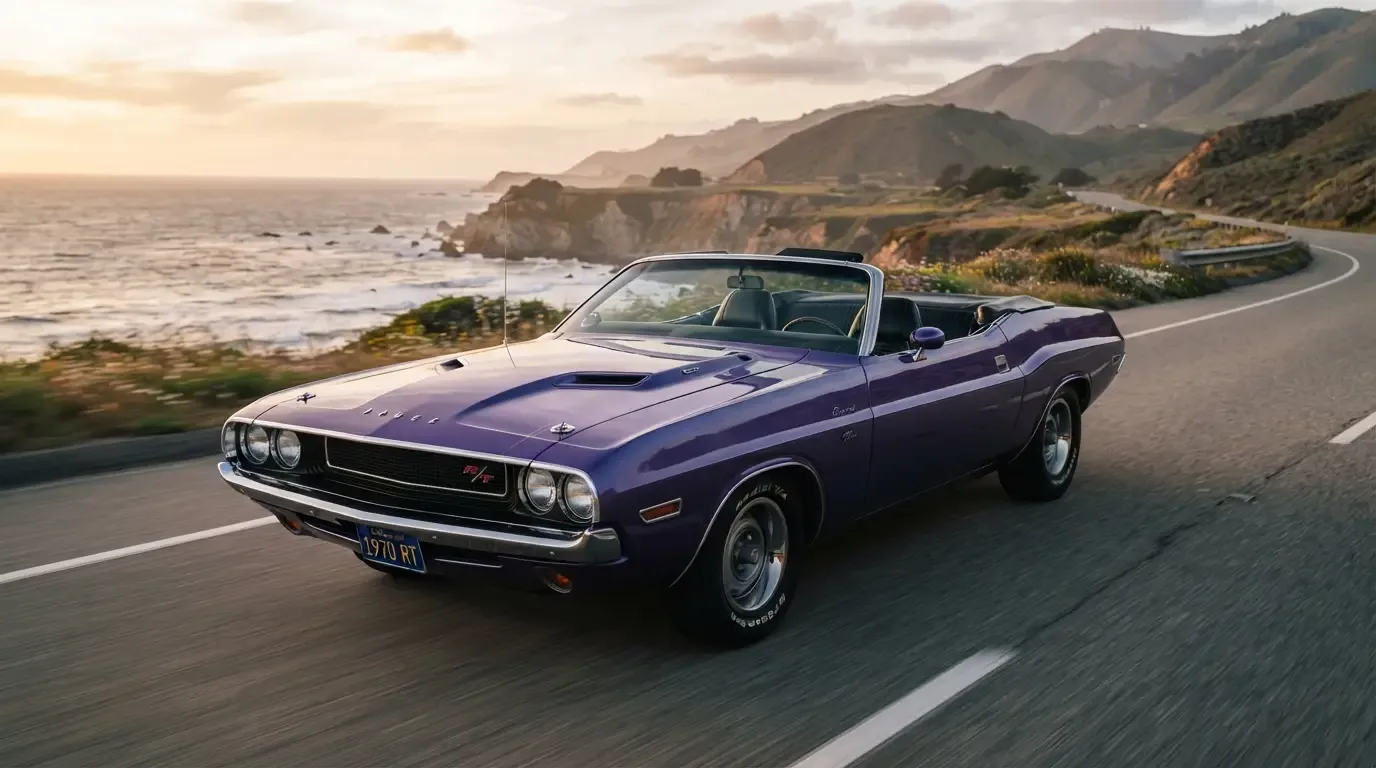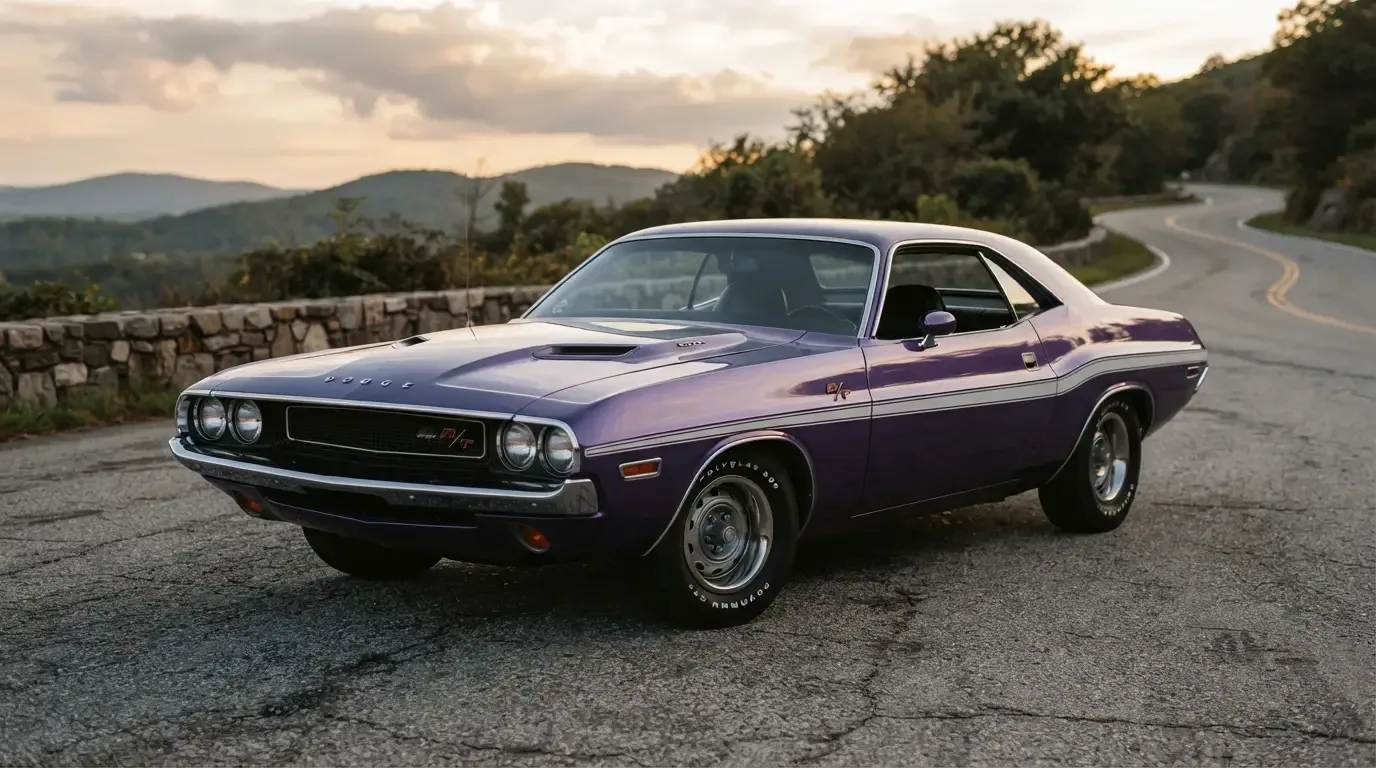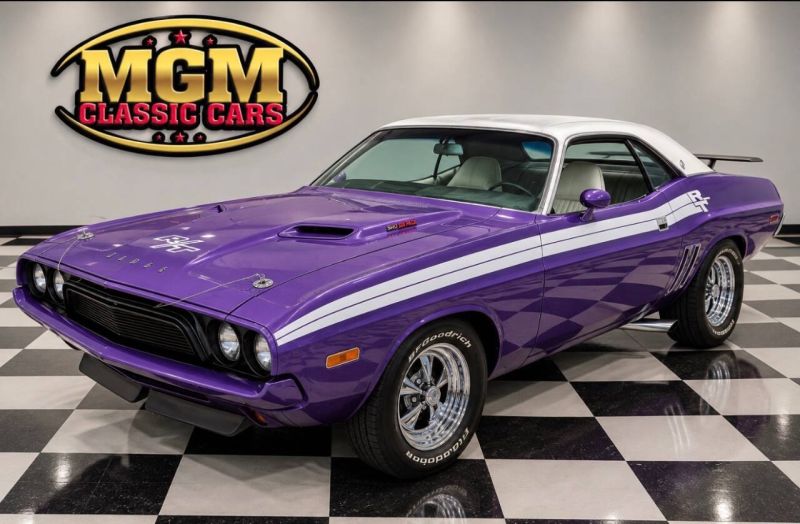
Production ledgers rarely make for exciting reading on their own, but the 1970 challenger production numbers tell a story that raw sales figures alone cannot. They reveal which trims Dodge buyers actually chose when the checkbook came out, which engine and body combinations turned out to be genuinely rare rather than just marketed as special, and how the Challenger's first full model year compares to the volumes its rivals were moving at the same time.
Total 1970 output and how it broke down
Dodge built the Challenger across coupe, hardtop, and convertible body styles for the 1970 model year, spread across the Base, R/T, T/A, and SE trim lines. Total 1970 production landed at roughly 76,935 units across every trim and body style, the strongest single season the Challenger nameplate would ever post. The overwhelming majority of that volume came from hardtop coupes in Base and R/T trim, the configurations that best matched everyday buyer priorities of value and reasonable performance without chasing the rarest possible specification.
Convertibles represented a small fraction of total production across every trim, consistent with the broader industry trend of declining open-top demand by 1970. The T/A, built specifically to satisfy SCCA Trans-Am homologation requirements rather than broad market appeal, was produced in the smallest numbers of any regular production trim that year, a scarcity baked into the model's purpose from the outset rather than a byproduct of weak sales.
Engine breakdown within the production totals
Within the R/T trim specifically, engine choice created enormous variation in surviving rarity. The 383 Magnum, as the standard R/T engine, accounted for the largest share of R/T production, while the step-up options grew progressively scarcer moving toward the top of the range. Dodge built around 356 Hemi-equipped Challengers for 1970 across every body style, with only about nine of those as R/T convertibles. Hemi-equipped cars represent a genuinely tiny fraction of total Challenger output for the year, a scarcity that has only become more apparent as collector interest in documented Hemi cars has intensified over the decades since.
The 440 Six Pack occupies a middle ground in this hierarchy, more common than the Hemi but considerably scarcer than the 440 Magnum or 383, and its distinctive three-carburetor induction system makes it instantly recognizable even to buyers with only modest familiarity with the model's engine options.
How Challenger volume compared to its rivals
Total 1970 Challenger production fell short of both the Camaro and Mustang for the same model year, a gap consistent with Dodge entering the pony car segment years after Ford and Chevrolet had already established their dealer networks and brand loyalty in the category. This lower overall volume works in the Challenger's favor today from a rarity standpoint, since fewer surviving examples across most configurations means genuine scarcity even for combinations that were not considered special at the time of original sale. You can read the background on the full 1970 Challenger story for how this production context fits alongside the car's launch and overall model year performance.
Why production data matters for authentication
Beyond satisfying curiosity, these production figures serve a practical purpose for anyone researching a specific car. Knowing how many T/A models, Hemi R/Ts, or convertibles Dodge actually built provides essential context when evaluating whether a specific car's claimed configuration is plausible, and cross-referencing production data against a car's individual fender tag and broadcast sheet is standard practice among serious appraisers and concours judges working with this era of Mopar. A seller claiming an extraordinarily rare combination deserves extra scrutiny precisely because the production numbers make clear just how few of those cars actually left the factory in the first place.
| Configuration | Relative rarity |
|---|---|
| Base hardtop | Highest volume |
| R/T with 383 Magnum | Common within R/T trim |
| R/T with 440 Six Pack | Moderately scarce |
| R/T with 426 Hemi | Extremely scarce |
| T/A | Low volume by design |
| Convertible, any trim | Low volume across the board |
"Production numbers are the foundation everything else in this hobby gets built on. Without knowing how many of a given configuration actually left the factory, you cannot judge rarity, and without judging rarity accurately, you cannot judge value with any confidence either."
- Sarah Whitfield
Reading production numbers with appropriate caution
It is worth noting that surviving factory production data from this era is not always complete or perfectly consistent across every source, and figures for specific engine and trim combinations sometimes vary slightly between references depending on how each source compiled its numbers. Treating these figures as a serious guide rather than an absolute final word is the more responsible approach, particularly for narrow subcategories like specific engine and transmission combinations where record-keeping from the period was less rigorous than modern collectors might prefer.
For buyers using production scarcity as part of their decision-making process, pairing that context with actual factory documentation on a specific car remains essential, and those ready to begin that search can find a classic Challenger currently listed for sale.
Color and paint code production data
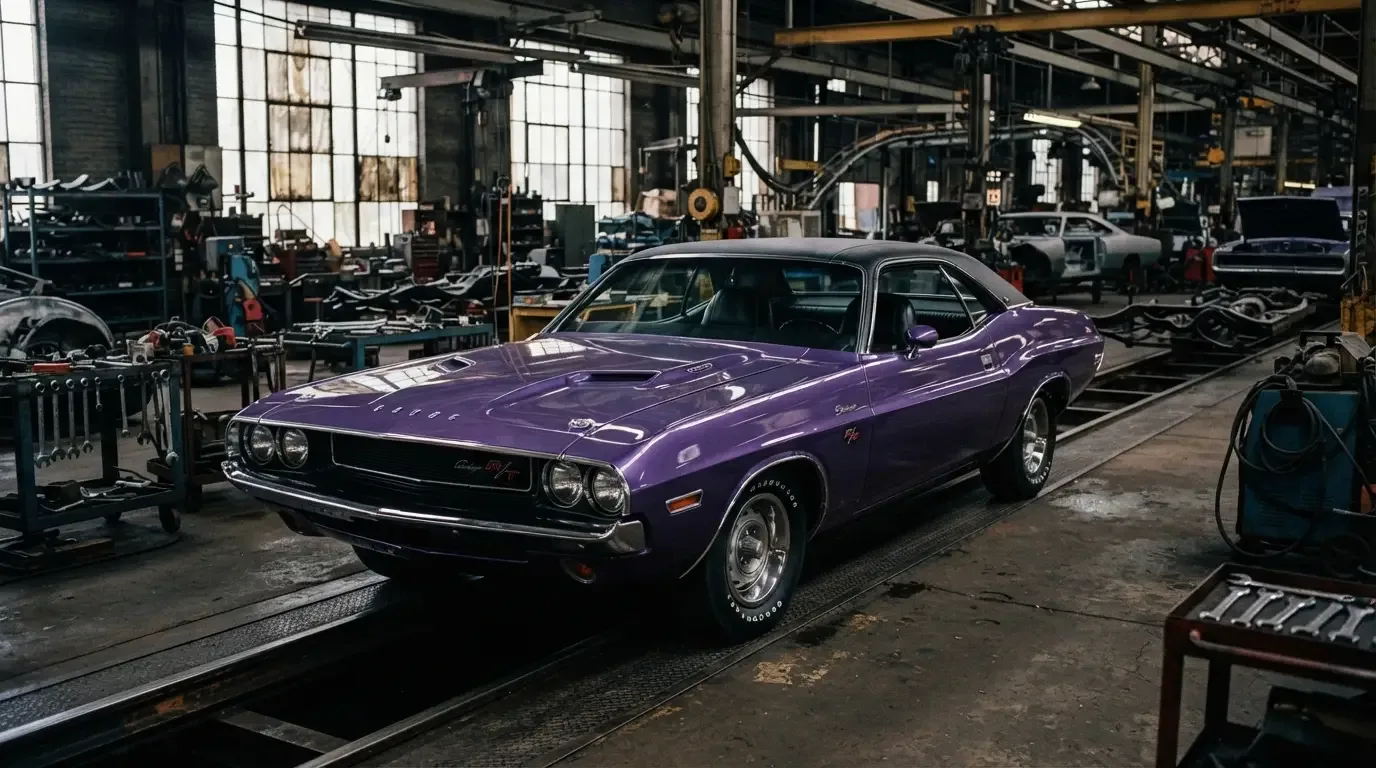
Beyond trim and engine, exterior color is another dimension of 1970 Challenger production that collectors track closely. Dodge's High Impact palette, including shades like Plum Crazy and Go Mango, was ordered by a comparatively small percentage of buyers relative to more conventional colors like black, white, or a range of standard reds and greens. That relative rarity means a Challenger built in one of the bolder High Impact shades, particularly when paired with a documented big-block engine, tends to draw outsized attention at auction compared to an otherwise identical car finished in a more common color. Paint code data recorded on the fender tag remains the definitive way to confirm original color on a car that may have been repainted at some point during its life, since color alone, without supporting documentation, is not sufficient evidence of originality.
Regional assembly and how it affected surviving numbers
Dodge built the 1970 Challenger across more than one assembly plant, and while the core specification remained consistent regardless of build location, minor variations in supplier parts and running changes did occur over the course of the model year as Dodge adjusted components in response to supply availability. These running changes are a secondary layer of complexity for anyone doing detailed production research, since a very early build car and a late model year car of the same nominal trim and engine combination may show small differences in hardware that only become apparent under close inspection. Serious researchers and concours judges account for these subtleties when evaluating originality, treating build date alongside trim and engine code as part of a complete picture rather than judging a car on any single data point in isolation. It is patient work, closer to archival research than casual car shopping, but it is exactly the kind of diligence that separates a confidently documented original from a car whose history has too many gaps to price with any real conviction.