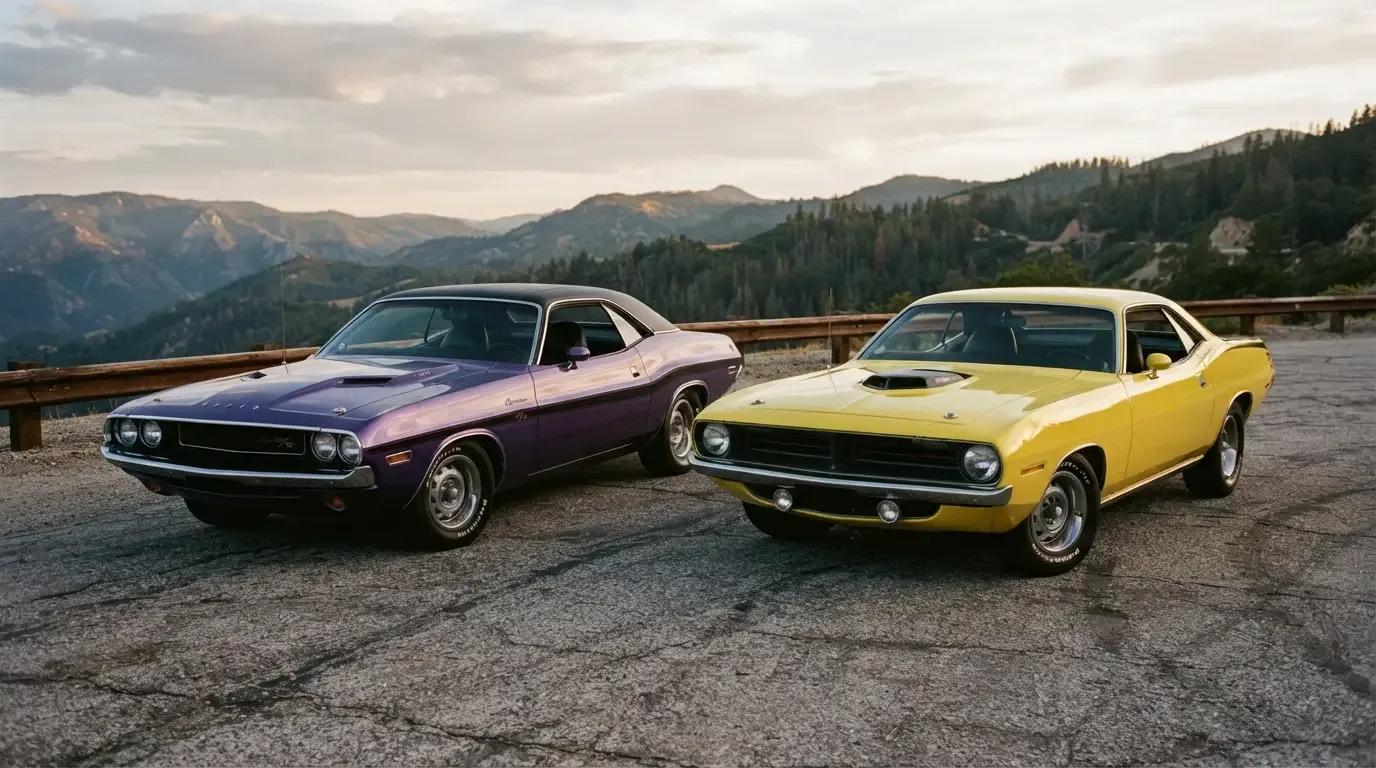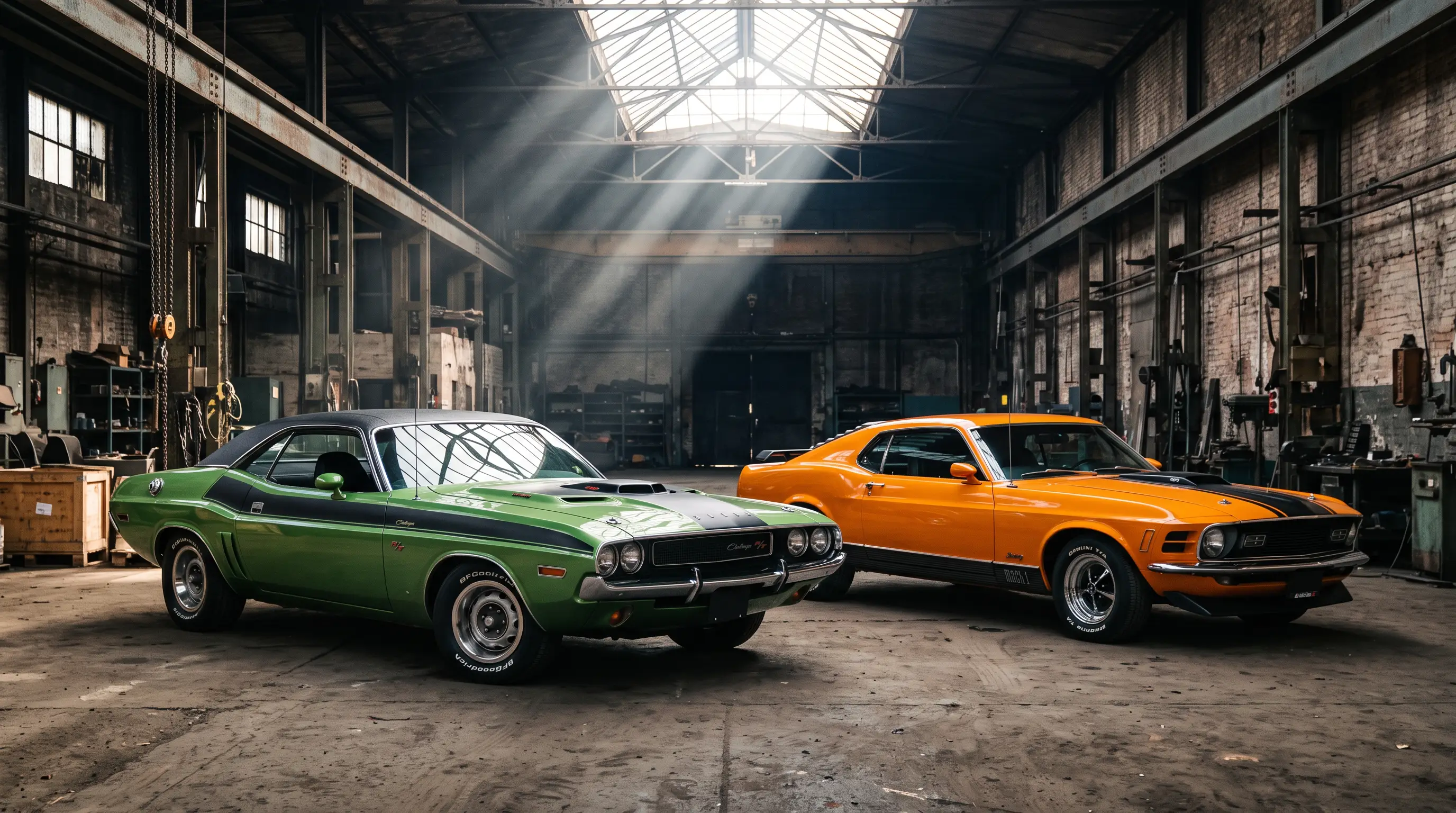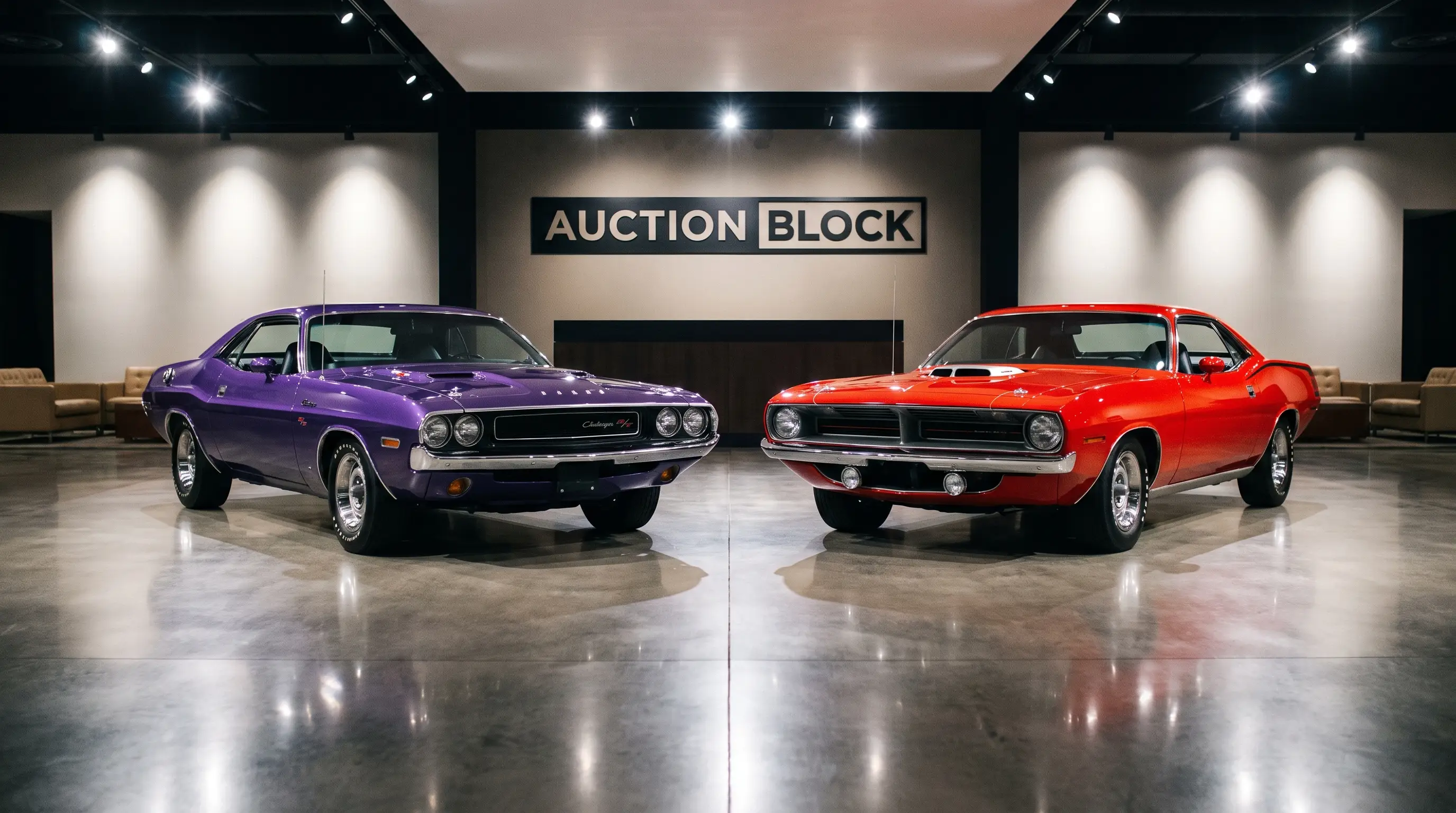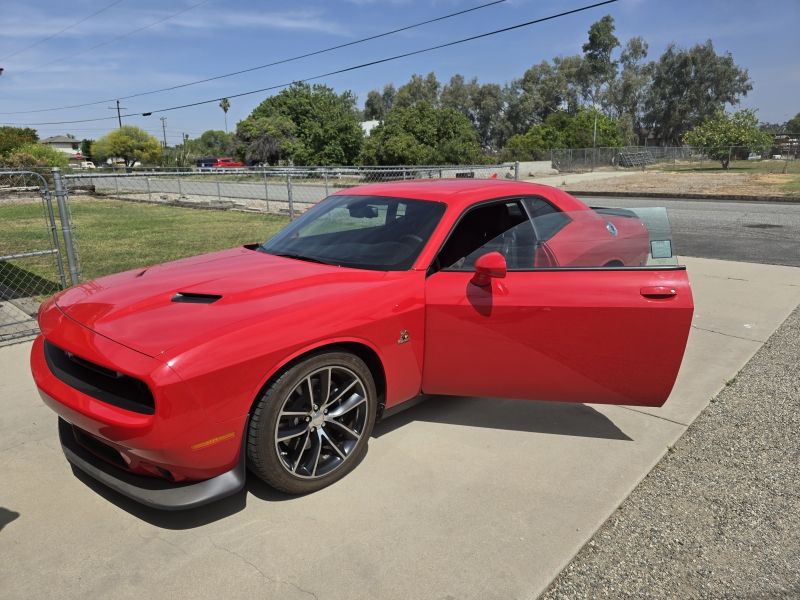
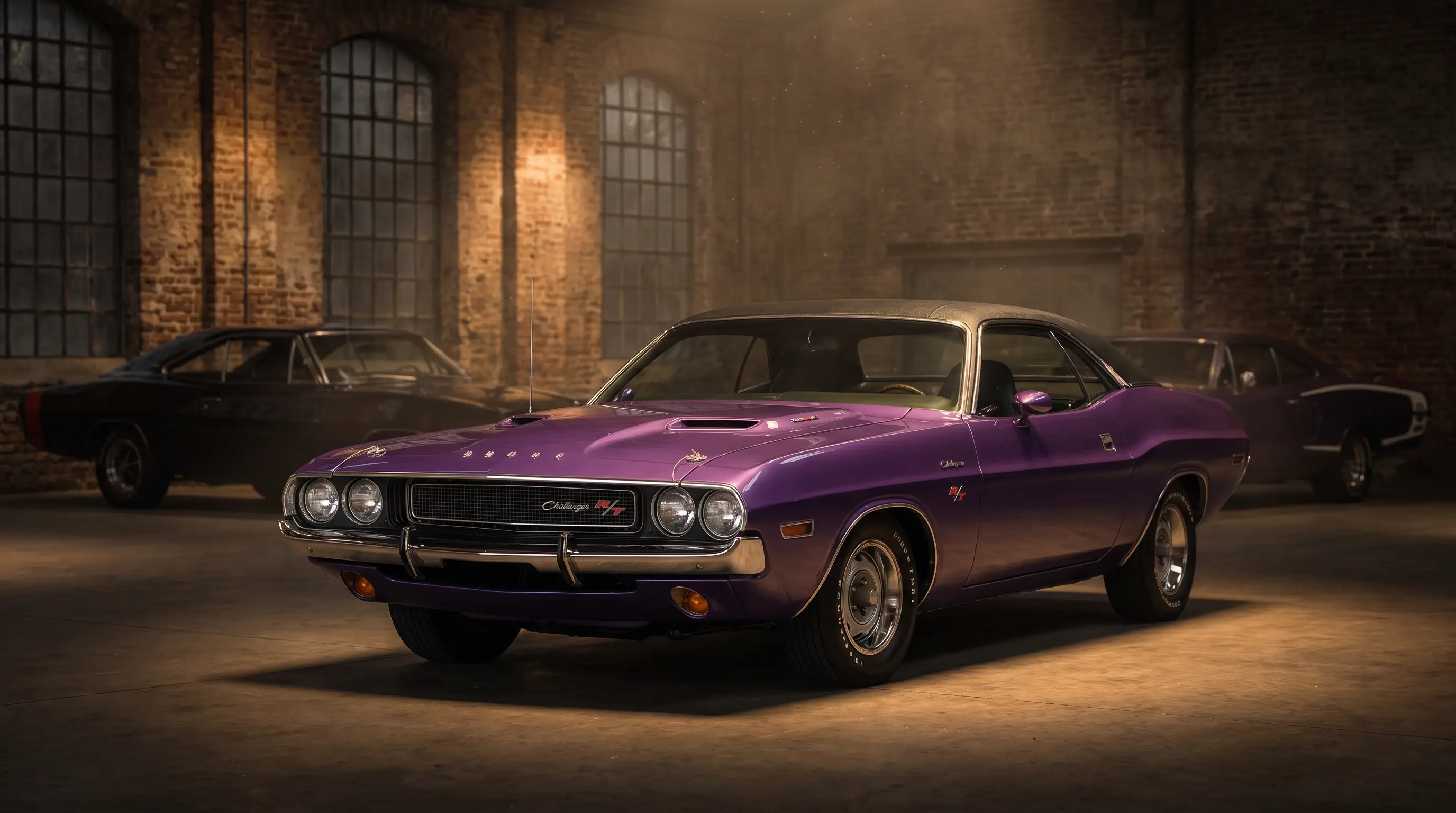
Ask any longtime wrench turner where the Challenger fits in the mopar muscle family and you'll get more than a one-word answer. This car didn't show up alone. It arrived as the last major addition to a lineup that already included the Charger, the Road Runner, the Super Bee, and the Cuda, and understanding where it slotted in tells you a lot about what Chrysler was actually trying to accomplish in those final years before emissions rules and insurance surcharges changed everything.
The late arrival with a specific job
By 1970, Chrysler already had muscle covered from nearly every angle. Plymouth's Road Runner offered stripped-down performance at a budget price. Dodge's Super Bee did the same for its own dealer network. The Charger gave buyers intermediate-size muscle with real back seat room, and the Cuda handled the aggressive end of the pony car segment for Plymouth. What was missing was Dodge's own answer in that pony car space, and the Challenger filled exactly that gap, arriving last among its siblings but built with the benefit of watching how the rest of the family had already performed in the market.
That late arrival meant the Challenger's engineers had real data to work from. They knew which engine combinations sold, which trim packages buyers actually ordered versus which ones sat on lots, and which competitors, both inside and outside Chrysler, were winning specific customer segments. The Challenger benefited from being the newest kid, even if that same lateness put it behind the Mustang and Camaro in overall market establishment.
Shared parts, shared engineering, one big family
Working under the hood of any of these cars, you notice fast how much hardware crosses freely between them. Engines, transmissions, rear ends, and a good portion of the suspension components came from the same Chrysler parts bin regardless of which badge sat on the hood. A mechanic who learned to rebuild a 440 out of a Road Runner already knew ninety percent of what he needed to service the same engine in a Challenger. That shared parts ecosystem is the practical backbone of why Mopar restoration culture today feels like one big extended garage rather than several separate, competing hobbies.
The 426 Hemi sat at the top of that shared parts pyramid, available across nearly every performance model in the family, Challenger included. That kind of engine-sharing across an entire model lineup was unusual even by the standards of an era when platform sharing was common. Chrysler let its performance flagship engine reach almost every corner of its muscle car range, and the Challenger got full access to it despite arriving last to the party.
"I've rebuilt engines out of a Super Bee, a Road Runner, and a Challenger in the same month using half the same tools and parts. That's not coincidence. That's Chrysler building one big family instead of five separate cars."
- Mike Sullivan
Where the Challenger stood out from its siblings
Despite all that shared hardware, the Challenger carved its own identity within the family through its E-body platform, shared only with the Cuda and distinct from the B-body underpinnings of the Charger, Road Runner, and Super Bee. That platform difference meant the Challenger occupied a genuinely separate market position from its own Dodge siblings, competing in the tighter, sportier pony car space while the Charger and Super Bee fought in the larger intermediate muscle car category.
This internal positioning meant Dodge dealers could offer a buyer walking through the door three genuinely different muscle car experiences under one roof, the family-friendly Charger, the budget-focused Super Bee, and the sporty Challenger, without any of them directly cannibalizing the others' sales. That's smart product planning, executed at a company that sometimes gets criticized for internal competition between its own divisions but clearly got this particular lineup segmentation right.
Why the family context matters for owners
Understanding the Challenger's place in this broader lineup changes how you think about parts sourcing, community, and even value. Owners chasing rare trim pieces often find success looking across the wider Mopar muscle family rather than restricting their search to Challenger-specific suppliers, because so much hardware crosses freely between siblings that shared a parts bin fifty years ago.
It also explains club culture. Many owners belong to Mopar-wide organizations rather than Challenger-only clubs, because the knowledge base, the swap meets, and the restoration expertise span the whole family rather than staying siloed by nameplate. For the full story on how the Challenger's closest sibling compares directly, that piece digs into the E-body half of this family in detail.
Insurance and the end of the family gathering
The good times for this whole family didn't last long, and that's worth remembering too. Insurance surcharges on high performance engines started climbing hard in the early 1970s, right around the same time emissions regulations began forcing horsepower ratings down across the board. The Challenger, arriving last, got the shortest run of any sibling in the family at full performance strength before those pressures started reshaping what Chrysler could reasonably offer.
That short window is part of why certain early Challenger configurations, especially Hemi-optioned cars from 1970 and 1971, carry such weight in the collector market today. They represent the tail end of an era when Chrysler could still build across its whole muscle car family without compromise, before insurance companies and federal regulators started dictating what the next generation of Mopar performance would look like. Every sibling in that family felt the same squeeze at roughly the same time, which is one more thing that ties their histories together even as each nameplate went its own separate direction afterward.
Bringing a piece of the family home
Whether you end up chasing a Challenger specifically or find yourself drawn to one of its Mopar siblings along the way, understanding how this whole family fits together makes you a sharper buyer and a more capable owner. Parts knowledge, club connections, and even resale value all benefit from thinking about these cars as one interconnected family rather than five isolated nameplates competing for the same attention.
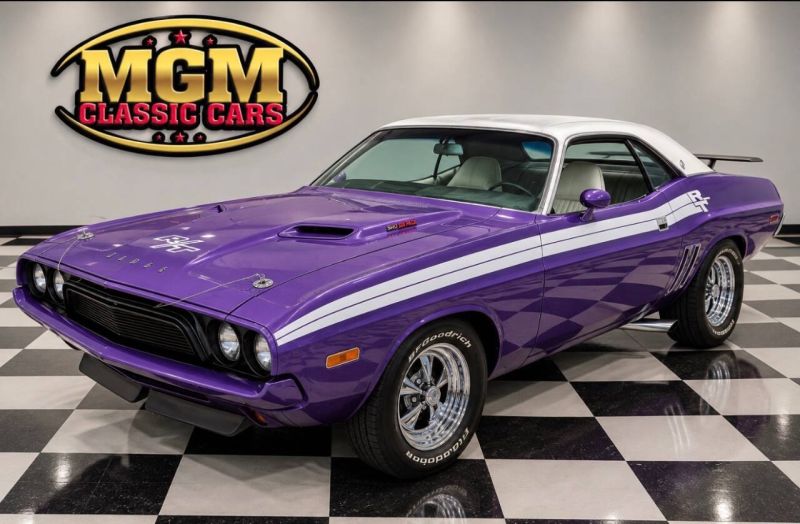
If the Challenger's specific spot in that family, the sporty pony car answer built on shared Chrysler muscle, is the one that's calling to you, you can browse classic Challenger listings and start comparing real examples. Whatever engine, trim, or condition you settle on, you're buying into a lineage that shares more DNA with its Mopar siblings than most casual observers ever realize.