
Dodge did not build the 1970 Challenger T/A because a stylist had a good idea on a Tuesday. The car exists because of a rulebook. The Sports Car Club of America required manufacturers competing in the Trans-American Sedan Championship, better known as Trans-Am, to sell a street version of any car they wanted to race, and that requirement is the entire reason challenger ta homologation talk still comes up whenever someone explains what makes the T/A different from a garden variety Challenger R/T.
Car Features
7 min read
Why Dodge Built the T/A: Homologation Explained
The Challenger T/A only exists because SCCA Trans-Am rules required a street version of any homologated race car, and that requirement shaped nearly every unusual detail on the T/A.
What homologation actually required
The SCCA's Trans-Am rules for the Over 2.0-Liter class capped engine displacement at 305 cubic inches for the race cars, well under the 340s and 383s that Detroit was putting in its street muscle cars by 1970. To make sure the racing stayed connected to cars people could actually buy, the 1970 rules required a homologated production run equal to 1/250th of a manufacturer's prior year output, with a 2,500 unit floor. In practice that worked out to roughly 2,800 units for Dodge, alongside 8,200 for Chevrolet, 7,000 for Ford, and 2,500 each for Plymouth and American Motors. The idea was simple even if the paperwork was not. If you wanted to race a car in Trans-Am, you needed to prove regular people could walk into a dealership and buy something closely related to it.
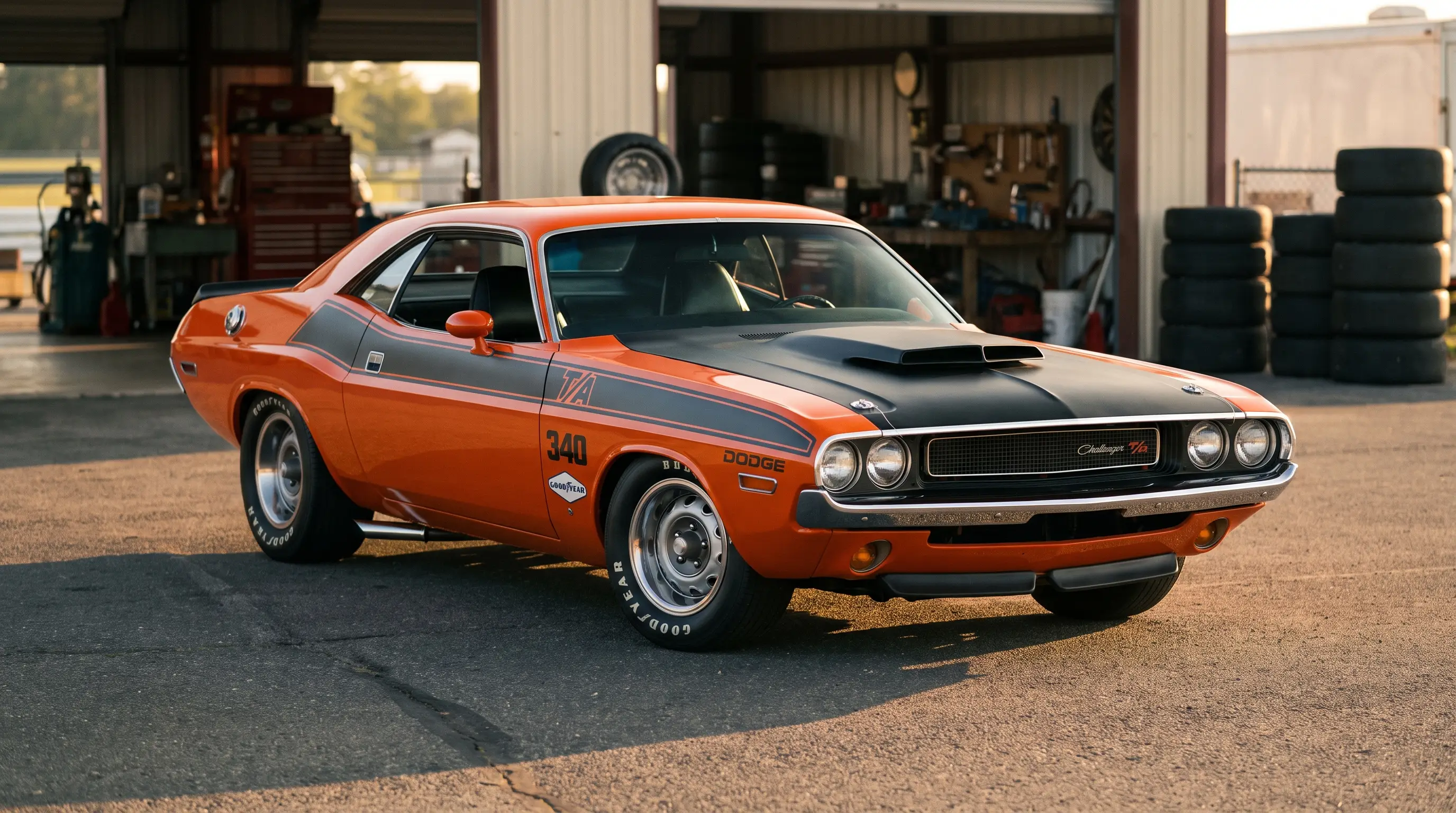
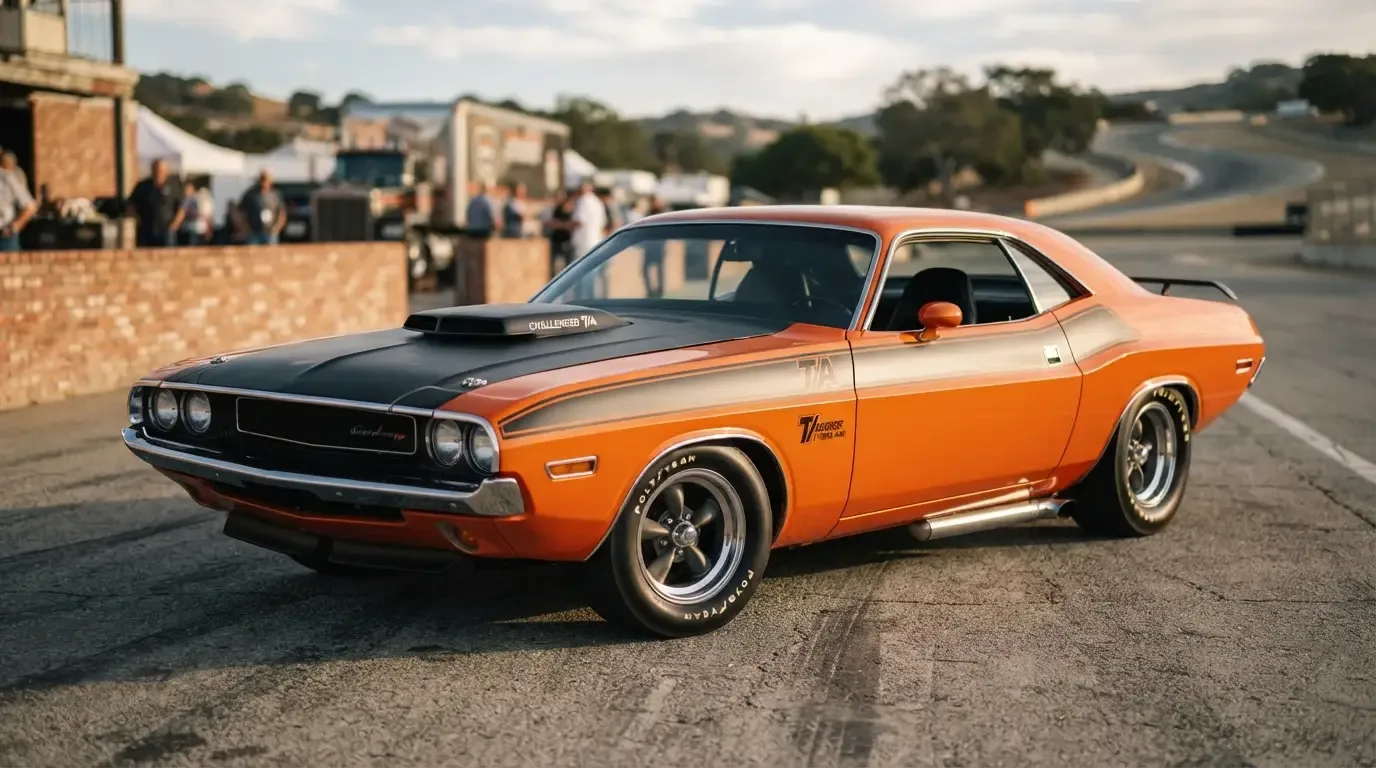
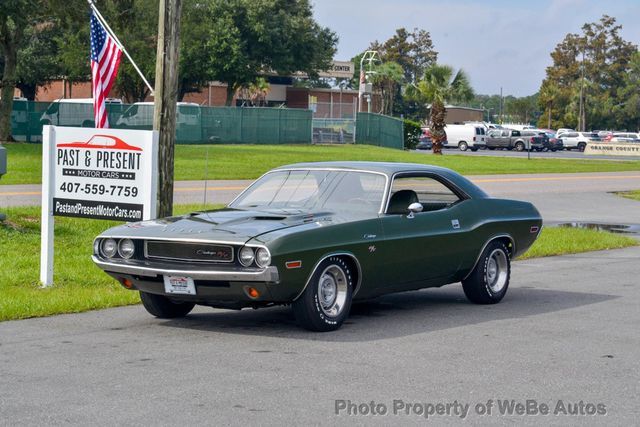
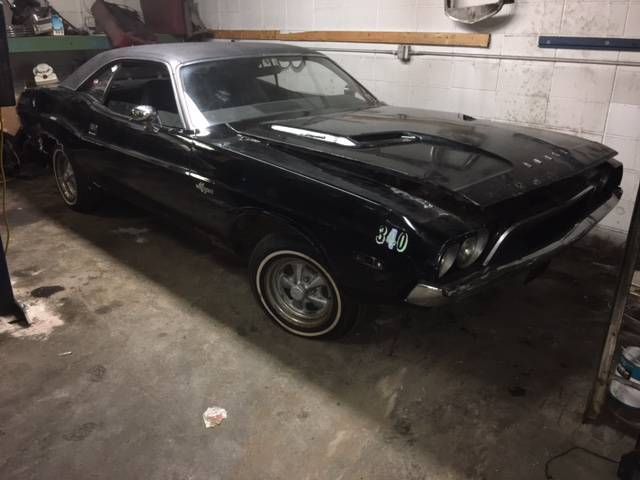
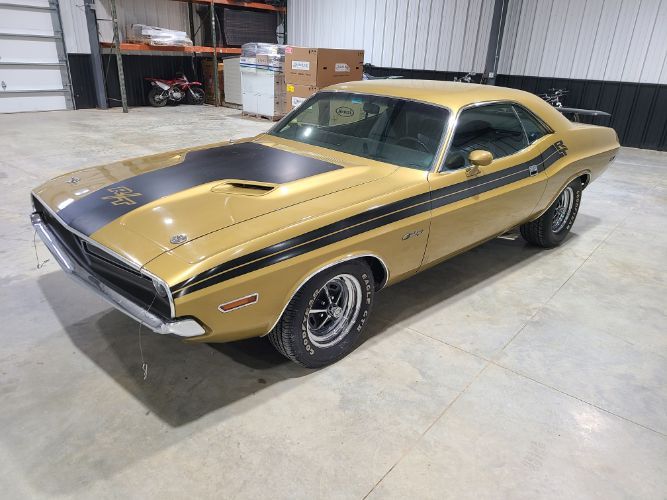
Dodge's answer was the Challenger T/A, built specifically to satisfy that rule while giving Chrysler a Trans-Am entry that could compete with the Mustangs, Camaros, Javelins, and Barracudas already racing in the class. The T/A borrowed styling cues directly from the race program: a fiberglass hood with functional scoop, side exit exhaust ahead of the rear wheels, staggered tire sizes front to rear, and a matte black hood panel that echoed the anti-glare treatment race teams used.
The 340 Six Pack engine that made it legal
Under the hood, the production T/A got a 340 cubic inch V8 fitted with three two-barrel Holley carburetors on an Edelbrock aluminum intake, an unusual factory setup that Dodge marketed as the Six Pack. Chrysler rated it at 290 horsepower, a figure most enthusiasts and period magazine testers considered conservative even by the loose standards of factory horsepower ratings in 1970. The Six Pack setup was distinctive enough that it became one of the T/A's signature features independent of the racing connection, since nothing else in the Challenger lineup got that induction system.
The actual Trans-Am race cars ran a destroked version of the 340, brought down to 305 cubic inches to meet the class limit, so the street car's 340 and the race car's 305 were related engineering exercises rather than the same engine wearing different badges. That distinction gets lost in casual conversation about the T/A, but it matters if you are trying to understand what homologation actually bought Dodge on race day versus what it put in a customer's garage.
Why the rule existed in the first place
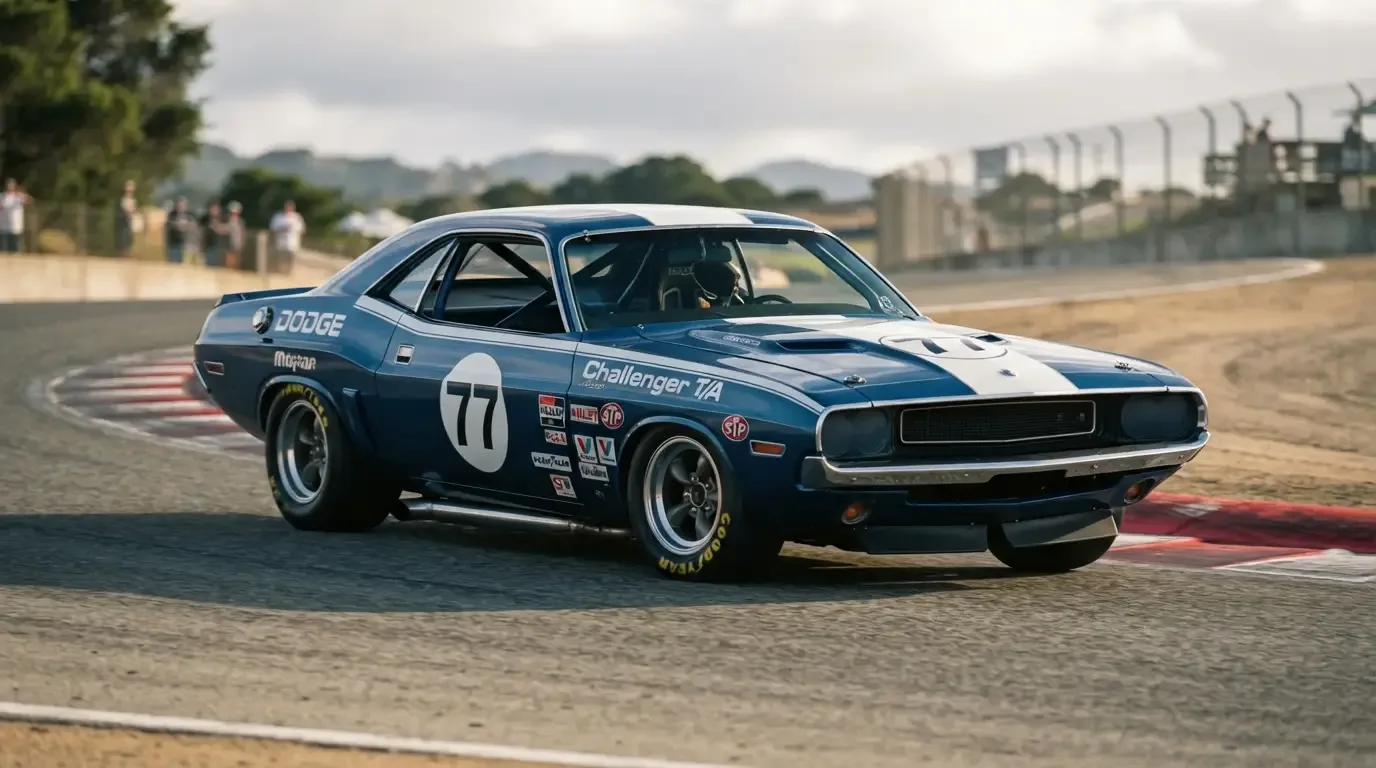
Trans-Am organizers wanted a series that felt relevant to showroom shoppers, unlike purpose-built sports prototypes that bore no resemblance to anything a fan could buy. Homologation rules were the mechanism for keeping that connection intact. In theory, a fan watching Sam Posey race a Challenger T/A could go to a Dodge dealer and buy a car that at least looked and sounded like what was on track, even if the mechanical specification underneath diverged in the details. That marketing logic is exactly why manufacturers were willing to spend real engineering budgets on street cars built to satisfy a racing rule rather than to maximize sales volume on their own merits.
It is worth remembering that the T/A was never going to be a big seller on its own terms. It was a narrow, focused product built to check a box, and Dodge knew that going in. The interesting part of the story is not that Dodge built a homologation special, plenty of manufacturers did that in this era, it is how completely the resulting car's identity got shaped by racing requirements rather than showroom demand. If you want more on the dodge challenger ta, the production car itself is worth its own deep dive beyond the homologation angle.
How the rule shaped what buyers actually got
Everything distinctive about the T/A traces back to homologation necessity rather than styling committee whim. The side exhaust exists because the race cars needed it for weight distribution and ground clearance reasons under hard cornering. The staggered tires, a smaller front and wider rear combination, mirrored the handling setup race engineers wanted for a car built to turn left and right at speed rather than just launch in a straight line. Even the matte black hood was functional first, glare reduction for a driver staring down a hood at 130 miles an hour, and stylish second.
"People assume the T/A's weird hardware is just 1970 excess. It's not. Every piece of it traces back to a line in the SCCA rulebook. That's what homologation does, it turns a lawyer's paragraph into a car."
- Patrick Walsh
How other manufacturers solved the same problem
Dodge was not alone in treating Trans-Am homologation as a design brief. Ford's Boss 302 Mustang, Chevrolet's Z/28 Camaro, and American Motors' Javelin Trans-Am all trace back to the same basic requirement, a street car built specifically to unlock a racing program rather than to chase a particular sales target. Comparing how each manufacturer solved that problem is instructive. Some leaned harder into engine specification, others into aerodynamic aids, and Dodge's answer with the T/A leaned into a fairly complete package that touched the drivetrain, the exhaust, the suspension stance, and the graphics all at once rather than emphasizing any single area.
That comprehensive approach is one reason the T/A reads as more of a cohesive statement than some of its homologation rivals, which sometimes felt like a standard model with a handful of go-fast parts bolted on to clear the rulebook. Whether that made the T/A a better street car is a separate question from whether it made a better homologation special, and reasonable people who know this era well disagree on the answer.
The paperwork side of homologation
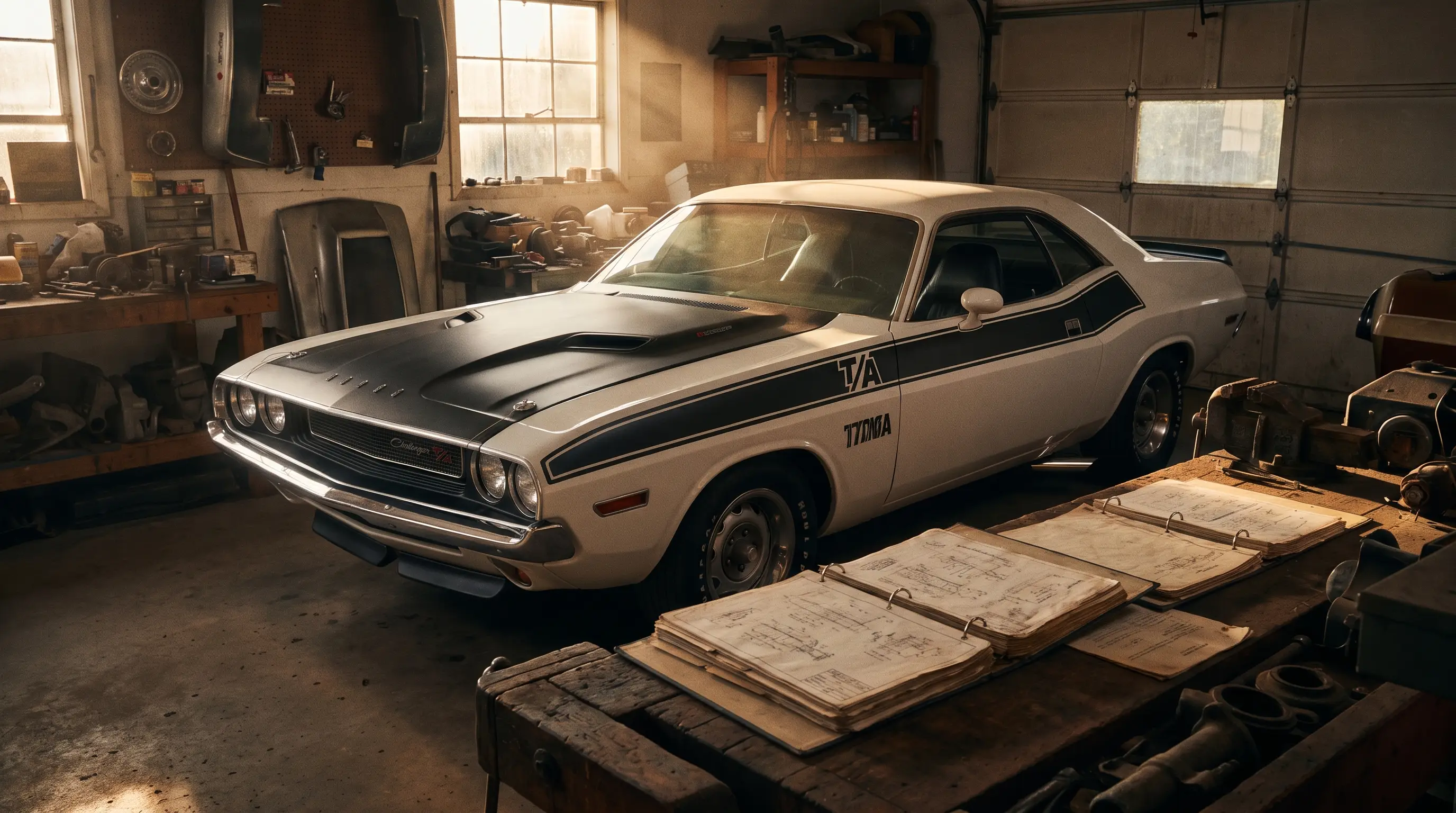
Satisfying an SCCA homologation requirement was not just an engineering exercise, it also involved a genuine paper trail with the sanctioning body confirming that the required production run had actually been built and sold through normal dealer channels. That paperwork is part of why serious T/A researchers care so much about build documentation today. The same records that proved to the SCCA in 1970 that Dodge had met its homologation obligation are, in a roundabout way, the ancestors of the fender tags and broadcast sheets collectors now use to verify an individual car's authenticity fifty years later.
What this means if you are shopping for one now
Understanding the homologation background changes how you evaluate a T/A on the market today. A car with its original Six Pack induction, correct side exhaust, and factory stripe package is not just well optioned, it is a more complete example of what the homologation rule actually produced. Reproduction parts exist for nearly every T/A specific component because so many cars were modified or had parts swapped over five decades, so originality on these specific items carries real weight with buyers who understand the backstory. For where the Challenger nameplate itself began before the T/A ever existed, it helps to know where this started, and from there you can look at classic Challengers on the market to see how T/A examples are currently priced against the rest of the lineup.
Sources and notes
Related Reading

About the author
Patrick Walsh
Automotive journalist covering classic car shows, events, and the enthusiast community across North America.
Related Listings - Dodge Challenger



Comments
Be the first to comment on this article.