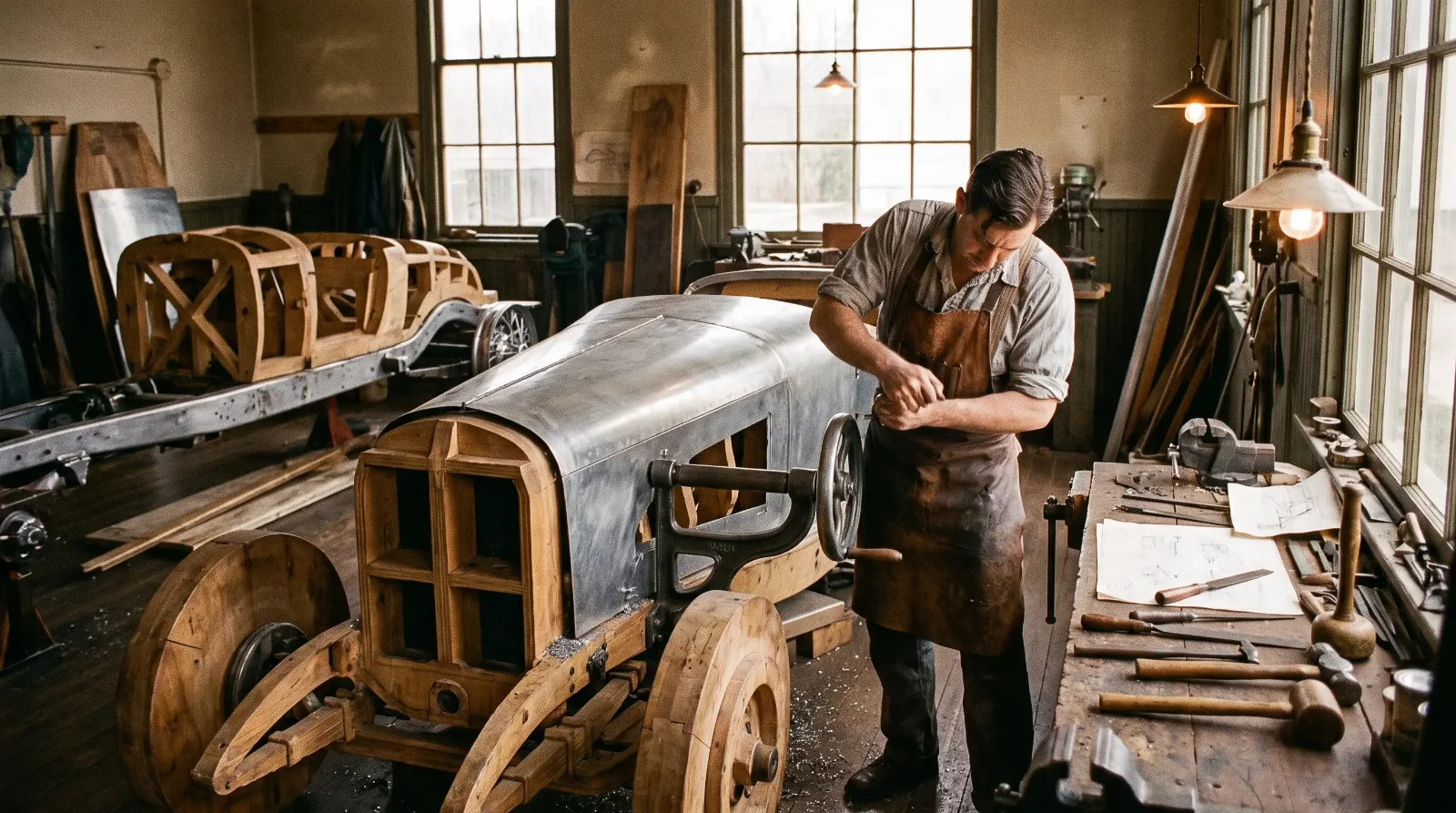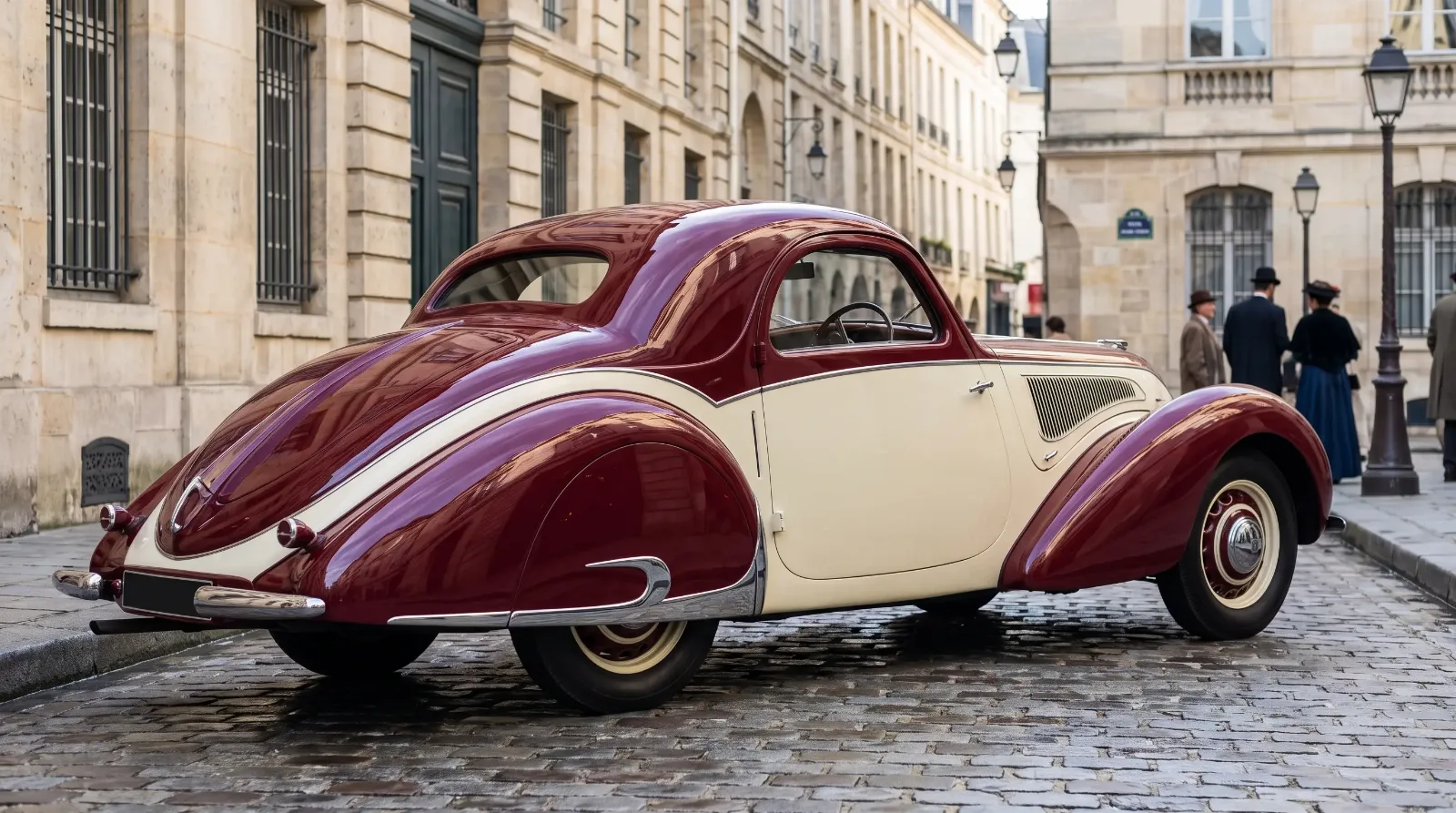
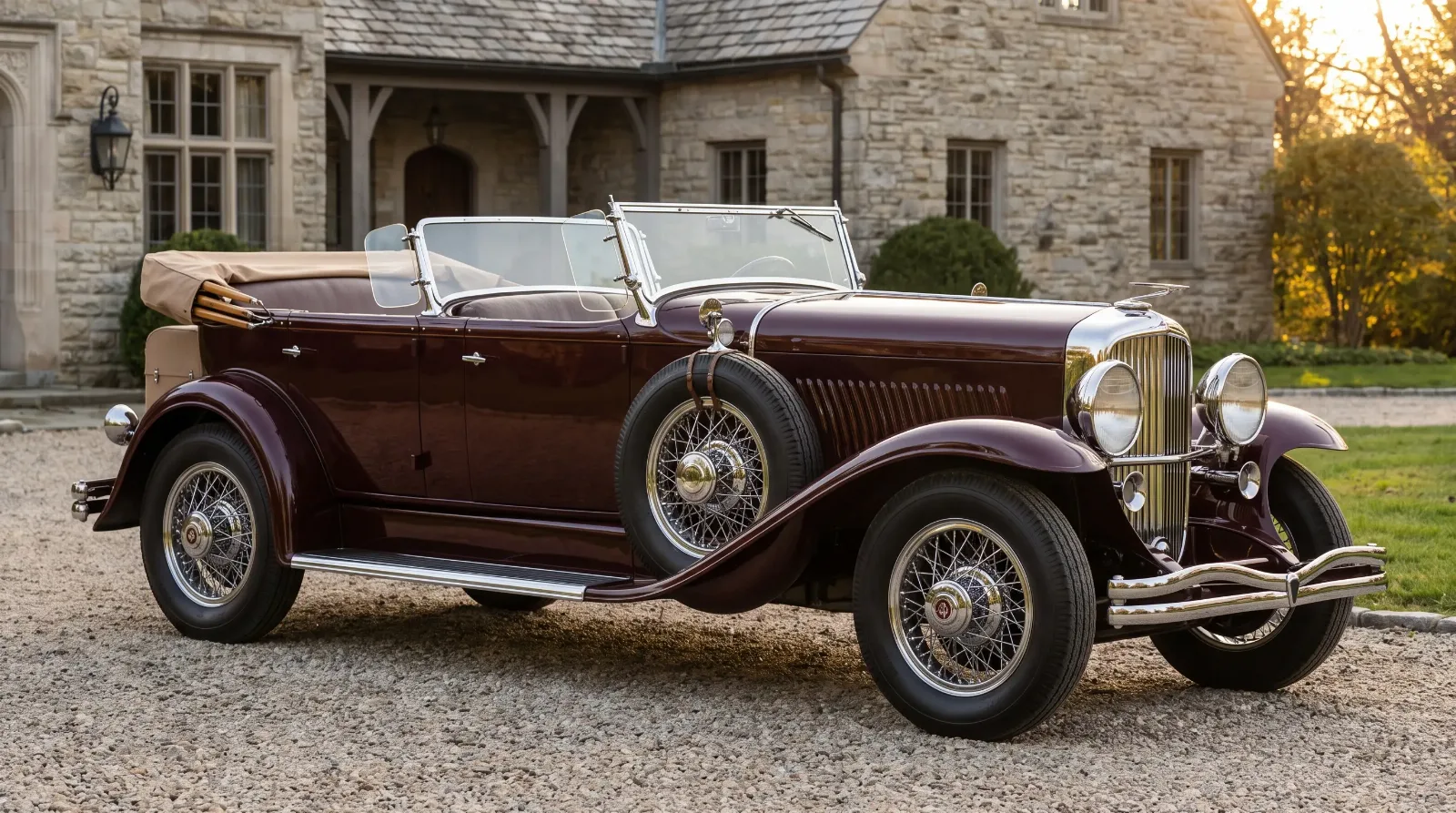
A dual-cowl phaeton is easy to describe and hard to build. Two windshields, one for the front seat and one for the rear, each with its own cowl rising out of the body to carry it. The rear passengers got their own wind protection and, on many examples, their own set of controls for the top and the side curtains. It sounds like a small thing. In practice it meant an entirely different body structure from a standard phaeton, and that is why the style became one of the most expensive things a coachbuilder could put on a chassis.
I look at coachwork the way a curator looks at furniture, as an object with a specific maker's hand in it, and the dual-cowl phaeton rewards that kind of attention. It was never a body style aimed at economy. It existed because a handful of buyers wanted an open car that still let the people in the back speak to each other without shouting over the wind, and were willing to pay for the extra cowl, the extra glass, and the extra labor that came with it. For the fuller account of how that arrangement fit into the wider coachbuilding trade, the dual cowl phaeton story covers the mechanics of custom bodies from the chassis up.
Why a second windshield changed everything
On a standard touring car or phaeton, the front windshield served everyone. Air that spilled over it reached the back seat roughened and full of eddies, tolerable at low speed and unpleasant once a car got moving. The dual-cowl solution split the body into two distinct compartments, each with its own raised cowl section and its own glass. The rear cowl was not a decorative add-on. It required its own metal structure, its own hinge points if it folded, and a body designer's care so the two cowls read as one continuous line rather than an afterthought bolted in the middle.
That structural demand is the real reason so few dual-cowl phaetons were built relative to other open styles. A coachbuilder could produce a standard phaeton body with one set of drawings and repeat it with small variations. A dual-cowl body needed a second full engineering pass, because the rear cowl had to clear the doors, the folding top mechanism, and the rear seat all at once, on a car that was still meant to look light and sporting rather than bulky.
There was also a mechanical consequence to all that extra glass and structure that buyers rarely think about. The added cowl, its framing, and the extra windshield glass put real weight high in the body, well above the chassis rails, at a point in the car where weight does the most to affect handling and top speed. A coachbuilder had to balance that added mass against the customer's expectation that the car would still feel sporting rather than ponderous, which meant careful choices elsewhere in the body, lighter door construction in some cases, or a narrower rear compartment than the chassis could technically support. None of that shows up in a photograph. It shows up in how the car actually drives, and it is one more reason the format never became common outside the wealthiest end of the market.
The chassis that carried them
Dual-cowl phaeton bodies appeared on the top rung of American chassis in the late 1920s and through the 1930s, most famously on Packard, Lincoln, Cadillac, and Duesenberg. These were long-wheelbase cars to begin with, which mattered, because fitting a full second cowl and a genuinely usable rear compartment needed the extra length that a shorter sporting chassis did not have. A Duesenberg Model J dual-cowl phaeton and a Packard Twelve dual-cowl phaeton share the format but read completely differently in person, since each coachbuilder interpreted the proportions against a different chassis and a different house style.
European coachbuilders built dual-cowl variants as well, though the format is remembered today mostly as an American idiom, tied to the era of the long chassis and the chauffeur-driven weekend car. A buyer who wanted to drive himself in front and carry guests in comfort behind, with everyone able to enjoy an open car, was the customer this style was built for.
Reading the body: what to look for
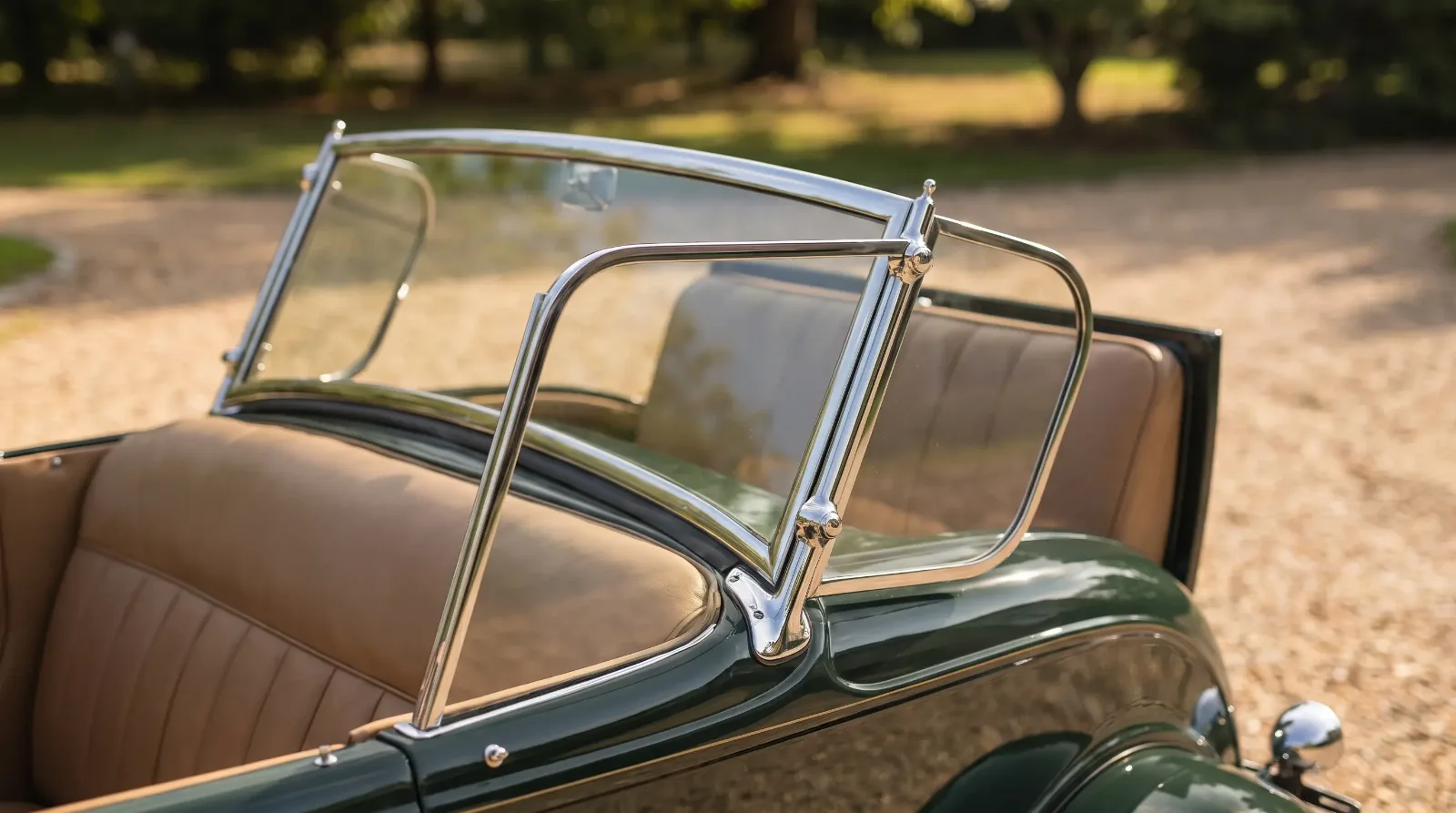
If you are trying to judge a dual-cowl phaeton in person, start with the rear cowl itself. It should rise cleanly out of the beltline, not look like a separate piece stitched onto the body afterward. Check that the rear cowl's glass, if present, matches the front windshield's rake and proportion. A mismatched angle is a sign of a later modification or a poorly executed recreation rather than an original design.
Next, look at the door and seat relationship. On a genuine dual-cowl body, the rear doors and seat were designed around the second cowl from the start, so the legroom and the cowl's intrusion into the compartment feel considered. On a car where a dual cowl was added after the fact, which did happen on some cars chasing higher values later in the century, the rear cowl often crowds the seat or sits at an angle that a period coachbuilder would not have accepted.
| Feature | Genuine period dual cowl | Warning sign |
|---|---|---|
| Rear cowl line | Continuous with body beltline | Visible seam or mismatched panel gauge |
| Glass rake | Matches front windshield angle | Steeper or shallower angle than front |
| Rear legroom | Designed around the cowl intrusion | Cowl crowds seat or knee space |
| Body number | Matches coachbuilder records for the style | No record of a dual-cowl body on that chassis number |
"A dual-cowl phaeton is one of the few body styles where the engineering is the whole point. You are not paying for extra chrome. You are paying for a coachbuilder who solved a hard structural problem twice on the same car and made it look effortless."
— Sarah Whitfield
Why they matter to collectors today
The dual-cowl phaeton has become one of the most recognizable and sought-after pre-war body styles precisely because it was never common. A Duesenberg or Packard wearing this coachwork tends to draw a crowd at a concours in a way that a closed sedan on the same chassis never will, and that visibility has kept the format in demand among buyers who want a car that photographs and shows as well as it drives. For a broader sense of what made this whole period distinctive, from the chassis engineering to the culture around it, keep reading. And if the dual-cowl format has you curious about how rare some of these coachbuilt bodies actually are relative to their surviving numbers, a related read works through exactly that question.
What stays true across every example is that the style demanded more from the coachbuilder than almost any other open body, and that extra demand shows in the cars that survive. Look closely at one in person and the second cowl stops looking like an ornament. It looks like what it was, a genuinely difficult piece of design carried off well.