
Everybody credits Henry Ford with inventing the assembly line, and I get why, the man turned it into the thing that put America on wheels. But if you actually dig into where the idea came from, Ford did not invent moving production one bit. He borrowed it, refined it, and then scaled it up bigger than anybody had ever tried before. The real story of where this all started is a lot more interesting than the textbook version.
Car Features
7 min read
Where the Assembly Line Really Began
Ford did not invent the assembly line. Here is where the idea actually came from, and what Ford changed to make it change everything.
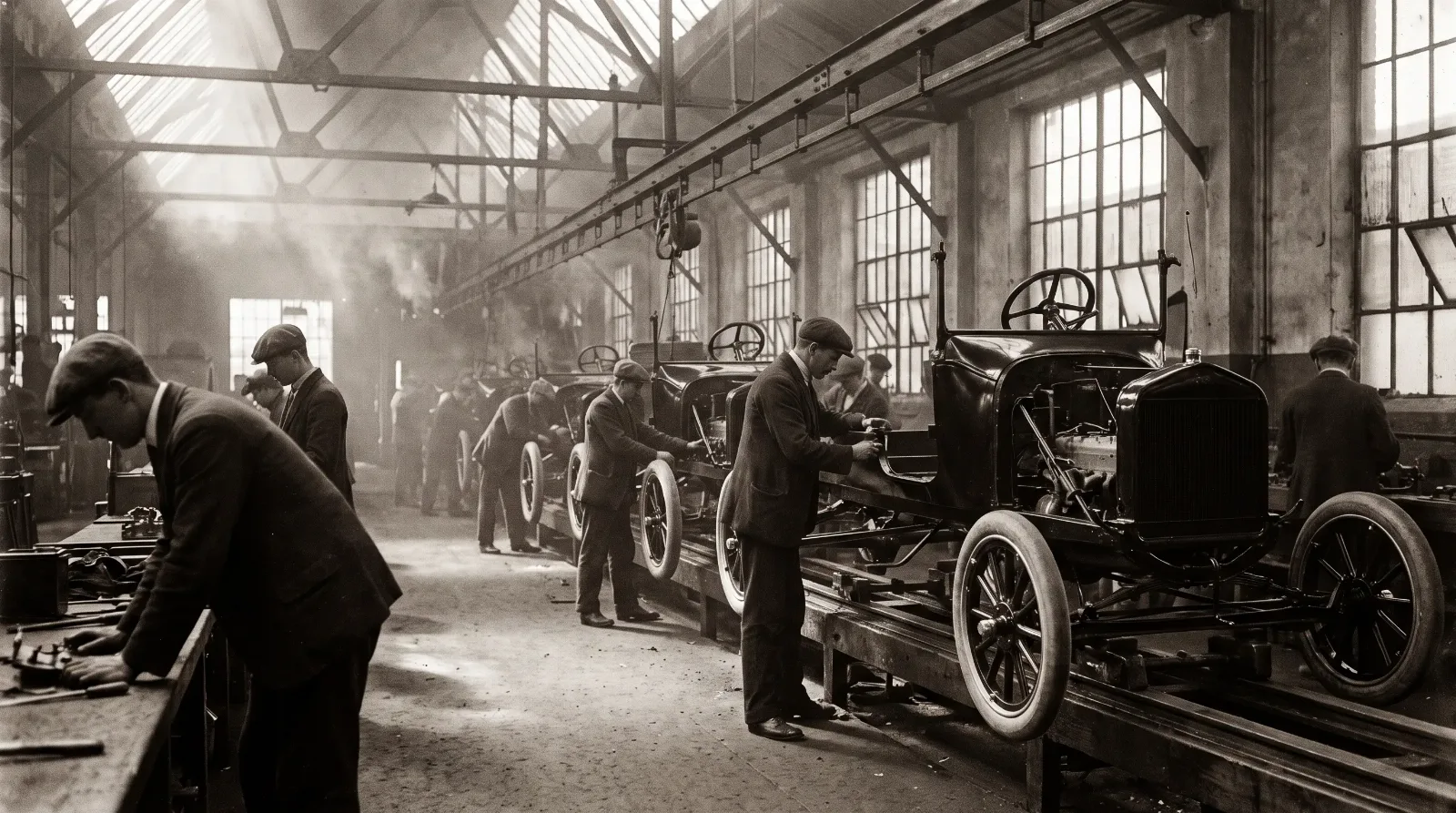
Where the idea actually came from
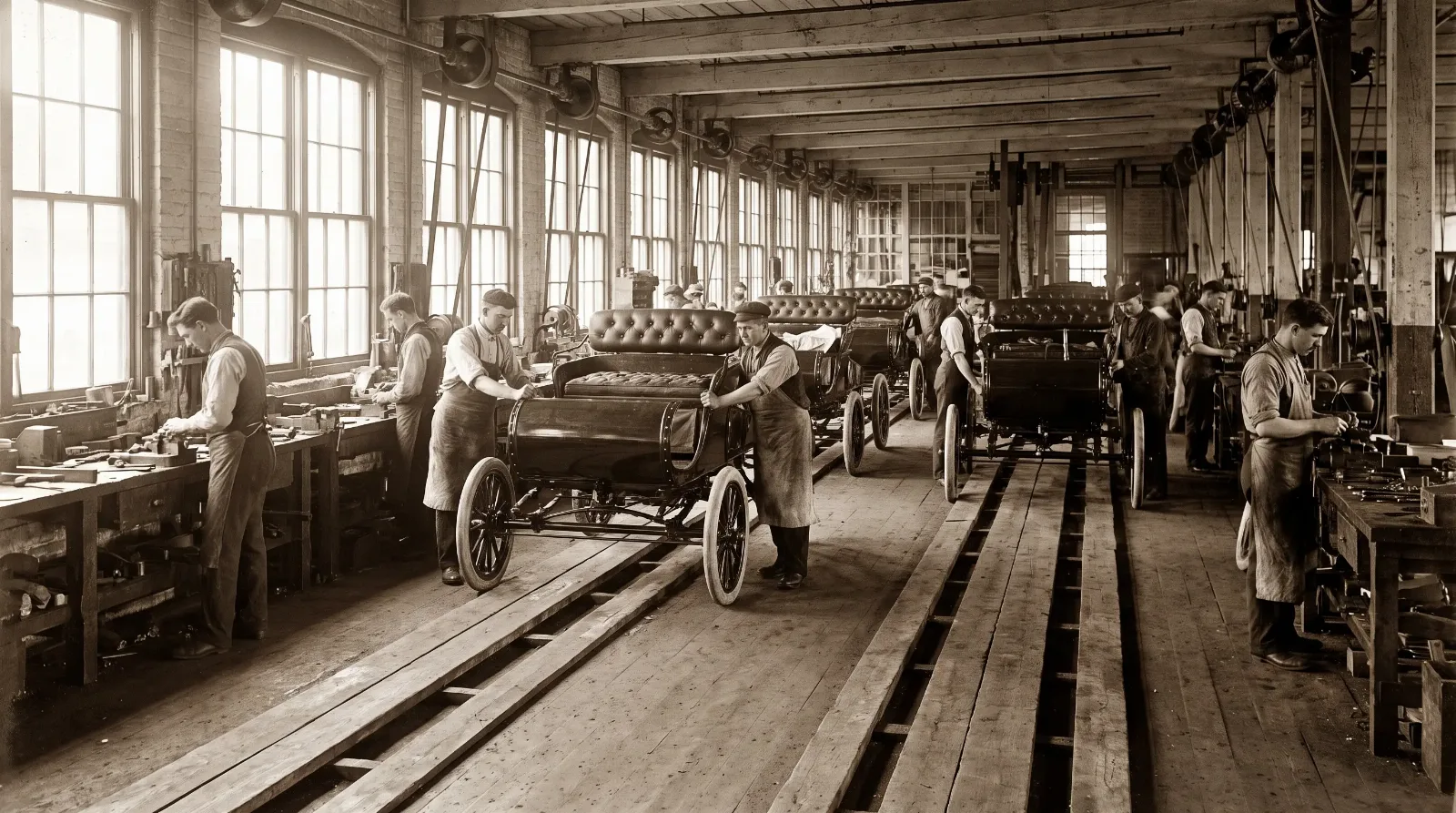
Ransom Olds gets left out of this conversation way too often, and that is a shame, because his Olds Motor Works was running a version of a moving production process for the curved-dash Oldsmobile back around 1901, years before Ford put together his famous Highland Park line. Olds had cars moving along a track from one work station to the next, with workers each handling a specific task rather than building a whole car from start to finish at one bench. That is the basic idea right there, and Olds had it working while Ford was still figuring out his own company.
Before Olds, you have got to look at meatpacking too, which sounds strange until you think it through. Chicago's slaughterhouses had been using overhead trolleys to move carcasses past stationary workers doing one repeated task each, going back to the 1870s and 1880s. That is a disassembly line technically, taking an animal apart piece by piece instead of putting a car together, but the underlying logic, keep the worker in place and move the work past him, is the exact same principle Ford later applied in reverse.
What Ford actually did different
So if Ford did not invent the concept, what did he actually contribute? Scale, mostly, and a level of obsessive standardization nobody else had committed to. Ford's Highland Park plant, starting around 1913, took the moving line idea and combined it with fully interchangeable parts, precise timing between stations, and a manufacturing philosophy that treated every single task in building a Model T as something that could be broken down, timed, and optimized.
The result was a car that dropped in price year after year while every other manufacturer was struggling to hold their prices steady. Ford's assembly time for a Model T chassis fell from roughly twelve and a half hours down to about ninety-three minutes once the moving line was fully up and running, and that kind of efficiency gain is what actually changed the automobile from a rich man's toy into something a factory worker could realistically save up and buy.
Why this mattered beyond just Ford's own bottom line
Here is the part that really gets me. Once Ford proved the moving assembly line could cut costs this dramatically, every other manufacturer that wanted to survive had to figure out some version of the same thing or get priced out of the market entirely. Companies that stuck with old bench-built methods, one crew building one car from start to finish, simply could not compete on price once a Model T was rolling off Highland Park's line faster than most factories could build one car by hand.
That pressure reshaped the whole industry within about a decade. Wages at Ford's plants went up too, famously to five dollars a day starting in 1914, partly because the monotonous, fast-paced work on a moving line burned through workers fast and Ford needed to keep people showing up. That wage increase gets remembered as generosity. It was also, plainly, a practical response to the brutal turnover a line like this produced.
The parts of the story that get left out
One thing that does not get talked about enough is how much resistance the moving line faced from skilled workers themselves. A craftsman who had spent years learning to build an entire engine took real pride in that work, and being reassigned to tighten the same six bolts all day, over and over, for an entire shift, was a demotion in every sense that mattered to him, even if the paycheck eventually got better. Turnover at Highland Park before the wage increase was brutal, reportedly requiring Ford to hire several times its actual workforce needs each year just to keep the line staffed, since so many men quit within weeks of starting.
That human cost is part of the real story, not a footnote to it. The efficiency gains that make for such a clean, impressive narrative in hindsight were built on top of a workforce that mostly hated the actual experience of the job, at least until the five-dollar day made staying worth the tedium. Any honest telling of this history has to hold both facts at once, the genuine manufacturing achievement and the grinding, repetitive reality it imposed on the men doing the work.
What this means when you are looking at a brass-era car today
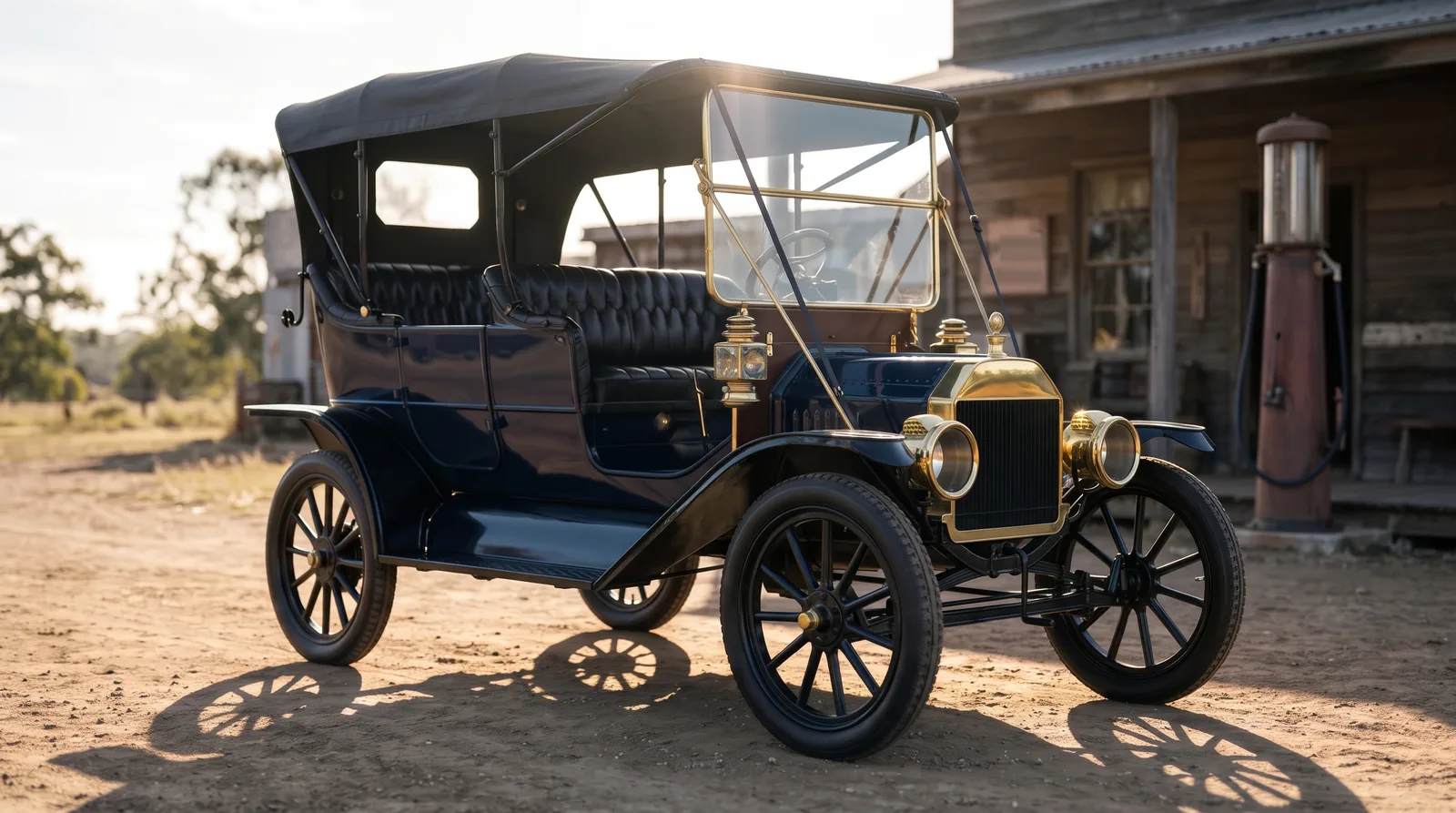
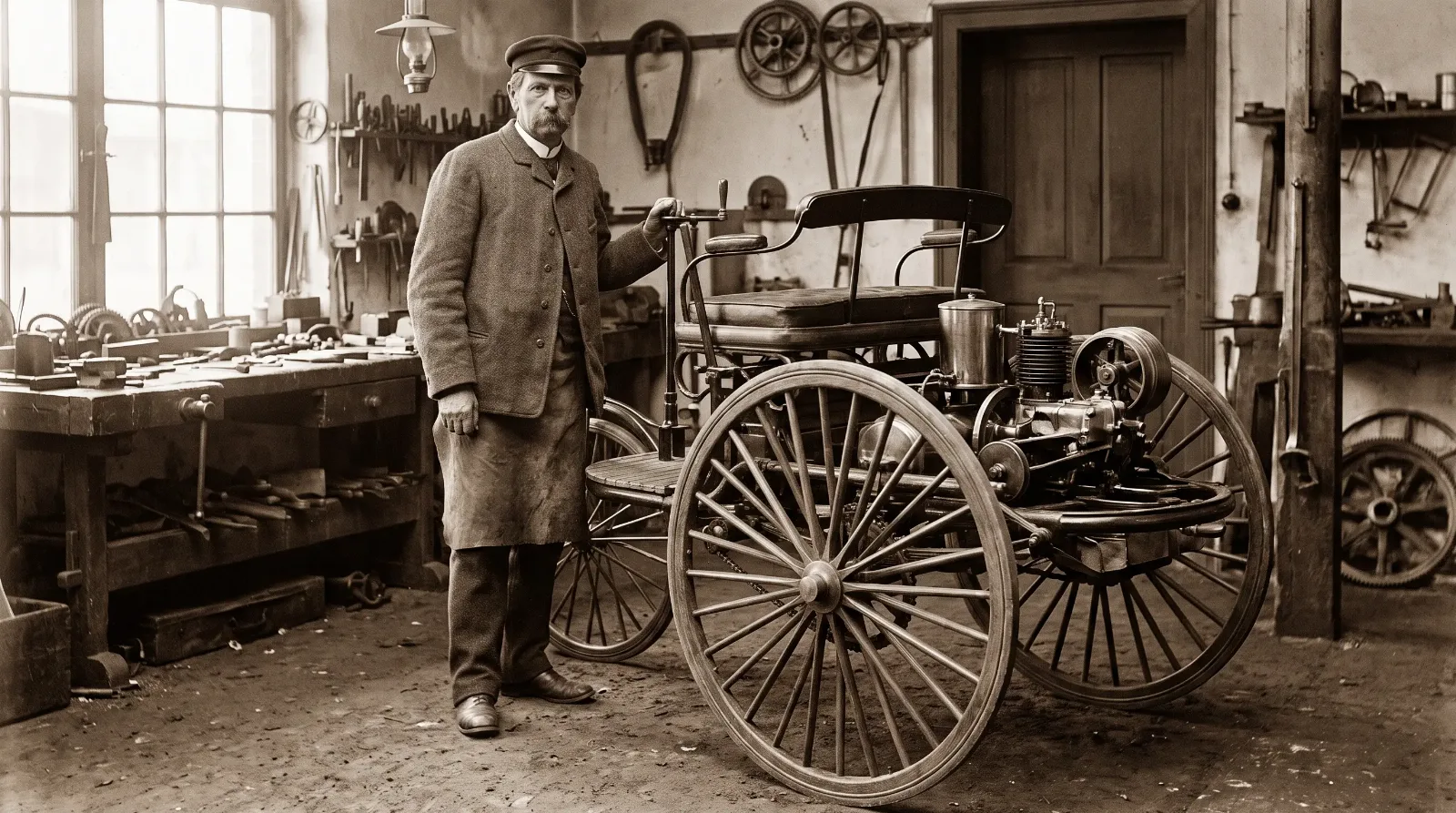
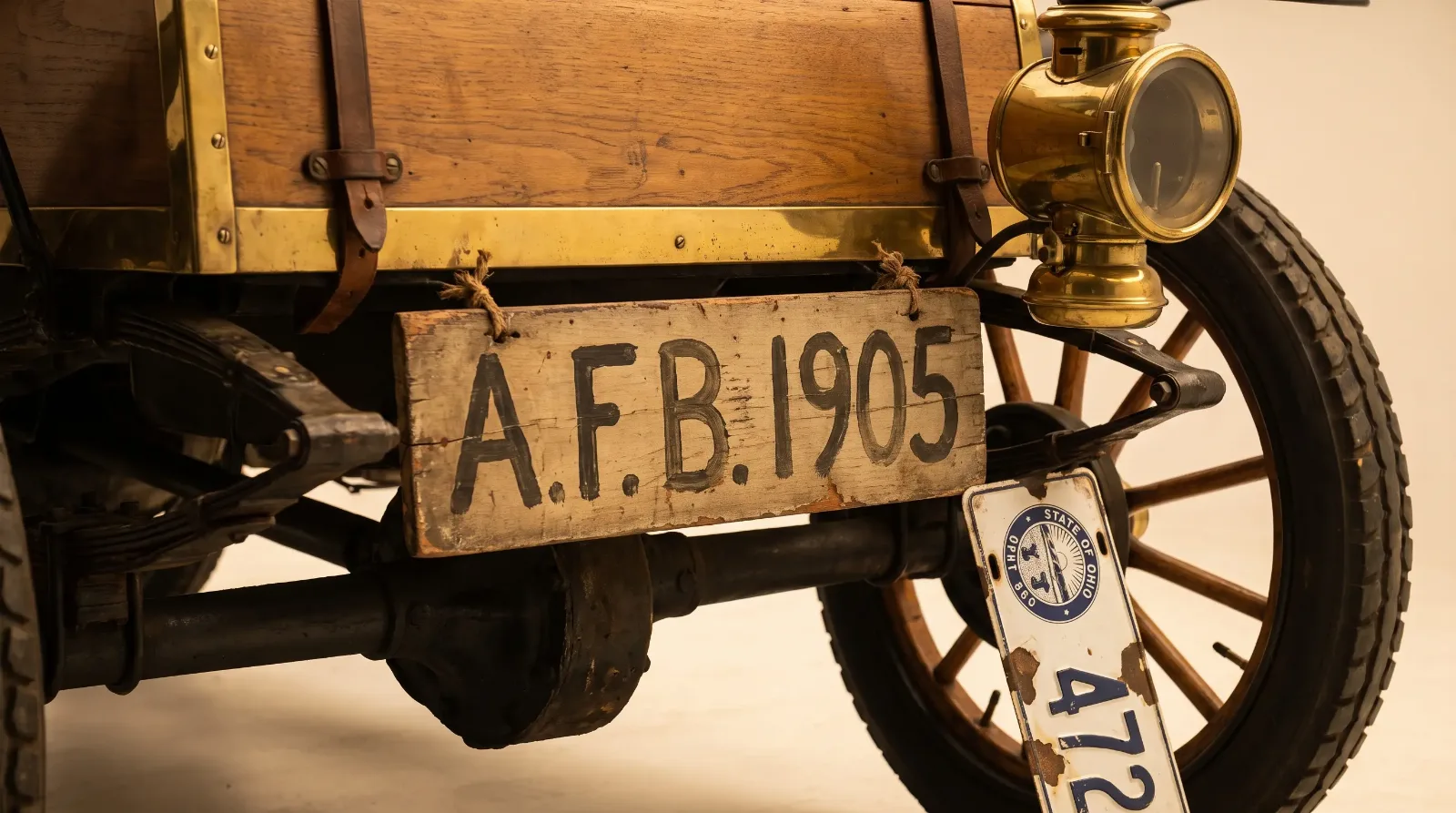
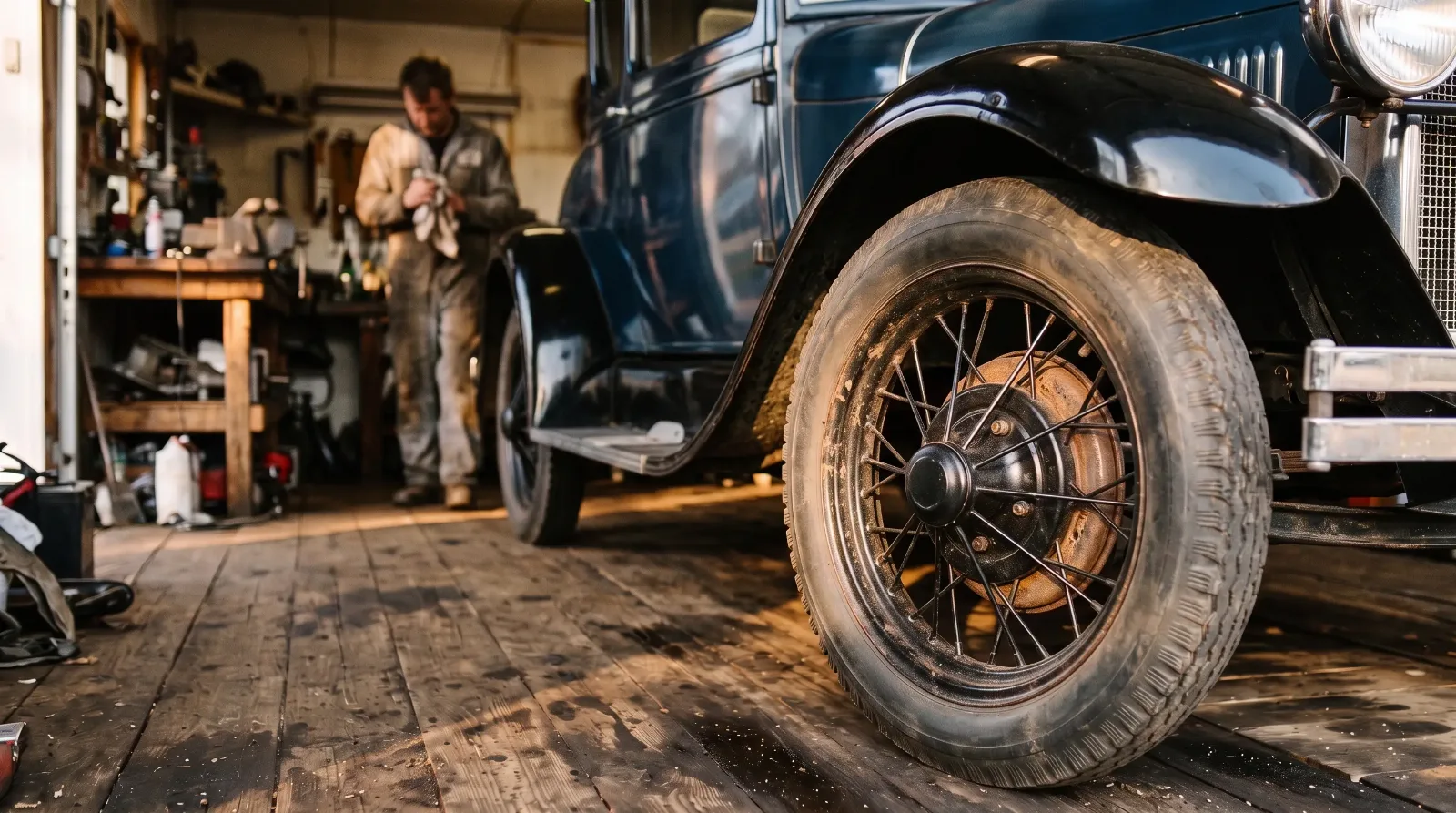
If you are examining a car built before roughly 1913, you are almost certainly looking at something assembled largely by hand, built by a small crew working at a stationary bench with far more individual craftsmanship going into each unit than anything that came off a moving line a decade later. That is part of why pre-assembly-line cars carry a different kind of appeal for some collectors, each one carries just a little more individual variation than a car stamped out by a fully standardized process.
Cars built after the moving line took hold tell a different story, one about efficiency and access rather than individual craftsmanship, and both stories matter to understanding America's antique automobiles as a whole. Neither approach is better exactly. They just represent two completely different philosophies about what a car factory was supposed to be.
"People act like Ransom Olds is some footnote, and it drives me nuts. The man had cars moving down a track years before Highland Park existed. Ford gets the credit because he scaled it up bigger than anybody thought possible, but credit for the idea itself belongs somewhere else."
Gary Nowak
The full story of how this manufacturing revolution fit into the wider transformation of the brass era, alongside everything else changing about how cars were built, sold, and driven, is covered in the early assembly line cars story. If you want to go back even further, to the actual question of who built the very first automobile that started this whole chain of events, a related read covers that debate directly. And if all this history has you wanting to see what survives from the era in person, you can browse antique cars for sale and get a feel for what is actually out there today.
Sources and notes
- History.com: Moving assembly line debuts at Ford factory
- Assembly Magazine: The moving assembly line turns 100
- Library of Congress: Ford implements the moving assembly line
- The Henry Ford: 1,000 Model T chassis outside the Highland Park plant, 1913
- World Socialist Web Site: 100 years since Ford's five dollar day
Related Reading
Have a
Classic Car
for Sale?
Reach thousands of serious classic car collectors across the US.
Sell It Here →
Selling a classic? Here's how: the best sites to sell a classic car
Are You a Classic Car Dealer?
List your full inventory and connect with targeted classic car buyers.
Join as a Dealer →

About the author
Gary Nowak
Lifelong Midwest rodder who has been building and driving traditional pre-war hot rods since the 1970s.
Comments (1)
D
datsun_dee
1 week ago
Tip for brass-era shopping: measure the left and right door gaps. Bench-built cars rarely match, and that mismatch is usually honest.