
The classic Ford Bronco body style rarity question comes up in almost every auction chat room and every driveway appraisal I have done since the early 2000s. Ford built the first-generation Bronco from 1966 through 1977 in three distinct body configurations, and the survival numbers between them are not close. If you are shopping this market with real money, the body style you choose determines your ceiling, your floor, and how fast you can sell if plans change.
Car Features
7 min read
Ranking the Rarest First-Gen Bronco Body Styles
Wagon, half cab, or roadster: the classic Ford Bronco body style rarity ranking shows why survival numbers, not just build totals, decide what these trucks are worth today.
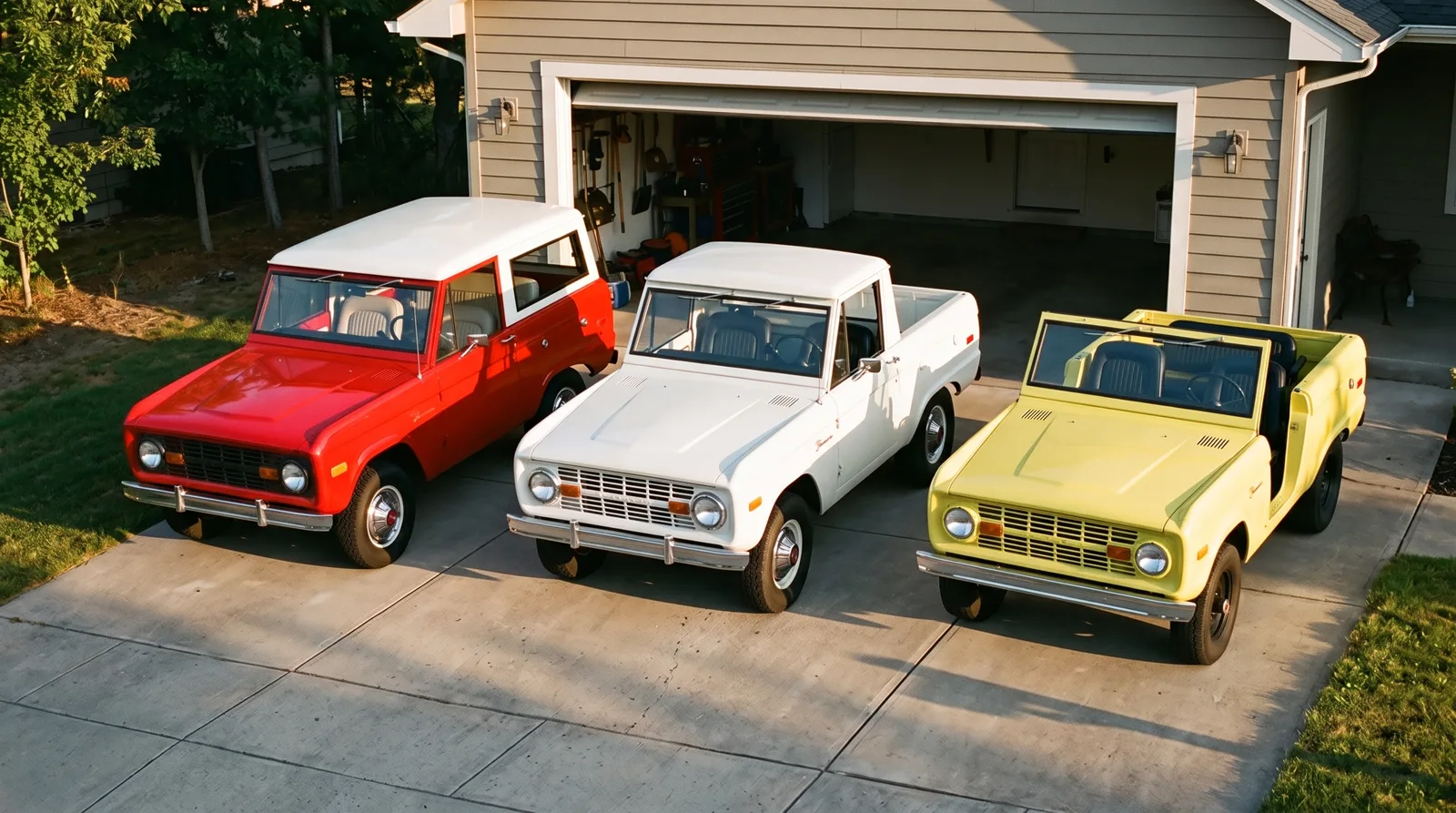
Three bodies, one platform, wildly different outcomes
Ford offered the first-generation Bronco in three factory body styles built on the same 92-inch wheelbase chassis: the U15 wagon (fully enclosed), the U14 half cab (pickup bed with a short cab), and the U13 roadster (no doors, no top standard, essentially an open utility vehicle). All three shared the same drivetrain options. What separated them in the market was practicality at the time of sale, and practicality is the enemy of long-term survival. Buyers in 1967 wanted a wagon they could use every day. Nobody was thinking about 2026 auction values.
That single fact explains almost everything about today's pricing gap. The wagon sold in the highest volume and is the easiest to find now. The half cab sold in modest numbers because it split the difference between a truck and a wagon and never found a dedicated buyer base. The roadster was always the niche pick, and it shows in what survives.
Wagon: the volume leader, and the value floor
The enclosed wagon is the body most people picture when they hear "early Bronco." It is also the one with the deepest pool of parts, clubs, and comparable sales, which keeps prices more predictable but caps upside. A clean, numbers-matching wagon in solid original paint or a quality repaint will trade in a fairly tight band. That predictability is a feature, not a flaw, if you want a car you can exit without waiting years for the right buyer.
I tell clients who want a Bronco to drive and enjoy, not to speculate on, to buy the wagon. It is the version with the most support behind it, and support is what keeps a restoration from turning into a money pit.
Half cab: the forgotten middle child
Production numbers on the half cab were always lower than the wagon, and the format itself, an open bed grafted onto the short Bronco cab, never built the following that the roadster eventually earned. For years that made it the least desirable of the three, which is exactly why it is interesting now. Low period demand plus decades of attrition equals a body style where good original survivors are legitimately hard to find. I have more on the ford bronco half cab and how the factory positioned it against the wagon and the roadster.
The catch with the half cab is liquidity. It is rare, but rarity without demand is just an obscure car. The buyer pool is smaller and more patient, so a half cab can sit longer on the market even when priced fairly. That is the tradeoff: potential upside against a longer hold.
Roadster: the doorless prize, and the number every buyer should know
The roadster is the body that gets the headlines, and the production numbers back up the attention. Ford built it in far smaller quantities than the wagon and phased it out of the catalog earlier than the other two configurations, which shrank an already small pool before rust, off-road use, and neglect took their toll on the survivors. Finding a genuine, unmolested roadster with clear documentation is closer to finding a specific coin than shopping a car market.
That scarcity is priced in aggressively at the top end. A documented roadster in strong original condition commands a real premium over a comparable wagon, sometimes by a wide margin, and that gap has held up through multiple market cycles rather than being a one-year spike.
Reading the market before you buy
Body style is only half the equation. Documentation, matching numbers, and honest sheet metal move the needle as much as which body sits on the frame. A rough roadster with replacement panels and no paper trail can trade for less than a documented, rust-free wagon, even though the roadster is nominally the rarer car. Rarity sets the ceiling. Condition and paperwork decide whether you get anywhere near it.
| Body style | Relative production volume | Market liquidity | Typical buyer profile |
|---|---|---|---|
| Wagon | Highest | Fast, predictable | Driver, first-time buyer |
| Half cab | Lowest of the standard configurations | Slow, patient market | Collector seeking a sleeper |
| Roadster | Smallest window in production | Strong demand at the top end | Serious collector, investment-minded buyer |
"Rarity gets a car noticed. Documentation gets it sold at the number the seller actually wants. I have seen plenty of rare Broncos sit because nobody could prove what the seller was claiming."
- David Mercer
What actually moves the price beyond the body
I run comps for a living, and the pattern repeats across every rarity tier. Original drivetrain adds more than a repaint. A clean title with a paper trail back to the original selling dealer adds more than fresh tires. Buyers in this market are not naive, and most of them have been burned once by a car that photographed better than it drove. That experience makes them cautious, and caution shows up as a discount on anything with gaps in the story.
The half cab and the roadster both suffer from a specific problem the wagon rarely has: fakes and reconfigurations. Because a wagon can be modified toward a half cab or roadster look with body panels sourced from parts trucks, a buyer chasing rarity has to verify the car is what the seller says it is, not just what it looks like in photos. That is not a reason to avoid the rarer bodies. It is a reason to budget for a proper inspection and, ideally, a marque specialist who can read the sheet metal and the data plate together.
Where to start
If you are new to this corner of the market, spend time learning the story before you spend money. It helps to understand where this started, because the body style decisions Ford made in the mid-1960s still shape what a given truck is worth today. Once you know what you are looking at, browse classic Broncos on the market and compare asking prices against real, closed sales rather than list prices alone. The gap between the two tells you more about the current mood of the market than either number does on its own.
My take after years of watching this segment: buy the wagon if you want to drive it and sell it without drama, buy the half cab if you have patience and want a genuine rarity for less money than a roadster, and buy the roadster only if documentation is airtight and you understand you are paying for scarcity, not for a more usable truck. Each body style rewards a different kind of buyer. Know which one you are before you write a check.
Sources and notes
Related Reading
Have a
Ford Bronco
for Sale?
Reach thousands of serious classic car collectors across the US.
Sell It Here →
Selling a classic? Here's how: sell my classic car
Are You a Classic Car Dealer?
List your full inventory and connect with targeted classic car buyers.
Join as a Dealer →
#Ford Bronco
#classic truck values
#Bronco roadster
#first-gen Bronco
#Bronco half cab
#Bronco collectibility

About the author
David Mercer
Classic car market analyst with two decades of experience tracking collector car valuations, auction results, and investment trends.
Related Listings - Ford Bronco
More in Car Features
Comments
Be the first to comment on this article.