
Ask three owners what kind of Ford Model A coupe they have and you may hear three different names for cars that look, at twenty paces, almost identical. Standard, Special, Sport, Business, Deluxe: Ford sold five coupe types between 1928 and 1931, each with its own style number, its own price and its own short or long life on the order sheets. The differences sit in the roof covering, the quarter windows, the trim and the paperwork. This guide separates them using Ford's own body style numbers, because the number, not the nickname, is what tells you which car you are looking at.
Car Features
7 min read
Sport Coupe, Special Coupe, Standard Coupe: The Model A Coupes Explained
Standard, Special, Sport, Business and Deluxe: how to tell the five Ford Model A coupes apart by style number, roof, price and years built.
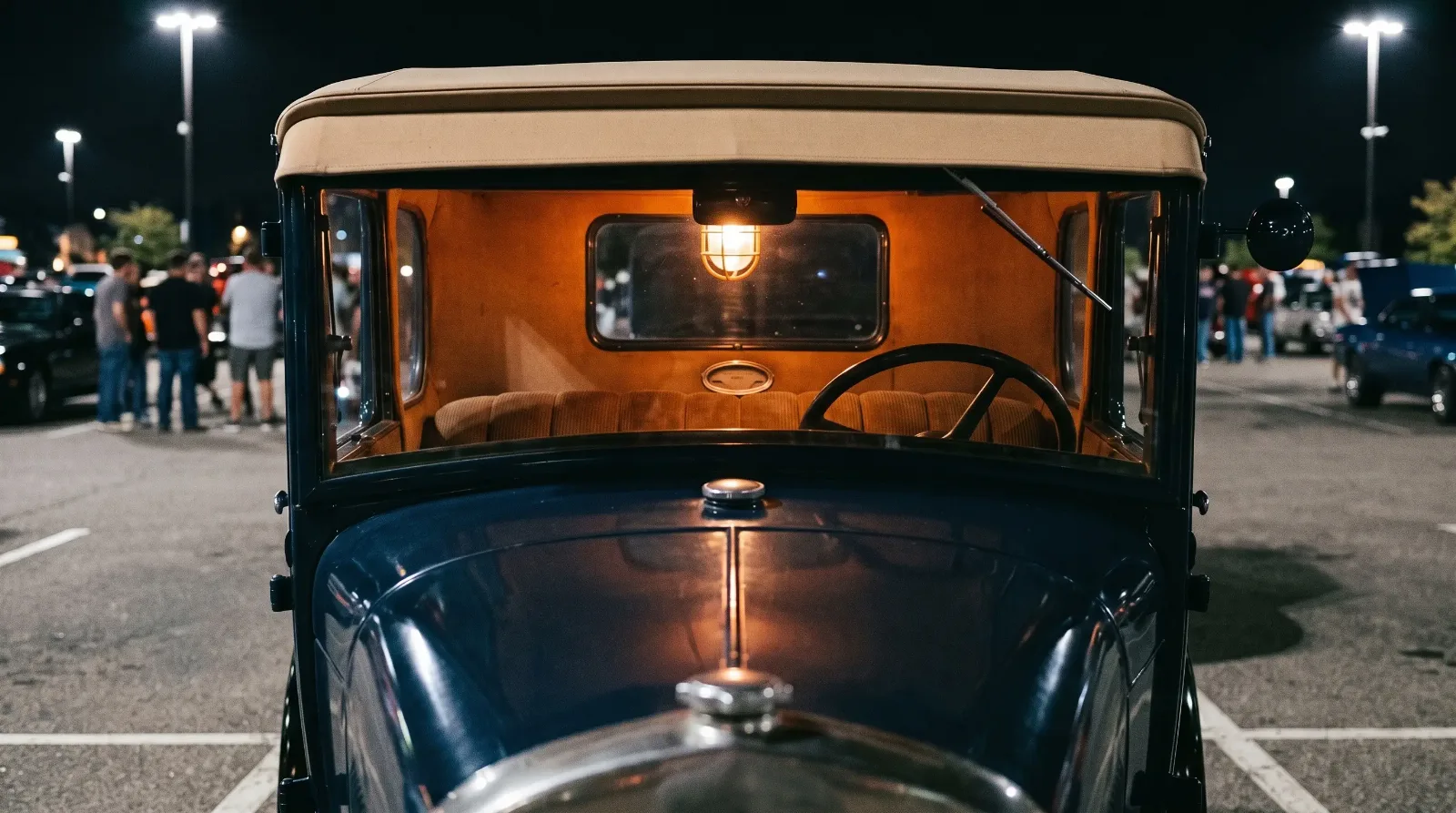
For the full family of open and closed cars, see the Ford Model A body styles. Here the subject is narrower: the two-door, two-seat closed cars Ford called coupes.
Five coupes, five style numbers
Ford identified every Model A body with a style number, and the coupes are easiest to understand through them. The letter after the number marks the generation: "A" for the original 1928 to 1929 bodies, "B" for the restyled 1930 to 1931 bodies.
| Coupe | Style number | Offered | US list prices |
|---|---|---|---|
| Standard Coupe | 45-A, then 45-B | 1928 to 1931 | 1928 $495; 1929 $500; 1930 $495; 1931 $490 |
| Sport Coupe | 50-A, then 50-B | From launch to 1931 | 1928 $550; 1929 $530; 1930 $525; 1931 $500 |
| Special Coupe | 49-A | July 1928 to July 1929 | 1928 $500; 1929 $510 |
| Business Coupe | 54-A | May 1928 to 1929 | 1928 $495; 1929 $490 |
| Deluxe Coupe | 45-B | From March 1930 to 1931 | 1930 $545; 1931 $525 |
Prices are factory list, FOB Detroit, without accessories. Two things stand out. The Sport Coupe was the dearest coupe in 1928 and 1929, $55 above the Standard at launch; from 1930 the new Deluxe Coupe took that place. And the Special and Business Coupes were short-lived: both were gone by the time the restyled 1930 cars arrived, when Ford dropped them from the line-up.
The Standard Coupe: the working closed two-seater
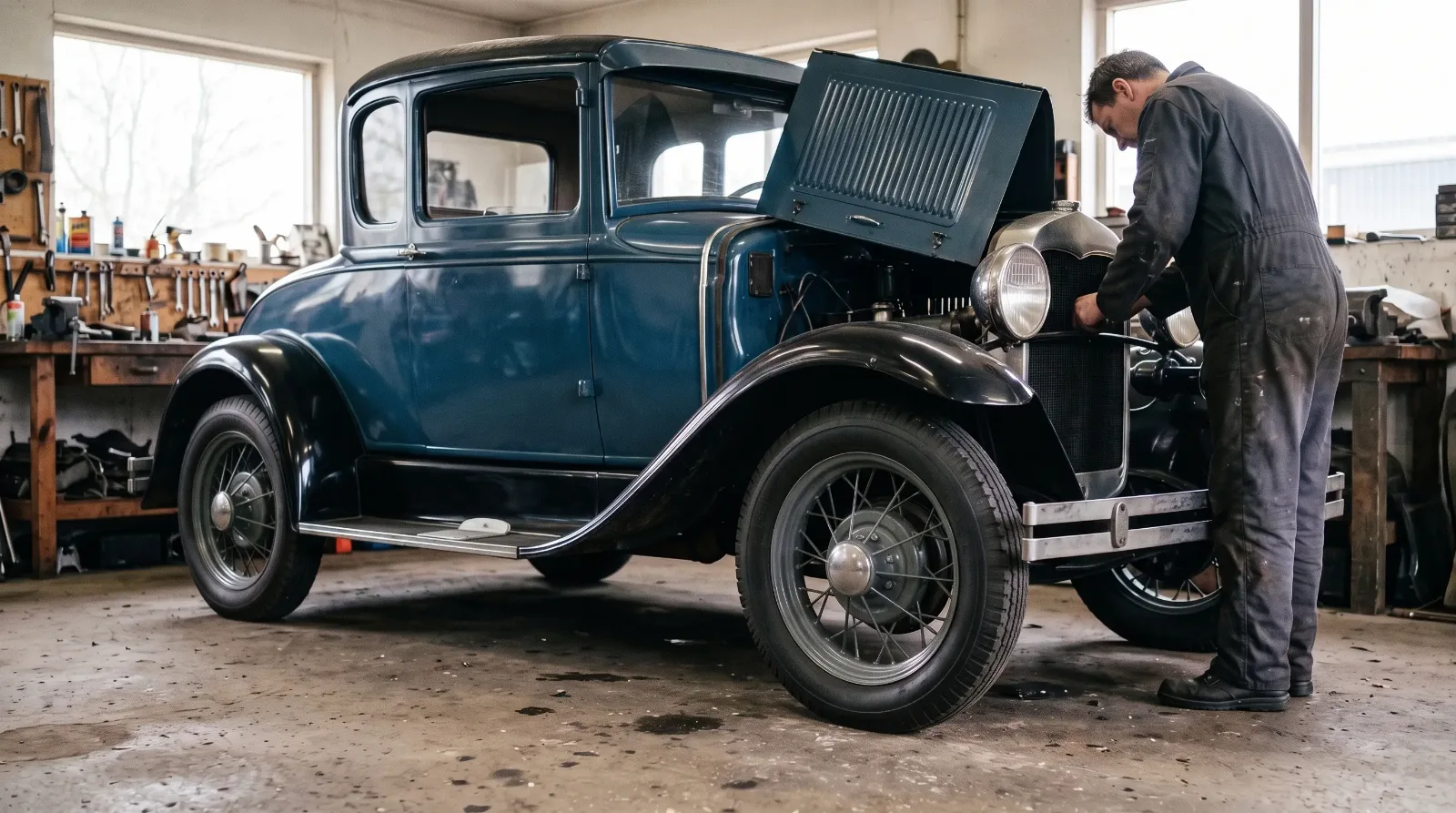
The Standard Coupe was the plain answer to a plain need: a closed car for one or two people that cost the same as a Tudor. In 1928 both listed at $495, and in 1931 both stood at $490. It ran through all four model years, first as the 45-A and then as the 45-B on the 1930 restyle.
It was also the volume coupe. One museum text puts 1930 Standard Coupe production at about 226,000, a round figure that should be read as an order of magnitude rather than a count. Ford did not publish a reliable breakdown by coupe type for every year, so anyone quoting exact production for a given coupe should be asked for the source.
The coachwork story is worth knowing. Briggs built a large share of Model A coupe bodies, including the Special, the Sport 50-B and the Business Coupe. Yet most 45-B Standard Coupes carried bodies built by Ford itself; Briggs supplied a run of 45-B bodies tagged 198-, something over 30,000 of them. On a 1930 or 1931 car the builder's tag, where it survives, is usually on the firewall below the patent plate; on 1928 and 1929 bodies it was a brass tag nailed to the wooden floor structure near the passenger's feet, under the carpet. It is the first thing a careful judge looks for.
"A Model A coupe is identified from the roof and the paperwork, in that order. Badges were never part of the vocabulary. If the style number on the body tag disagrees with the roof covering and the quarter glass, the car has been rebuilt, and the honest description says so."
Sarah Whitfield
The Sport Coupe: a cabriolet look on a fixed roof
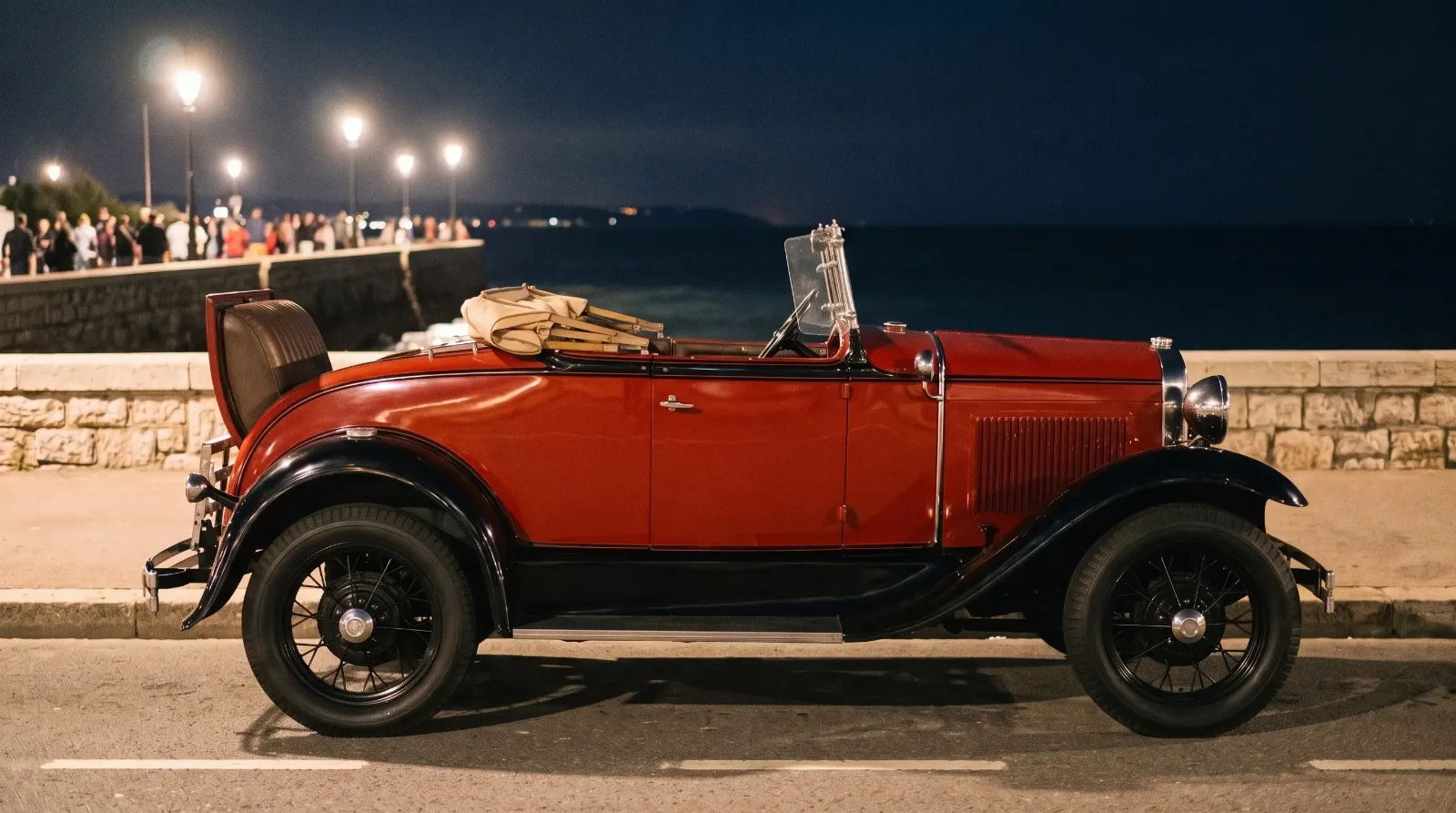
The Sport Coupe is the one people photograph. It was a two-seat coupe with a fixed roof covered in fabric, finished to resemble a cabriolet. Decorative landau irons on the rear quarters suggested a folding top that was not there. A sun visor sat over the windshield, and a rumble seat in the rear deck carried two more passengers in the open air.
Those landau irons are the key distinction from the true Cabriolet, the 68-A introduced in March 1929. The Cabriolet had a real folding top, a fixed windshield, roll-up glass and folding door posts, with chrome landau irons that did work and no sun visor. The Sport Coupe gave buyers the same silhouette without the leaks and the extra cost: in 1929 it listed at $530 against $645 for the Cabriolet. Buyers noticed. Over the four years the Sport Coupe outsold the Cabriolet by a wide margin.
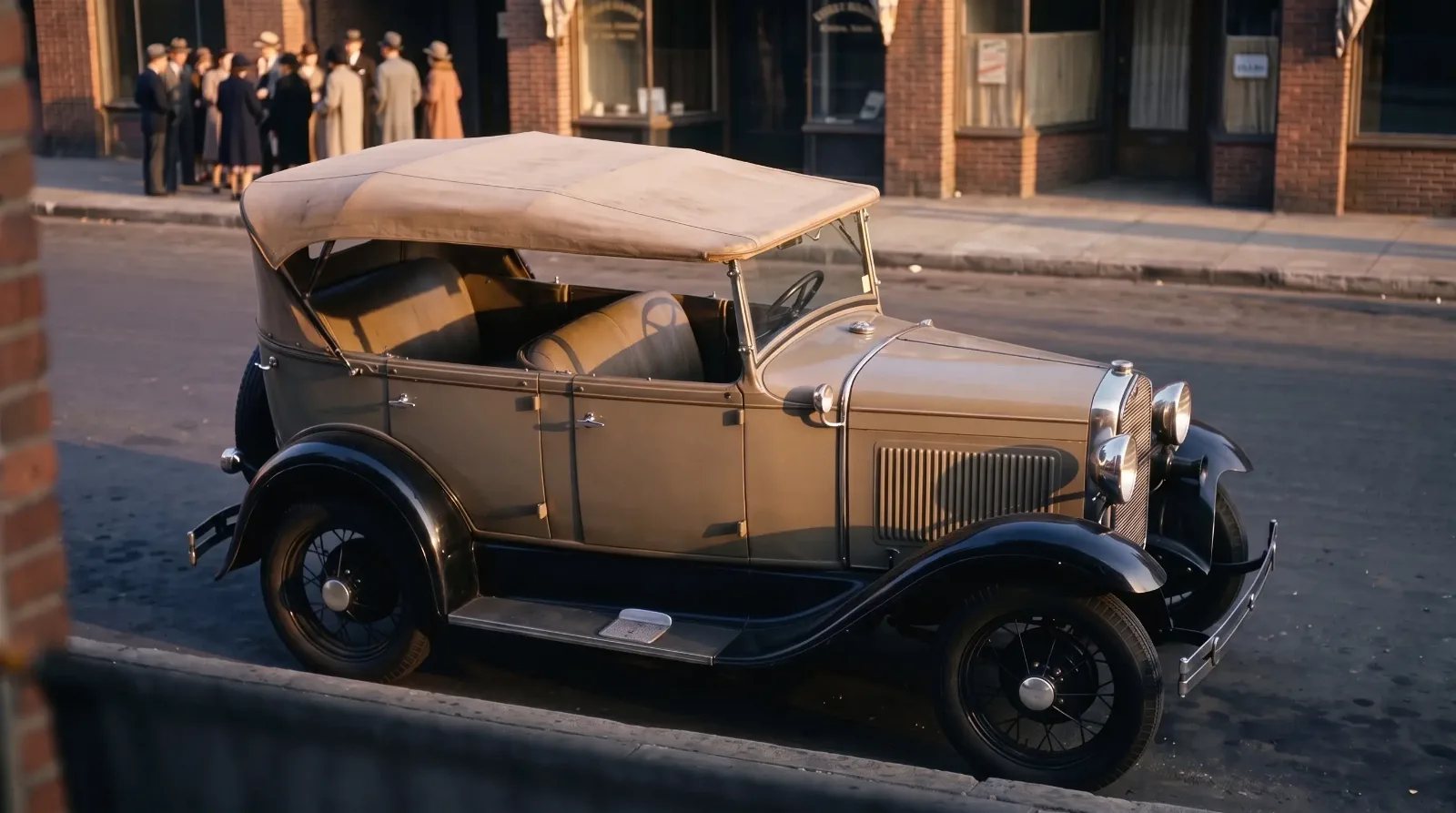
It had early admirers in high places. Edsel Ford was filmed in a December 1927 newsreel driving a Roadster and a Sport Coupe, his favorite styles. And Douglas Fairbanks ordered a Model A Sport Coupe for Mary Pickford, delivered on Christmas Eve, with a Henry Ford photograph of the car dated January 1928. For buyers who wanted fresh air without giving up a roof, Ford's open cars were the alternative; the four-door touring model is covered in the phaeton.
Special and Business Coupes: the short-run cars
These two cause the most confusion, because they lived briefly and the period record about them is thin.
The Business Coupe, style 54-A, arrived in May 1928. The first version, built until February 1929, had a leatherette-covered top above the belt line and blind rear quarters with no glass. The later version switched to a pyroxylin-covered top and small oval quarter windows, the "opera" windows that make a 1929 Business Coupe easy to spot. It sold for $495 in 1928 and $490 in 1929.
The Special Coupe, style 49-A, ran from July 1928 to July 1929, at $500 and then $510. The visible difference from the Standard Coupe is the covering: the 45-A had a steel back with only its top in black artificial leather, while the Special Coupe carried the artificial leather over both the top and the back panel, laid over a wooden frame. Briggs built both in space it leased at Ford's Highland Park plant. A seller who describes a Special Coupe with great confidence about its unique features should be asked to show the body tag and the source.
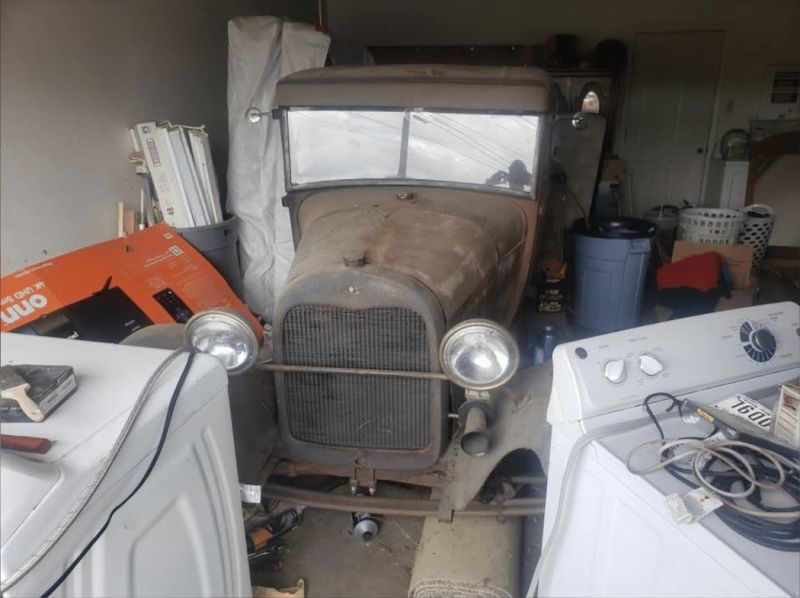
Survivors still turn up. In August 2026 a 1929 Business Coupe stored for about 60 years in Black Creek, Wisconsin, was listed on Facebook Marketplace at $10,000, unrestored but solid. That is an asking figure, not a sale, but a dry-stored, original short-run coupe is exactly the kind of car that teaches more than a restored one.
The 1930 restyle and the Deluxe Ford Model A coupe
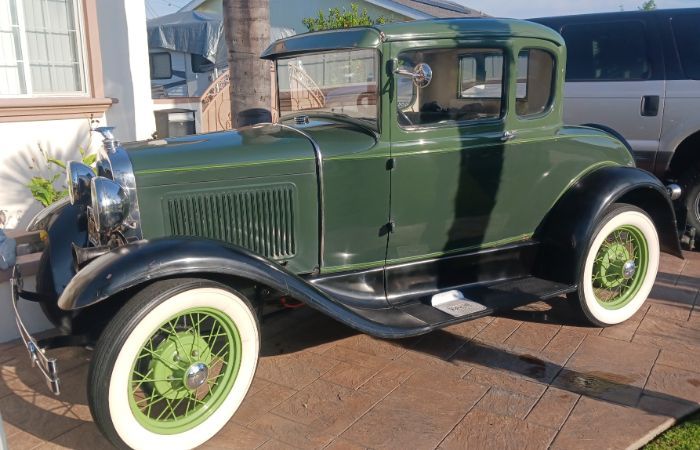
The 1930 cars brought new "B" bodies across the range: 35-B, 40-B, 45-B, 55-B. The Special and Business Coupes were dropped, and in March 1930 the Deluxe Coupe arrived under the 45-B number, priced at $545 that year and $525 in 1931. It sat above the Standard Coupe, giving a closed-roof buyer more finish without the faux-cabriolet treatment. At $545 it was now the dearest coupe in the range, $20 above the Sport Coupe.
For a judge, the 45-B number is a small trap: the Standard and Deluxe shared it, so trim and interior, not the number alone, separate them. Briggs-built Deluxe bodies carry their own tag, 166-, against 198- on Briggs Standard Coupes. The 1930 restyle also shaped the closed Fords that followed, including the Victoria, style 190-A, a different car with its own story.
If you are shopping, the restyled cars are the most common place to start; browse 1930 Model A coupes for sale and read each listing against the table above. Check that the claimed type matches the roof, the quarter glass and the body tag. And if your interest runs from closed coupes to wood-bodied utility, the station wagon is covered in this piece.
Sources and notes
Related Reading
Have a
Ford Model A
for Sale?
Reach thousands of serious classic car collectors across the US.
Sell It Here →
Selling a classic? Here's how: sell my classic car
Are You a Classic Car Dealer?
List your full inventory and connect with targeted classic car buyers.
Join as a Dealer →

About the author
Sarah Whitfield
Third-generation classic car collector specializing in pre-war American and European coachbuilt automobiles. Researcher and concours enthusiast.
Related Listings - Ford Model A




Comments
Be the first to comment on this article.