
Most Model A bodies were steel over a wood frame, built by the thousands in Detroit. The station wagon was different. Its body was nearly all wood, the wood came from Ford's own forests in Michigan's Upper Peninsula, and it was the first wagon any of the Big Three sold straight off the factory line. If you are looking at a Model A woody wagon today, that wood is the whole story: why it cost more new, why so few survive and why it costs more than any other body to keep right.
Car Features
7 min read
The Ford Model A Station Wagon: Wood Bodies From the Iron Mountain Forests
Ford's first factory station wagon wore maple, birch and basswood from its own Upper Peninsula forests. Here is what that means for buyers.
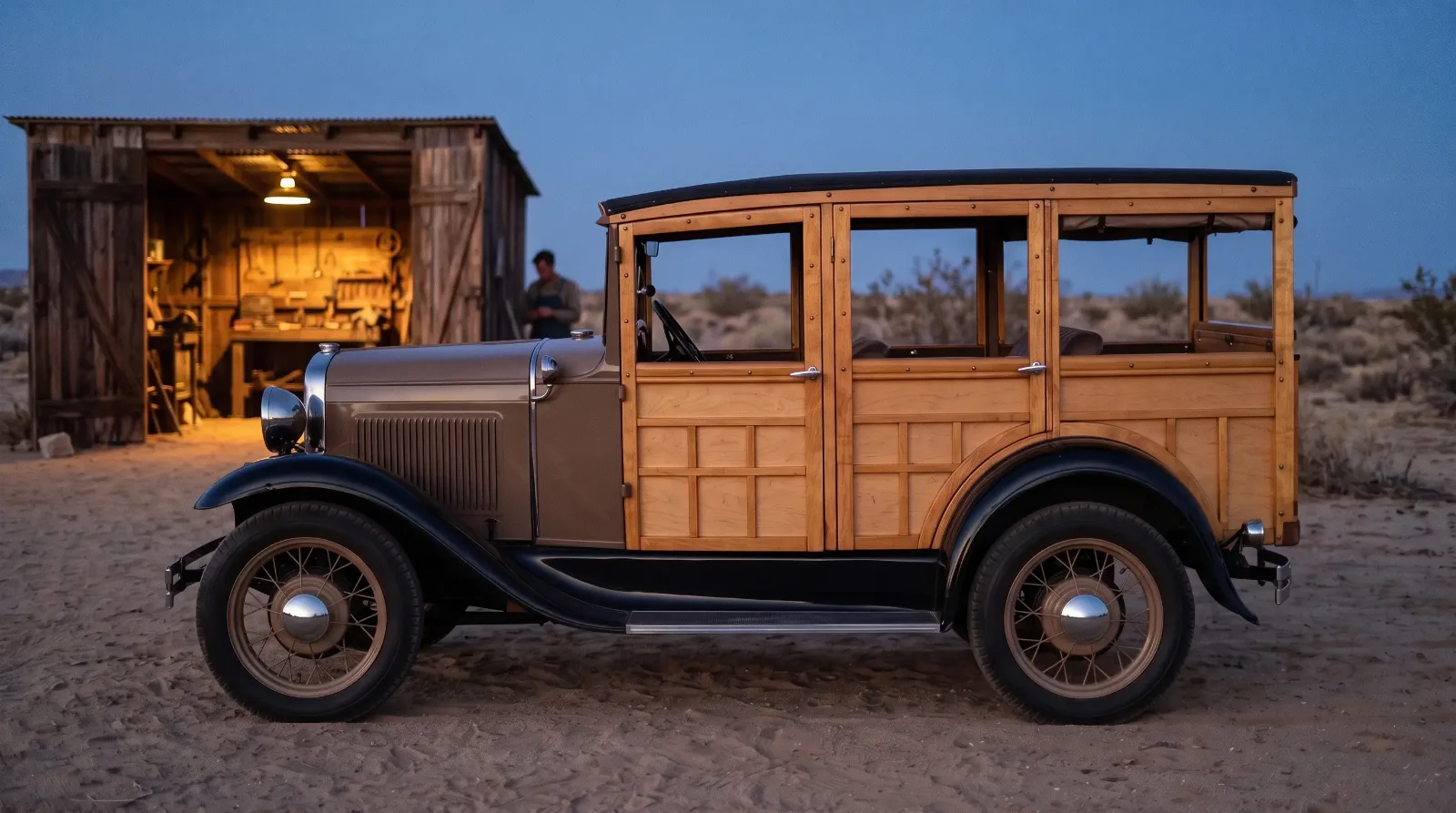
Why the Model A woody wagon was a first
Before 1929, a station wagon was something you had built. Hotels and resorts needed a vehicle to haul guests and their bags between the railroad depot and the front desk. The owner bought a Ford chassis, sometimes a Buick, and paid a local coachbuilder to put a wood body on it. People called them depot hacks, from the old word for a hired horse-drawn rig, and the name station wagon grew up after depots started being called railroad stations, around 1910.
For the 1929 model year, Ford cut out the coachbuilder. The company put a wood-bodied station wagon, style 150-A, into its own catalog, and that made Ford the first of the Big Three to offer a factory-built station wagon. A buyer could now walk into a Ford dealer and order a wagon the same way he ordered a Tudor.
The wagon joined a 1929 line that was already growing fast. That year also brought the 68-A Cabriolet, the Taxi and new Town Sedans, and if you want the full count of how many bodies Ford offered, the body style guide lays it out.
Wood from the Iron Mountain forests
The wood did not come from a supplier. Ford had built up its own timber holdings in the Upper Peninsula, and the man who put them together was E. G. Kingsford, the Iron Mountain Ford dealer, who married Henry Ford's first cousin and arranged about 313,000 acres of timberland for the company. He went on to run Ford's operations up there as a vice president.
At Iron Mountain, Ford built a large sawmill and a hydroelectric plant. The workforce there peaked at more than 7,000 in late 1925, during the Model T years. By the time the Model A wagon came along, the mill was already a working part of Ford's supply chain, the same thinking that ran through the assembly line years in detail: own the raw material, control the cost.
Three hardwoods went into the wagon: maple, birch and basswood. On surviving cars, auction descriptions identify maple for the framing and birch plywood for the insert panels between the frame members.
Who built the bodies: Murray and Baker-Raulang
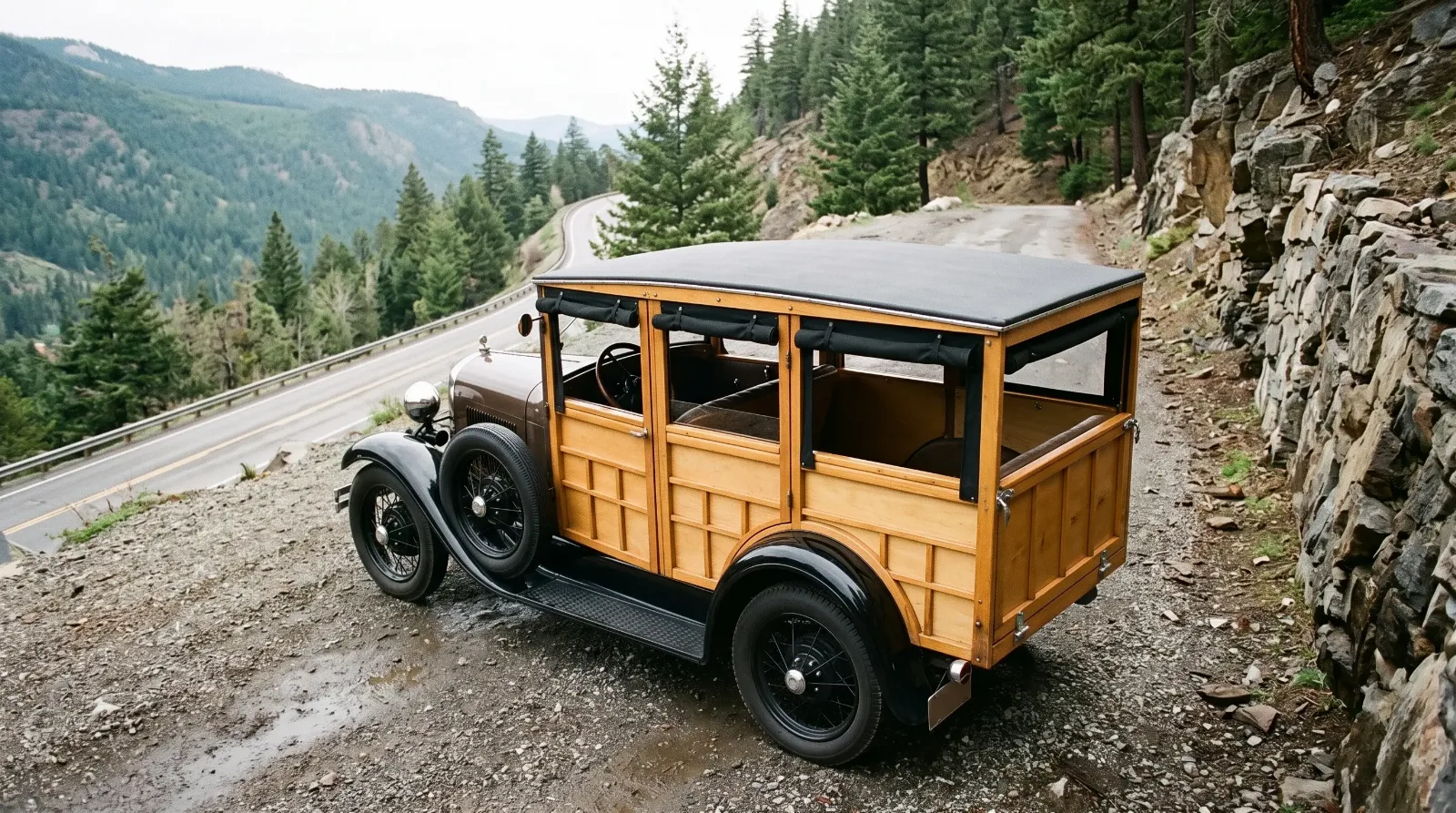
Ford owned the trees, but it did not assemble every wagon body itself. The 150-A was built by the Murray Corporation of America in Detroit, and its body tag carries a Murray M250 prefix. In June 1930 the 150-B replaced it, and those bodies came from Murray and from Baker-Raulang, which also built some of Ford's other wood bodies.
Inside, the wagon carried two rows of removable seats behind the driver. Pull them and you had a flat load floor, which is exactly what a resort or a farm wanted. The wagon rode on the same 103.5 inch wheelbase chassis as every other Model A car, with the same 40 hp four. It was a passenger car with a cargo body on it, not a truck.
| Station wagon | Details |
|---|---|
| Style numbers | 150-A (1929 to mid 1930); 150-B (from June 1930) |
| Body builders | Murray (150-A); Murray and Baker-Raulang (150-B) |
| Woods | Maple, birch, basswood from Ford's Upper Peninsula forests |
| 1929 production | 4,954 |
| 1930 list price | $640 (Tudor $495, Fordor $600) |
| 1931 list price | $625 (Tudor $490, Fordor $590) |
What it cost, and why so few were built
The wagon sat near the top of the price list. In 1930 it listed at $640 f.o.b. Detroit, the same as the DeLuxe Fordor and Town Sedan, and $145 more than a Tudor. In 1931 it came down to $625, still $135 over the Tudor and $35 over a Fordor. Only the Town Car cost meaningfully more in 1930.
Ford built 4,954 wagons in 1929. The figures I have seen for 1930 and 1931 contradict each other, so I won't quote one. Compare that 1929 figure to the Tudor, which ran to about 1.39 million over four years, and you see what the wagon was: a specialty body for specialty buyers.
There was also the upkeep. Dealer descriptions of surviving wagons say proper care meant re-varnishing the wood every year, a labor-intensive job. Whether or not every owner kept to that, wood left outside in Michigan or anywhere else with weather does not stay sound for long, and that is the biggest reason survivors are scarce.
"A steel Tudor can sit in a field for thirty years and you can still save it. A wagon body that sat out for thirty years is firewood. You buy a woody for the wood, and you pay for the wood."
Robert Halloran
Buying and keeping a Model A wagon today
The good news first. Mechanically, a Model A wagon is a Model A. Engine, transmission, brakes and chassis parts are the same ones the hobby has supported for decades, and you can buy most of them from the regular Model A suppliers. If the running gear is tired, that is ordinary money.
The body is where the risk sits. Before you buy, look at the wood like a carpenter, not like a car guy:
On value, there is not a lot of public data, and I would not read too much into one sale. One 1931 woody wagon sold for $18,150 at Barrett-Jackson Las Vegas in 2016, at a time when restored 1928 Tudors and Phaetons were selling around $15,000. Treat that as a data point from a decade ago, not a price guide. A wagon with a sound, well-documented wood body is a different car from one that needs a new one, and the price should reflect it.
If you are deciding between body styles, it helps to know where the wagon sits against the open cars like the roadster. The roadster is light, simple and plentiful. The wagon is heavy on wood, scarce and the more work. It is also the only Model A that carries a piece of the Upper Peninsula with it, and the wagon that made Ford the first of the Big Three to build one at the factory.
For where the wagon fits in the run from 1908 to 1931, read twenty three years of early Fords.
Sources and notes
Related Reading
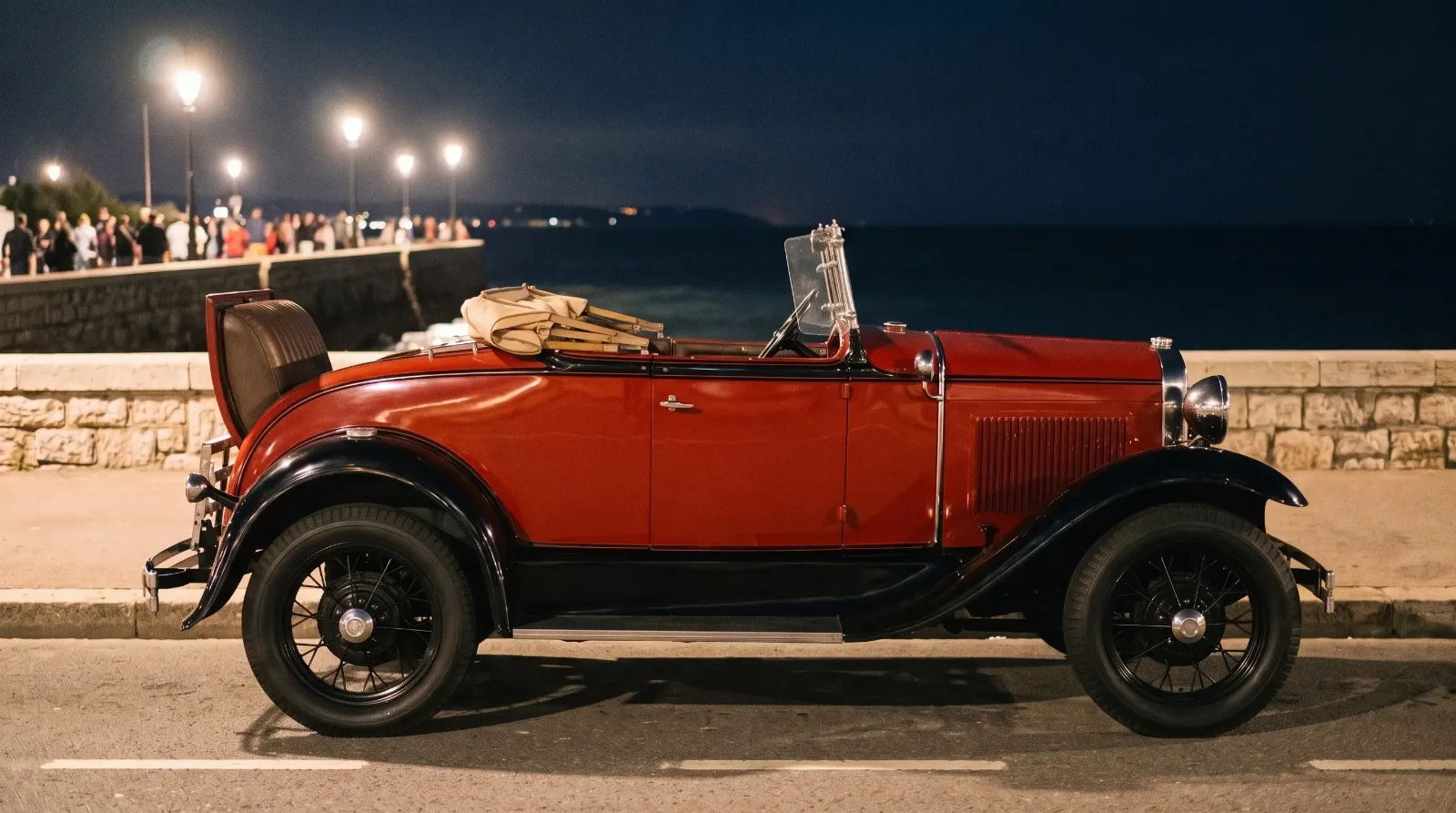
Have a
Ford Model A
for Sale?
Reach thousands of serious classic car collectors across the US.
Sell It Here →
Selling a classic? Here's how: the best sites to sell a classic car
Are You a Classic Car Dealer?
List your full inventory and connect with targeted classic car buyers.
Join as a Dealer →

About the author
Robert Halloran
Texas-based classic truck enthusiast with decades of experience buying, restoring, and writing about American pickups from the 1940s through the 1980s.
Related Listings - Ford Model A




Comments
Be the first to comment on this article.