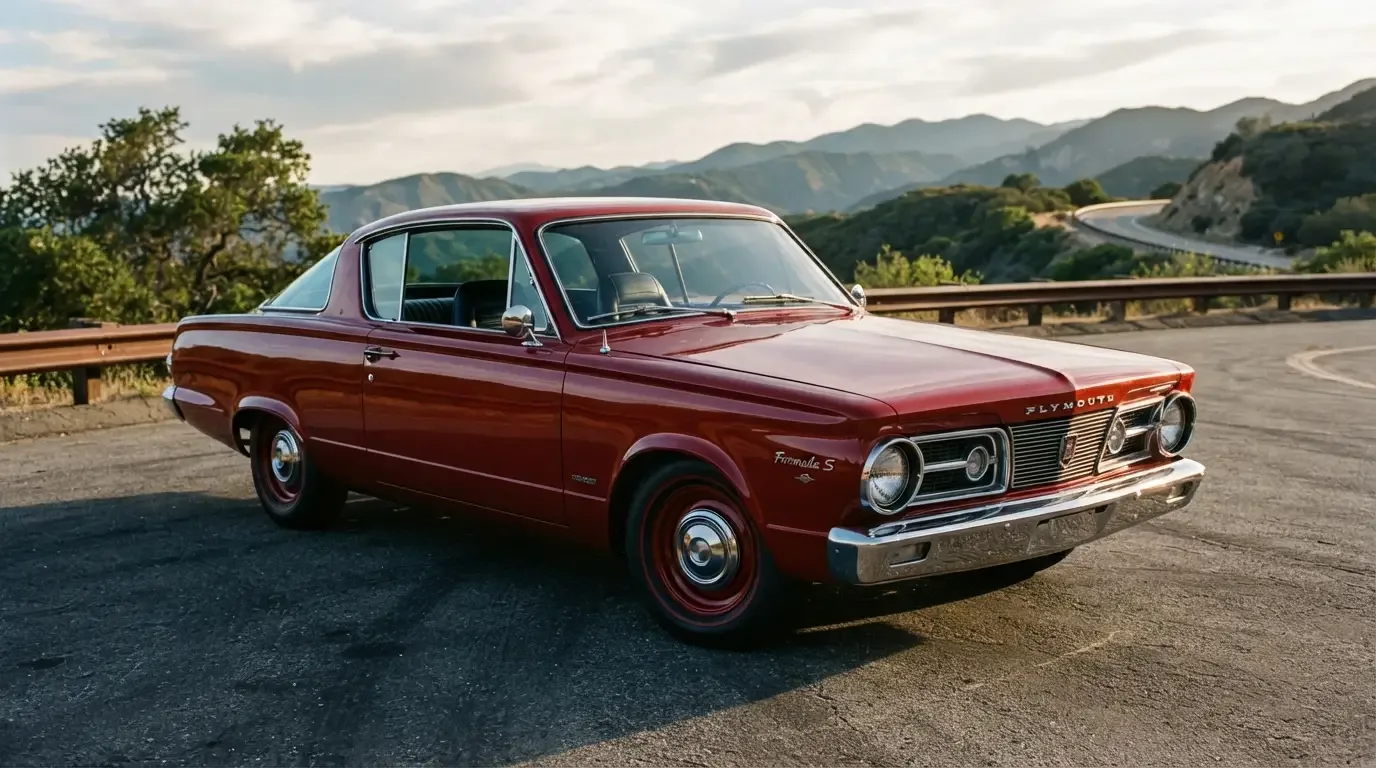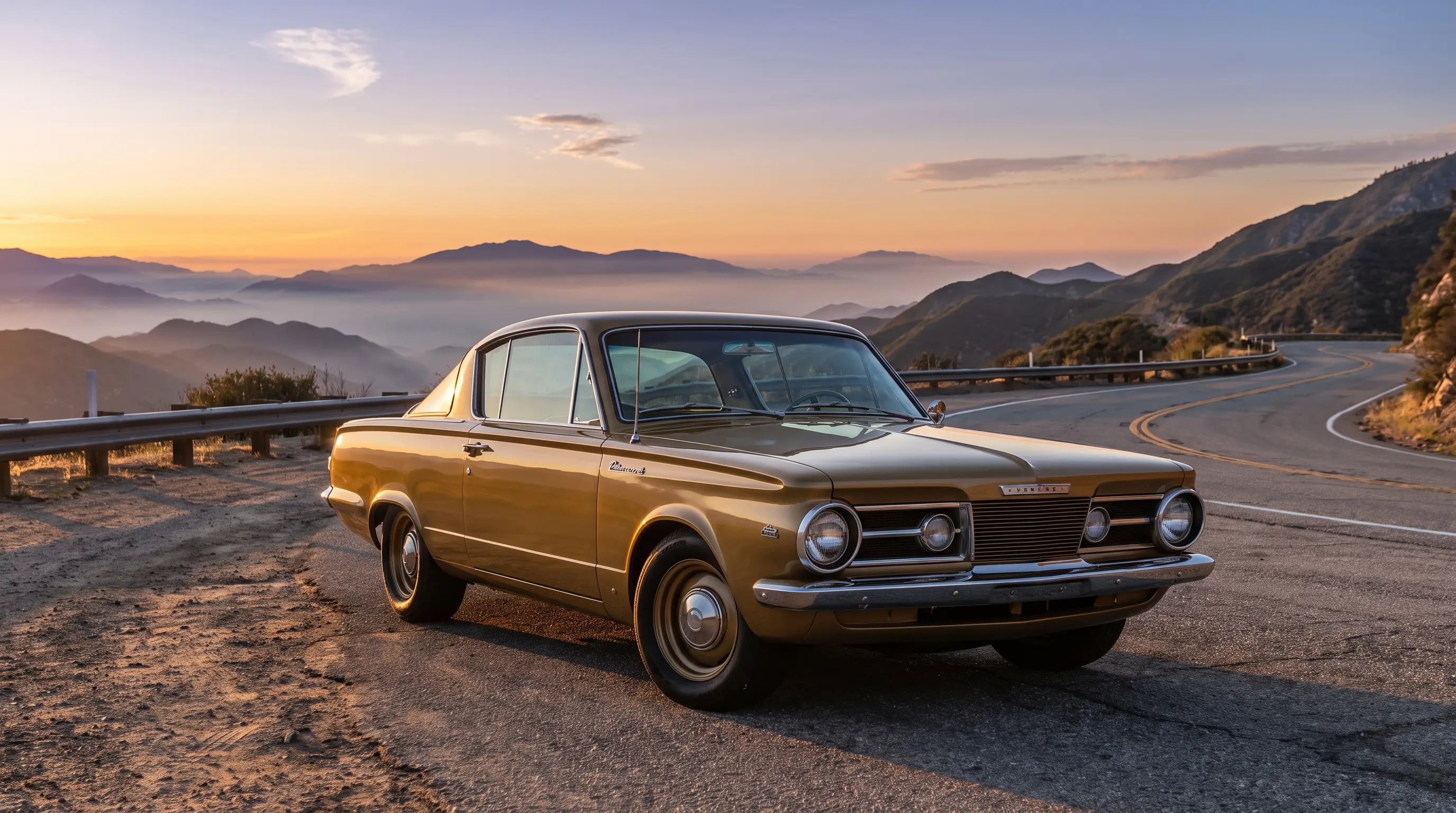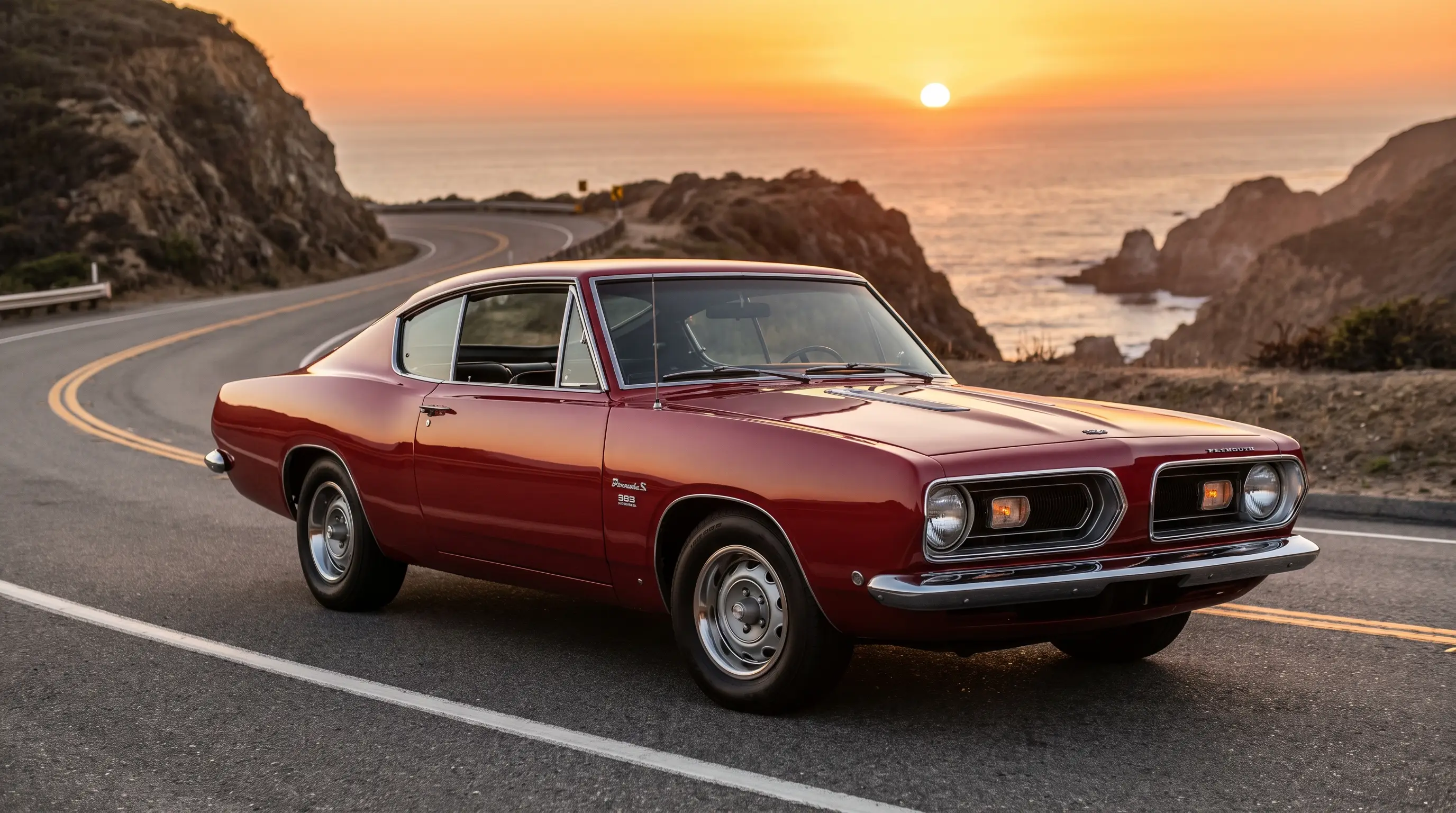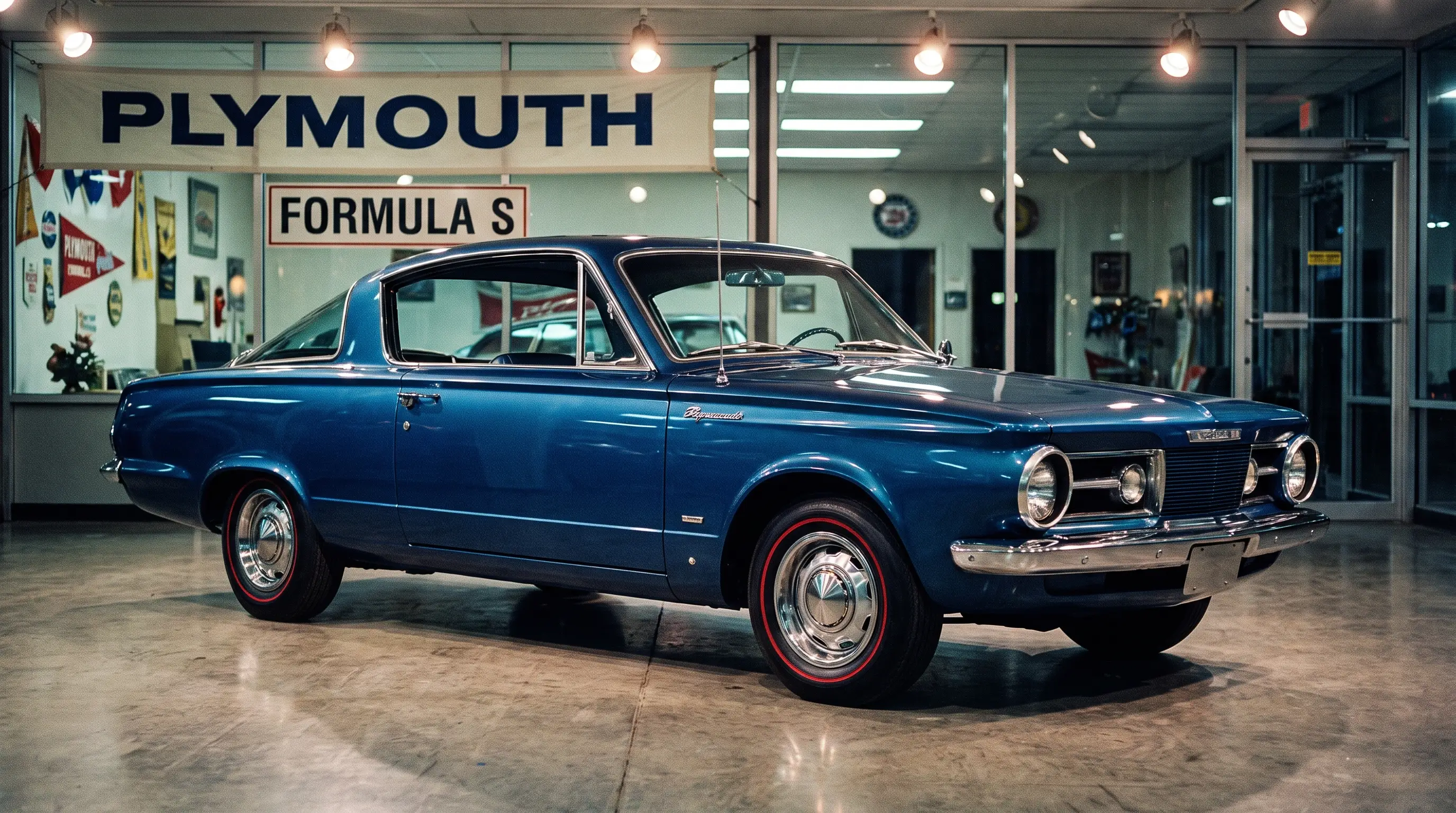
Plymouth's product planning records place the Formula S option's introduction in April 1965, about a year after the Barracuda itself reached dealers. That timing detail matters to anyone researching the 1965 formula s barracuda specifically, because it means the earliest Barracudas built that model year did not have the option available at all. A precise production date separates genuine early Formula S cars from Barracudas that simply picked up similar equipment through individual option selections without the actual package designation.
Filling a gap in the original lineup
The Barracuda launched in April 1964 as Plymouth's answer to a compact sporty car segment that was rapidly gaining attention, built on the existing Valiant platform with a distinctive fastback rear window as its signature styling element. What it lacked at launch was a genuine performance option to match the market's growing appetite for cars that looked sporty and actually handled that way. Plymouth's engineering staff spent roughly a year closing that gap, and the Formula S option that emerged in the spring of 1965 was the result.
Internal correspondence and period trade publications describe the package as a direct response to competitive pressure, an acknowledgment that the standard Barracuda's chassis tuning left performance on the table that a properly sorted suspension and a stronger engine could recover. That is a fairly candid admission for a factory to make, even implicitly, and it tells researchers something about how seriously Plymouth's engineers took the compact performance segment by 1965.
The timing also lines up with when rival manufacturers were sharpening their own compact performance offerings, and Plymouth's engineering staff would have been well aware of what competitors were bringing to market during the same window. A roughly year long gap between the Barracuda's launch and the Formula S option's arrival reads less like an oversight and more like a deliberate second phase of the car's rollout, one where the company could react to what the market actually wanted rather than guessing at launch.
"A roughly year long gap between a car's launch and its performance option tells you the factory was watching the market, not just following a plan drawn up a year earlier."
- Tom Ramirez
What the option actually specified
The Formula S package centered on the Commando 273 V8, Plymouth's high output tune of the 273 cubic inch small-block, rated at 235 horsepower through a four-barrel carburetor and a revised camshaft profile compared to the standard engine. Alongside the engine came a genuine handling package: heavy duty torsion bars, firmer shock valving, a front sway bar, and wider wheel and tire combinations that gave the car noticeably more grip than a standard Barracuda riding on its factory settings.
Exterior identification stayed relatively restrained for 1965, limited to specific badging rather than the bold stripe treatments that later muscle cars would adopt as a matter of course. Factory documentation from this period lists the badge placement and specification precisely enough that researchers can distinguish a genuine early Formula S from a standard Barracuda that simply received some of the same individual options without the full package designation.
Interior changes were similarly modest, generally limited to instrumentation upgrades and trim details that signaled the car's performance intent without overhauling the cabin entirely. Plymouth's approach in 1965 favored function over visual flash, a pattern that shifted noticeably as the Formula S option matured through subsequent model years and competitive pressure pushed manufacturers toward more aggressive styling statements.
How period reviewers received the package
Automotive press coverage from 1965 generally credited the Formula S option with meaningfully improving the Barracuda's road manners, an assessment that focused more on cornering behavior and body control than on straight line acceleration figures. That reception matched Plymouth's own marketing angle for the package, which positioned the Formula S against European sporting cars in some period materials rather than exclusively against domestic muscle car rivals.
Reviewers of the era were working from a compact platform that had not been originally engineered around a high output V8 and firm suspension tuning, which made the Formula S option's success notable within the context of its time. The car had to overcome a chassis design that predated the performance ambitions layered onto it, and by most contemporary accounts, it did.
Some period comparisons pitted the Formula S directly against rival compact performance offerings from Ford and Chevrolet, and Plymouth's engineers had reason to be satisfied with how those comparisons generally read. The 273 powered car was not the outright quickest in every test, but the combination of a genuinely upgraded suspension and a well matched engine gave reviewers a package that felt cohesive rather than assembled from a parts bin, which was not always true of rival offerings in the same price range.
Where this fits in the broader Formula S record
The 1965 debut represents only the starting point of a package that Plymouth continued updating through the rest of the decade, eventually offering bigger displacement engines including the 383 and 340 in later model years. For readers researching how the option changed after this first year, read the background on the complete Formula S history across every model year it was offered.
Buyers and researchers focused specifically on later big-block Formula S cars will also find it useful to compare directly against a subsequent model year covered in worth a look too, which documents how the package changed once the 383 engine became available and altered the car's balance considerably from where it started in 1965.
Verifying an original 1965 example today
Given the tight window between the Barracuda's launch and the Formula S option's introduction, verifying a genuine 1965 example requires factory documentation rather than assumptions based on equipment alone. Broadcast sheets, dealer invoices, and Chrysler's build records remain the standard for confirming a specific car's original specification, and researchers should treat any 1965 Formula S claim without that supporting paperwork with appropriate skepticism.
Given the narrow production window involved, roughly eight months between the option's introduction and the end of the 1965 model year, the population of genuine examples was never large to begin with, and decades of attrition have only tightened that supply further. That scarcity is precisely why documentation carries so much weight with this particular car, more so than with later Formula S model years that had longer production runs and larger surviving populations to draw comparisons from.
For collectors actively searching rather than simply researching, shop classic Barracuda listings to compare available examples against the documentation standards outlined here, since equipment alone cannot substitute for a verifiable factory record on a car this specific to a narrow production window.