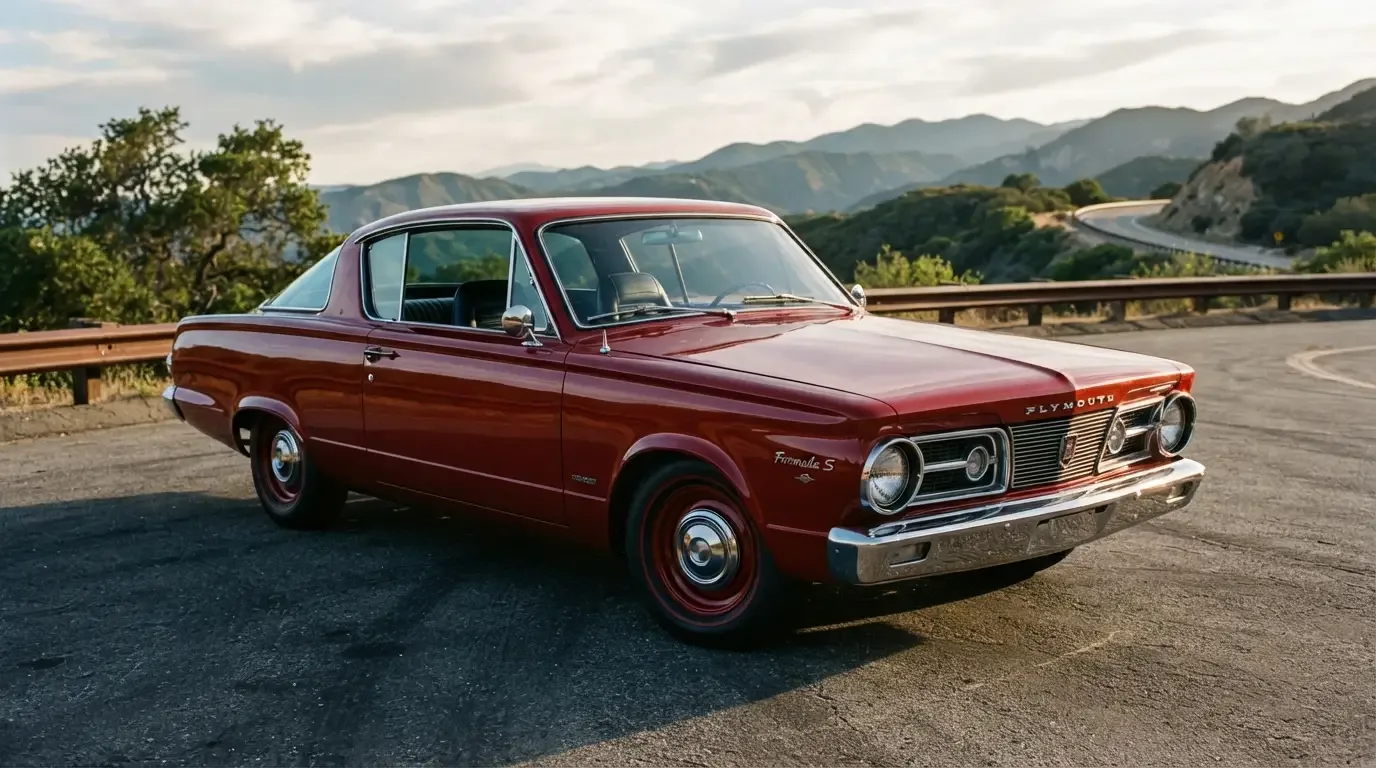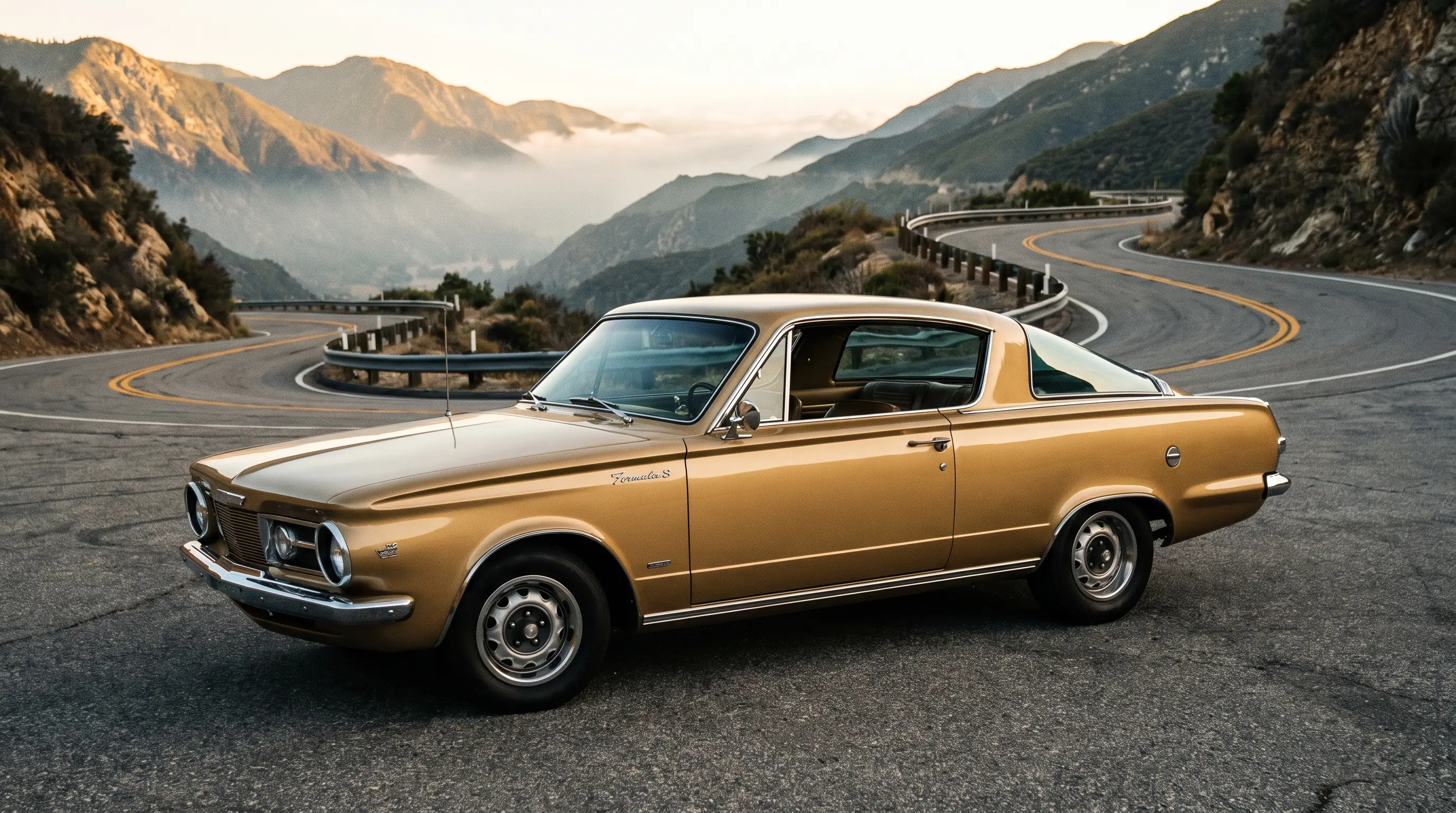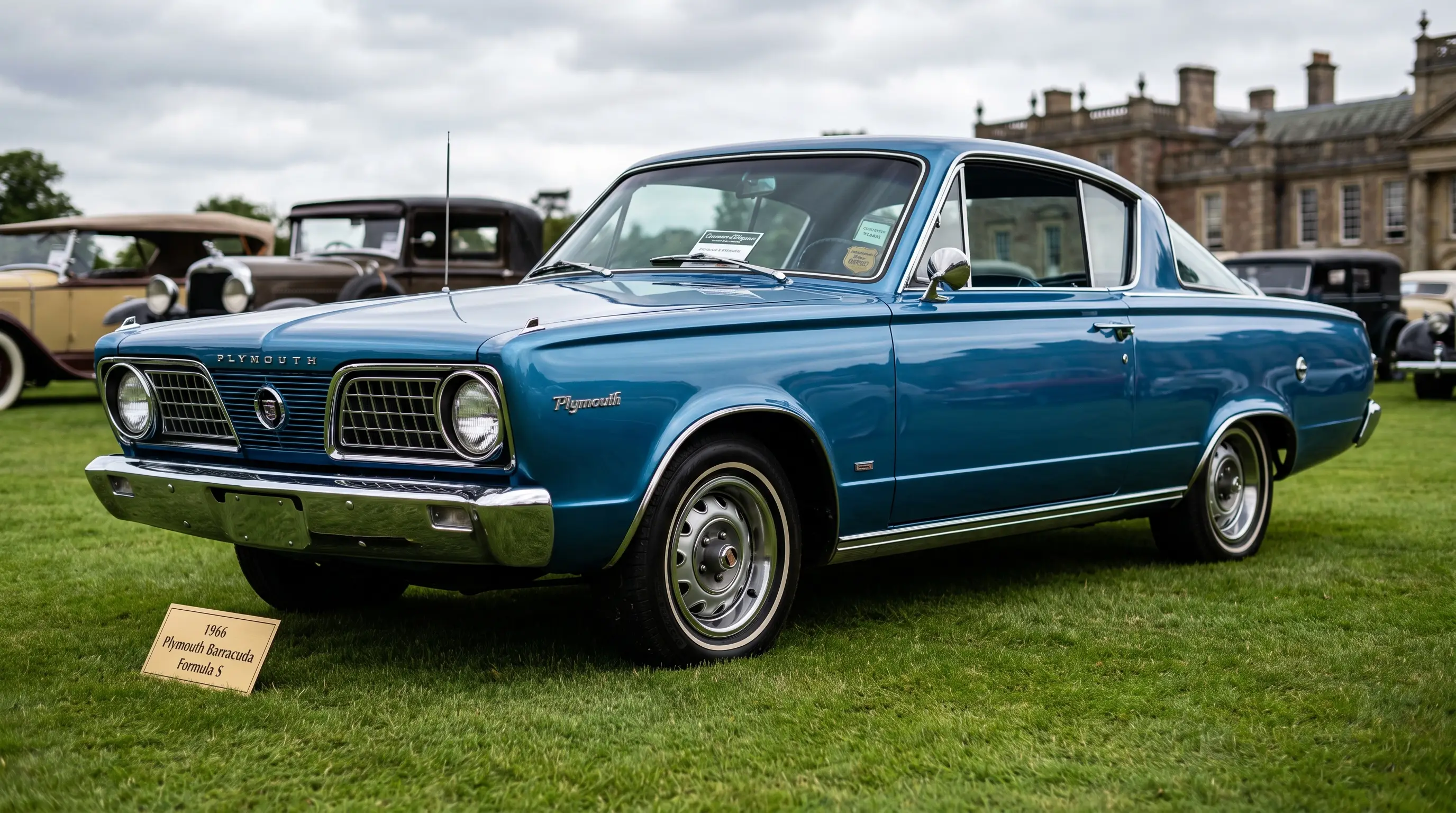
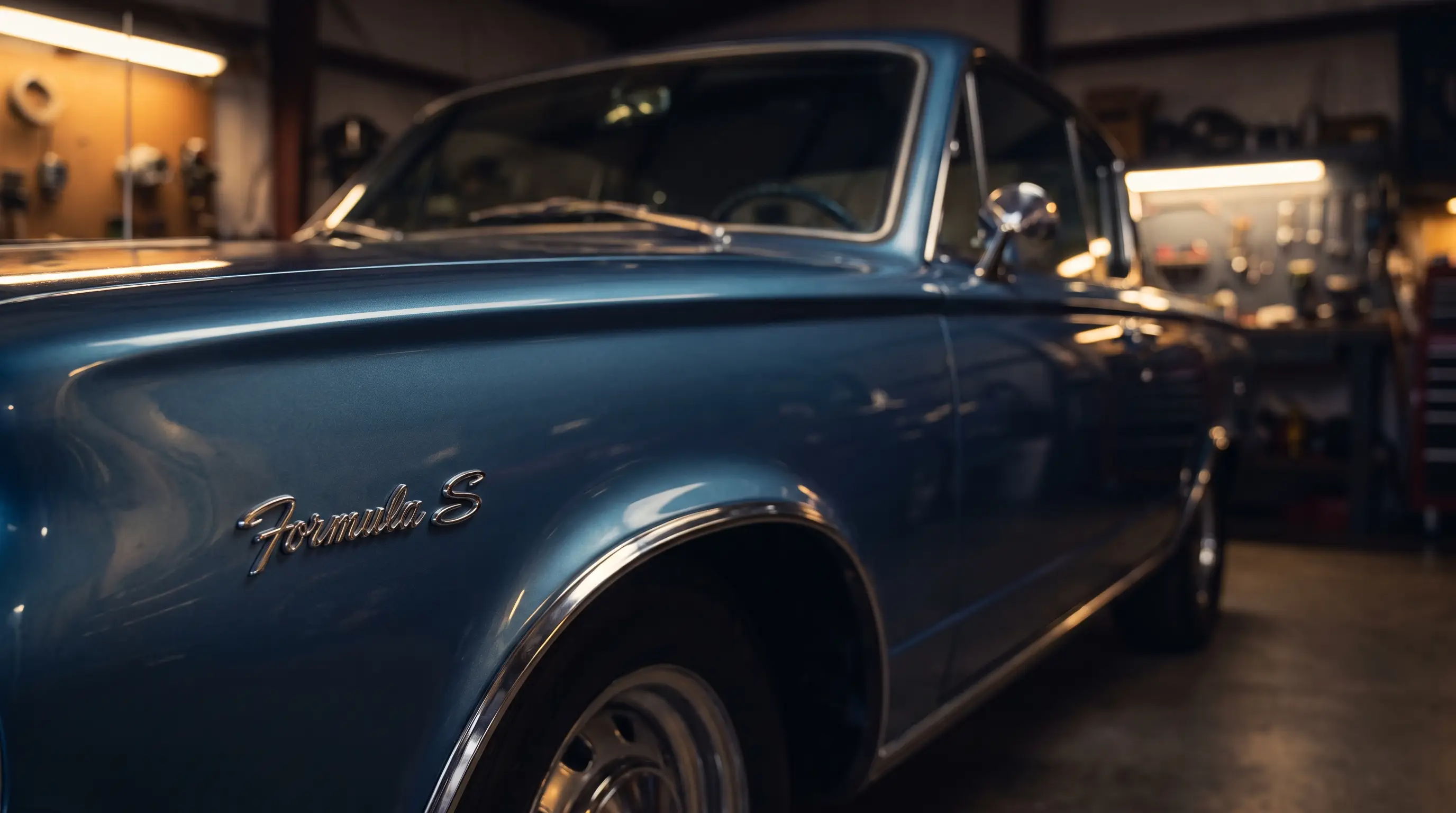
There is a small stamped script badge that shows up on the front fenders of certain Plymouth Barracudas, and if you ask around at a car show, half the people standing near one will tell you a different story about what it means. The Formula S emblem is not decoration. It is a build code made visible, and once you know how to read it, a plain looking Barracuda starts talking.
What the badge actually promised
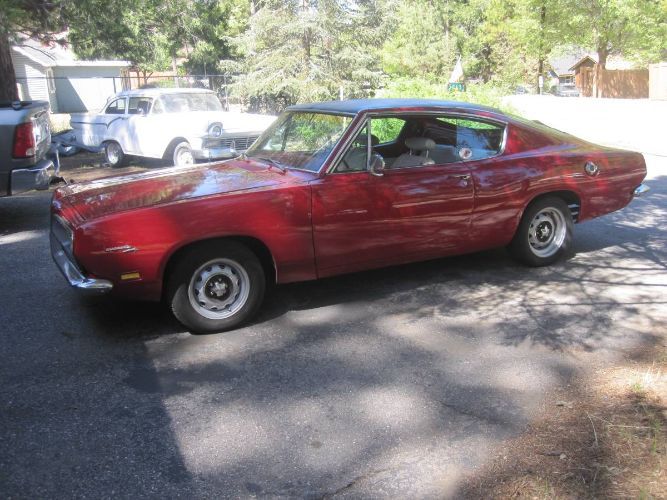
When Plymouth rolled out the Formula S package in April 1965, it was aimed at a very specific complaint. The first Barracuda, based on the Valiant, looked the part with that big wraparound fastback glass, but it drove like a compact family car because that is exactly what it was underneath. The Formula S option bolted on the Commando 273 V8, a firmer suspension package, wider steel wheels, and a Rallye instrument cluster with an actual tachometer. The fender badge told the guy at the next stoplight that this particular car was not the base model. It was Plymouth's way of saying "check the springs before you challenge this one."
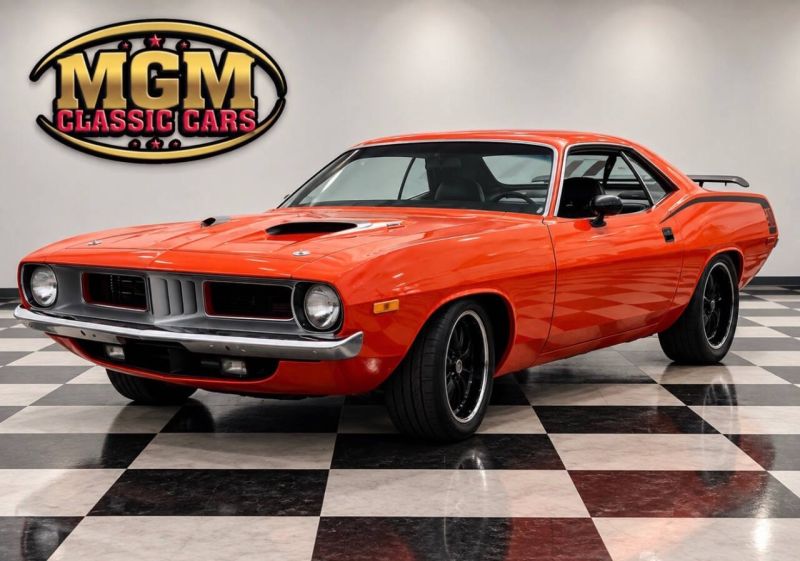
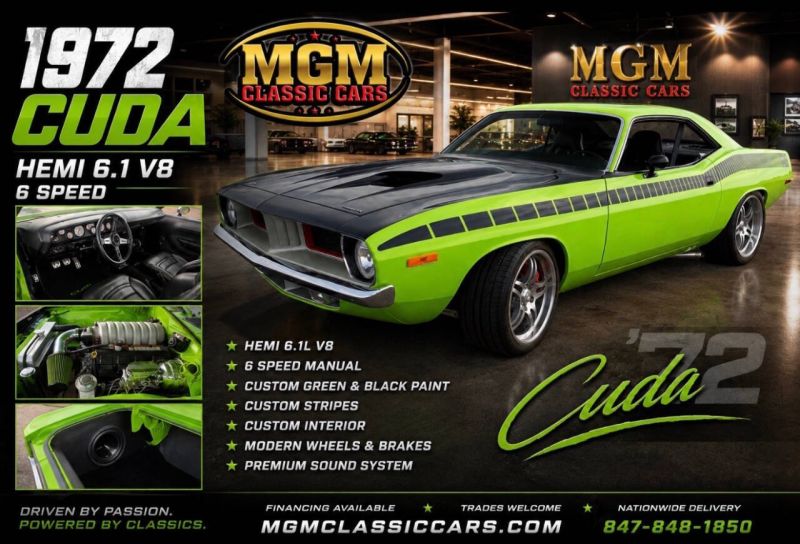
The Formula S badge did not actually follow the car onto its new E-body platform for 1970. When the Barracuda was redesigned that year, Plymouth retired the Formula S name and rolled its performance identity into the new 'Cuda trim instead, a car that could be ordered with the 340 four barrel, the 383, or bigger, riding on dual exhaust, a firmer torsion bar and rear leaf spring rate, and heavy-duty suspension. So if a badge on an E-body car reads Formula S rather than 'Cuda, that is worth a second look before you trust it. The emblem stayed small on the earlier cars. What it represented did not.
Reading the trim, not just the badge
Here is where I have watched people get tripped up at swap meets. The Formula S badge by itself does not tell you the engine. It is a suspension and handling package, and it was offered across a range of engines depending on the model year. A numbers-matching Formula S 340 is a different animal from a Formula S with a 383, and both are different from a car that just has the badge because someone bought a reproduction emblem at a parts show and stuck it on. The only way to know for certain what left the factory under that hood is the fender tag and the broadcast sheet if one survived with the car. I have heard plenty of estimates thrown around at swap meets for how many original fender tags survive on early Barracudas, and honestly nobody has a hard number that holds up to scrutiny, so treat any precise percentage you hear with a grain of salt.
What you can trust is the pattern. Formula S cars got a distinct hood treatment options list, wider Rallye wheels, and usually a bumblebee stripe or side stripe package that varied by year. The stripe alone is not proof either, since stripe kits get reproduced and reapplied all the time during restorations. Badge, stripe, tag, and broadcast sheet need to agree before I take a seller's word for what a car is.
Why the emblem still matters to buyers today
Collectors chase Hemi cars for the headlines, but the Formula S badge represents something more useful for most people shopping this market: a genuinely quick, genuinely well handling Barracuda that does not require a second mortgage. A documented Formula S 340 from the early 1970s delivers real performance, real period-correct swagger, and a purchase price that leaves room to actually drive the thing instead of trailering it between shows. That is not a small advantage. A car you can drive is a car you actually get to enjoy.
The emblem also carries weight at resale. A verified Formula S car, tag matched and documented, tends to hold a clear premium over an otherwise identical Barracuda without the package, because buyers know exactly what they are getting: the suspension, the engine tier, the visual cues, all confirmed rather than assumed. If you are looking at a Barracuda with a Formula S badge and want the whole picture on how the package evolved year to year, it is worth digging into before you commit to a purchase.
"I've had guys hand me a fender badge in a plastic bag like it's a deed to the car. It's not. It's a clue. Match it to the tag or you're just buying a nice looking guess."
- Wayne Coburn
Spotting a genuine package versus a dressed-up clone
The clubs have a rhythm for this kind of verification, and it usually starts with the same three questions. Does the fender tag list the correct suspension and trim codes for Formula S. Does the VIN decode to an engine that was actually offered with the package that model year. Does the car have any paperwork trail, even a partial one, tying it back to the original dealer or a documented restoration. None of those questions require a professional appraiser, just patience and a willingness to look past a shiny paint job.
What trips up first time buyers most often is assuming the badge alone settles the matter. It does not, and it never has. Plymouth dealers occasionally installed trim pieces at the dealership level that were never coded at the factory, and decades of parts swapping have muddied plenty of otherwise honest cars. None of this makes a non-matching Formula S clone worthless. It just means the price should reflect what it actually is rather than what the seller wishes it were.
For anyone ready to go looking, the smartest approach is to walk in already knowing the difference between a documented car and a dressed one, then let that knowledge do the negotiating. If you want to find a classic Barracuda worth that kind of scrutiny, treat the emblem as the first clue in a longer investigation, not the final word.
How the package evolved across the decade
The Formula S badge did not mean the same thing in 1966 that it meant in 1970, and treating it as a single fixed spec across the entire production run is one of the more common mistakes I see at swap meets and online listings alike. On the first generation Barracuda, the package was built around the Commando 273, a small block that was respectable for its day but nowhere near what buyers would associate with serious muscle car performance a few years later. Plymouth kept refining the formula as bigger engines became available, and by the time the second generation cars arrived in 1967, Formula S buyers could option into a 383 alongside the smaller engines, a meaningful jump in both weight and output that changed the character of the package considerably.
When the E-body arrived in 1970, the Formula S name itself was retired, and that same suspension-and-trim philosophy carried on under the 'Cuda badge instead, layered on top of a much wider spread of available engines, from the 340 all the way up to the 440 and 426 Hemi depending on year and configuration. That breadth is exactly why a badge alone tells you so little without the tag to back it up. A 1966 Formula S and a 1970 'Cuda share a basic philosophy but not a name, and they are meaningfully different cars built for different competitive landscapes, and treating them as interchangeable ideas does a disservice to both.
The badge as a piece of the bigger story
Every small stamped emblem on an old car is really a compressed version of a much longer story about what the factory was trying to sell and who they thought was buying it. The Formula S badge tells you Plymouth wanted a piece of the growing performance car market and built a package specific enough to earn its own name on the fender. That is worth more to me than most of the flashier options lists from the era, because it represents an actual engineering decision rather than a marketing flourish. Next time you see one of these small script badges at a show, take the extra minute to ask what is actually behind it. Sometimes the answer is exactly what you hoped. Sometimes it is a good story about a car that used to be something else. Either way, it is worth knowing which one you are looking at before the checkbook comes out.