
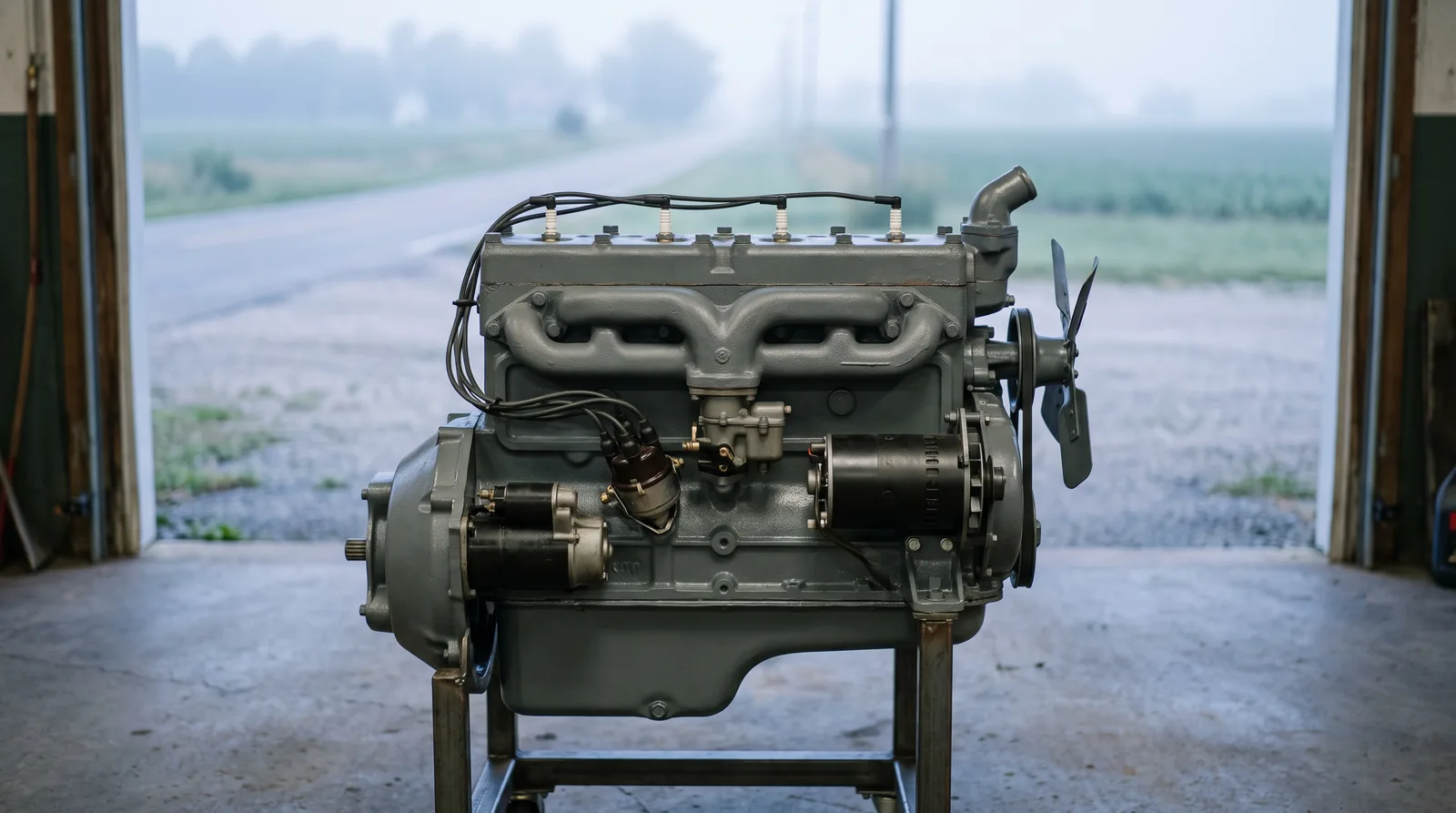
The 302 never left Ford. It left the Mustang. For 1980 and 1981 the only V8 on the order sheet was a 4.2-liter rated at about 120 hp, sold with an automatic only, the lowest-rated V8 Mustang Ford ever built. Then came the fox body Mustang 5.0. Over the next five model years Ford reworked that small-block almost every season, from a 157 hp two-barrel in 1982 to a 225 hp sequential-injected engine for 1987. That is 68 more horsepower from the same 302 cubic inches, and most of the engine bay looked the same. This is where the power actually came from, year by year and part by part.
Car Features
7 min read
The 5.0 HO: How the 302 Brought Back Mustang Performance
From 157 hp in 1982 to 225 hp in 1987: the hardware, year by year, that turned the Fox body Mustang 5.0 into Ford's cheap V8 hero.
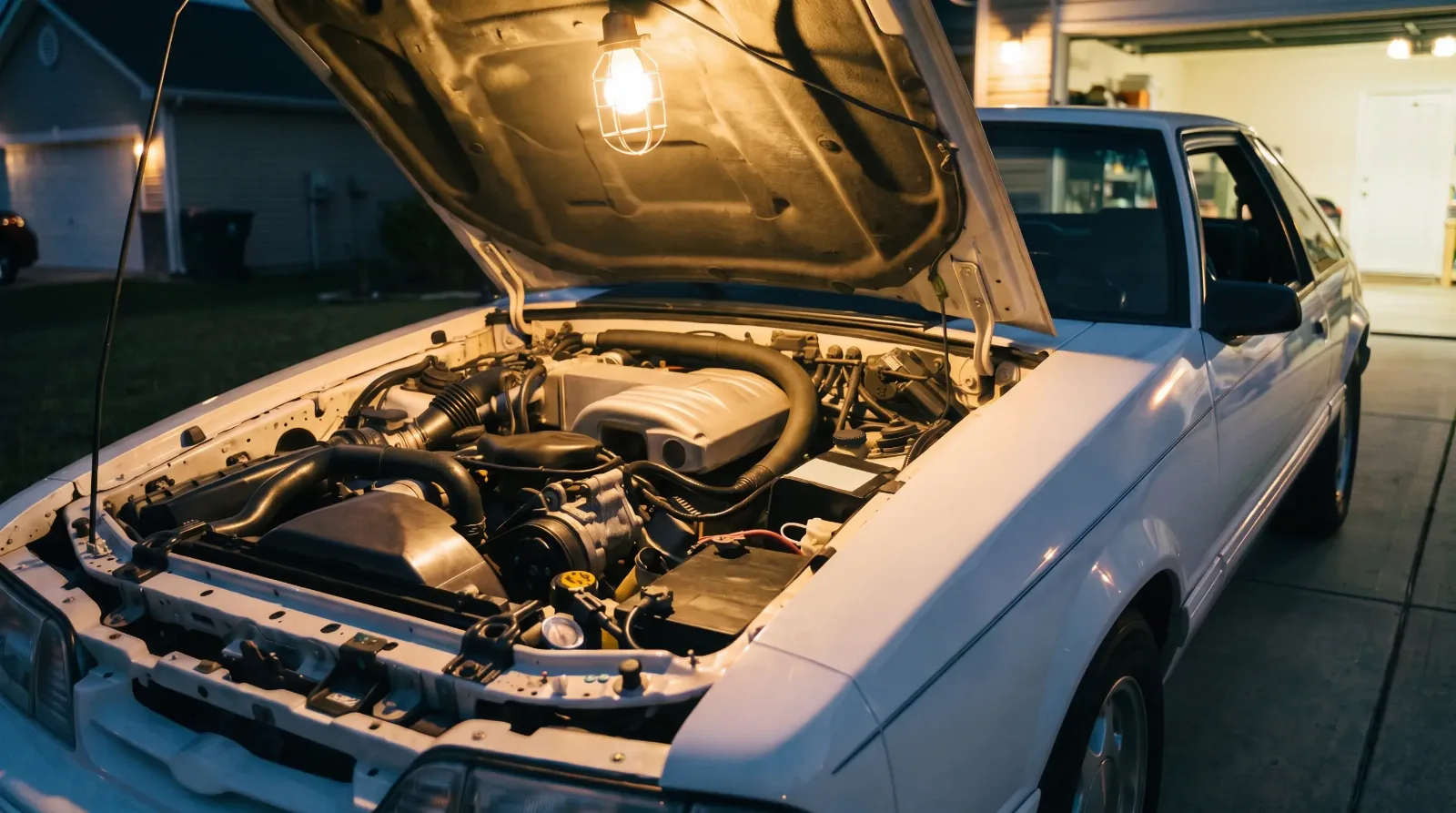
Where the fox body Mustang 5.0 started
The first Fox Mustang had a V8. For 1979 the 302 was on the engine list at 139 to 140 hp, sharing the top of the catalog with the 2.3 turbo four. A year later it was gone, replaced by the 4.2 (255 cubic inch) V8. That is the hole the 5.0 HO climbed out of, and it explains why a 157 hp rating in 1982 looked like good news to anyone paying attention.
For 1982 Ford brought back the GT name and gave it the 5.0 HO, its high-output version of the 302, on a two-barrel carburetor. Rated output was 157 hp, with torque quoted at 235 to 240 lb-ft depending on which source you read. Those are net numbers. Against the 4.2 it replaced, that is roughly a third more power in a single model year. The launch car and its "Boss is back" advertising have their own story, and the full Fox timeline has the details. What matters here is that 157 hp was a floor, and Ford spent the next five years raising it.
Carburetor to fuel injection, 1983 to 1986
The changes came fast and they were real hardware, not decal packages. For 1983 the 5.0 got a 600 cfm Holley four-barrel and went to 175 hp. The T-5 five-speed arrived partway through the year. For 1984 the manual cars stayed at 175 hp with the four-barrel, while automatics got a central fuel injection version rated at 165 hp. Two induction systems on one engine in one year. Ford was hedging.
1985 was the big carbureted year. Manual-transmission cars got a roller camshaft, E5AE cylinder heads, a revised Holley four-barrel and less restrictive manifolds. The rating jumped to 210 hp. It was also the last carbureted V8 Mustang. Automatic cars stayed on central fuel injection at 165 to 180 hp, so the gap between a stick and an automatic 5.0 that year was as much as 45 hp.
For 1986 the carburetor was gone. The 5.0 switched to sequential multiport fuel injection, the first 302 to get it, and the rating went down to 200 hp. Read that again: the injected engine was rated 10 hp under the carbureted engine it replaced. I have not seen a Ford document that explains the drop, so I will not invent a reason. The same year, V8 cars got the 8.8-inch rear axle, which mattered more to the people who would later add power than any rating on the sticker.
| Model year | Induction | Key hardware change | Rating (SAE net) |
|---|---|---|---|
| 1979 | Carburetor | 302 offered in the new Fox car | 139 to 140 hp |
| 1980 to 1981 | Carburetor | 302 dropped for a 4.2 V8, automatic only | 118 to 120 hp |
| 1982 | Two-barrel | 5.0 HO arrives in the GT | 157 hp |
| 1983 | Holley four-barrel, 600 cfm | T-5 five-speed mid-year | 175 hp |
| 1984 | Four-barrel (manual); CFI (automatic) | Two fuel systems in one year | 175 hp / 165 hp |
| 1985 | Revised four-barrel (manual); CFI (automatic) | Roller cam, E5AE heads, freer manifolds on manual cars | 210 hp / 165 to 180 hp |
| 1986 | Sequential multiport injection | 8.8-inch rear axle on V8 cars | 200 hp |
| 1987 to 1988 | Multiport, speed-density | E7TE heads | 225 hp, 300 lb-ft |
| 1989 to 1992 | Multiport, mass-air-flow | MAF replaces speed-density | 225 hp |
| 1993 | Multiport, mass-air-flow | Hypereutectic pistons; engine rerated | 205 hp, 275 lb-ft |
1987: 225 hp, then six years at the same number
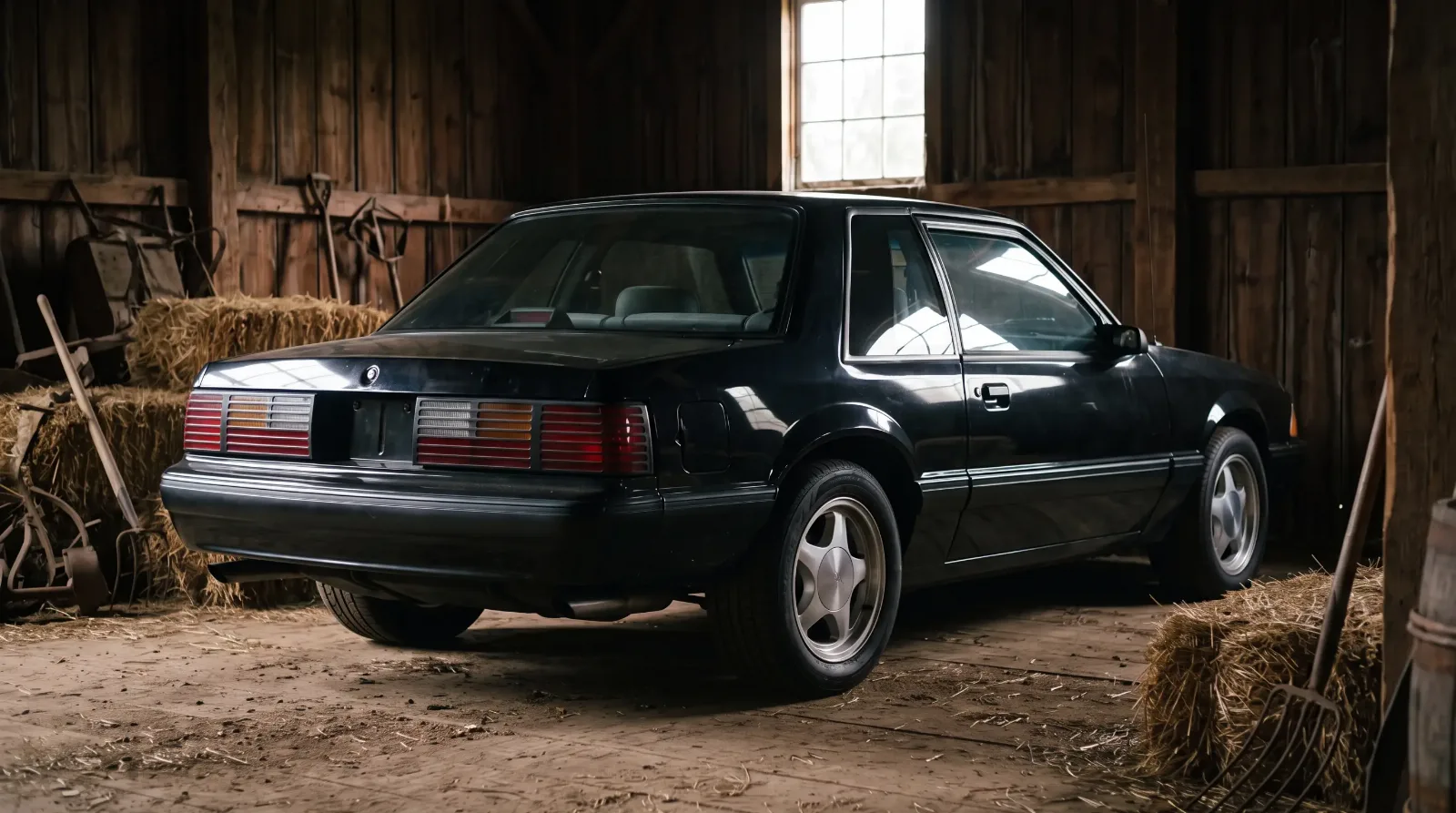
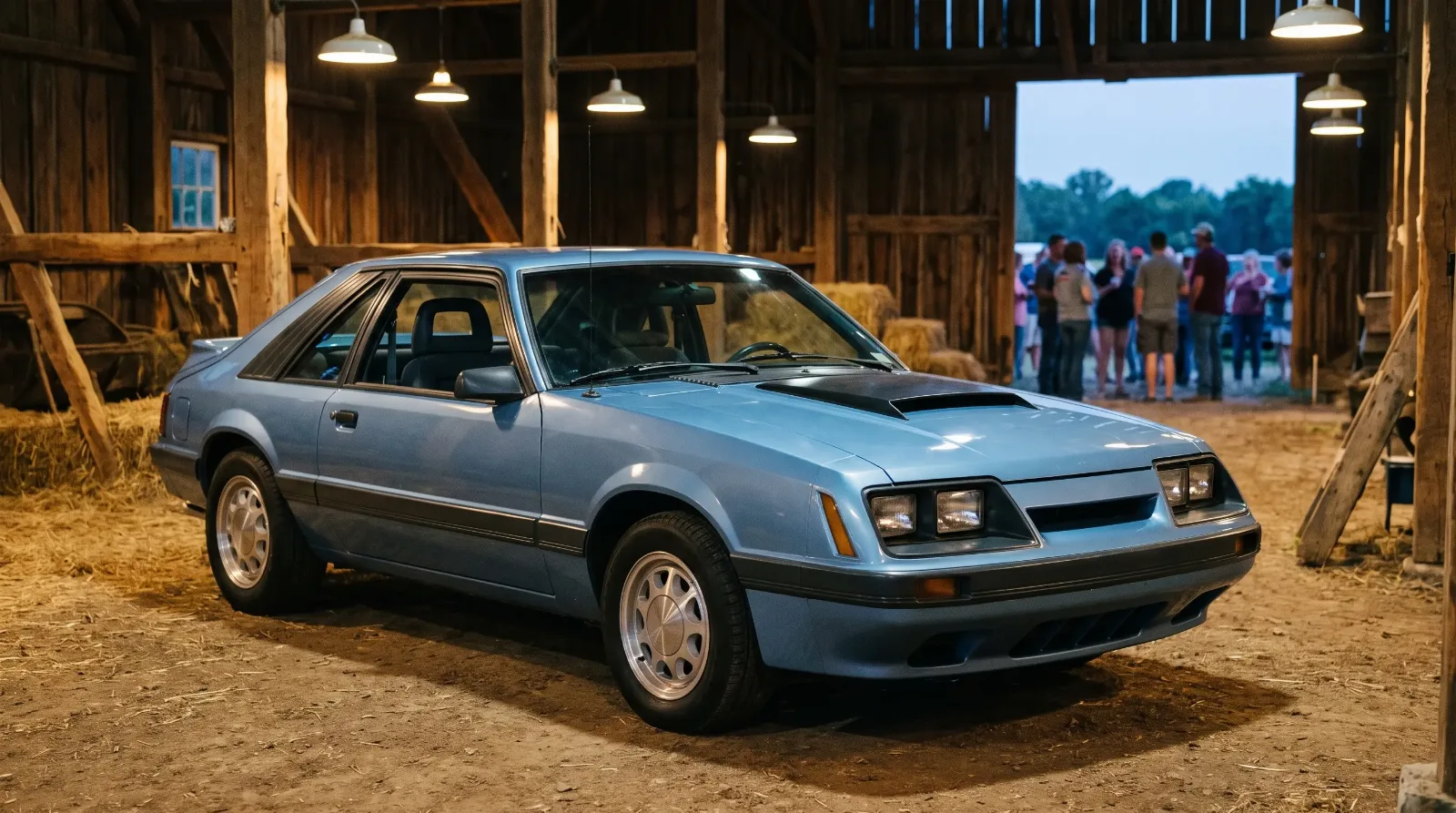
For 1987 Ford put E7TE heads on the injected 5.0 and the rating climbed to 225 hp at 4,200 rpm and 300 lb-ft at 3,200 rpm. That is the number most people mean when they say "5.0." It stayed on the books through 1992, which is a long time for anything to sit still in a Ford engine program. The same year brought the aero nose, and whether your car is four-eye or aero is still the first question at any Fox gathering. Under the hood, the aero cars are where the 225 hp engine lives.
The price is what made it dangerous. In 1987 the base coupe started at $8,271 and the LX 5.0 package listed at $1,885. MustangSpecs puts the weight the GT package added at about 200 lb over an LX 5.0. The exact gap moved with body style and options, but the cheapest V8 car was also the lightest. Cheap, light and 300 lb-ft. That is the whole recipe. The California Highway Patrol had done the same math years earlier: it asked for a light pursuit car in 1982 and ordered 400 notchbacks, and by 1993 nearly 15,000 SSP police Mustangs had gone to more than 60 agencies.
The 1989 switch from speed-density to mass-air-flow fuel injection did not change the rating, but it changed the aftermarket. A speed-density system calculates airflow from a fixed map, so it gets confused when you change the cam, heads or intake. A mass-air system measures the air that actually goes in. That is a large part of why the late 5.0 became the base for everything from bolt-on street cars to tubbed Pro Street Mustangs. The engine responded to parts, and the parts were cheap.
The 1993 rerating: same engine, smaller number
For 1993 the 5.0 was rerated to 205 hp and 275 lb-ft. Owners took it personally. The explanation on record says the new figure was more accurate, because the older ratings predated the mass-air system, and it points to minor cam profile changes and the switch to hypereutectic cast pistons for all 302s that year. That account comes from a single reference, and I have not found Ford's own statement. So treat the reasons as plausible, not proven.
The same year Ford's new SVT group showed what the 302 could do with better parts. The 1993 Cobra got GT-40 heads, a Cobra upper intake, its own cam, larger injectors and a 65 mm throttle body, and it was rated at 235 hp. Thirty horsepower over the GT from the factory's own parts bin. Tuners had been saying that for years.
"The 1993 car did not lose 20 horsepower. It lost 20 horsepower on paper. Put a 1992 and a 1993 5.0 on the same dyno and you are measuring cam and piston details, not a different engine. The window sticker is a document. The dyno sheet is the evidence."
Dan Reeves
Did the 5.0 really bring back American performance?
Start with the honest comparison. A 1970 Boss 302 was rated at 290 hp gross. The 1982 5.0 HO was rated at 157 hp net. Line those up and the Fox car looks weak, but the two numbers were measured different ways. Gross ratings were taken on a stand without the accessories and exhaust a real car carries. Net ratings include them. The muscle-era figures in this piece and the Fox figures here are not on the same scale, and anyone who compares them straight is comparing paperwork.
What the 5.0 did, by the numbers, was take the Mustang from 118 to 120 hp in 1981 to 225 hp in 1987, on a 1987 LX coupe that listed at about $10,150 with the LX 5.0 package, before any other options. It did that in steps a buyer could see every model year. Whether that "brought back American performance" is a bigger claim than one engine can carry on its own. It brought back Mustang performance, and it made a cheap V8 car that more than 60 police agencies put on patrol. The title holds if you read it that way.
The pushrod 5.0 outlived the Fox body by two years. The 1994 and 1995 SN95 GT carried it at 215 hp and 285 lb-ft, and 1995 was its last model year before the 4.6 modular V8 took over. The Fox cars that made its name are still around in real numbers, and the Fox Body Mustangs listed right now show how many of them people kept.
Sources and notes
Related Reading
Have a
Ford Mustang
for Sale?
Reach thousands of serious classic car collectors across the US.
Sell It Here →
Selling a classic? Here's how: compare the places to sell classic cars
Are You a Classic Car Dealer?
List your full inventory and connect with targeted classic car buyers.
Join as a Dealer →
#Ford Mustang
#302 V8
#fox body mustang
#mustang gt
#5.0 HO
#LX 5.0
#classic Mustang history
#Mustang 5.0

About the author
Dan Reeves
Performance engine builder from North Carolina's motorsports corridor, focused on swaps, forced induction and making real, repeatable power.
Related Listings - Ford Mustang
More in Car Features



Comments
Be the first to comment on this article.