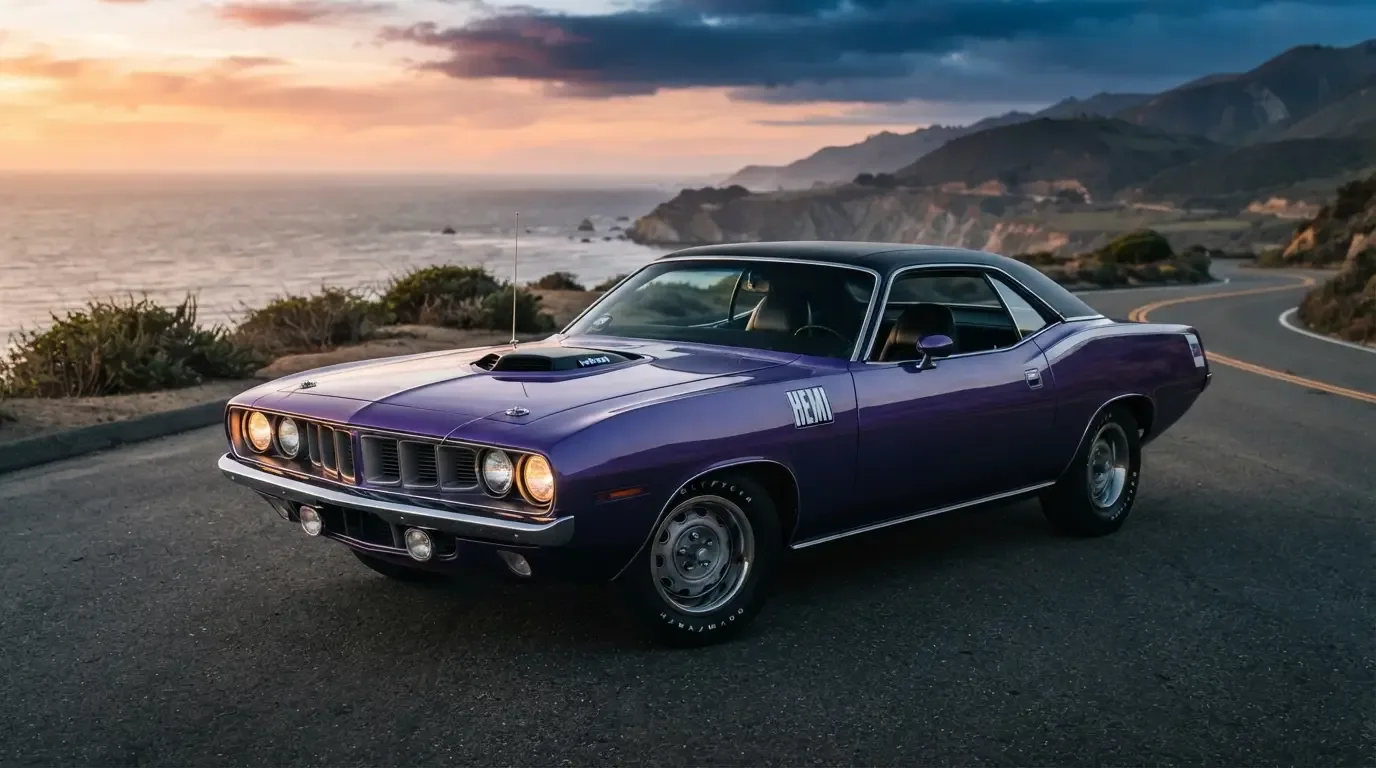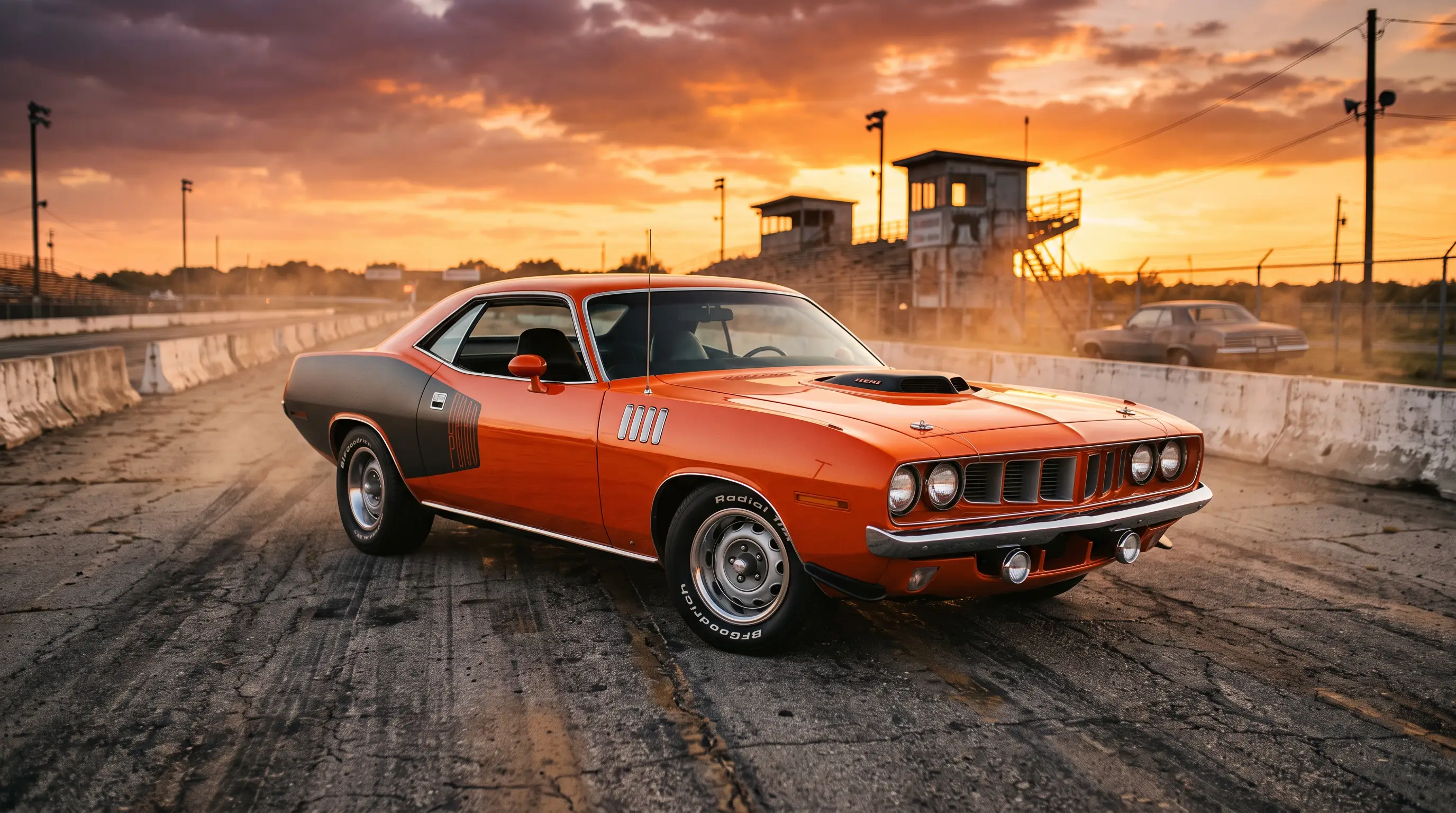
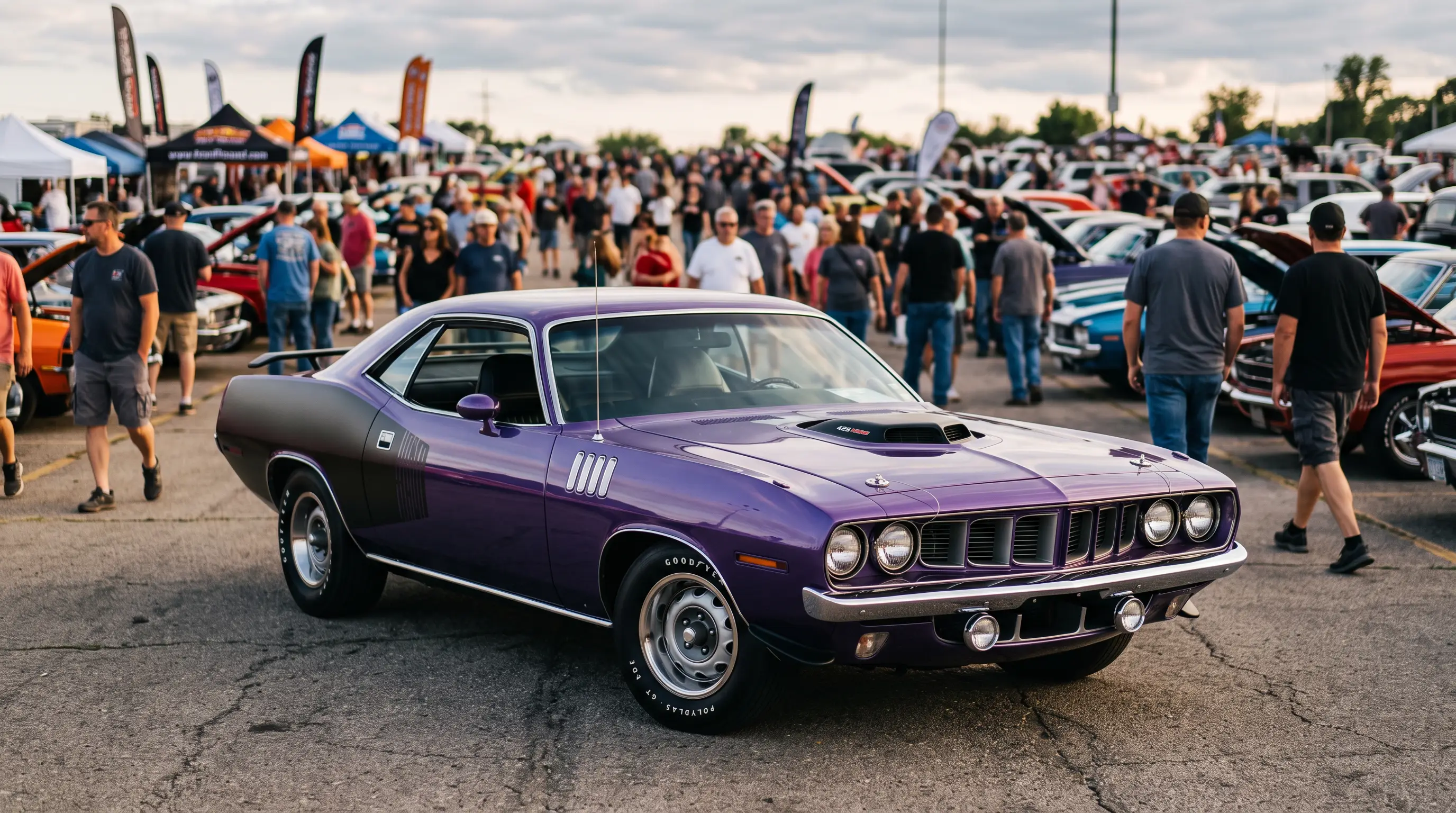
Every hemi cuda legend starts with the same basic fact. Plymouth built a small number of E body cars with the 426 Hemi for two model years, then stopped. That is it. No decade long production run. No slow fade into obscurity. A sharp start, a sharp end, and a car left behind that decades of buyers decided was the best Mopar ever built. The legend did not happen by accident. It happened because the numbers back it up.
Rarity built the reputation
Low production numbers do not automatically create a legend. Plenty of rare cars from this era are forgotten. What separated the Hemi Cuda was the combination of low numbers and real performance credentials. The 426 Hemi was already a proven, feared engine from NASCAR and drag racing before it ever went into a Barracuda. Putting it into the smallest, lightest body Plymouth had available created a car that backed up its reputation on the street and at the strip, not just on a spec sheet.
That matters. A rare car with mediocre performance becomes a footnote. A rare car with genuine, provable performance becomes a legend. The Hemi Cuda checked both boxes, and that combination is why it still commands attention more than fifty years later.
The number every collector knows
Ask a Mopar collector how many Hemi Cuda convertibles Plymouth built across both years and most can recite the figure without hesitation. Roughly 25 to 28 Hemi Cuda convertibles were built across the two years combined, 14 in 1970 and somewhere around 11 to 14 in 1971 depending on which registry count you trust. That number gets repeated so often in this hobby it has become shorthand for the entire legend. Small number. Big reputation. That is the whole equation.
Numbers like that do more work than any marketing campaign ever could. They give collectors a concrete fact to anchor a story around, and stories built on verifiable facts last longer than stories built on hype. That is exactly what happened here.
| Legend factor | Detail |
|---|---|
| Engine | 426 Hemi V8, race-proven before street use |
| Production window | 1970 to 1971 only |
| Body styles | Hardtop, convertible |
| Key reputation driver | Low production plus proven performance |
How word of mouth kept the legend alive
For years after production ended, the Hemi Cuda was not the headline collector car it is today. It took decades of enthusiast magazine features, club gatherings, and word of mouth among people who actually owned or drove one to build the reputation into what it is now. Collectors talked. Stories got repeated. The car earned its status the slow way, through consistent reinforcement rather than a single dramatic event.
That slow build matters because it means the legend rests on something real. Hype driven reputations tend to collapse once the hype fades. Reputations built over decades by people who actually experienced the car tend to hold, and that is exactly the pattern the Hemi Cuda has followed since production ended.
"The legend is not marketing. It is fifty years of people who drove the car agreeing on the same thing. That kind of consensus does not happen for cars that do not deliver."
- Dan Reeves
Where the legend gets tested
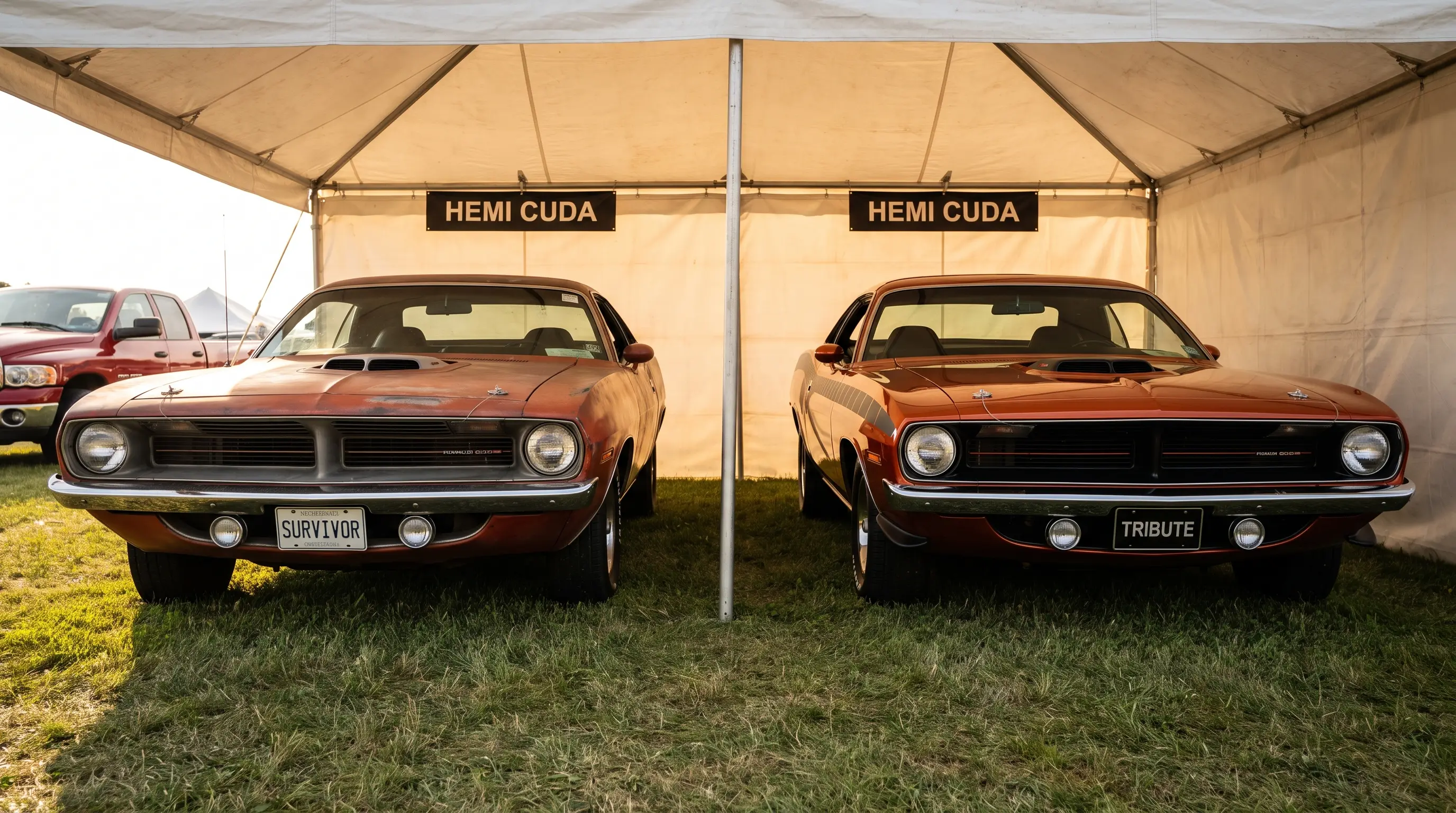
Every legend attracts imitators, and this one is no exception. Clones and tribute cars wearing Hemi Cuda badges and stripes are common. Some are built honestly and sold honestly as tributes. Some are not, and get passed off as the real thing to buyers who do not know to ask for documentation. The legend itself has never been in question. What gets tested, over and over, is whether a specific car in front of you actually earns the name.
That is why documentation carries so much weight in this market. A broadcast sheet and factory build records are not paperwork for its own sake. They are the difference between owning the legend and owning a very good looking story about it.
Pop culture gave the legend a second push
Movies, magazine covers, and model kits kept the Hemi Cuda in front of people who never got near a real one. A kid who saw a Hemi Cuda on a poster in 1985 grew up, made money, and went looking for the real thing thirty years later. That pipeline has run for decades and shows no sign of stopping. Pop culture exposure does not create value on its own, but it keeps a car in front of buyers long enough for the underlying rarity to do its work.
Compare that to cars with similar or better period performance numbers that never got the same cultural exposure. Some of those cars are objectively rarer today. Few of them command anywhere near the same money. Exposure plus rarity built this legend. Rarity alone would not have been enough.
What the legend is not
The legend is not a claim that every Hemi Cuda drove perfectly or that the factory build quality was flawless. Plenty of period road tests noted rough edges, and I have read enough of them to know the car was not without its quirks. The legend is specifically about the combination of engine, rarity, and timing, not a claim of mechanical perfection. Collectors who understand that distinction tend to make better buying decisions than those chasing an idealized version of the car that never quite existed.
Why the legend still holds up
Fifty plus years after the last one left the factory, the Hemi Cuda has not faded the way some period rivals have. Prices have not softened. Interest has not cooled. If anything, each new generation of collectors entering the hobby seems to arrive already primed to want one, having grown up hearing the same reputation repeated by the generation before them.
For the full production history behind the reputation, the whole picture covers exactly how Plymouth built this car and why the window was so short. Understanding that background is what separates casual admiration from genuinely informed collecting.
If you want to see what carries that legend today, shop classic Barracuda listings and compare documented examples against the reputation. The number of genuine cars left is small. The number of people who want one keeps growing. That is not a formula that reverses itself easily, and it is exactly why the legend shows no sign of fading.
Bottom line. The hemi cuda legend rests on three things that all check out under scrutiny. Real rarity. Real performance. Real staying power across five decades of collector attention. Take any one of those away and you get a different, smaller story. Together they built the reputation this car still carries today, and nothing on the horizon suggests that changes anytime soon. Buyers chasing that legend just need to remember it lives in the paperwork as much as in the badge on the fender.