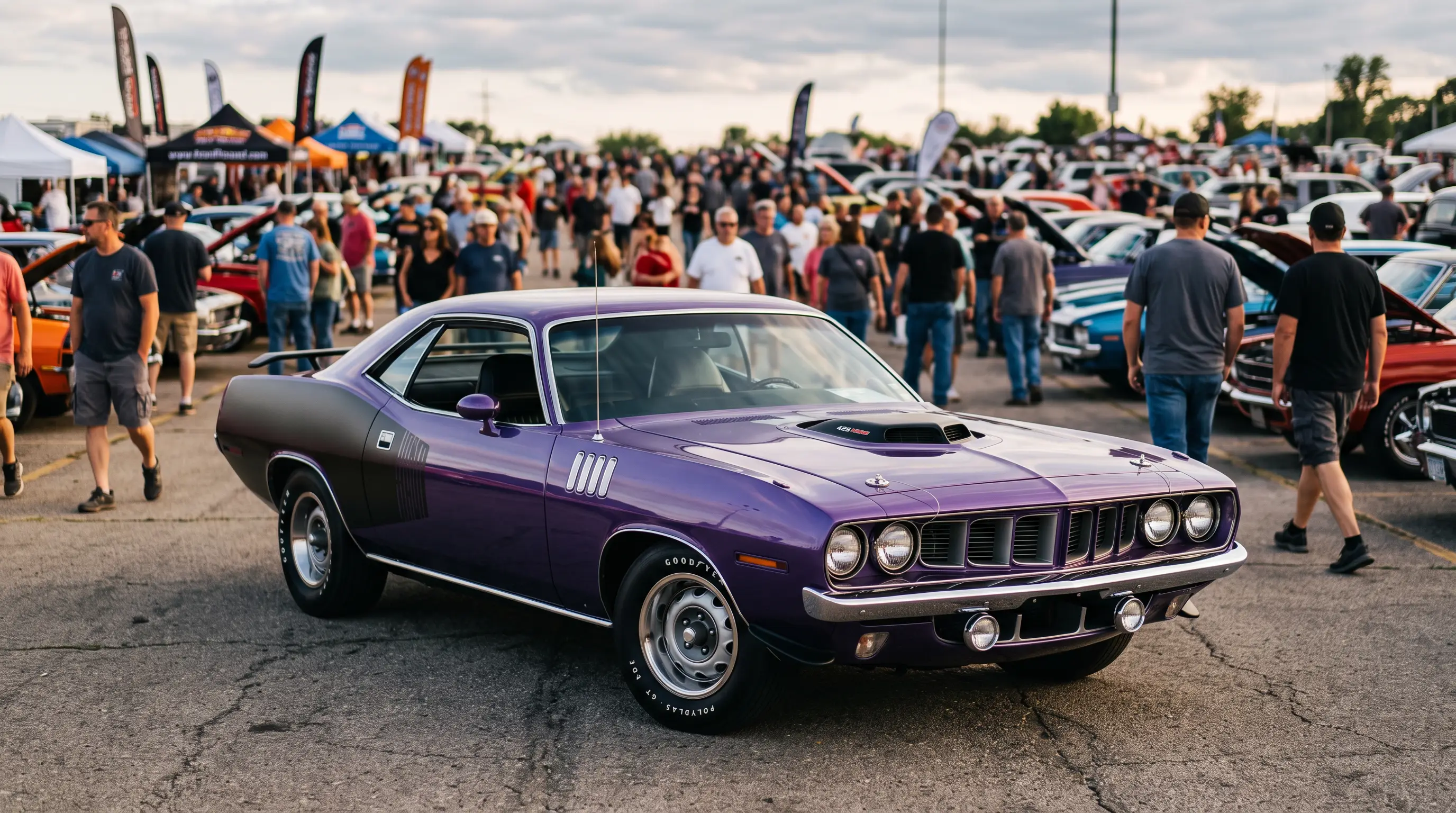
A guy at a Mopar show in the Midwest once told me his Hemi Cuda was the real thing, no papers needed, because he could just tell by the sound of it. I believed the sound. I did not believe the story. That conversation, more than any auction house press release, is what taught me why the real cuda vs clone question matters so much in this hobby, and why it never gets settled by ear, by badge, or by how convincing the seller sounds standing next to the car.
Why the question exists at all
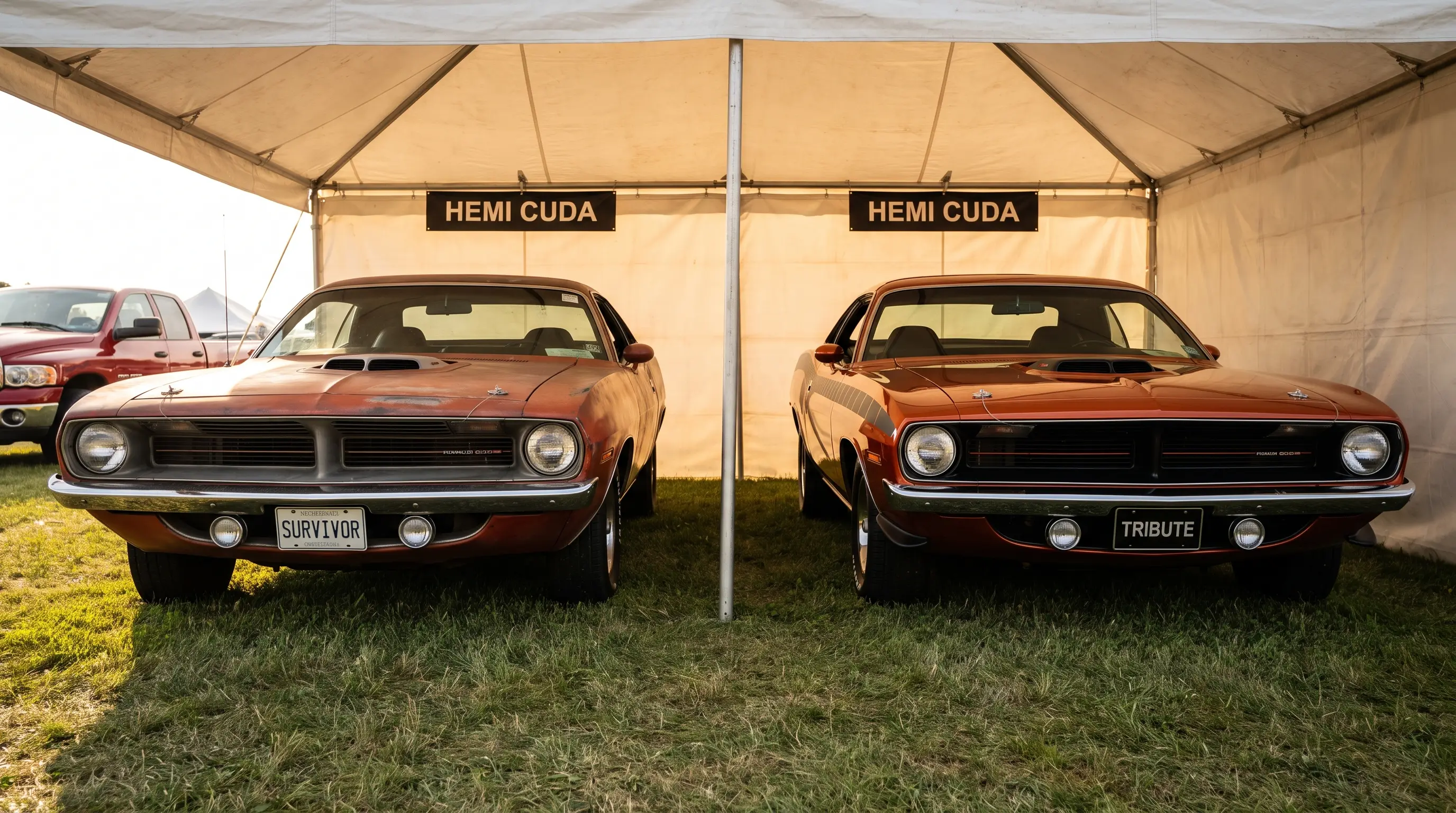
Plymouth built the Hemi Cuda in small numbers for two years. Decades later, that scarcity created two separate markets. One market trades in genuine, documented, numbers matching cars. The other trades in tribute builds, some honestly represented, some not, wearing the same stripes, the same badges, and often a correct looking 426 Hemi under the hood. Visually, at a car show, the two can be nearly indistinguishable to anyone who has not done the homework.
That indistinguishability is exactly the problem. A well built clone, using a correct period engine and a factory correct body, can fool experienced eyes at a glance. It takes documentation, not visual inspection, to separate the two with confidence. That is the uncomfortable truth at the center of this whole debate.
The paper trail that actually settles it
A genuine Hemi Cuda carries a fender tag, broadcast sheet, and VIN that all correspond to factory records confirming it left the assembly line with the Hemi option specifically. Independent authenticators, most famously Galen Govier, built entire careers verifying exactly this kind of documentation for Mopar buyers who wanted certainty before writing a check with a lot of zeros on it.
Without that paperwork, you are trusting a story. Stories are cheap. A stamped, period correct broadcast sheet is not something you can print at home convincingly, and that is precisely why serious buyers will not move forward without one. I have sat next to buyers at auctions who walked away from beautiful, well presented cars purely because the documentation did not check out. That discipline is what keeps this market honest.
An honest tribute is not a crime
Not every clone is a scam in progress. Plenty of builders create honest tribute cars, clearly represented as such, for buyers who want the look and the driving experience without paying genuine car money. There is nothing dishonest about that transaction when both sides understand exactly what is being bought and sold. The trouble starts the moment a tribute gets marketed, knowingly or through willful ignorance, as an original.
I have met builders who take real pride in their tribute work and are the first to volunteer the truth about what the car actually is. Those conversations are refreshing, and frankly more enjoyable than talking to someone protecting a story that will not survive a documentation review. Honesty about a car's status does not diminish it. It just prices it correctly.
"I have never met a real one that needed convincing. The paperwork does the talking. When a seller starts talking instead, that tells you something."
- Patrick Walsh
What separates the buyers who get burned
Every real cuda vs clone horror story I have heard follows the same pattern. A buyer got excited, skipped the independent inspection, and trusted a seller's word over paper verification. By the time the truth surfaced, real money had already changed hands and the car had usually been resold at least once more, muddying the trail even further. The fix for all of this is boring and unglamorous. Get the car inspected by someone with no financial interest in the sale before you commit.
That advice sounds obvious written down. It gets ignored constantly in the moment, because buying a Hemi Cuda is an emotional experience, and emotional buyers skip steps. Sellers who are confident in their car's authenticity welcome outside verification. Sellers who resist it are telling you something important, whether they mean to or not.
Where this all connects
None of this matters without understanding what made the real thing worth faking in the first place, and the hemi cuda story covers the production history and rarity that created this entire market, genuine and tribute alike, and it is worth reading before you ever start shopping seriously.
It also helps to understand where the whole model line began, since the full story traces the Barracuda back to its origins before the Hemi option existed at all, and that context makes it easier to understand why the E body Hemi years became the specific target for so much replication decades later.
The tells experienced eyes look for
Ask around at any Mopar swap meet and you will hear the same short list of warning signs. Casting numbers that do not match the claimed build date. A fender tag that shows signs of having been altered or replaced. A seller who gets vague the moment you ask which authenticator reviewed the car. None of these things prove a car is a clone on their own, but stacked together they are exactly the pattern experienced buyers have learned to notice before money changes hands.
I have also learned to pay attention to how a seller reacts to scrutiny. Someone with a genuine, documented car tends to welcome questions, because every answer reinforces the sale. Someone protecting a shaky story tends to redirect the conversation toward the car's condition, its sound, its presence at a recent show, anything other than the specific paperwork that would settle the question in thirty seconds. That redirection is itself a signal worth taking seriously.
Buying with your eyes open
My advice after years of watching this market has not changed. Assume nothing based on appearance alone. A correct looking car with an incomplete paper trail is a maybe, not a yes, until an independent expert confirms it. That single habit will save you more money and more heartbreak than any amount of enthusiasm at a car show ever will.
If you want to see genuine, documented examples currently available, classic Barracudas on the market is a good place to start comparing real listings against everything covered here. Do the homework. The car that sounds right and the car that is right are not always the same thing, and only the paperwork tells you for certain which one you are looking at.
The guy at that Midwest show may well have owned a genuine car. I never found out, and neither did he, at least not from me. But that is exactly the point. Confidence at a car show is not evidence. Paperwork is, and until it shows up, every claim in this hobby deserves to be treated as a maybe.