Ask a room full of Mopar collectors what the most expensive cuda ever sold for and you will get a range of answers, most of them close, none of them exactly right, because the true number depends on which sale you count and under what conditions. As an appraiser, I care less about the specific headline figure than about what actually produced it, since that combination of factors is repeatable and the number itself is not.
What produces a record sale
The most expensive Hemi Cuda sales share a consistent set of ingredients. Convertible body style. 426 Hemi engine. Four speed manual transmission. Full factory documentation including broadcast sheet and independent authentication. Rare factory color, ideally with a matching interior. Remove any one ingredient and the number drops, sometimes sharply. These sales are not random spikes. They are the predictable result of stacking every scarcity factor the model offers onto a single, well documented car.
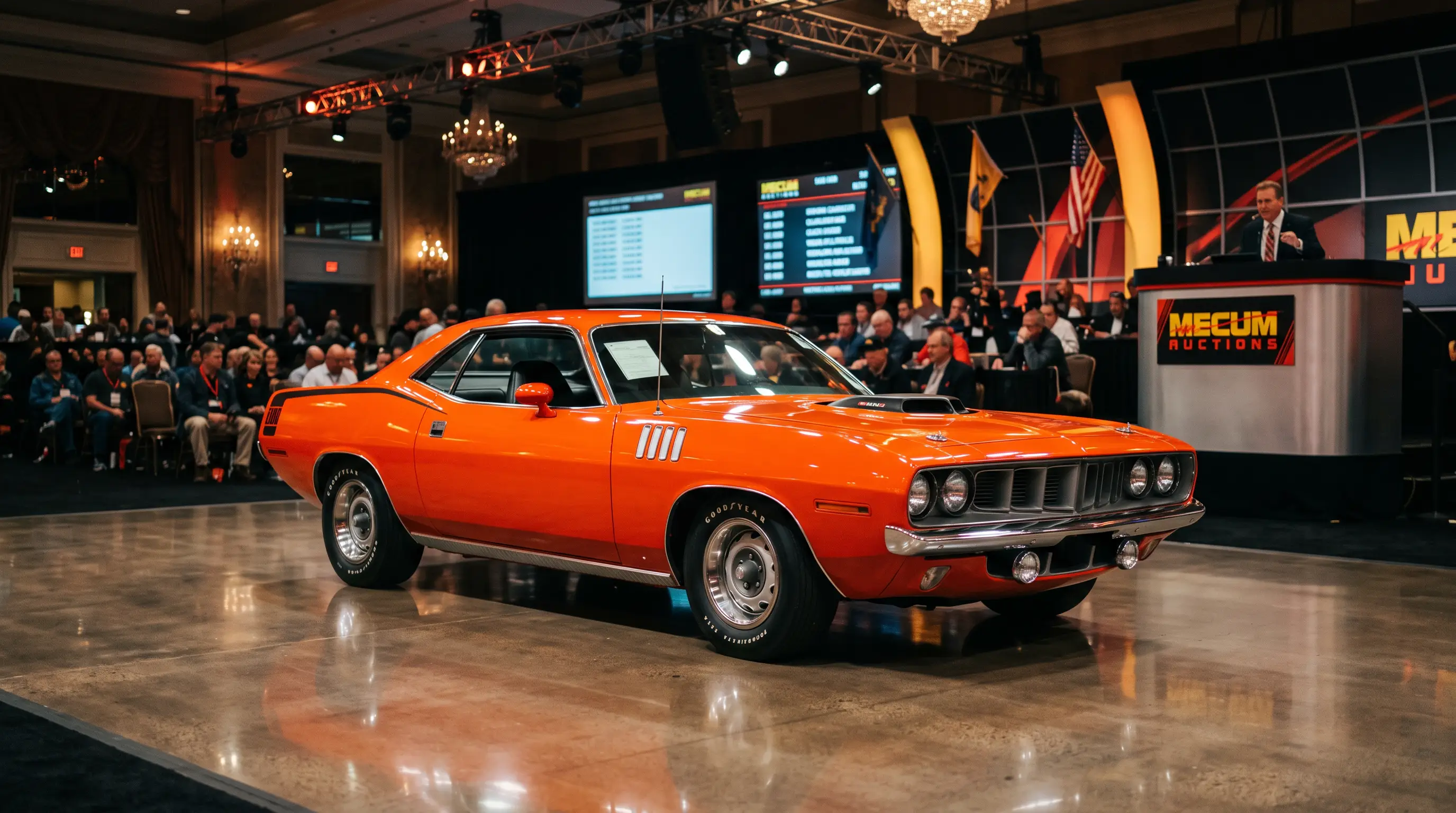
A $3.5 million winning bid for a 1971 Hemi Cuda four-speed convertible at Mecum's 2014 Seattle auction is the figure most frequently cited in enthusiast press as the ceiling for this model. I treat any specific number like that with appropriate caution until I have reviewed the actual sale documentation myself, because auction press releases tend to round favorably and headline writers are not always precise about buyer's premium inclusion.
Why buyer's premium confuses the headline number
One detail that trips up casual readers of auction results is the difference between the hammer price and the total price including buyer's premium. Auction houses typically add a percentage on top of the winning bid, and headline figures usually quote the all in total, not the hammer price alone. That distinction can represent a meaningful gap, and confusing the two numbers leads to inaccurate comparisons between sales handled by different auction houses with different premium structures.
When I appraise a car against a previous record, I always normalize for this before drawing conclusions. Comparing an all in price from one sale against a hammer price from another produces a misleading picture of where the market actually sits, and that kind of error shows up constantly in casual online discussion of these results.
| Record sale factor | Effect on price |
|---|---|
| Convertible body style | Significant premium over hardtop |
| Documented four speed manual | Premium over automatic |
| Rare factory color plus matching interior | Additional premium |
| Full authentication package | Removes buyer doubt, protects top dollar |
Reading the sale beyond the number
What I find more interesting than the top line figure is who was bidding and why. Record sales for the most expensive cuda examples typically involve at least two serious, well funded bidders who both wanted that specific car for reasons beyond simple investment logic. Sentimental attachment, a desire to complete a specific collection theme, or simply not wanting to lose to a rival collector all play into these numbers in ways that pure financial modeling cannot fully capture.
That human element is part of why record sales are genuinely difficult to predict in advance. Auction houses can estimate a range based on comparable sales and documented rarity, but the final number often depends on whether the right two people show up in the room, or on the phone, on the same night.
"Every record sale has a story behind it that never makes the press release. Usually it involves two collectors who simply refused to lose."
- Marcus Feld
What this means if you are not chasing the record
Most buyers are never going to compete for the most expensive cuda on record, and that is fine. Understanding what drives the record helps you understand your own car's value more accurately. A hardtop with an automatic transmission and thin documentation is never going to approach record territory, no matter how good it looks in photographs, and pricing it as though it might sets unrealistic expectations for a sale.
The gap between a record sale and a solid, honestly represented driver quality car reflects real, measurable differences in rarity and documentation, not marketing spin. Knowing where your specific car falls on that spectrum is the single most useful thing an appraisal can tell you before you decide to buy or sell.
How I would appraise a record contender today
If a client brought me a car they believed could challenge the existing record, my process would not start with the engine bay. It would start with the file folder. Broadcast sheet, fender tag, casting numbers, prior ownership chain, any existing authentication letters. Only after that paperwork checks out completely would I move on to a physical inspection of paint, body panels, and drivetrain originality. Skipping straight to the visual inspection is how appraisers get fooled, and I have seen enough near misses over the years to never take that shortcut myself.
Once the paperwork and physical inspection both check out, I would then research recent comparable sales as tightly as possible, matching body style, transmission, color rarity, and documentation quality rather than simply pulling the last few Hemi Cuda results regardless of configuration. A rough comparable is worse than no comparable at all, because it anchors expectations to a number that does not actually reflect the car being evaluated.
Context for the whole model
None of these record numbers exist in a vacuum. They are the ceiling of a much broader market built on the production history and rarity of the model as a whole, and the full story covers that production history in depth and explains exactly why this specific car, out of an entire era of muscle cars, keeps setting the numbers it does.
If you want to see where current market pricing sits relative to these headline figures, classic Barracuda for sale listings offer a real time look at asking prices across the full range of condition and documentation, from solid drivers to the kind of documented, top tier examples that occasionally approach record territory themselves.
My bottom line as an appraiser has not changed in years of watching this segment. Chase the record number for curiosity. Value your own car against the honest middle of the market. The two figures serve different purposes, and confusing them is the single most common mistake I see buyers and sellers make in this category.
A record sale will keep happening every so often, and a new most expensive cuda headline will replace the old one eventually. That is simply how a shrinking supply of documented, top tier cars behaves against a growing, well capitalized buyer base. Understanding the mechanics behind that number is far more useful than memorizing whatever figure happens to be current when you read this, and it will serve you better whether you are buying, selling, or simply insuring the car you already own.