Hurst/Olds auction results get quoted constantly, and half the numbers floating around are either out of date, missing context, or lifted from a sale that involved a car most buyers will never see again. I track these results across every major sale, and the record-setting numbers people repeat almost always come with an asterisk that got dropped somewhere along the way.
What actually sets a record versus what gets remembered as one
A genuine record sale requires three things lining up at once: a documented low-production year, a verified matching-numbers drivetrain, and condition at the top of the market, usually a #1 or a very strong #2. When all three align, a Hurst/Olds can bring a price that reshapes how the whole segment gets valued for a season. The problem is that these sales are rare enough that the "record" figure people quote two or three years later is often stale, and buyers walk into a negotiation assuming that number is the current floor rather than a ceiling set by an exceptional car.
I've watched this happen at consecutive Kissimmee and Scottsdale sales. A standout 1968 example brings a strong hammer price, the number circulates through forums and listing descriptions for the next eighteen months, and sellers with visually similar but less documented cars start pricing against it. Most of those follow-up cars don't sell at that level, because they're not the same asset. They're a similar-looking car riding on someone else's provenance.
| Sale factor | Record-setting example | Typical market example |
|---|---|---|
| Documentation | Full Hurst-side build trail, verified numbers-matching | Partial paperwork, some gaps in ownership chain |
| Condition tier | #1 or strong #2 | #2 to #3, honest driver quality |
| Model year | Low-volume year with confirmed scarcity | Any year, scarcity unverified |
| Result | Sets a new market ceiling for the segment | Trades at the segment's actual median |
Reading a hammer price correctly
A hammer price only tells you what one buyer paid one seller on one specific day. It doesn't tell you the reserve, whether the seller had a walk-away number in mind, or whether two bidders got into a personal contest that pushed the price past where the broader market would have settled. I look at a run of comparable sales across at least two or three cycles before I'll call a number representative rather than an outlier.
The other detail buyers miss is exposure. A car that's been shown at the right events, covered in the enthusiast press, and known within the Hurst/Olds collector community before it crosses the block tends to bring more than an identical car that surfaces cold with no history anyone recognizes. That's not really about the car. It's about how much of the buying pool already trusts the story before bidding opens.
Buyer's premium is another detail that gets glossed over when a sale gets quoted secondhand. The number that circulates online is almost always the hammer price, before the auction house's commission gets added on top. Depending on the house and the sale, that premium can run into five figures on a strong Hurst/Olds result, which means the actual out-the-door cost to the winning bidder was meaningfully higher than the headline figure suggests. If you're planning your own bid off a quoted "record," build the premium into your math before you set a ceiling.
What tends to soften a result
Plenty of Hurst/Olds cars go through a sale and either fail to meet reserve or sell quietly below the numbers people expect. The common threads: a non-matching engine presented as original, a restoration that leans too heavily on reproduction trim without disclosure, or a color combination that falls outside the documented production spec for that year without an explanation. Buyers in this segment do their homework, and a listing that oversells its documentation tends to get punished harder than one that's honest about its gaps.
🔧 Inspection Priorities
- Request the full sale history, not just the current listing description. A car that's changed hands three times in five years at falling prices tells a different story than the auction house catalog copy suggests.
- Confirm whether "no reserve" actually applied, or whether a reserve was quietly met before bidding opened. This changes how much weight the final number deserves.
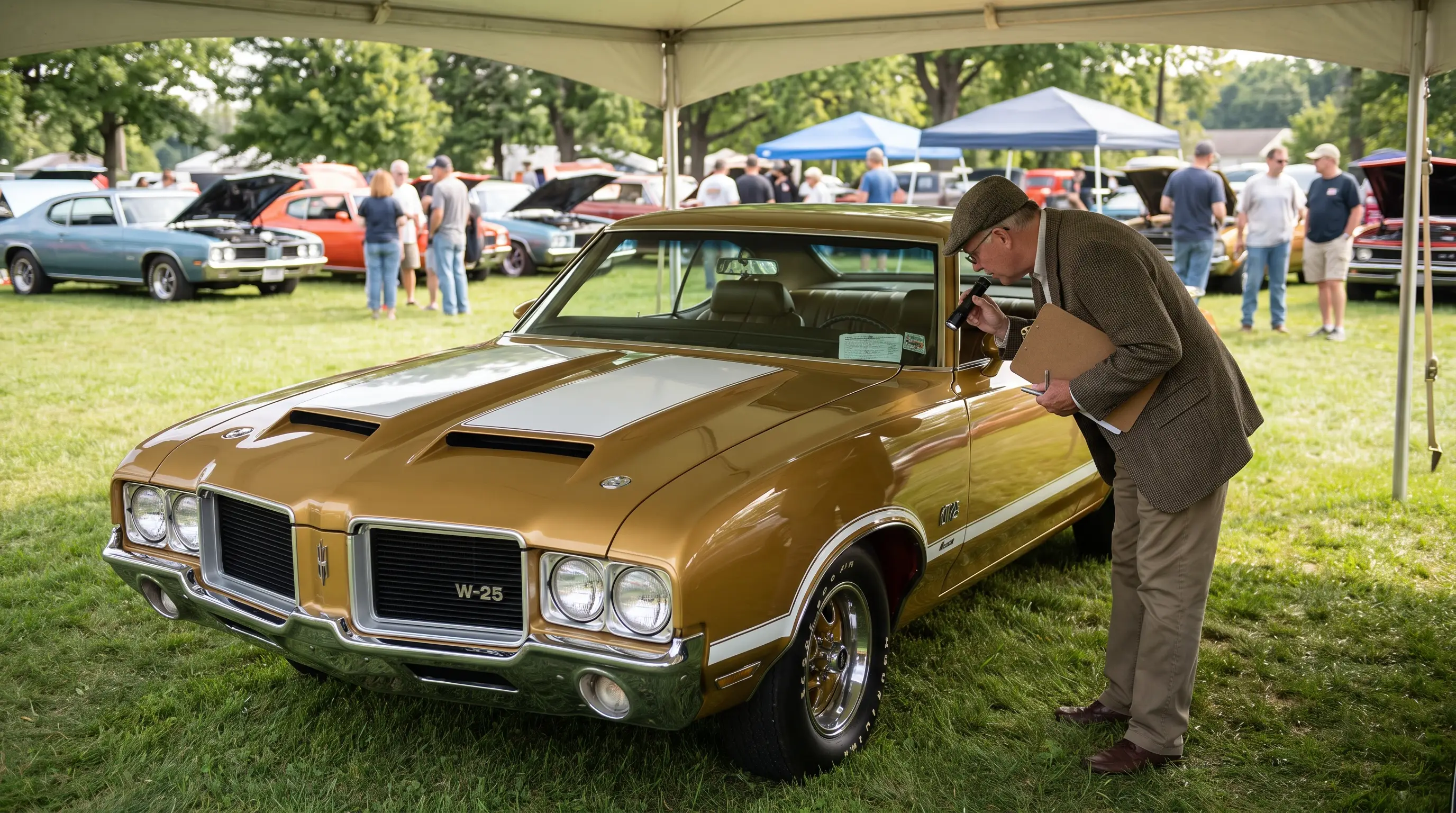
- Check the condition report against photos taken outside the auction house's own staged lighting. Condition tier claims soften fast under a phone flashlight.
How I use this data with clients
When I'm advising a buyer or seller on a Hurst/Olds, I build a comp set from the last three to five comparable sales, weighted toward the most recent and the most similarly documented. I discount outlier results in both directions rather than anchoring to either the highest number on record or the lowest quiet sale. That gives a realistic band, not a headline.
I also weight sales differently depending on the auction house and the sale's format. A no-reserve sale at a marquee event with deep bidder registration tells you something different than a reserve sale at a smaller regional auction with a thinner room. Neither is wrong, but treating them as interchangeable data points is how buyers end up anchored to a number that doesn't reflect the market they're actually shopping in.
For readers who want the full context on why these cars carry the documentation weight they do, the Hurst/Olds chapter covers the program's history and why the paper trail matters as much as the sheet metal. And if you're trying to separate a genuinely correct car from a well-dressed clone before you bid, a related deep-dive walks through exactly what to check before the gavel drops.
"A single record sale tells you what one car did on one day. A comp set built from five sales across three years tells you what the market is actually doing. I never advise a client off the first number."
— David Mercer
The takeaway
Treat any quoted Hurst/Olds auction record as a data point, not a price target. The number that matters is the trailing average across documented, comparable sales, adjusted for condition tier and paperwork depth. For the platform's complete valuation picture across every Cutlass variant, not just the Hurst/Olds segment, the full Cutlass story puts these auction results in context against the model line as a whole.