
Somewhere in a closet or a shoebox belonging to a Jeep enthusiast is probably a small, chipped die cast CJ that has not been touched in years but still cannot be thrown away. The Jeep CJ culture toys and models story is a smaller piece of the vehicle's cultural footprint than its trail history or its screen appearances, but it may be the most personal, because for a huge share of collectors, a toy CJ was the first version of the vehicle they ever owned, years before they could drive the real thing.
Car Features
7 min read
The CJ in Miniature: Toys, Models and Merchandise
Die cast toys, plastic model kits, and dealer merchandise turned the classic Jeep CJ into a childhood fixture, and today that small collectibles market carries its own quiet history.
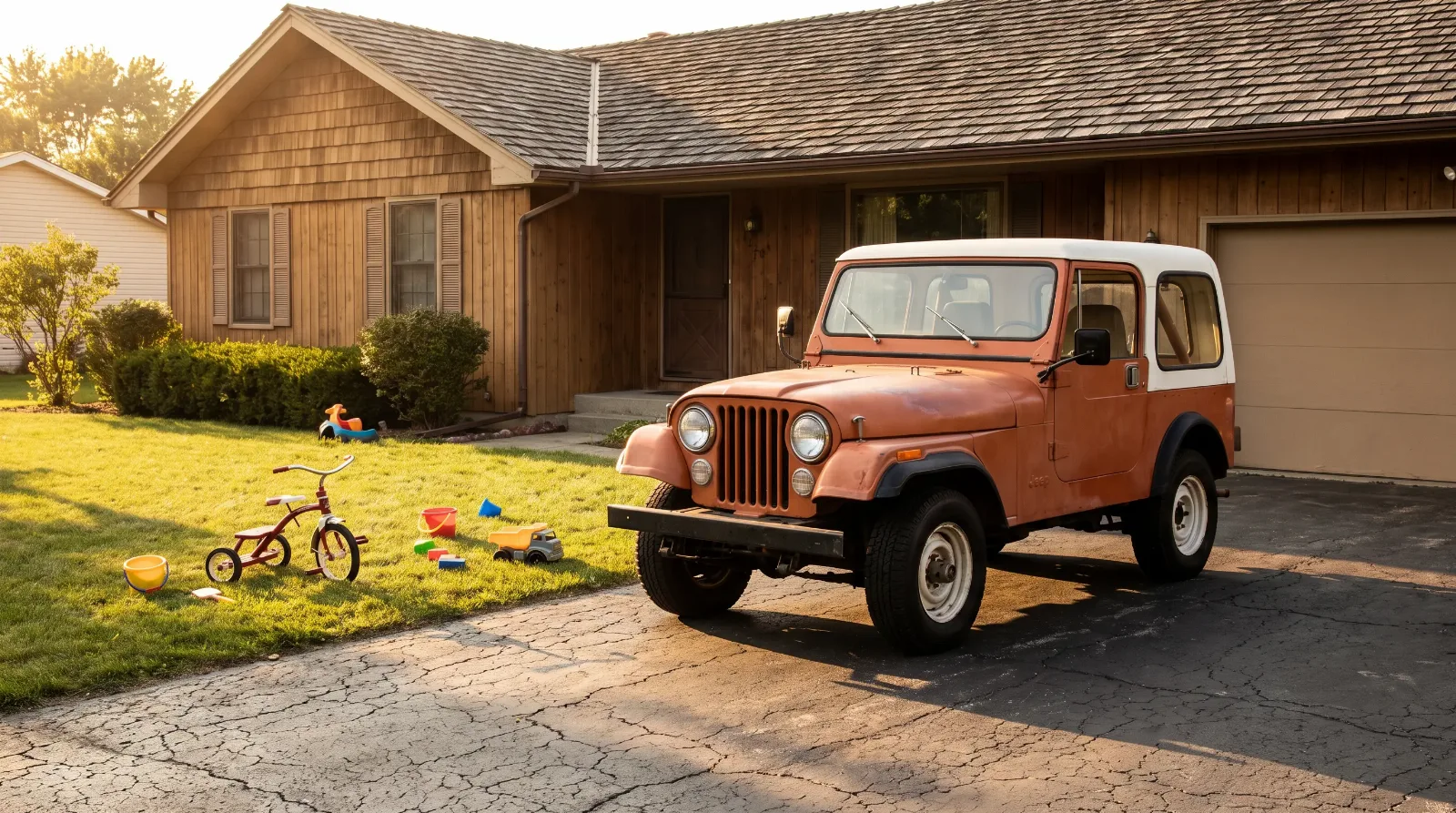
A shape simple enough for a toymaker to love
The CJ's design gave toy and model makers an unusually forgiving subject. Its flat hood, boxy fenders, round headlights, and exposed grille slats reduced cleanly to simplified forms without losing recognizability, which mattered enormously for die cast manufacturers working at small scale with limited tooling budgets. A CJ toy could be made cheaply and still look unmistakably like a CJ, which is not true of every vehicle shape. That manufacturing friendliness is a large part of why the model appeared so often and for so long across the toy industry.
Major manufacturers began producing CJ toys not long after the vehicle's own postwar popularity took hold. Die cast companies working in both the United States and overseas released CJ models in a range of scales throughout the 1950s and 1960s, often marketed alongside other farm and military themed toys that traded on the same postwar familiarity with Jeep vehicles that adult buyers already had from their own service or their neighbors' farms.
From toy chest to hobby shop
As the CJ's off road and outdoor recreation identity solidified through the 1960s and 1970s, toy and model production followed the shift. Manufacturers moved beyond simple farm and military themed CJ toys toward versions equipped with roll bars, oversized tires, and roof racks, mirroring the aftermarket modifications real owners were making to their own vehicles. Plastic model kit companies released CJ-5 and later CJ-7 kits aimed at older hobbyists and modelers, complete with optional parts for building a stock example or a trail modified version, giving builders the same choice real owners faced.
This period also saw slot car and radio control versions enter the market, extending the CJ's toy presence beyond static display models into vehicles kids could actually race or drive around a living room floor. The variety of scales and formats, from small pocket sized die cast pieces to detailed plastic kits meant for careful assembly, meant the CJ reached toy buyers across a wide age range and a wide range of price points, which kept it in continuous production across multiple toy categories for decades.
Merchandise beyond the toy aisle
Toys and scale models were only part of the CJ's presence in consumer merchandise. Dealer promotional materials, patches, belt buckles, and printed goods carrying the CJ's silhouette or the broader Jeep name circulated through the 1960s, 1970s, and 1980s, much of it tied to the same outdoor recreation and off road trail culture that made events like the Jeepers Jamboree significant. Owners who attended trail runs often came home not just with stories but with event patches and pins that, decades later, collectors seek out alongside the toy and model market as a related but distinct category of CJ memorabilia.
This merchandise ecosystem reflects something genuine about how deeply the CJ had embedded itself in American culture by the middle of its production run. A vehicle does not generate a sustained toy and collectibles market unless enough people care about it emotionally, not just functionally, and the CJ clearly crossed that threshold well before its production ended in 1986. The broader story of how that emotional attachment built up across owners, communities, and now collectors is covered in more on the jeep cj renegade, alongside our complete history of the vehicle's four decade run.
"I had the toy years before I had the real one, worn smooth from being carried around in a coat pocket. When I finally bought an actual CJ-5 in my twenties, the first thing I did was set that same little die cast model on the dashboard. It felt like it belonged there."
- Patrick Walsh
Collecting the miniature version today
The current market for vintage CJ toys and models is modest compared to full sized vehicle collecting, but it is active and, in some corners, surprisingly competitive. Original box packaging, unopened plastic model kits, and regionally distributed promotional die cast pieces all carry premiums over loose, well played examples, following the same logic that governs most vintage toy collecting generally. Condition and completeness matter enormously, since these were, after all, made to be played with rather than preserved.
What separates CJ toy collecting from broader vintage toy collecting is the overlap with full sized vehicle ownership. A meaningful share of buyers in this smaller market are also CJ owners themselves, people building out a personal collection that spans both the real vehicle in the garage and the toy versions that first introduced them to it decades earlier. That overlap gives the toy and model market a sentimental weight that pure investment driven collecting categories rarely carry.
A small footprint with an outsized emotional pull
Toys and models were never going to be central to the CJ's engineering or off road legacy, but they mattered in a different way, as the entry point for a generation of future owners who grew up wanting the real thing after years of pushing a small plastic or die cast version across a bedroom floor. That quiet, personal thread runs alongside the CJ's louder trail and screen history, and it helps explain why so many owners today describe their attachment to the vehicle in terms that go back decades before they ever turned a key. Those looking to close that circle themselves can browse classic CJs on the market and find the full sized version of what may have started as something much smaller.
How the model kit hobby shaped a generation of restorers
Plastic model kit builders in particular got something out of assembling a CJ that the die cast toy buyer did not, a genuine, if simplified, education in how the vehicle went together. Kit instructions walked builders through the basic relationship between frame, axles, and body in a way that stuck with some of them long after childhood, and more than a few present day CJ restorers trace their comfort with mechanical assembly back to hours spent gluing together a plastic model of the same vehicle they would eventually own and repair for real. That connection between hobby modeling and later mechanical confidence is anecdotal rather than documented in any formal survey, but it comes up often enough in restoration shop conversations and club meetings to be treated as a real, if informal, pattern within the CJ owning community.
The kits themselves also preserved details that occasionally proved useful decades later, when original documentation for a specific trim or accessory package had become hard to find. Model kit box art and included parts sprues sometimes captured accessory configurations, roof rack styles, tire and wheel combinations, that were accurately researched at the time of the kit's release but poorly documented anywhere else, turning what was originally a children's hobby product into an unexpected, secondary reference source for restorers working decades after the fact.
Sources and notes
Related Reading
Have a
Jeep CJ
for Sale?
Reach thousands of serious classic car collectors across the US.
Sell It Here →
Selling a classic? Here's how: sell my classic car
Are You a Classic Car Dealer?
List your full inventory and connect with targeted classic car buyers.
Join as a Dealer →

About the author
Patrick Walsh
Automotive journalist covering classic car shows, events, and the enthusiast community across North America.
Related Listings - Jeep CJ

Comments
Be the first to comment on this article.