
Pop the hood on a genuine 1969 K5 Blazer and the engine bay tells you exactly what Chevrolet was betting on that year. The K5 Blazer 1969 engine lineup was not extensive by later standards, but every option on the table came straight from the existing C/K pickup parts bin, and that decision is worth understanding on its own merits, not just as a historical footnote.
Car Features
7 min read
What Powered the Very First K5 Blazers
The K5 Blazer 1969 engine lineup borrowed straight from Chevrolet's pickup parts bin, and evaluating one today takes more than checking paint on the valve covers.
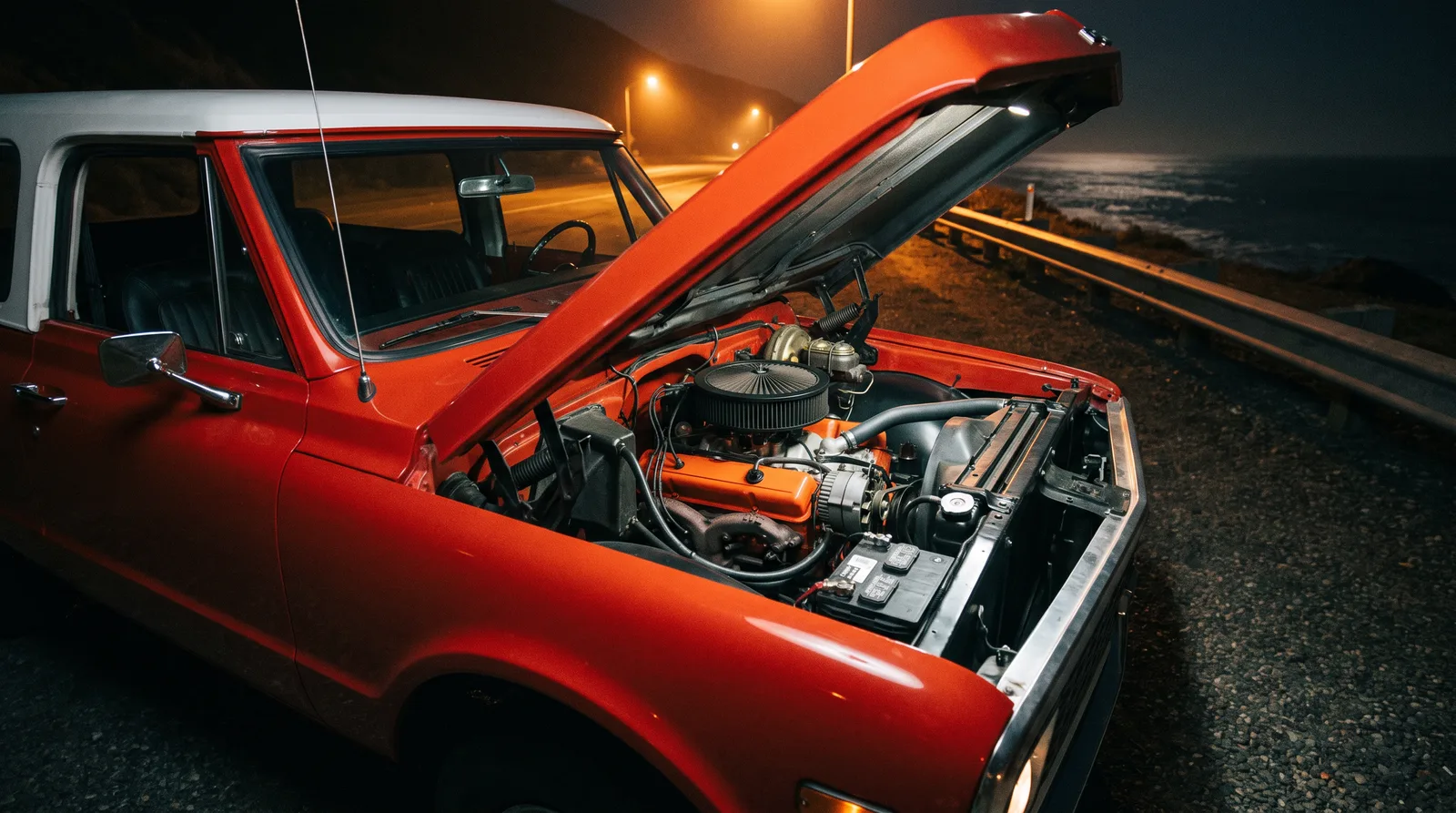
What buyers could actually order
The standard engine in the 1969 K5 Blazer was Chevrolet's inline six-cylinder, the workhorse that powered a huge share of Chevrolet's truck lineup at the time. It was not exciting, but it was proven, easy to service, and cheap to run, which mattered to the ranch and fleet buyers who made up a real share of early Blazer sales. Buyers who wanted more power could step up to a V8 option, giving the Blazer meaningfully more capability for towing and hauling than the six-cylinder could deliver on its own.
Chevrolet actually offered four engine choices for the 1969 K5 Blazer: a 250 cubic inch inline six as the base engine, an optional 292 cubic inch inline six, and two V8 options, a 307 and a 350. Exact horsepower ratings from this era were measured under gross testing standards that do not translate directly to how engines are rated today, so any specific output figure quoted for a 1969 K5 Blazer engine is best treated as a period-gross number rather than a modern net rating.
| Engine position | Type | Typical buyer |
|---|---|---|
| Standard | 250 cubic inch inline six | Fleet, ranch, and work-focused buyers prioritizing durability and low running cost |
| Optional | 292 cubic inch inline six | Buyers wanting more low-end pull without stepping up to a V8 |
| Optional | 307 or 350 cubic inch V8 | Buyers prioritizing towing capacity and higher power output |
Why the engine choices matter more than they look
From an engineering standpoint, the decision to launch the K5 Blazer with drivetrain options pulled directly from the existing pickup lineup was the efficient choice, and it was also the right one. Chevrolet did not need to develop new engines for a new model. It needed to prove that a truck-based platform could deliver the off-road credibility the Scout and Bronco had already established, while adding genuine towing and payload capability those smaller trucks could not match. Reusing proven, already-tooled engines let Chevrolet focus its engineering resources on the body, the removable top, and the shortened chassis, rather than spreading development across an entirely new drivetrain as well.
That said, reliability data on these engines in a Blazer application specifically is harder to pin down than reliability data for the same engines in standard pickups, simply because Blazers saw different duty cycles. Off-road use, frequent towing, and the added weight of the removable top all put slightly different stress on the drivetrain than a standard pickup would see, and owners restoring or maintaining a 1969 Blazer today should factor that different use history into how they evaluate an engine's condition, rather than assuming it aged identically to the same engine in a contemporary pickup.
What this means for a truck being evaluated today
Anyone assessing a 1969 K5 Blazer's original engine faces a straightforward diagnostic question: is the drivetrain actually original to the truck, and if so, how has its specific use history affected its condition. A numbers-matching six-cylinder or V8 in a documented, low-mileage 1969 Blazer is a meaningfully different proposition than the same engine in a truck with an unclear ownership history and decades of unknown off-road use. The engine's basic design and reliability profile do not change, but the accumulated wear pattern absolutely can, and that distinction matters when comparing two trucks that otherwise look similar on paper.
This is also where a systematic evaluation earns its keep over a purely visual inspection. Compression testing, checking for consistent oil pressure across the operating range, and looking closely at how the engine has been maintained tell a buyer far more than whether the paint on the valve covers looks original. A pretty engine bay and a mechanically sound engine are not the same thing, and treating them as interchangeable is how buyers end up disappointed after a purchase.
"The engine options in 1969 were not glamorous, and that is exactly why they worked. Chevrolet used what it already knew was reliable instead of gambling on something new for a brand-new model. When you are evaluating one of these trucks today, the engineering logic from 1969 still applies. Proven and well maintained beats exotic and unknown every time."
- Emily Chen
Matching the drivetrain to how the truck will actually be used
An original inline six-cylinder in sound mechanical condition is a perfectly reasonable choice for an owner who wants a straightforward, low-stress truck for occasional driving and light towing. It is not the engine to choose for anyone planning serious off-road work or regular heavy hauling, and buyers should be honest with themselves about which category they actually fall into before deciding how much weight to place on finding a numbers-matching six versus accepting a truck with a period-correct V8 already installed. The V8-equipped trucks tend to command a premium specifically because they deliver meaningfully more usable power for the kind of work-focused driving the Blazer was originally built for.
Owners considering a mechanical rebuild on either engine option should approach the project the same way they would evaluate a used engine for purchase. Establish a baseline through proper compression and leak-down testing before assuming a rebuild is unnecessary, and get a clear picture of what has already been replaced versus what remains original before committing money to further work. A partially rebuilt engine with unknown remaining original components is a harder evaluation than either a fully original, well-documented engine or a fully rebuilt one with clear receipts, and buyers should factor that ambiguity into what they are willing to pay.
Where to go from here
The engine lineup is only one piece of what made the 1969 K5 Blazer a genuinely different proposition from the trucks it was built to compete against, and readers who want the full story of that debut year will find the broader context for why Chevrolet made the choices it did across the entire truck, not just under the hood.
Buyers evaluating a specific example, whether shopping for a numbers-matching original or a solid driver with a well-documented rebuild, can browse classic K5 Blazer listings to compare engine condition and documentation across multiple trucks before committing to one.
Proven parts, honestly evaluated
The K5 Blazer's 1969 engine lineup was never meant to impress on paper. It was meant to work, and to keep working under conditions the Scout and Bronco were not necessarily built to handle. Evaluating one of these engines today comes down to the same principle that guided Chevrolet's original decision: proven design matters less than documented condition, and a careful, methodical inspection will tell a buyer far more than an engine's reputation alone ever could.
Sources and notes
Related Reading

Have a
Chevrolet Blazer
for Sale?
Reach thousands of serious classic car collectors across the US.
Sell It Here →
Selling a classic? Here's how: sell my classic car
Are You a Classic Car Dealer?
List your full inventory and connect with targeted classic car buyers.
Join as a Dealer →

About the author
Emily Chen
Bay Area engineer with a deep focus on vintage Japanese and European performance cars. Approaches classic car research and restoration with an analytical eye.
Related Listings - Chevrolet Blazer
Comments
Be the first to comment on this article.