
Value talk around the 1969 K5 Blazer tends to get emotional fast, full of stories about a grandfather's truck or a barn find that turned out to be something special. I want to strip that out and look at k5 blazer 1969 values the way I look at anything I am asked to appraise, as a function of condition, documentation, and how easily a specific truck could actually be sold if the owner needed to sell it tomorrow.
Car Features
6 min read
The Collector Value of a 1969 K5 Blazer
An appraiser's read on k5 blazer 1969 values: condition, documentation, liquidity, and downside risk, in that order, not rarity claims alone.
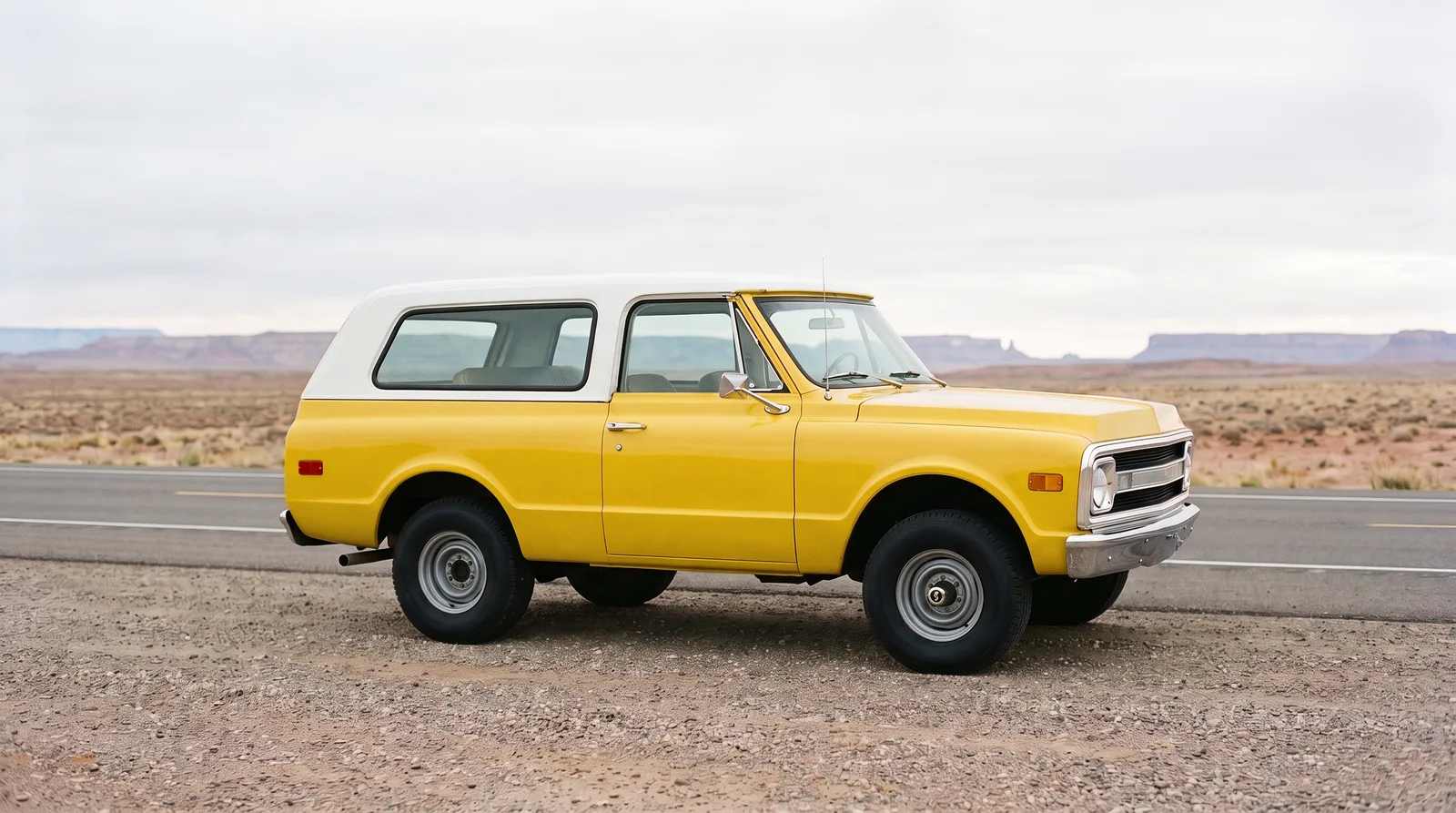
Why 1969 carries a premium over later first-generation years
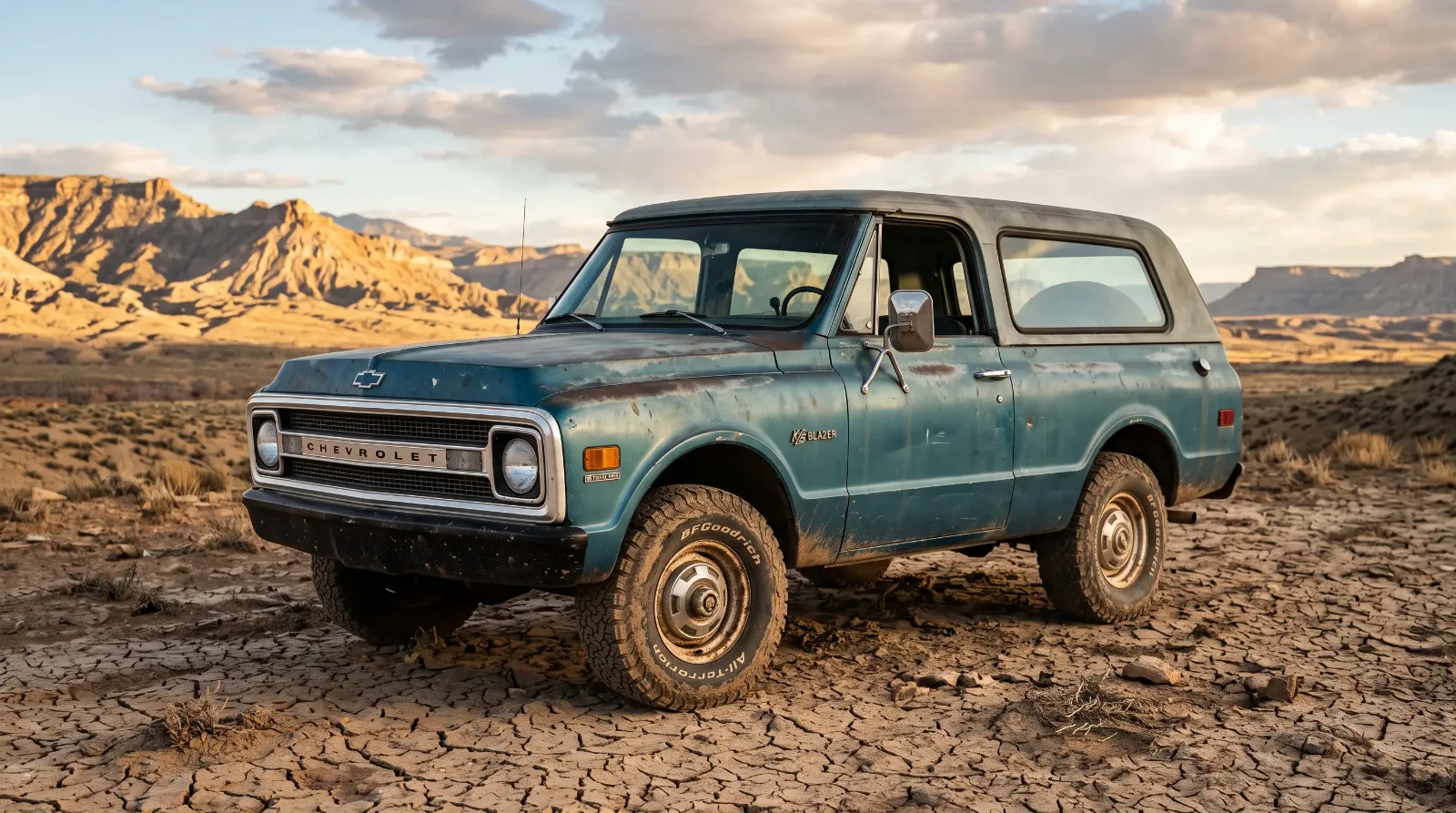
The 1969 model year is the introduction of the K5 Blazer, and first-year status does real work in the collector market regardless of the vehicle in question. Add the removable hardtop, a feature Chevrolet offered from 1969 through 1975 before switching to a fixed half-cab roof for 1976, and you have a truck that occupies a genuinely distinct niche rather than one more year in a long production run. That combination, first year plus a body style that later Blazers abandoned, is the core of why 1969 trucks command a premium over otherwise similar 1970 or 1971 examples in comparable condition.
None of that premium is automatic, though. A rough 1969 Blazer with a replaced drivetrain and a body full of filler is not worth more than a clean 1971 in original condition just because of the year on the title. Condition and originality still set the floor and ceiling for any individual sale. Year is a multiplier on top of that foundation, not a substitute for it.
The four things I actually weigh
When I look at a 1969 Blazer, I am weighing condition, documentation, liquidity, and downside risk, and I weigh them roughly in that order.
Condition is the obvious one. Rust in the floors, rockers, and rear wheel tubs is common on trucks this age that were not stored carefully, and it is expensive to correct properly rather than cosmetically. Documentation is the build sheet, title history, and any service records that confirm a truck's story rather than just its appearance. Liquidity asks a simple question: if the current owner needed to sell in thirty days, how many genuine buyers exist for this exact configuration, in this condition, at a realistic price. And downside risk is what happens to that value if the market softens, which is the question most casual buyers never ask themselves until it is too late.
Where the real money sits in this market
The top of the 1969 Blazer market is unrestored, low-mileage, four-wheel-drive trucks with original sheet metal and a documented history. Those are rare enough that when one surfaces, the price gets set by whoever wants it most rather than by any comparable sale, because there is often nothing directly comparable on the market at the same moment. Below that tier sits the bulk of the market, older restorations, driver-quality trucks with a mix of original and replacement parts, and project trucks that need real investment before they are worth what a buyer might hope.
Every 1969 Blazer left the factory with four-wheel drive; the two-wheel-drive version did not arrive until 1970, so there is no 2wd first-year truck to weigh against the 4x4. The market for this truck was built almost entirely around four-wheel-drive capability, and buyers looking for a 1969 Blazer are generally looking for that capability specifically. Later 2wd Blazers show how that plays out: rarer, yet rarely worth more, because rarity without demand is not value.
"Rarity gets you attention. Documentation gets you the check. I have seen plenty of genuinely rare trucks sit unsold because nobody could prove the story, and plenty of common trucks sell fast because the paperwork was airtight."
- Marcus Feld
| Tier | What defines it | Buyer profile |
|---|---|---|
| Top tier | Unrestored or documented restoration, original sheet metal, complete history | Serious collectors, low price sensitivity |
| Mid tier | Driver-quality, mixed original and replacement parts, partial documentation | Enthusiast owners who plan to use the truck |
| Project tier | Incomplete, rust issues, missing top or interior, thin or no paperwork | Builders willing to invest, or parts buyers |
How financing and insurance factor into the real number
Value on paper and value in a transaction are not always the same thing, and this is where a lot of private-party 1969 Blazer sales fall apart. Classic vehicle financing and insurance both lean heavily on documented appraisals, and a truck without a paper trail can struggle to clear the underwriting bar even when everyone involved agrees on the price verbally. I have seen deals stall not because the buyer and seller disagreed on value, but because a lender wanted evidence neither side had bothered to assemble ahead of time. Sorting that paperwork before listing a truck, or before making an offer on one, saves real time on both sides of a sale.
The same logic applies to insurance valuation. A stated-value or agreed-value policy on a 1969 Blazer depends on supporting documentation, recent comparable sales, and often photographs detailed enough to satisfy an underwriter who has never seen the truck in person. Owners who treat that paperwork as an afterthought routinely find themselves underinsured relative to what the truck would actually cost to replace, which is its own kind of downside risk, quieter than a bad purchase but just as real over time.
Reading a listing before you read the whole picture
A listing that leads with rarity claims and light on photos of the floors, rockers, and frame is a listing worth being cautious about. A seller confident in a truck's condition shows you the parts that scare buyers, not just the parts that flatter it. That is not a rule specific to 1969 Blazers, but it applies with extra force here because the rust-prone areas on this body style are well known within the enthusiast community, and a seller working this market for any length of time knows exactly which angles to avoid.
Before committing real money, shop classic K5 Blazer listings broadly enough to build a sense of what condition actually costs at each tier, rather than anchoring on the first truck you fall for. The 1969 model carries genuine premium potential, but that premium only holds up when the underlying truck earns it. Everything else is a story, and stories, however good, are not what pays for the restoration bill that shows up after the sale.
Value is only one slice of what makes a 1969 Blazer worth owning, and readers who want the whole picture should treat this appraisal as a companion piece to the model's fuller history rather than a standalone verdict.
My bottom line on 1969 K5 Blazer values is unremarkable, and that is by design. The premium is real, the first-year status and removable top earn it, but the premium sits on top of the same fundamentals that drive value in any classic vehicle. Buy the condition and the paperwork first. Let the year be the bonus, not the reason.
Sources and notes
Related Reading
Have a
Chevrolet Blazer
for Sale?
Reach thousands of serious classic car collectors across the US.
Sell It Here →
Selling a classic? Here's how: where to sell your classic car online
Are You a Classic Car Dealer?
List your full inventory and connect with targeted classic car buyers.
Join as a Dealer →
#collector car appraisal
#classic truck values
#K5 Blazer
#chevrolet blazer
#1969 Blazer
#Blazer market

About the author
Marcus Feld
Accredited collector-car appraiser who reads the market through hammer prices, condition tiers and risk.
Related Listings - Chevrolet Blazer
Comments
Be the first to comment on this article.