
Ask how many 1969 K5 Blazers Chevrolet actually built and you will get a range of confident-sounding answers, most of them wrong in some small way. The k5 blazer 1969 production numbers are one of the more misunderstood corners of Blazer history, partly because the model launched mid-cycle, partly because early GM production records for niche truck lines were never as tidy as the passenger car side. Sorting out what is documented from what is repeated folklore takes some care, but it is worth doing, because the real numbers say something about how cautiously Chevrolet approached this new vehicle.
Car Features
6 min read
How Many 1969 K5 Blazers Were Really Built
Production claims about the 1969 K5 Blazer get repeated more often than they get verified. Here is what the mid-year launch and thin survival rate actually tell us.
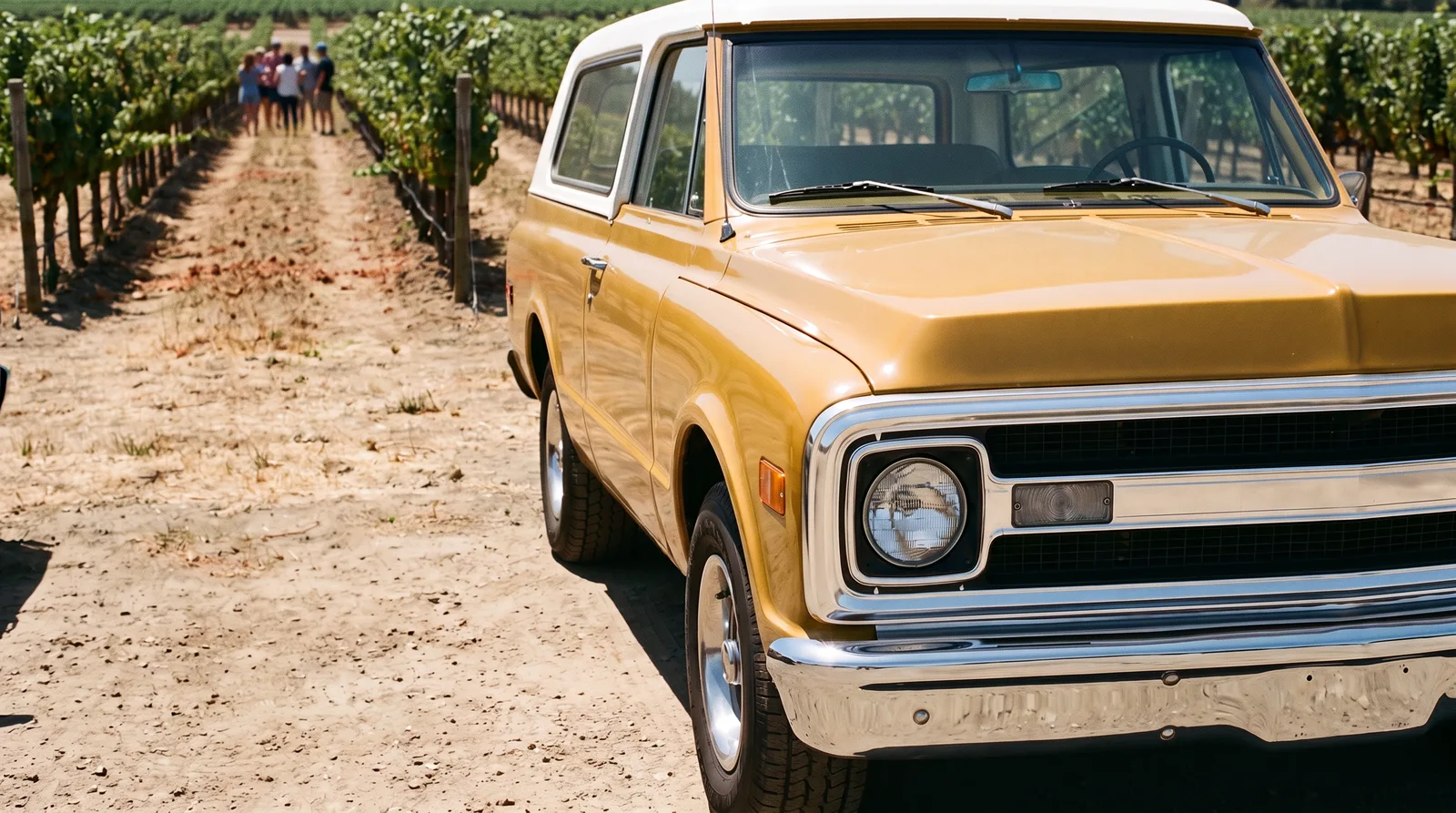
A late-year launch that skews the numbers
The Blazer did not arrive at the start of the 1969 model year alongside the rest of Chevrolet's truck lineup. It came to market partway through, which means any first-year production figure is really a partial-year figure, not a full twelve months of output. That single fact explains a lot of the confusion people run into when comparing 1969 numbers against 1970 or 1971 totals. A shorter production window naturally produced fewer trucks, and treating that count as a direct measure of demand rather than of calendar time leads to a skewed picture of how popular the Blazer actually was out of the gate.
Total 1969 Blazer production across trim levels and drivetrain choices is generally put at just under five thousand units, commonly cited as 4,935, for that partial launch year. Any number you see attached to this year should be treated as an estimate unless it is sourced directly to GM production records or a recognized registry, because secondhand figures have been copied and rounded so many times across enthusiast forums and articles that small errors have calcified into accepted fact.
Two-wheel drive versus four-wheel drive
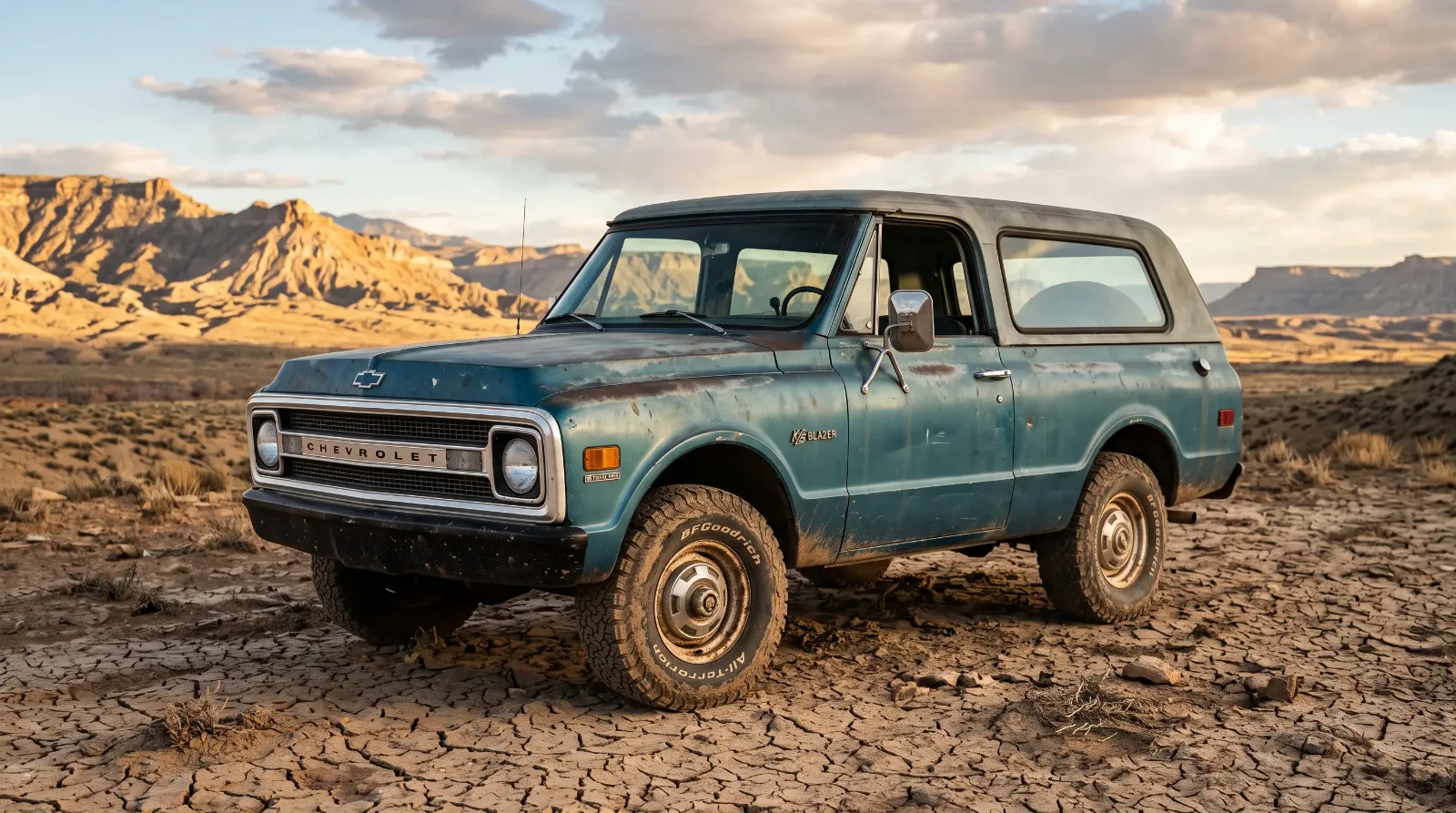
One detail that gets lost in casual retellings is that the 1969 Blazer was not exclusively a four-wheel-drive truck. A two-wheel-drive version existed on the order sheet, aimed at buyers who wanted the open-top utility body without the cost or complexity of a transfer case. Surviving examples of the two-wheel-drive configuration are considerably scarcer today than the four-wheel-drive trucks that dominate the collector market, largely because the four-wheel-drive version was the one that actually sold in meaningful volume and the one that built the Blazer's reputation as a go-anywhere rig.
What survives and why survival rate matters more than the original count
For a market researcher, the raw production number is less useful than the survival rate, and on that front the 1969 Blazer has not been kind to its own history. These were work trucks first, sold to buyers who used them hard, and a meaningful share of the earliest examples were driven into the ground, rusted through, or scrapped long before anyone thought to preserve them as collector pieces. What remains today, particularly in unmodified, numbers-matching condition, is a small fraction of an already modest original build.
That scarcity is precisely why documentation matters so much when you read the background on any specific 1969 truck. A clear title history, an original build sheet, or a Protect-O-Plate can separate a genuinely early-production example from a later 1969 truck assembled closer to the following model year's changeover, and buyers who care about that distinction should expect to pay for the paperwork, not just the sheet metal.
"People quote a production figure like it is engraved somewhere. It is not. What we have is estimates built on fragments, and the fragments do not always agree with each other."
- Sarah Whitfield
Comparing the 1969 count against later Blazer years
Looking at 1969 in isolation misses the more useful comparison, which is how that partial year's output relates to the production runs that followed once the Blazer settled into a normal twelve-month cycle. By 1970 and 1971, annual output climbed meaningfully as dealers built inventory experience with the model and Chevrolet expanded trim and drivetrain choices. That growth curve supports the idea that 1969's modest numbers reflect a short selling season and a genuinely new product finding its footing, rather than weak underlying demand for the Blazer concept itself.
It also means that a straightforward year-over-year percentage comparison, the kind that gets thrown around casually in enthusiast discussions, overstates how much the Blazer's popularity grew in its second full year. A truck that was only on sale for part of 1969 was always going to look small next to a truck sold for all twelve months in 1970, and conflating that timing gap with a story about surging demand is one of the more common small errors that creeps into casual Blazer histories.
| Detail | What is documented |
|---|---|
| Model year launch | Mid-year introduction, not a full twelve-month sales cycle |
| Drivetrain options | Both two-wheel drive and four-wheel drive were offered |
| Total 1969 output | Commonly cited at 4,935 units for the partial launch year |
| Survival rate today | Low, most early trucks were used hard and not preserved |
| Best evidence for a specific truck | Build sheet, dealer invoice, or Protect-O-Plate over general estimates |
Reading production claims with a skeptical eye
When a seller or a forum post cites an exact 1969 Blazer production number down to the last unit, that precision should raise a small flag rather than settle the question. GM's early truck-line record keeping was not built with future collectors in mind, and a lot of what circulates today traces back to a handful of secondary sources rather than a single authoritative GM document. That does not mean the general range being discussed is wrong, only that the decimal-point confidence attached to it usually is.
The more productive approach, and the one serious researchers take, is to treat the production count as a working estimate and put the real weight on documentation for the individual truck in front of you. A well-papered 1969 Blazer tells its own story more reliably than any aggregate figure ever could, and that individual story, VIN, build sheet, dealer invoice where one survives, is what actually holds up under scrutiny.
For buyers weighing all this against a purchase decision, find a classic K5 Blazer with documentation intact rather than chasing a truck based purely on the promise of rarity. Scarcity without paperwork is a claim. Scarcity with paperwork is a fact, and in a market this thin on hard numbers, that distinction is worth paying attention to before any money changes hands.
It is also worth remembering that production totals, even accurate ones, only measure how many trucks left the factory, not how many still exist in a form worth calling original. Two 1969 Blazers with identical build numbers can have wildly different stories once you account for decades of use, weather, and ownership. One might carry its factory drivetrain and an unmolested body, the other might be a shell rebuilt around salvaged parts from three different trucks. The production figure treats both the same. A careful buyer does not.
Sources and notes
Related Reading
Have a
Chevrolet Blazer
for Sale?
Reach thousands of serious classic car collectors across the US.
Sell It Here →
Selling a classic? Here's how: the best sites to sell a classic car
Are You a Classic Car Dealer?
List your full inventory and connect with targeted classic car buyers.
Join as a Dealer →
#classic truck history
#production numbers
#K5 Blazer
#chevrolet blazer
#1969 Blazer
#Blazer research

About the author
Sarah Whitfield
Third-generation classic car collector specializing in pre-war American and European coachbuilt automobiles. Researcher and concours enthusiast.
Related Listings - Chevrolet Blazer

Comments
Be the first to comment on this article.