
Value on a 1972 K5 Blazer is not one number. It is four separate questions stacked on top of each other, and most buyers only ask the first one before they write a check. Condition gets the attention. Documentation, originality, and liquidity get ignored until the truck is already sitting in a driveway, and by then the mistake, if there is one, has already been paid for. Assessing 1972 K5 Blazer values properly means working through all four, in order, before the emotional pull of a removable top and a straight-six growl takes over the decision.
Car Features
6 min read
What a 1972 K5 Blazer Is Worth Today
A risk-framed look at 1972 K5 Blazer values, weighing condition, documentation, originality, and liquidity before the emotional pull takes over.
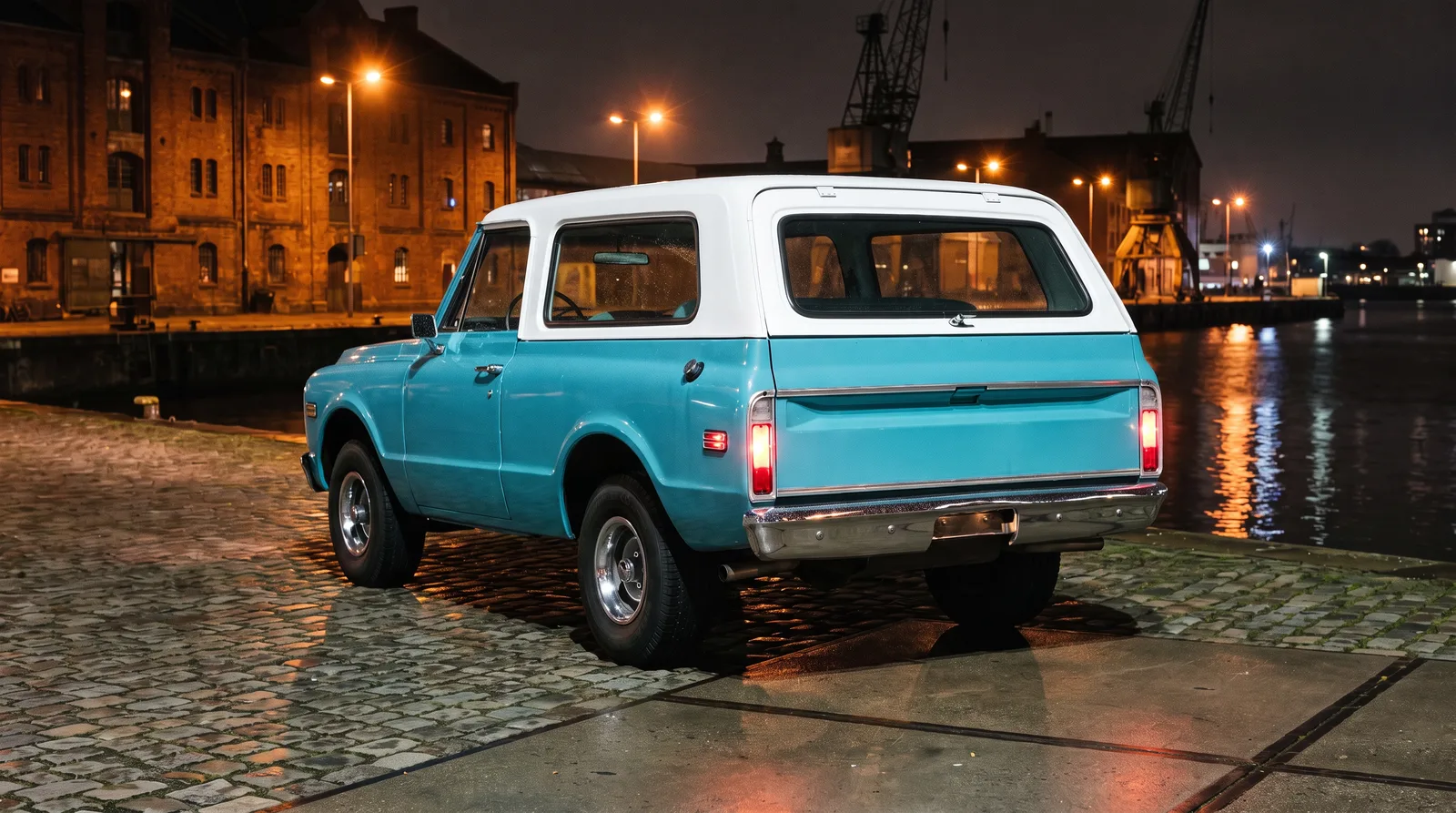
Condition is the obvious variable, and the deceptive one
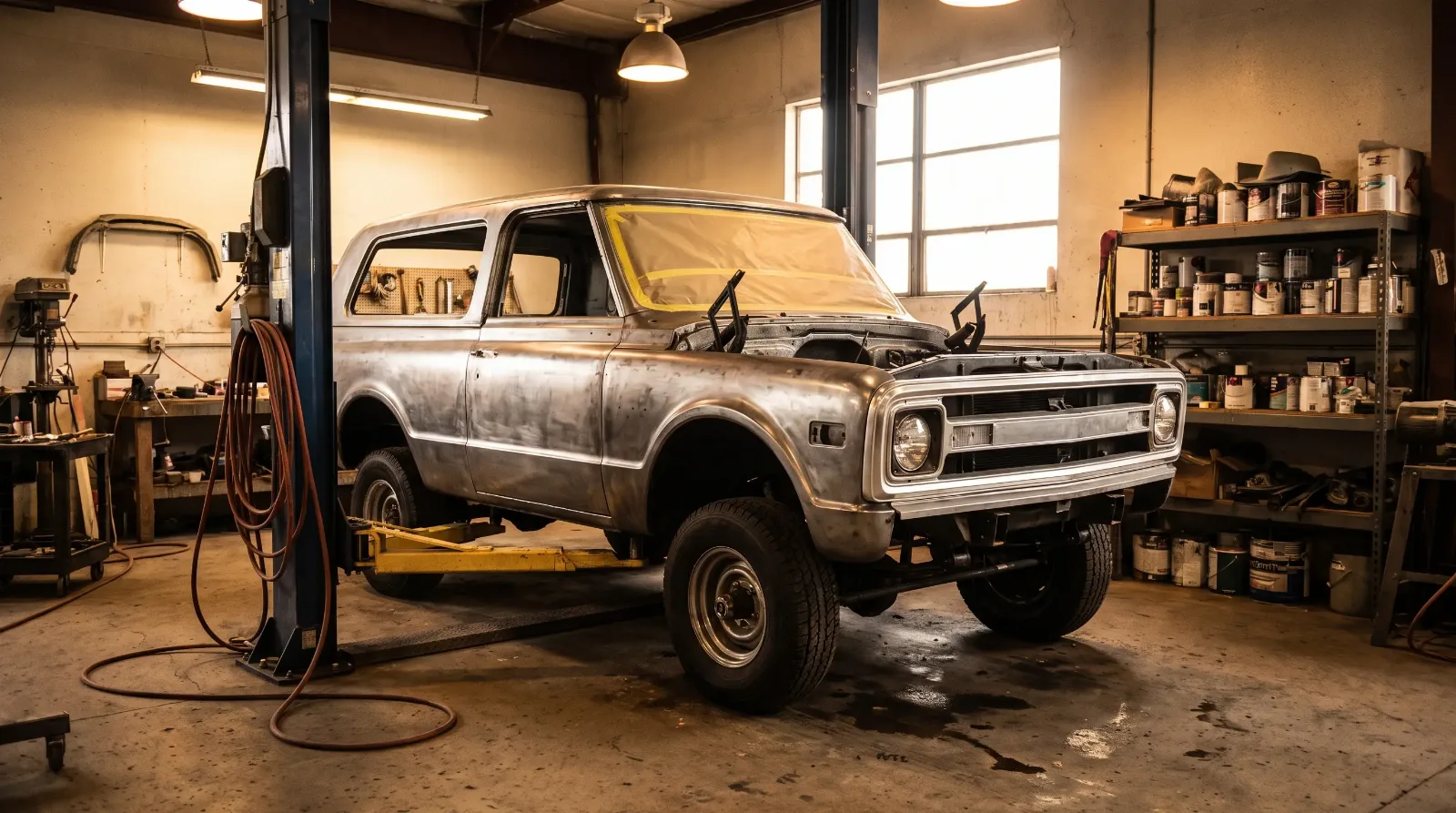
A truck that looks solid in photographs can hide frame rust, floor pan patches, and cab corner repairs that a casual walkaround will not reveal. The K5 Blazer's body sits low relative to the frame and the removable top design means water intrusion at the seals was common over five decades, which shows up as rot in places a buyer does not think to check on a truck this age. Paint condition tells you almost nothing about structural condition, and a fresh repaint should raise more questions than it answers, not fewer.
What actually moves a price is mechanical soundness combined with body integrity, not shine. A rough-looking truck with a solid frame and honest rust history is a better financial position than a glossy one with filler in the rockers, even though the glossy one will sell faster to a buyer who never looks underneath.
Documentation changes the math more than people expect
A build sheet, an original title chain, period photographs, or dealer paperwork does not just satisfy curiosity. It removes risk, and removed risk is worth real money in this market. A 1972 K5 Blazer with a documented history commands a premium over an identical truck with no paper trail, because the documented truck answers questions before they get asked: is this the original drivetrain, was this truck ever four-wheel drive before someone converted it, does the VIN match the configuration being claimed.
Buyers who skip this step are effectively self-insuring against fraud and misrepresentation without knowing it, and that insurance has a cost even if it never shows up as a line item.
Regional demand differences complicate condition assessment further, since a truck that would grade highly in a dry western climate might carry hidden corrosion issues if it spent decades in a humid or salt-exposed region before relocating. An appraiser who only inspects the truck as it sits today, without asking where it actually lived across its service life, is working with an incomplete picture no matter how thorough the visual inspection appears to be.
Liquidity: the part appraisers think about and buyers don't
A truck can be in excellent condition and fully documented and still be hard to sell, if the color, configuration, or trim level falls outside what the market currently wants. Popular colors and desirable trims like Cheyenne move faster and at tighter price spreads than base trucks in an unusual factory color, regardless of how well either one was preserved. Liquidity is the difference between a truck you can sell in a season and one that sits listed for a year while the market slowly loses interest.
That gap between published price guides and actual sale results applies here as a real caveat, since valuation tools like Hagerty's lag actual transactions and regional demand swings can move real-world numbers meaningfully in either direction within a single year.
| Value factor | What it actually affects |
|---|---|
| Condition | Baseline price, repair cost exposure |
| Documentation | Risk premium, buyer confidence |
| Originality | Long-term appreciation potential |
| Liquidity | Time to sell, negotiating leverage |
"Every truck has a price where it becomes a good buy. The mistake people make is assuming that price is the same for every 1972 K5 Blazer on the market, when it almost never is."
- Marcus Feld
Originality as its own value driver
Originality gets confused with condition constantly, and the two are not the same thing. A truck can be in mediocre cosmetic shape and still carry high originality value if it retains its numbers-matching drivetrain, factory paint code, and unaltered configuration, because those are the elements a buyer cannot simply purchase and install later. Condition is reversible with enough money and time. Originality, once lost through a swapped engine or a non-factory drivetrain conversion, is essentially gone for good, and no amount of restoration budget brings it back.
That distinction is why an appraiser weighs a rough but original 1972 K5 Blazer differently than a beautifully finished truck built from mismatched parts. The rough original has a ceiling that a careful buyer can reach with investment. The mismatched truck has already hit its ceiling, regardless of how much money goes into it from here, because the market pays a real premium for verified originality that no amount of fresh paint can replicate.
The downside case, not just the upside
A serious appraisal always asks what happens if the market softens or the buyer needs to exit quickly. A well-documented, original-configuration 1972 K5 Blazer in a popular trim and color has real downside protection, because demand for that specific combination tends to hold even in a slower market. A base-trim, undocumented truck in an unpopular color carries meaningfully more downside risk, since it depends on finding one specific buyer rather than competing across a broad pool of interested collectors.
Buying with that downside case in mind, rather than only the best-case appreciation story, is what separates a considered purchase from a hopeful one.
None of these four factors operates in isolation, and treating them as a checklist rather than an interconnected picture is where a lot of buyers go wrong. A truck can score well on condition and poorly on documentation, or carry excellent paperwork wrapped around mediocre bodywork, and the honest final number sits somewhere in the intersection of all four rather than at the top of whichever single factor looks best in the listing photos.
My advice to anyone new to this market is simple: walk through all four factors deliberately before making an offer, resist the pull of the first truck that looks right in photographs, and treat a lower asking price as a question rather than a gift. There is usually a reason a truck is priced below where comparable examples sit, and finding that reason before purchase is far cheaper than discovering it after.
For the full context behind what makes a 1972 K5 Blazer desirable in the first place, from trim levels to drivetrain choices, the whole picture covers the model year in detail. And if you are ready to weigh these factors against actual trucks on the market, you can shop classic K5 Blazer listings to see current asking prices and condition reports.
Sources and notes
Related Reading
Have a
Chevrolet Blazer
for Sale?
Reach thousands of serious classic car collectors across the US.
Sell It Here →
Selling a classic? Here's how: compare the places to sell classic cars
Are You a Classic Car Dealer?
List your full inventory and connect with targeted classic car buyers.
Join as a Dealer →

About the author
Marcus Feld
Accredited collector-car appraiser who reads the market through hammer prices, condition tiers and risk.
Related Listings - Chevrolet Blazer
Comments
Be the first to comment on this article.