
At a swap meet outside Tulsa a few years back, I watched a man spend twenty minutes arguing with a stranger about the correct shade of orange paint on a 1972 K5 Blazer, neither of them budging, both of them clearly enjoying it more than they wanted to admit. That argument is the restoration culture around this truck in miniature, a community that cares enough about specific years and specific details that a paint code can become a genuine point of pride or contention. The 1972 K5 Blazer restoration culture is not a quiet hobby. It is opinionated, social, and stubborn in the best way.
Car Features
6 min read
The 1972 K5 Blazer Restoration Culture
Inside the community of owners and restorers who argue over paint codes and interior correctness to keep 1972 K5 Blazer history intact.
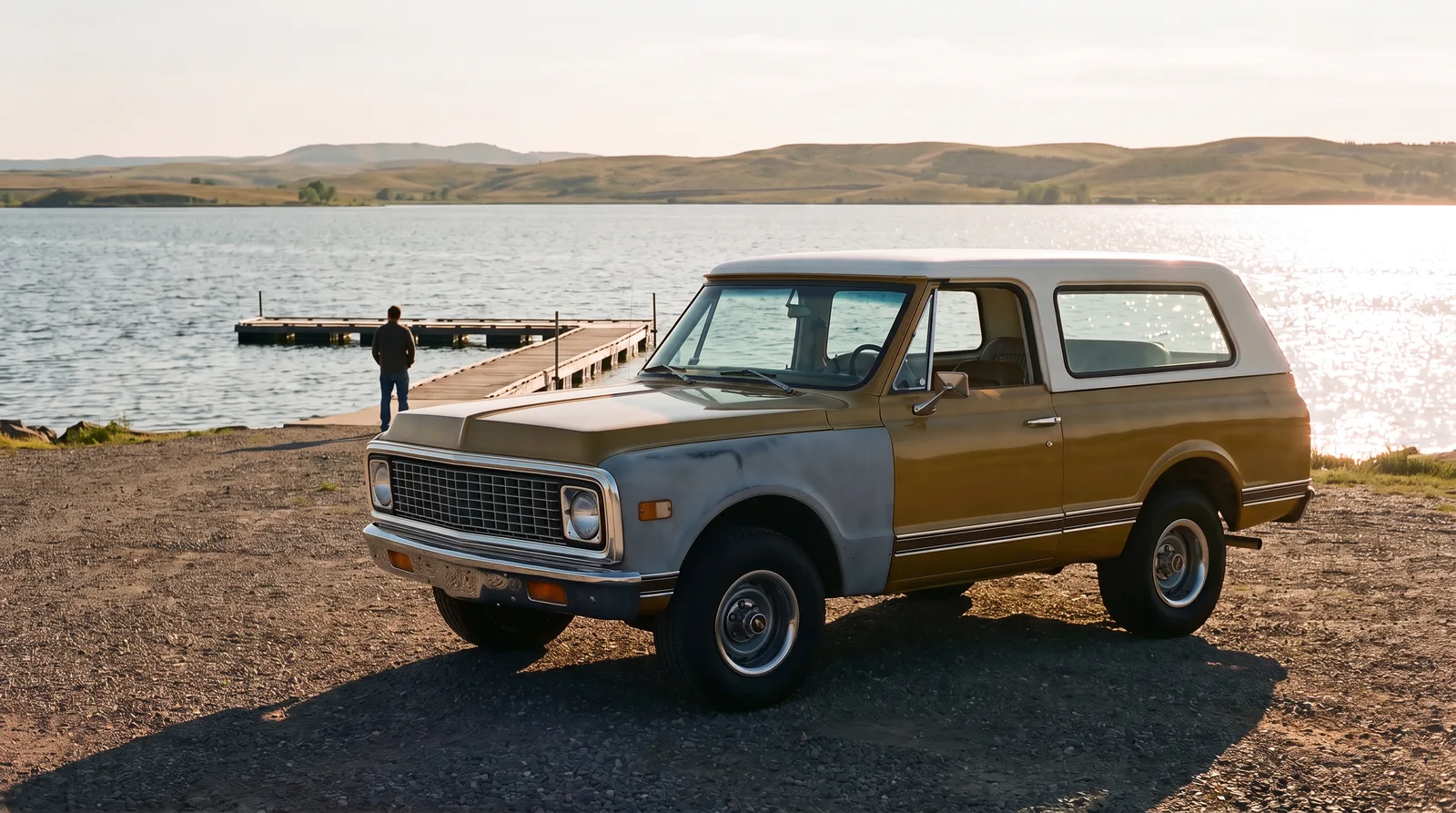
Why the 1972 model year specifically draws a crowd
Restorers gravitate toward 1972 partly because it sits at the tail end of the first-generation K5 Blazer, the era of the original body style and its fully removable steel top, before the squarebody generation began with the 1973 model year. That makes 1972 trucks a kind of last chapter, and last chapters attract a particular type of enthusiast who wants the final, most refined version of an original idea before the next generation reinvents it. There is also a practical draw: parts interchange reasonably well across the early K5 years, which means a 1972 project has a wider net to fish from than some other single model years in the truck's run.
The community that has grown up around these trucks skews toward people who remember them from childhood, whether that was a ranch truck, a ski trip hauler, or a neighbor's daily driver, and that personal memory shows up constantly in how people talk about their projects. Nobody restores a 1972 K5 Blazer purely as an investment. The ones who finish the job are chasing something more personal than that.
What the debates actually get argued about
Paint codes come up constantly, since Chevrolet's factory colors from 1972 have faded and been reproduced by different suppliers over the years with real variation between batches. Interior correctness is another flashpoint, particularly around whether a given seat pattern or dash trim actually matches what a specific trim level received that year, since aftermarket suppliers have not always been precise about which details belong to which model year.
Then there is the four-wheel-drive-versus-two-wheel-drive question, and whether a truck that started life as a 2wd and later gained a transfer case should be represented as anything other than what it originally was. Purists tend to draw a hard line here. Builders focused on usability tend to care less. Both camps show up at the same shows, park next to each other, and mostly manage to stay friendly about it.
Regional club chapters have started organizing dedicated 1972-specific gatherings distinct from broader K5 Blazer events, a level of granularity that would have seemed unnecessary a decade ago but now reflects how much the community has grown and specialized. These smaller, focused meets tend to draw the most serious owners, the ones with build sheets in hand and specific questions about a single trim detail rather than a general appreciation for the truck as a category.
Where knowledge actually gets passed down
Forums and swap meets remain the backbone of how correct information about the 1972 model year survives, since factory documentation from Chevrolet is incomplete or was never digitized in a form easy to search. Longtime owners who bought their trucks new, or close to it, are an aging resource, and the restoration community has gotten noticeably more serious in recent years about recording their firsthand knowledge before it disappears entirely with them.
That urgency has changed the tone of the hobby somewhat, from pure enthusiasm toward something closer to preservation work, with people treating original build sheets and period photographs the way archivists treat primary sources, because in a real sense that is exactly what they are.
"Every argument at a swap meet about the correct orange is really an argument about getting the history right before nobody's left who remembers it firsthand."
- Patrick Walsh
The parts hunt as its own subculture
Sourcing correct parts for a 1972 K5 Blazer has become a subculture within the larger restoration community, with dedicated networks tracking which suppliers reproduce trim pieces accurately and which ones get the details wrong. A trim clip that looks close enough in a catalog photo can be subtly wrong in a way only someone who has handled an original will notice, and that kind of institutional knowledge circulates through the community person to person more than it does through any published guide.
Salvage yards specializing in early GM trucks have become genuine destinations for serious builders, some of them visited on pilgrimage-like trips across several states specifically to pull a single dash bezel or a correct set of door hinges off a donor truck too far gone to save otherwise. That willingness to drive hundreds of miles for one small correct part says something about how seriously this community treats getting a 1972 build right, and it is a big part of why the restoration culture around this specific truck feels denser and more committed than it does around less beloved model years.
What a project truck actually costs in time
Nobody in this community will tell you a full restoration is cheap or fast, and most will tell you unprompted that it takes longer than planned regardless of budget. What keeps people going is rarely the finished result alone. It is the process itself, the swap meet arguments, the forum threads, the slow accumulation of correct parts sourced from three states away, all of it built around a shared stubbornness about getting one specific truck from one specific year exactly right.
I have watched people sell finished trucks within a year of completing them, not because they lost interest in the K5 Blazer but because the finished truck could not offer what the unfinished project did, a reason to keep learning, keep hunting for the next correct part, keep showing up to the next swap meet argument. The restoration itself is often the point, more than the ownership that follows it.
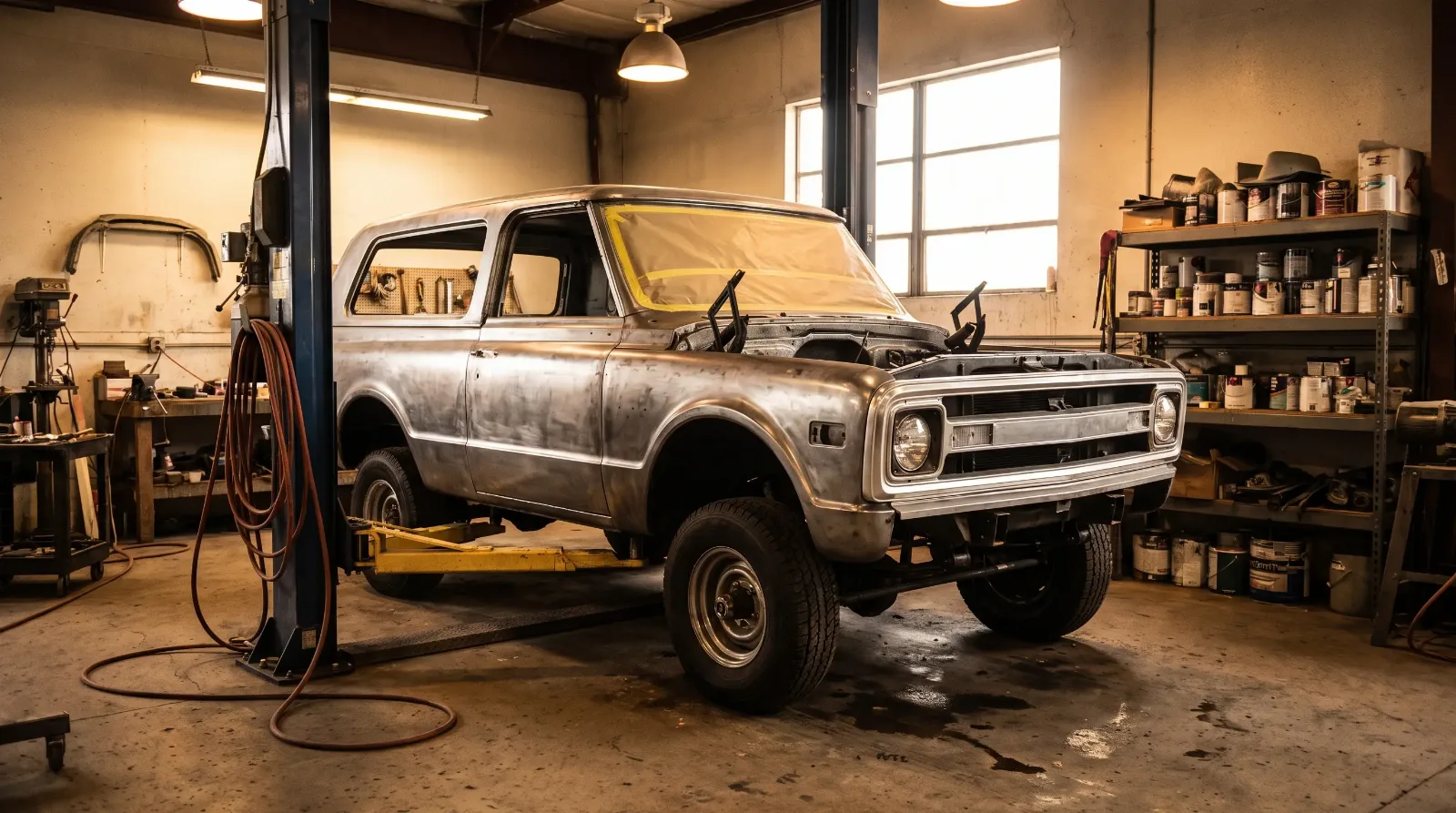
For the background on what made 1972 such an important year for the model, the 1972 k5 blazer story lays out the trim levels, engines, and configuration choices that this restoration community argues over so passionately. For the wider arc of the K5 Blazer across its entire production run, the full story covers both generations. And if watching all this has you wanting a project of your own, there are classic K5 Blazers on the market waiting for someone willing to have that paint code argument themselves.
Sources and notes
Related Reading
Have a
Chevrolet Blazer
for Sale?
Reach thousands of serious classic car collectors across the US.
Sell It Here →
Selling a classic? Here's how: compare the places to sell classic cars
Are You a Classic Car Dealer?
List your full inventory and connect with targeted classic car buyers.
Join as a Dealer →
#swap meets
#classic truck community
#K5 Blazer
#1972 Blazer
#Chevrolet Blazer history
#restoration culture

About the author
Patrick Walsh
Automotive journalist covering classic car shows, events, and the enthusiast community across North America.
Related Listings - Chevrolet Blazer
Comments
Be the first to comment on this article.