
Most 1973 K5 Blazers left the factory as work trucks, and most of them lived exactly that life: a farm, a construction site, a county road department, until rust or a tired engine ended the story. What makes the surviving examples worth documenting is how few of them escaped that fate in original or near-original condition. A handful of 1973 K5 Blazers have survived well enough, or been restored carefully enough, that they now function as reference points for what the first squarebody model year actually looked like when it rolled off the line, before decades of parts swapping blurred the details.
Car Features
7 min read
Notable 1973 Squarebody K5 Blazers
How researchers separate a genuinely documented 1973 K5 Blazer survivor from a well-done restoration wearing the same badge.
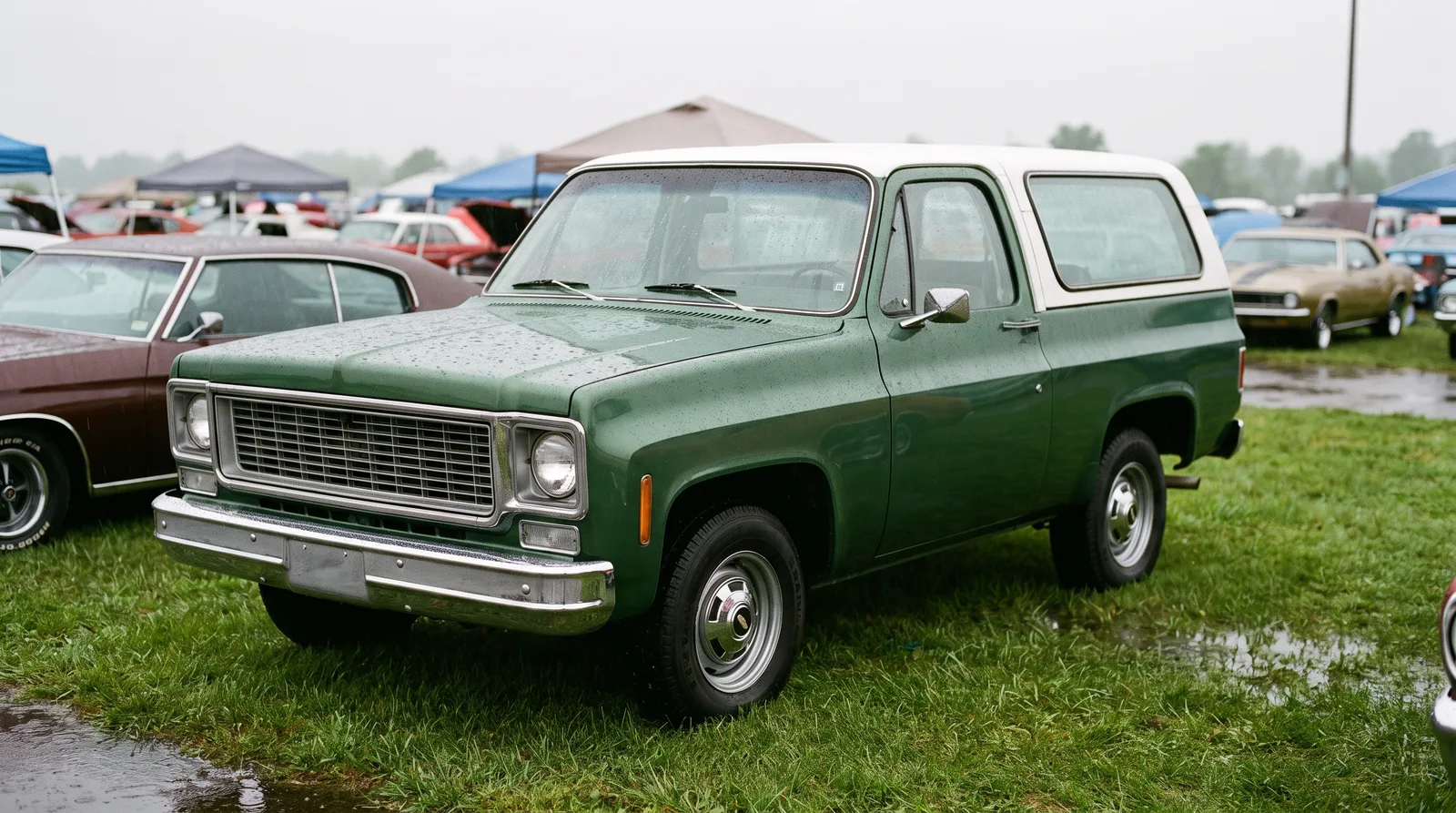
Why 1973 examples are harder to document than later years
The 1973 model year opened a body style that ran with only minor changes through 1980, and that interchangeability, which makes the 1973 truck popular with restorers, also makes it harder to verify as a distinct example. A 1973 K5 Blazer wearing 1975 trim, or vice versa, is common enough that provenance research has to lean on build sheets, cowl tags, and dealer paperwork rather than appearance alone. Concours judging for this generation puts real weight on documentation for exactly this reason. A truck that presents as clean and period-correct but cannot produce a build sheet or original title chain earns less credit than one with thinner paint and a complete paper trail.
This is part of why the notable 1973 examples that do surface in the hobby tend to come with a story attached, a first owner who kept every receipt, a dealership that held onto the original invoice, or a family that never let the truck leave the property. Without that chain, a 1973 K5 Blazer is just a well-preserved truck. With it, the same truck becomes a documented artifact.
Factory options that make an example stand out
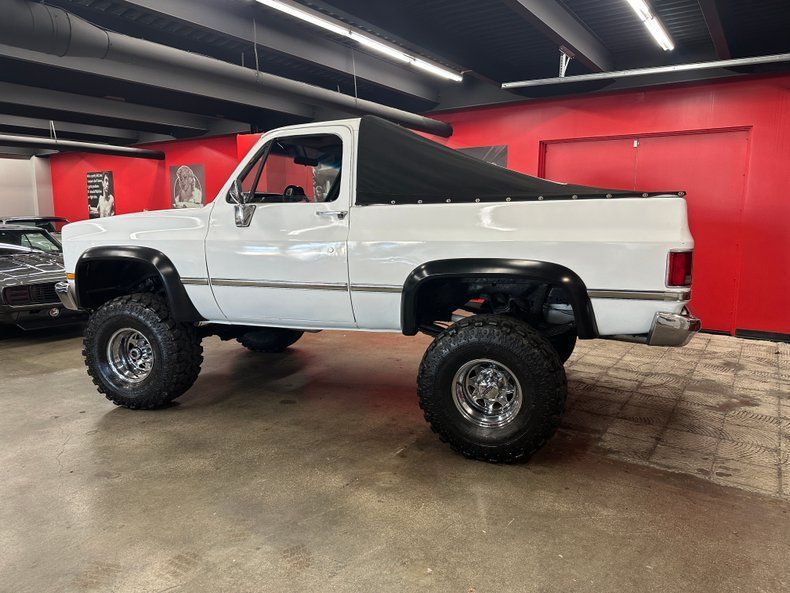
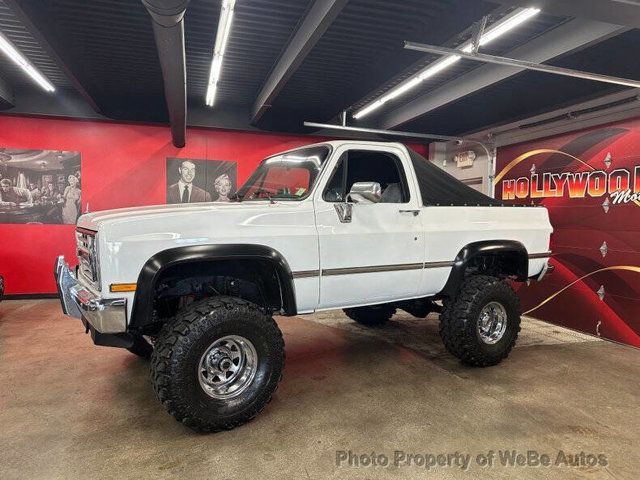
The 1973 K5 Blazer could be ordered with a range of factory options that few buyers actually checked, and those rarer configurations are what tend to draw attention when an original example surfaces. A truck ordered with the Cheyenne Super trim, air conditioning, and the removable hardtop in the same order is a meaningfully different find than a base-trim work truck, both because fewer were built that way and because the combination survived the winter months better in a garage than a fleet truck ever did outdoors. Engine choice matters too. A 1973 K5 Blazer ordered with the larger V8 rather than the standard six is a more sought-after find among collectors who value the truck's original performance character over a later engine swap.
Color is its own small research project. Factory paint codes from 1973 covered a wide range, and several of the less common shades from that catalog rarely show up on surviving trucks today, either because they were unpopular at the time or because repaints over the decades erased the original finish. A verified original-paint 1973 K5 Blazer in one of the scarcer colors carries weight in judging circles that a repainted truck, however well done, cannot match.
How dealer records help fill the gaps
Original dealer paperwork is often the strongest evidence available for a 1973 K5 Blazer, more useful in practice than a family story passed down over decades, because a dealer invoice records the exact options ordered, the selling price, and often the original owner's name and location. When that paperwork survives alongside the truck, researchers can cross-check it against the cowl tag and confirm the truck has not been reshuffled with parts from another example. Some regional Chevrolet dealer networks kept better records than others, and trucks originally sold through dealerships that later closed or changed hands often lost that paper trail entirely, which is part of why geography plays an unexpected role in which 1973 K5 Blazers end up well documented today.
Owners researching a specific truck should also check state title records where available, since a continuous title chain with no gaps in ownership can substitute for some of the missing dealer paperwork, particularly for trucks that stayed within one family or one region for most of their life. Retention periods and record formats for title archives from the 1973 era vary widely by state, so results depend heavily on where the truck was originally titled. A truck with both a clean title chain and surviving dealer documentation represents close to the strongest provenance case a 1973 K5 Blazer can have.
What separates a documented survivor from a good restoration
There is an important distinction between a 1973 K5 Blazer that survived largely untouched and one that has been restored to a high standard. Both can look excellent in photographs, but a documented survivor, meaning a truck with most of its original sheet metal, interior, and mechanical components intact, holds a different kind of value than a restoration built on a solid but modified core. Concours judges and serious collectors treat these as separate categories rather than ranking one above the other automatically, because each preserves a different kind of information about how the truck actually existed in 1973.
A careful restoration can still be historically significant if it was done using period-correct parts and documented research, particularly for trucks that would otherwise have been lost entirely to rust or accident damage. The notable examples in this category tend to be the ones where the restorer published their process, kept photographic records of the teardown, and sourced parts specifically to match what the original build sheet called for rather than what was convenient to install.
"A survivor tells you what 1973 actually was. A restoration tells you what someone believed 1973 was, and the gap between those two things is where the real research happens."
- Sarah Whitfield
Where to learn more
Anyone researching a specific 1973 K5 Blazer, whether to verify a potential purchase or to document a family truck, benefits from starting with the broader model history. Readers can find more on the 1973 k5 blazer for context on what changed that year, and our complete history covers the full run from 1969 through 1991 for anyone trying to place a specific truck within the larger timeline. For those looking to acquire a project or a documented example of their own, there are currently classic K5 Blazers on the market spanning a wide range of condition and originality.
The value of getting it right
Documenting a notable 1973 K5 Blazer is slow work, and it rarely produces a dramatic discovery. Most of the effort goes into confirming small details, matching a cowl tag number, tracking down a second or third owner, verifying that a paint code matches the factory catalog rather than a later repaint. But that patience is exactly what separates a truck with a real, defensible history from one that simply looks old enough to have one. As more 1973 K5 Blazers pass through restoration shops and change hands at auction, the pool of properly documented examples will keep shrinking relative to the number of trucks claiming originality, which makes the verified survivors more valuable, not less, with every passing year.
Sources and notes
Related Reading
Have a
Chevrolet Blazer
for Sale?
Reach thousands of serious classic car collectors across the US.
Sell It Here →
Selling a classic? Here's how: sell my classic car
Are You a Classic Car Dealer?
List your full inventory and connect with targeted classic car buyers.
Join as a Dealer →

About the author
Sarah Whitfield
Third-generation classic car collector specializing in pre-war American and European coachbuilt automobiles. Researcher and concours enthusiast.
Related Listings - Chevrolet Blazer
Comments
Be the first to comment on this article.