
Ask an old-timer at any Model A meet about the Ford police car and you will hear a story with a roadster in it, a star painted on the door and a patrolman with one hand on his hat. Some of those stories are even true. The real history of the Model T and the Model A police car is short on paperwork and long on photographs, and it turns on one quiet invention that rode in the back seat of a Model T in Detroit: the police radio.
Car Features
7 min read
Model T and Model A Police Cars
Detroit's radio tests in a Model T patrol car, 244 NYPD roadsters in 1931 and what the record says about early Ford police cars.
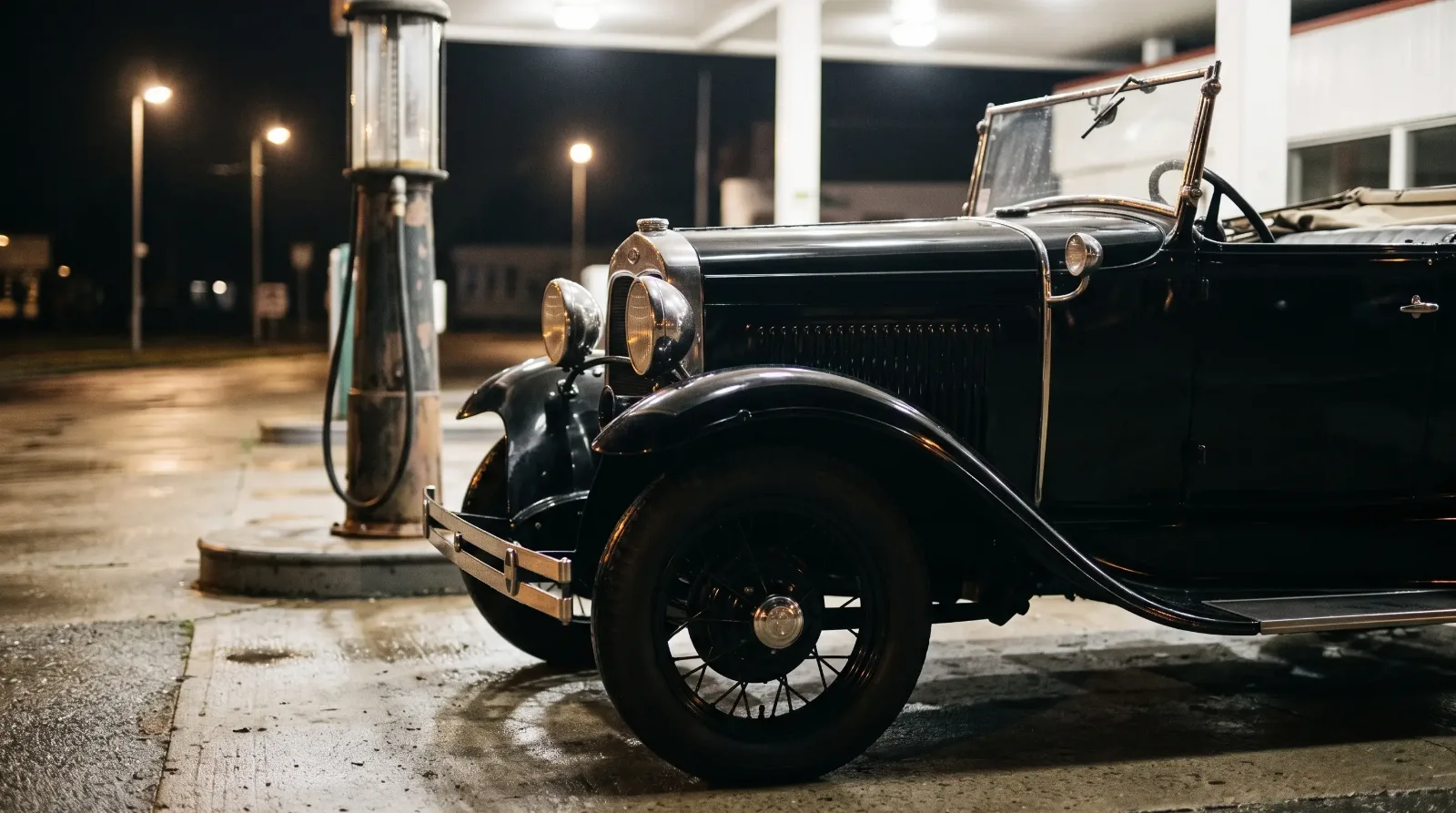
Police Fords were not a separate model. They were ordinary cars and light chassis put to work, the same way Ford's trucks were, and our trucks story covers that wider working fleet. Here the subject is narrower: what the cops drove, what the record actually says, and what it leaves out.
The Model T on patrol
The Model T did not set out to be a police car. It set out to be cheap, and cheap is what a city council likes to hear. A 20 hp four, a top speed of about 40 to 45 mph and a price that kept falling made it the obvious choice for a department that needed wheels and did not have much money. A 1919 Model T Phoenix police cruiser turns up in more than one history of the car, and it looks exactly as plain as you would expect. During the First World War, the Allies put Model Ts to work as light patrol cars, and even as rail tractors.
Forty-odd miles an hour does not sound like pursuit speed. Then again, the fellow being pursued was most likely in a Ford too.
Not every working Model T in public service wore a badge. Towns also put the Ford to work hauling passengers and schoolchildren, and the buses are a story of their own.
Detroit's Model T and the radio in the back seat
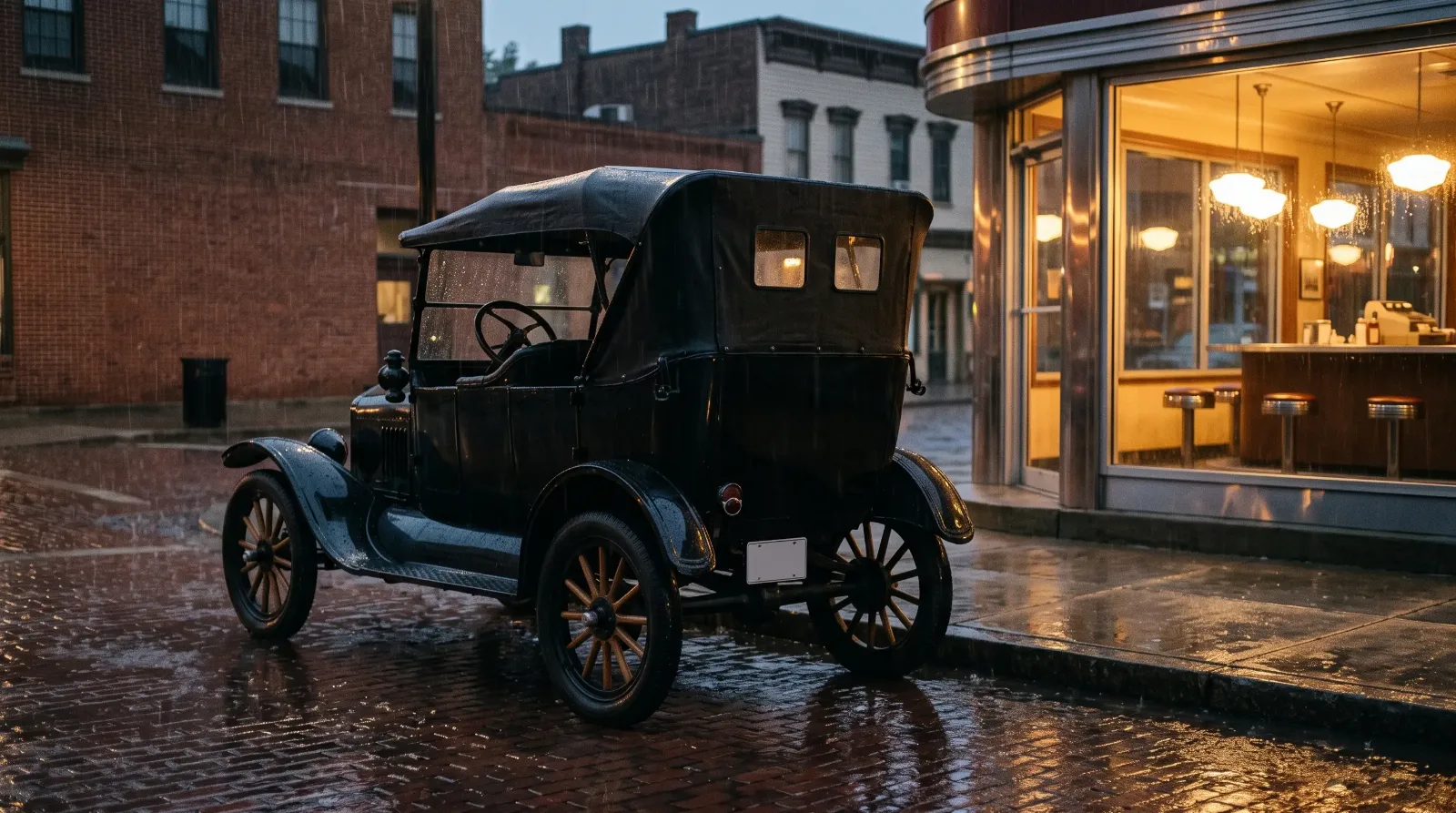
Here is where the old guys deserve the credit. Between 1921 and 1927 the Detroit Police Department ran experiments in sending messages to moving cars by radio. The test car was a Model T Ford patrol car, with the receiver installed in the back seat. The receiver was built by patrolman Kenneth Cox and a student, Robert L. Batts, and Commissioner William P. Rutledge directed the work.
It took years to get right. On April 7, 1928, Detroit police began regular one-way radio dispatch to patrol cars, through a station first called KOP and later W8FS. The cars could hear headquarters; they could not answer. The IEEE later recognized the system as an engineering milestone, with a plaque dedicated on Belle Isle on May 1, 1987.
So the first radio patrol work in Detroit rode in a Model T, but by the time the system went into regular service, the Model A had just arrived in showrooms. Timing like that is how history tidies itself up.
The Model A police car arrives
The Model A gave a police department more of everything that mattered. Its 200.5 cu in four made 40 hp at 2,200 rpm, about twice the Model T's output, and it would run 60 to 65 mph. It had four-wheel mechanical brakes in place of the Model T's transmission band and rear drums, and a conventional three-speed gearbox that a new recruit could learn without a lesson in pedals.
Ford sold the car to departments the same way it sold everything else. From 1929 the company offered commercial bodies on the Model A chassis, "no fewer than eighteen body styles," and it listed "police patrols" among the Model A and AA commercial bodies. Beyond that listing, the specifics of a Model A police package are hazy. Collectors talk about special heads and generators, but that talk comes from forums, not from Ford documents, and nobody should pay extra for it without proof.
"Every Model A with a siren on the fender comes with a story about a police head and a heavy generator. Ask for the paper. Nine times out of ten the story is the only original part."
Gary Nowak
1931: roadsters by the hundred
The best documented police Model As are open cars, and that makes sense. The roadster was the cheapest Model A on the list, $430 in 1931, and a patrolman could get in and out of it quickly.
| Department or use | Ford | What the record says |
|---|---|---|
| Allied forces, First World War | Model T | Light patrol cars and rail tractors |
| Phoenix police | 1919 Model T | Cruiser pictured in histories of the Model T |
| Detroit police | Model T patrol car | Radio receiver tests, 1921 to 1927 |
| New York police | 1931 Model A roadster | 244 in a December 1931 parade |
| Missouri State Highway Patrol | 1931 Model A roadster | 36 new roadsters at $413.18 each, November 1931 |
In December 1931 the New York Police Department paraded its vehicles, and the line included 244 Model A roadsters of the 1931 model year. That is a fleet, not a few cars bought on a whim. When a department that size orders a car by the hundred, it tells you what the Model A had become: the default answer for anyone who needed a lot of reliable cars and had to justify the bill.
Out in Missouri, the new State Highway Patrol went on the road on November 24, 1931, and its own history lists the first fleet: 36 new Model A Ford roadsters at $413.18 each, plus a handful of sedans and motorcycles. The roadsters carried twin Klaxon horns, a spotlight, a fire extinguisher, a first aid kit and an electric "Patrol" sign behind the windshield. None had a siren and none had a radio, so headquarters phoned messages to filling stations and cafes along the trooper's route. Troopers were told to drive with the top down in fair weather, so the public could see who they were.
What survives and what to believe
Very few police Fords survived as police Fords. A department car was worked hard, sold off, repainted and driven by somebody else until it wore out. What turns up today is usually a civilian Model A or Model T dressed in period markings, and there is no harm in that as long as nobody calls it something it is not.
If a car is offered as an ex-police vehicle, the questions are simple. Is there a bill of sale, a department record, a photograph of that car in service? Without them, it is a nice Ford in a costume. Railroad inspection cars carry the same problem of conversions and copies, and the full story of those Fords on rails shows how far a working Model T could stray from the catalog.
The bigger picture is easy to lose behind the sirens. The Model T and the Model A were cheap and dependable enough that a police department could buy them in bulk, and one of them carried the radio that changed patrol work. If you want the rest of the family, start at the beginning.
Sources and notes
- IEEE Milestone: One-Way Police Radio Communication, 1928 (ETHW)
- The Henry Ford: NYPD Model A roadsters, December 1931
- Missouri State Highway Patrol: history of the 1930s (PDF)
- MAFCA: Model A new car prices, 1928 to 1931
- RM Sotheby's: 1931 Ford Model A panel delivery and the Model A commercial line
- Wikipedia: Ford Model T
Related Reading
Have a
Ford Model T
for Sale?
Reach thousands of serious classic car collectors across the US.
Sell It Here →
Selling a classic? Here's how: sell my classic car
Are You a Classic Car Dealer?
List your full inventory and connect with targeted classic car buyers.
Join as a Dealer →
#ford model a
#ford model t
#police cars
#Model A Roadster
#Model A police car
#Police radio
#Detroit police

About the author
Gary Nowak
Lifelong Midwest rodder who has been building and driving traditional pre-war hot rods since the 1970s.
Related Listings - Ford Model T

Comments
Be the first to comment on this article.