
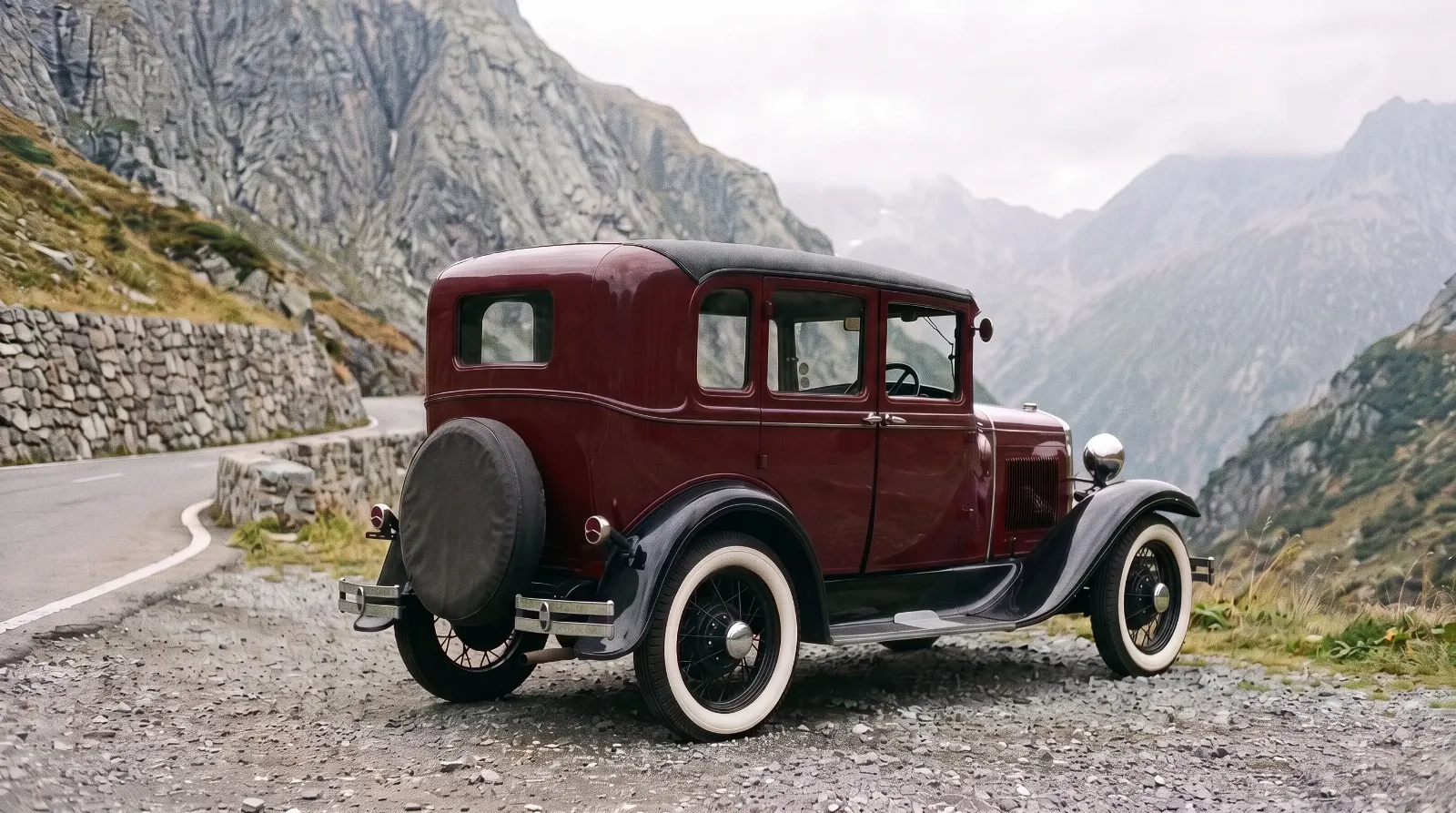
Every old Ford man has heard the story: a steep hill, a Model T that quits halfway up, and a driver who turns the car around and climbs the rest of the way in reverse. It sounds like a joke from a postcard. It was not. Driving a Model T backwards up a hill was a real fix for a real problem, and the reasons sit in two places on the car: under the front seat, and inside the transmission.
Car Features
6 min read
Why Model T Drivers Backed Up Steep Hills
A gravity fed tank under the seat and a planetary gearbox: why Model T owners turned around and climbed steep hills in reverse.
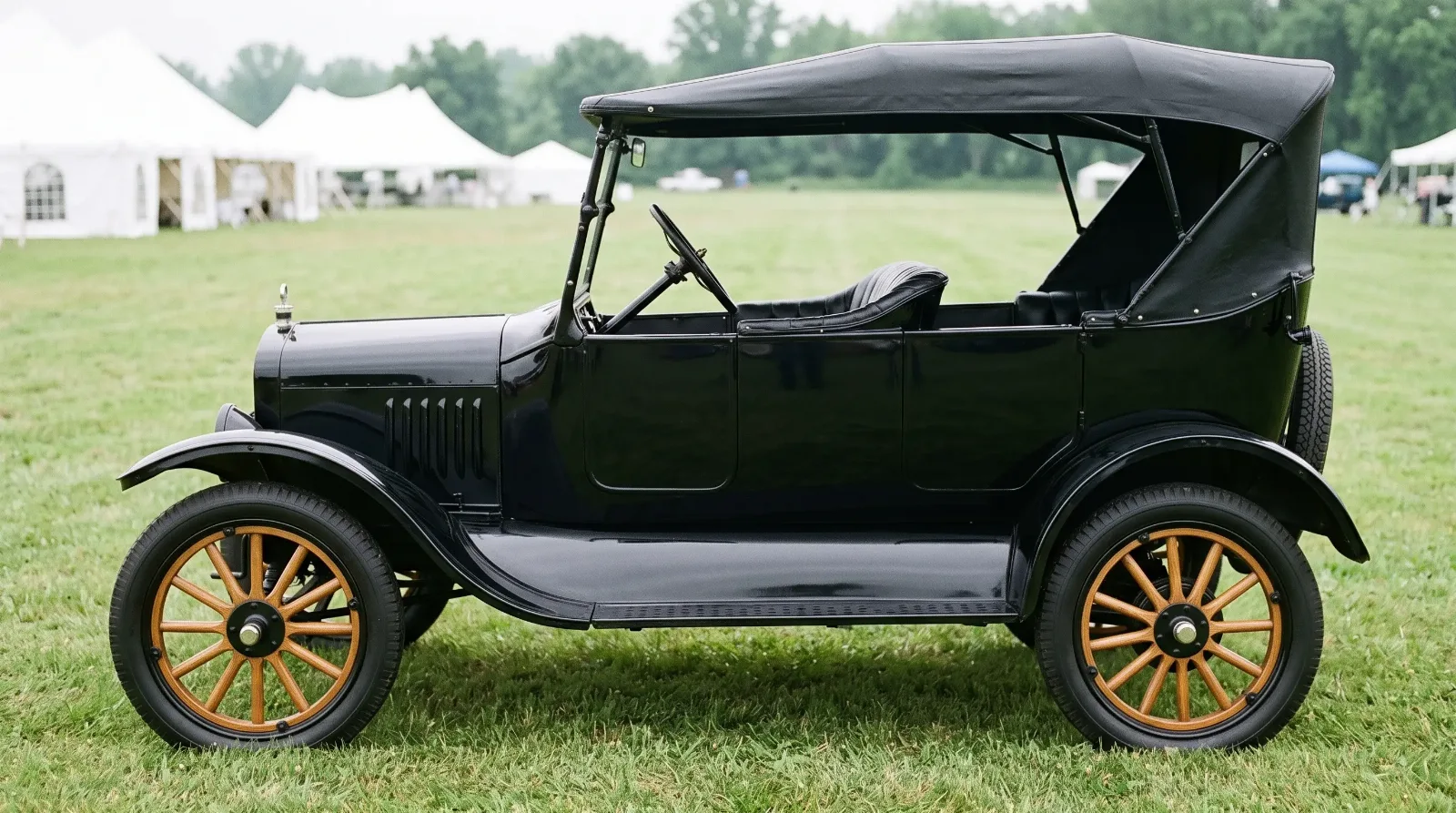
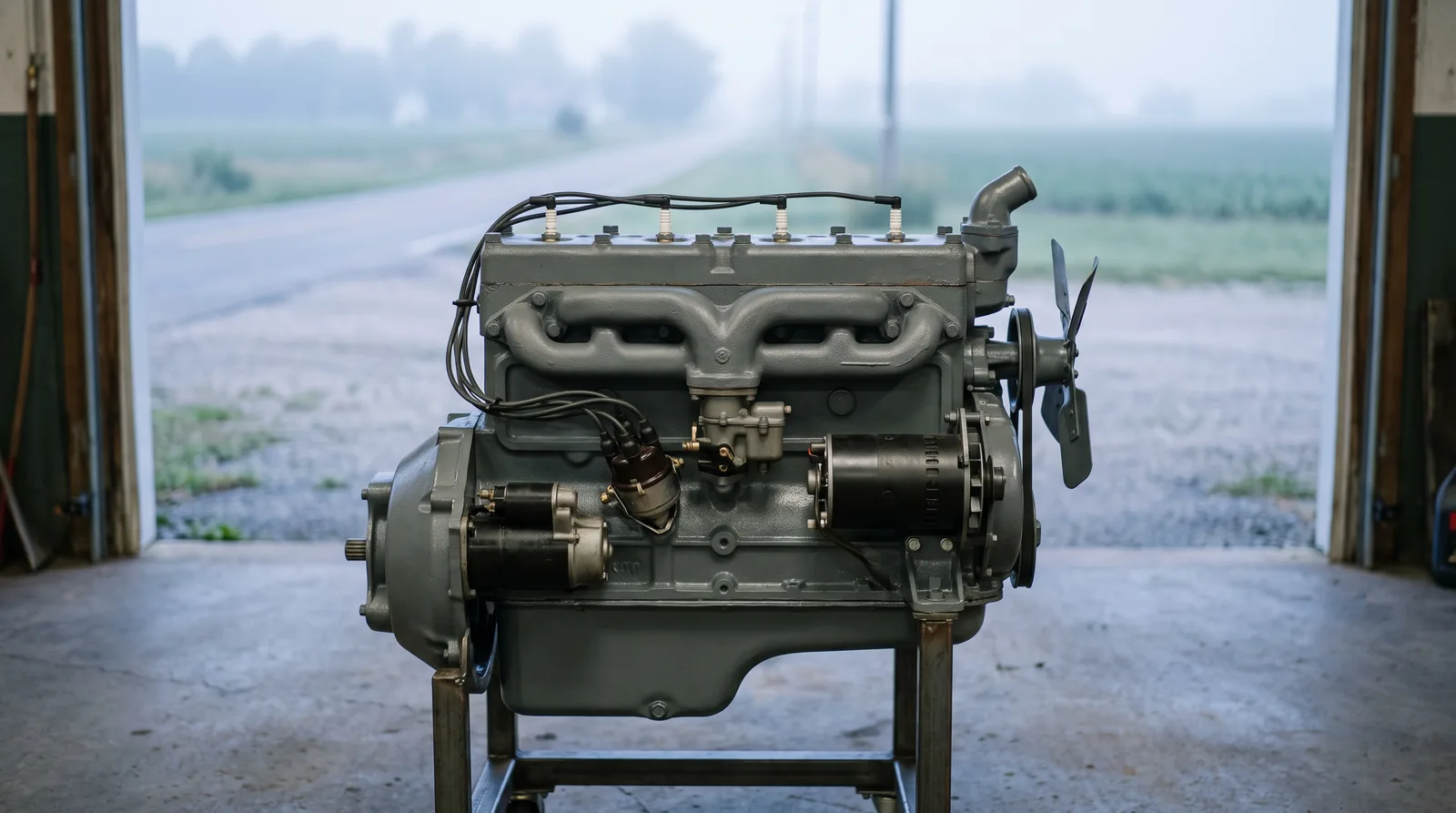
The short version is gravity. The longer version is worth knowing, because it says a lot about how simply the car was built and how well its owners understood it. If you want the whole engine picture first, start with how early Ford engines worked.
A fuel system with no pump
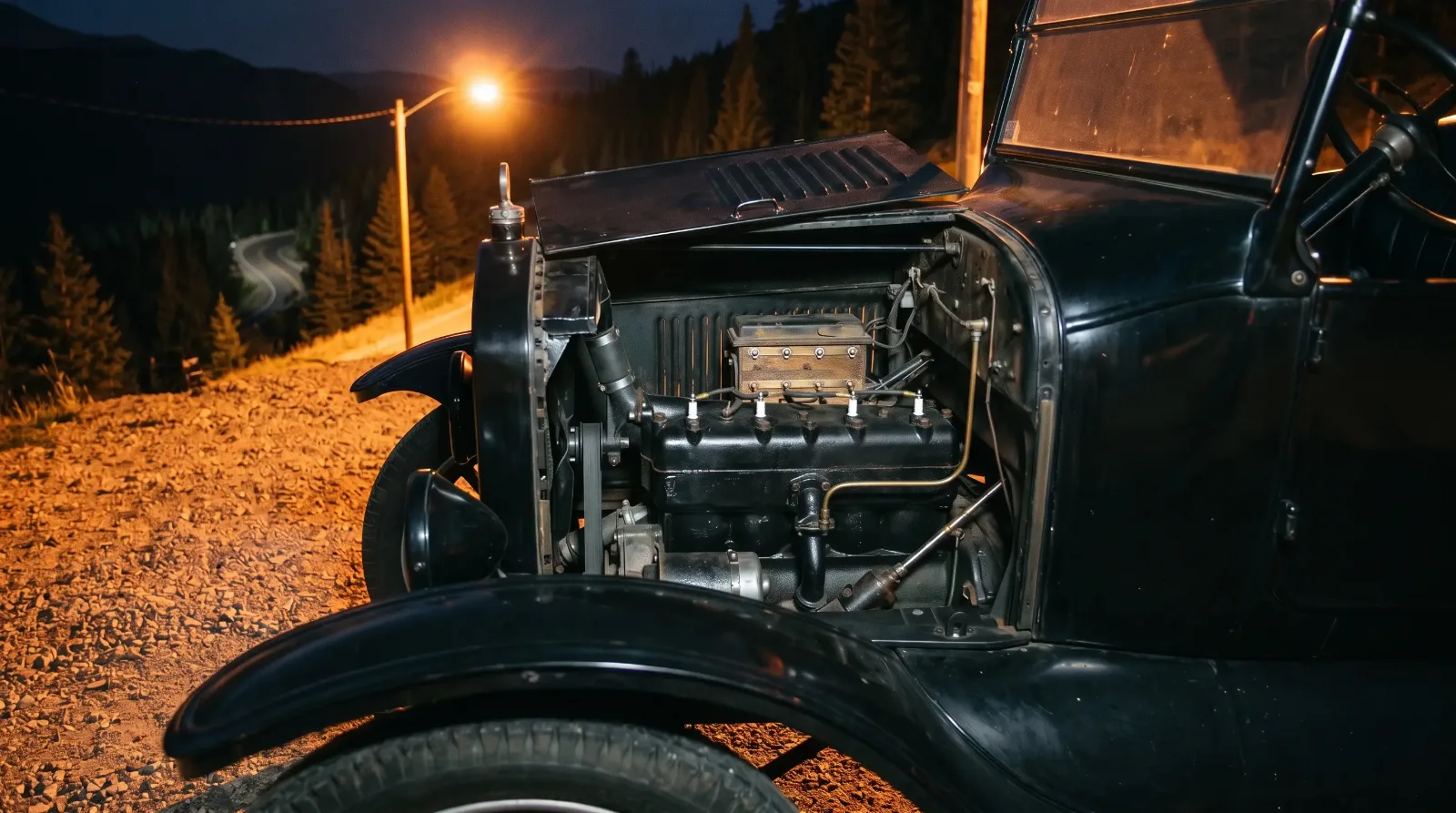
The Model T carried 10 US gallons of gasoline in a tank under the front seat. There was no fuel pump. Gasoline ran down to the carburetor by gravity alone, the same way water runs out of a rain barrel. Ford's own manual called it a "ten-gallon gasoline tank," and that was about all the explanation an owner got.
On level ground the system worked fine. The tank sat higher than the carburetor, and fuel flowed. The trouble came when the front of the car pointed sharply up. Tilt the car nose-high on a steep grade and the carburetor, out front on the engine, rises relative to the tank behind it. With a full tank there was still enough head of fuel to keep things running. With the tank low, the fuel level could drop below the carburetor, and the engine starved.
Nothing was broken. The car simply ran out of downhill for its gasoline. Plenty of drivers learned that lesson halfway up a grade with a line of wagons watching.
Why the Model T went backwards up a hill
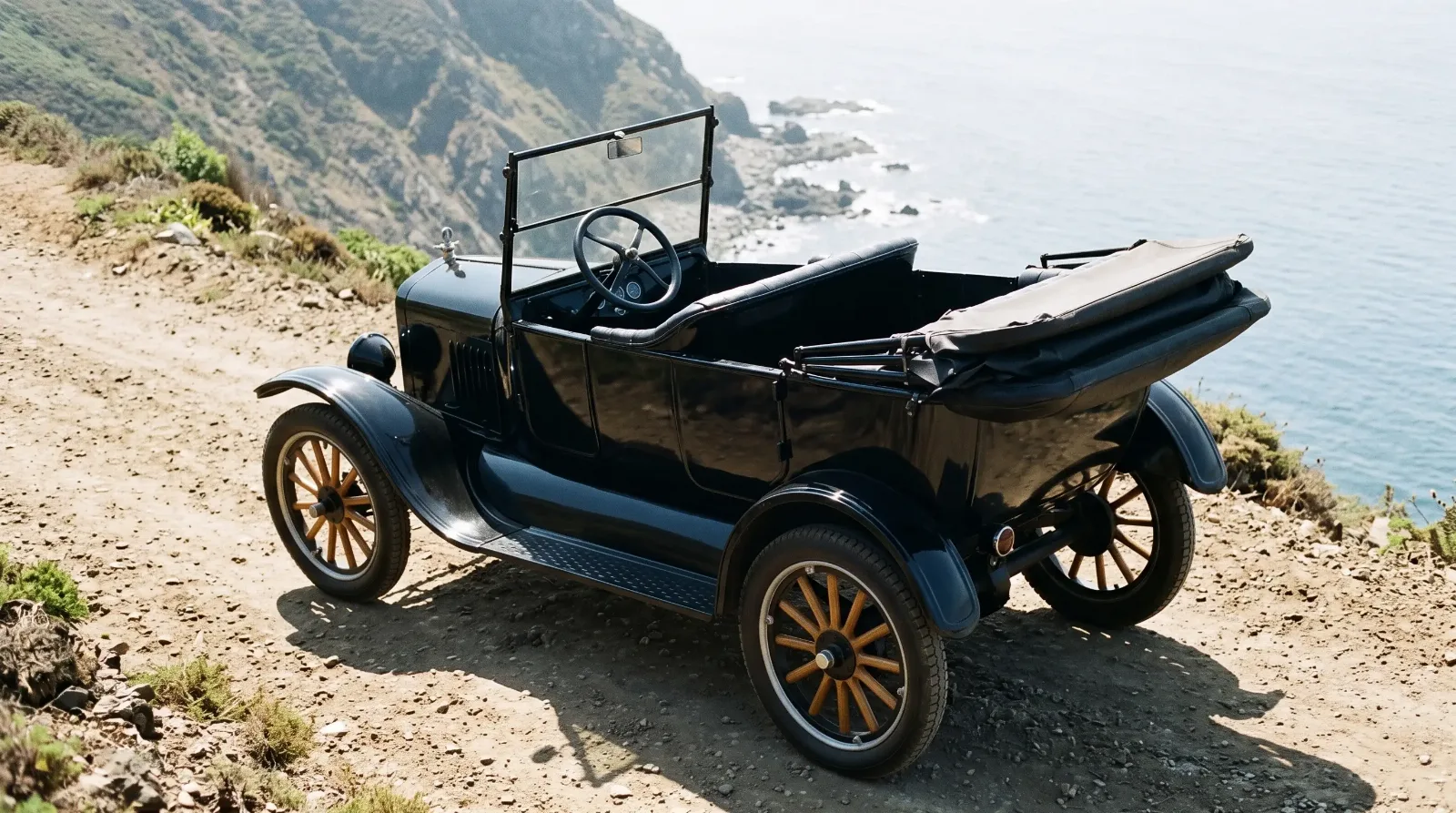
The fix was to point the other end of the car up the slope. Turn around, back up the grade, and now the tank under the seat sits above the engine again. Gravity goes back to work, the carburetor gets fuel, and the engine keeps pulling. It was not elegant, but it did not cost a dime, and it worked with the tools every owner already had: a steering wheel and the middle pedal.
The second reason is the gearbox. The Model T had a planetary transmission with two forward speeds and reverse, worked by three bands. The left pedal gave low, the center pedal gave reverse, and the right pedal was the transmission brake. Drivers have long said that reverse was a lower gear than low, and the numbers back them up. Model T technical references give low as 2.75 to 1 and reverse as 4 to 1, so in reverse the engine turned more times for each turn of the rear wheels and the car had more pulling power going backwards. With the 40 to 11 rear axle, that works out to roughly 10 to 1 overall in low and about 14.5 to 1 in reverse.
| Factor | What the car had | Why it mattered on a hill |
|---|---|---|
| Fuel tank | 10 gal, under the front seat | Nose-up, a low tank fell below the carburetor |
| Fuel feed | Gravity only, no pump | No way to push fuel uphill to the engine |
| Transmission | Planetary, two forward speeds plus reverse | Reverse (4:1) was geared lower than low (2.75:1) |
| Engine | 177 cu in four, 20 hp | Little reserve on a steep grade |
How it was done in practice
Backing up a hill in a T took some nerve. You looked over your shoulder, held the center pedal down, and steered with one hand while the car crawled up the grade tail first. The hand throttle sat on the steering wheel, so a driver set the engine speed with the lever and left his feet for the pedals. On a narrow road with a ditch on each side, it was a real piece of driving.
The engine had no surplus to spare. Ford rated the 177 cubic inch four at 20 horsepower, which was plenty for a light car on the flat and not much on a long, steep pull. A full tank and a short hill usually meant no trouble. A low tank and a mountain road meant a choice: stop and add fuel, or turn around.
That was the habit that went into the stories. It fed the car's folklore the same way its rattles and its size did, and it is part of why the nickname stuck, as told in the Tin Lizzie chapter.
"People laugh at the picture of a Ford going up a hill backwards. The fellows who did it were not laughing. They had figured out the fuel system with no manual, no pump and no help, and they got home. I will take that over a warning light any day."
Gary Nowak
The fix Ford made, and what came after
Ford changed the layout for the 1926 model year. On most models the fuel tank moved forward and up, into the cowl, where it sat above the carburetor no matter how the road tilted. The Model A that followed kept the same idea: a cowl tank, gravity feed, no fuel pump. Ford solved the problem by moving the tank, not by adding parts.
The gearing side had its own answers. Owners who climbed a lot of hills could fit a Ruckstell axle, an aftermarket two-speed planetary unit in the rear axle that gave an underdrive ratio on top of the T's own gears. On the trucks, Ruckstell and Jumbo auxiliary gearboxes added intermediate ratios. None of that was standard, and most car owners kept backing up.
Speed was never the point on these climbs. A T backing up a grade moved at a walking pace, and even on the flat the car was no racer, as covered here. What the trick shows is how close the owner and the machine were. The car had a simple weakness, the owner found a simple answer, and the old guys who worked that out deserve the credit for it.
Sources and notes
- SAHB Technical Talk 14: the Ford Model T, low and reverse ratios
- Ford Motor Company: Ford Model T manual (1919), Project Gutenberg
- Wikipedia: Ford Model T engine (fuel tank and gravity feed)
- Wikipedia: Ford Model T (pedals, 1926 cowl tank)
- San Diego Air and Space Museum: Glover Edwin Ruckstell collection
- History Museum of Hood River County: A Flivver in Good Use, with readers on backing up hills
Related Reading
Have a
Ford Model T
for Sale?
Reach thousands of serious classic car collectors across the US.
Sell It Here →
Selling a classic? Here's how: compare the places to sell classic cars
Are You a Classic Car Dealer?
List your full inventory and connect with targeted classic car buyers.
Join as a Dealer →

About the author
Gary Nowak
Lifelong Midwest rodder who has been building and driving traditional pre-war hot rods since the 1970s.
Related Listings - Ford Model T
More in Car Features
Comments
Be the first to comment on this article.