
Picture a farmyard on the Great Plains around 1910. The wagon is greased, the horse is harnessed, and the trip to town is the whole of the day: about 10 to 12 miles, there and back, if the road holds. The story of the Model T and rural America begins with that number, because the car did not just make the trip faster. It made the trip small enough to do on a weekday, and that changed what a farm family could reach.
Car Features
7 min read
How the Model T Changed Rural America
From a 10 mile horse and wagon day to Plains states leading the nation in car ownership: how the Model T reshaped farm life.
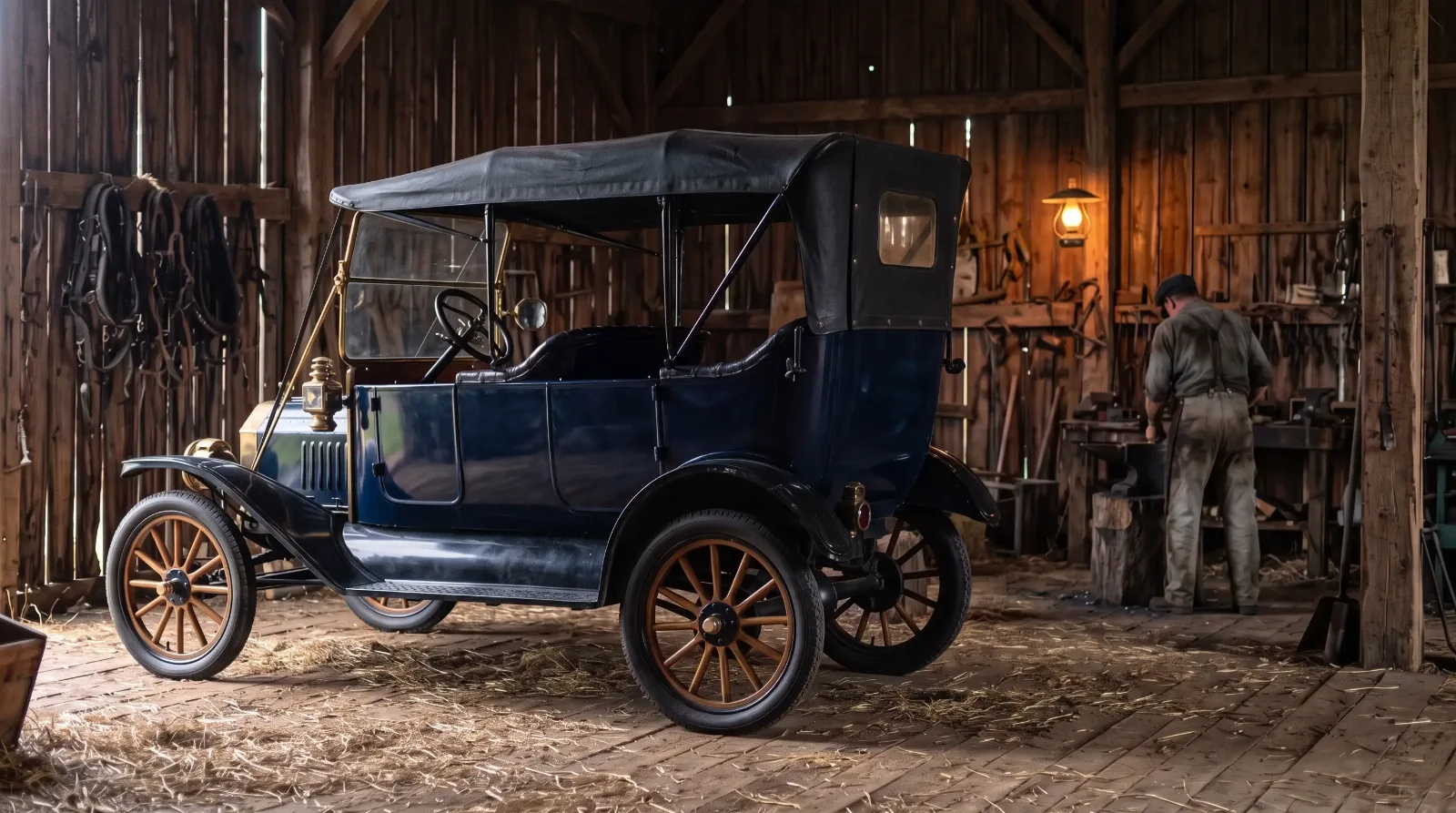
The national story of the car, from its 1908 launch to the end of the line in 1927, is told in the full Model T story. This piece stays out in the country, on the farms, small towns and dirt roads where the car mattered most.
The ten mile world gets bigger
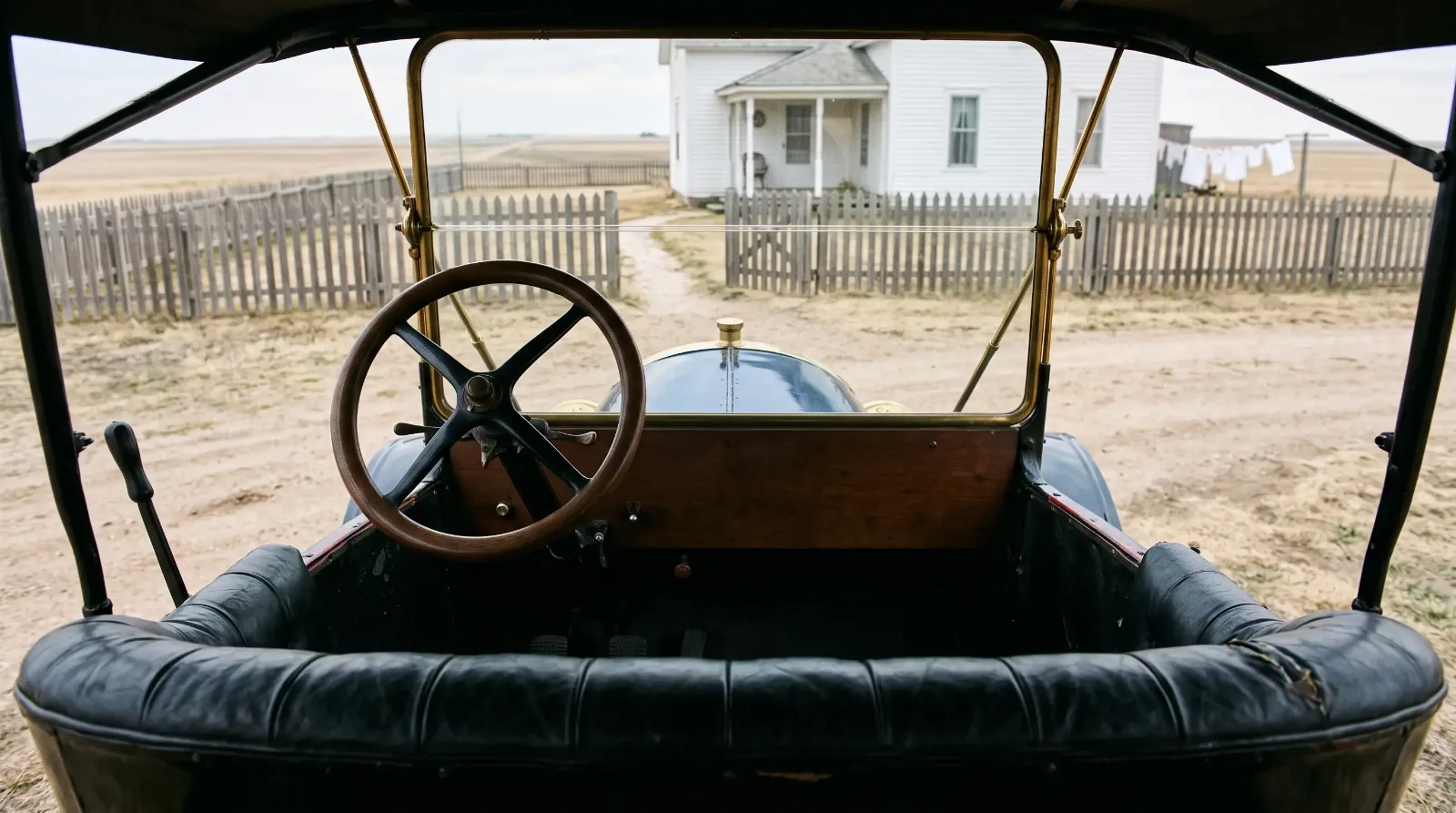
Before the automobile, rural life was organized around the pace of a horse. The church, the school, the store, the doctor and the rail depot all had to sit inside that 10 to 12 mile daily radius, or they were a special trip. Farm families lived with that limit for generations because there was nothing else.
The Model T broke the limit for people who had never been the target of a car maker before. Early automobiles were city machines and rich men's machines. The T was built for ground that was rough and roads that were mostly dirt. Its high road clearance and its suspension suited rutted tracks, and Iowa farm families took to it early. Alongside the standard 56 inch track, a 60 inch tread was available for Southern roads.
Once the car was in the barn, the map redrew itself. A town two or three times farther away became a reasonable trip. A farm wife could reach a larger store. A family could choose a church rather than accept the nearest one. None of that shows up in a production table, but it is the change people remembered.
Model T rural America by the numbers
The Plains took to the car faster than most of the country. In 1910 Nebraska had one car for every 65 adults, fourth in the nation, and North Dakota had one for every 72, fifth. By the early 1920s Nebraska ranked third, Kansas fourth and South Dakota seventh. These were farm states, not industrial ones, and they were buying cars at a rate the cities did not match.
Most of those cars were Fords. Before 1930, Fords made up more than half of the vehicles in the Great Plains region. Price explains a great deal of it. A Model T runabout cost $825 in 1909 and fell to $260 by 1925, its low point, with the touring car at $290 the same year.
| Measure | Figure | Scope |
|---|---|---|
| Daily range by horse and wagon | About 10 to 12 miles | Rural Great Plains |
| Adults per car, Nebraska | 65 to 1 (4th nationally) | 1910 |
| Adults per car, North Dakota | 72 to 1 (5th nationally) | 1910 |
| Ford share of vehicles | More than half | Great Plains, before 1930 |
| Runabout price | $825 to $260 | 1909 to 1925 |
| Farms with an automobile | About 31 percent (16 percent in Virginia and the Carolinas) | United States, 1920 |
The national picture caught up. By 1920 about one American farmer in three owned a car, 31 percent of farms against only 16 percent in Virginia and the Carolinas, and in several Midwest and Plains states more than 60 percent of farmers had one. Trucks and tractors were still rare: about 2 percent of farms had a truck and 4 percent a tractor.
Mail, medicine and the school wagon
The car reached the farm through the people who served it as much as the people who lived there. Rural Free Delivery sent mail carriers out along country routes, and farmers and carriers alike pushed for roads that could carry a car. When winter closed those roads, snowmobile kits that put skis on the front and tracks on the rear of a Ford found buyers among mail carriers, doctors, firefighters and undertakers.
The country doctor is the figure most often remembered in this story, and with reason. A call that once meant a long buggy ride could now be made the same afternoon.
School travel changed more slowly. The rural "kid hack" began as a horse-drawn farm wagon with benches. Motorized versions put the same idea, a wood body with side benches and a rear door, onto a truck frame. In 1927 Albert L. Luce Sr., a Ford dealer in Fort Valley, Georgia, built a bus with a steel framework under its wood body on a Model TT chassis. That vehicle, Blue Bird No. 1, is the oldest surviving school bus in America and is now at the Henry Ford Museum.
The car that did farm work too
A farmer looks at a machine and asks what else it can do. The Model T answered. With a belt fitted, it drove threshers, saws, pumps and generators, and about a dozen companies sold kits to turn one into a light tractor. That part of the story has its own chapter on tractor kits and belt power, but its rural meaning is simple: one purchase did several jobs, which made the price easier to justify on a farm where every dollar had to earn.
The local Ford dealer made it workable. Many early dealers came out of the trades a farm town already had: blacksmiths, livery men, machinists and hardware merchants. Ford required them to stock parts and train at Ford schools, so a broken car could be fixed in the county instead of shipped away. By 1930 there were more than 8,000 Ford dealers in the United States.
"People talk about the Model T as an industrial story, and it is. But walk into a small town museum on the Plains and you will find it in a different frame: next to the cream separator and the threshing photos, because out there it was farm equipment that happened to carry the family to church."
Patrick Walsh
Roads, jokes and a changed countryside
The cars came first and the roads followed. Farmers wanted access to markets, Rural Free Delivery needed passable routes, and drivers wanted somewhere to go. On July 11, 1916, Woodrow Wilson signed the Federal Aid Road Act, which put $75 million in matching funds over five years into rural post roads.
Country humor kept pace. Model T jokes ran on the car's size and tinny body, and one of the best known has a farmer asking to be buried in his Ford because it had pulled him out of every hole he ever got into. It is a joke, but it is also a fair summary of how rural owners felt about a car that kept going on roads that stopped everything else. Those owners did not much care that it came in black for most of the run; the reasons for that are another story, and you can read more here.
By the late 1920s the countryside looked different. Children rode to school, families shopped in bigger towns, and the isolation that had defined farm life for a century was no longer a given. The car was not the only cause; Rural Free Delivery and the new roads played their part. But the machine in the barn was the one people could touch, and for millions of rural families it was Henry Ford's Model T.
Sources and notes
Related Reading
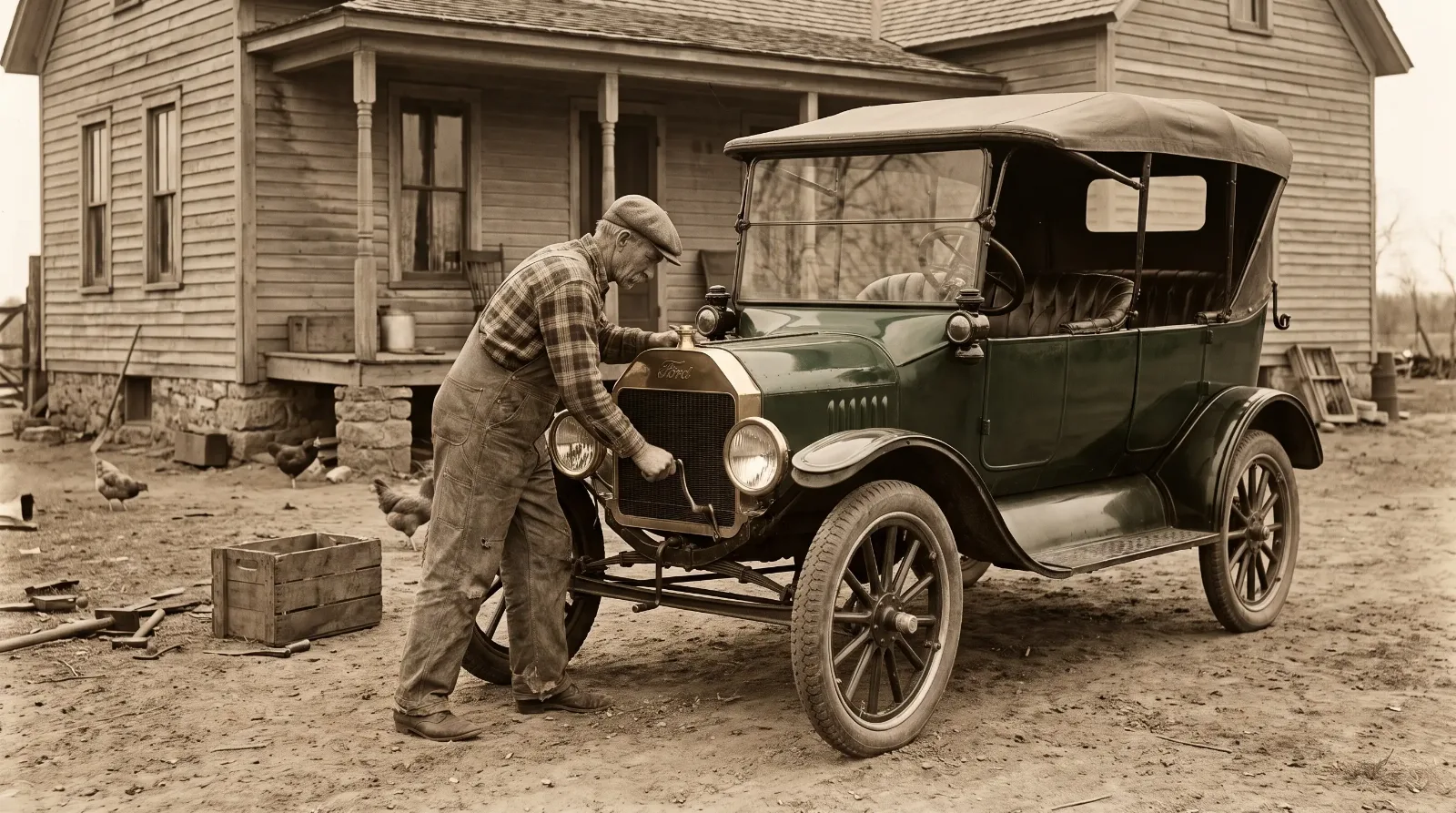
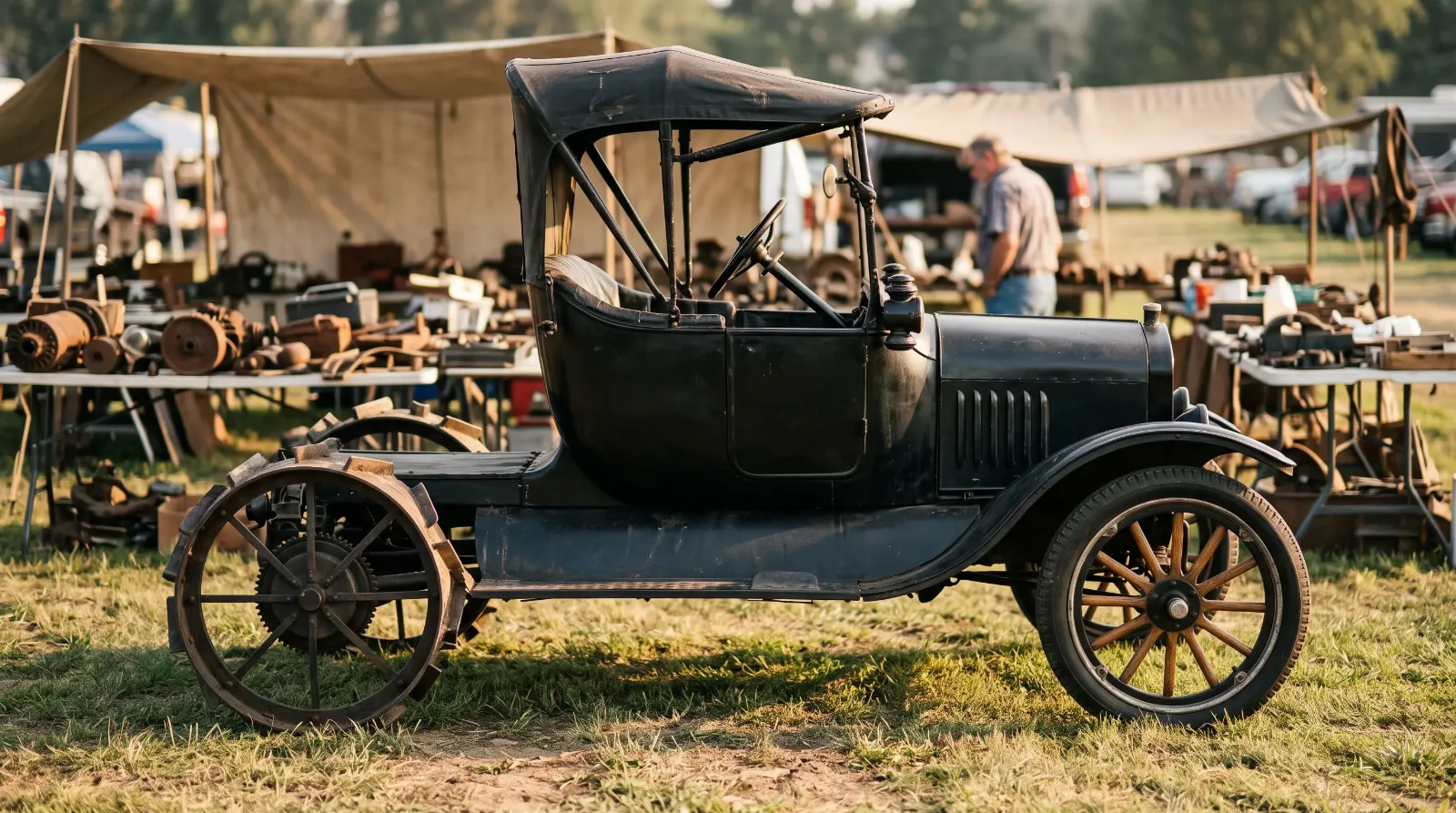
Have a
Ford Model T
for Sale?
Reach thousands of serious classic car collectors across the US.
Sell It Here →
Selling a classic? Here's how: where to sell your classic car online
Are You a Classic Car Dealer?
List your full inventory and connect with targeted classic car buyers.
Join as a Dealer →
#ford model t
#henry ford
#farm history
#Rural America
#Great Plains
#school bus
#Rural Free Delivery

About the author
Patrick Walsh
Automotive journalist covering classic car shows, events, and the enthusiast community across North America.
Related Listings - Ford Model T
Comments
Be the first to comment on this article.