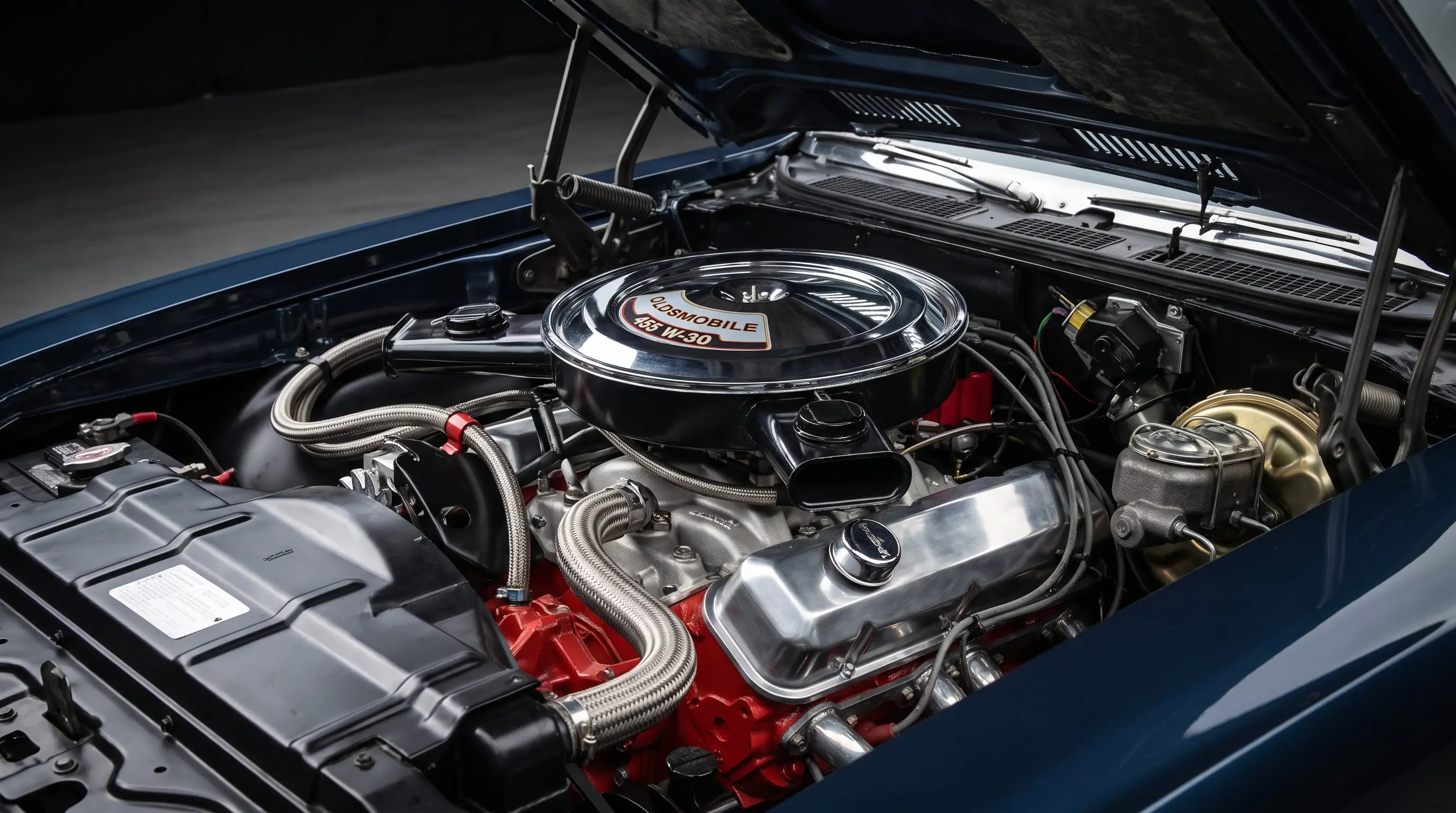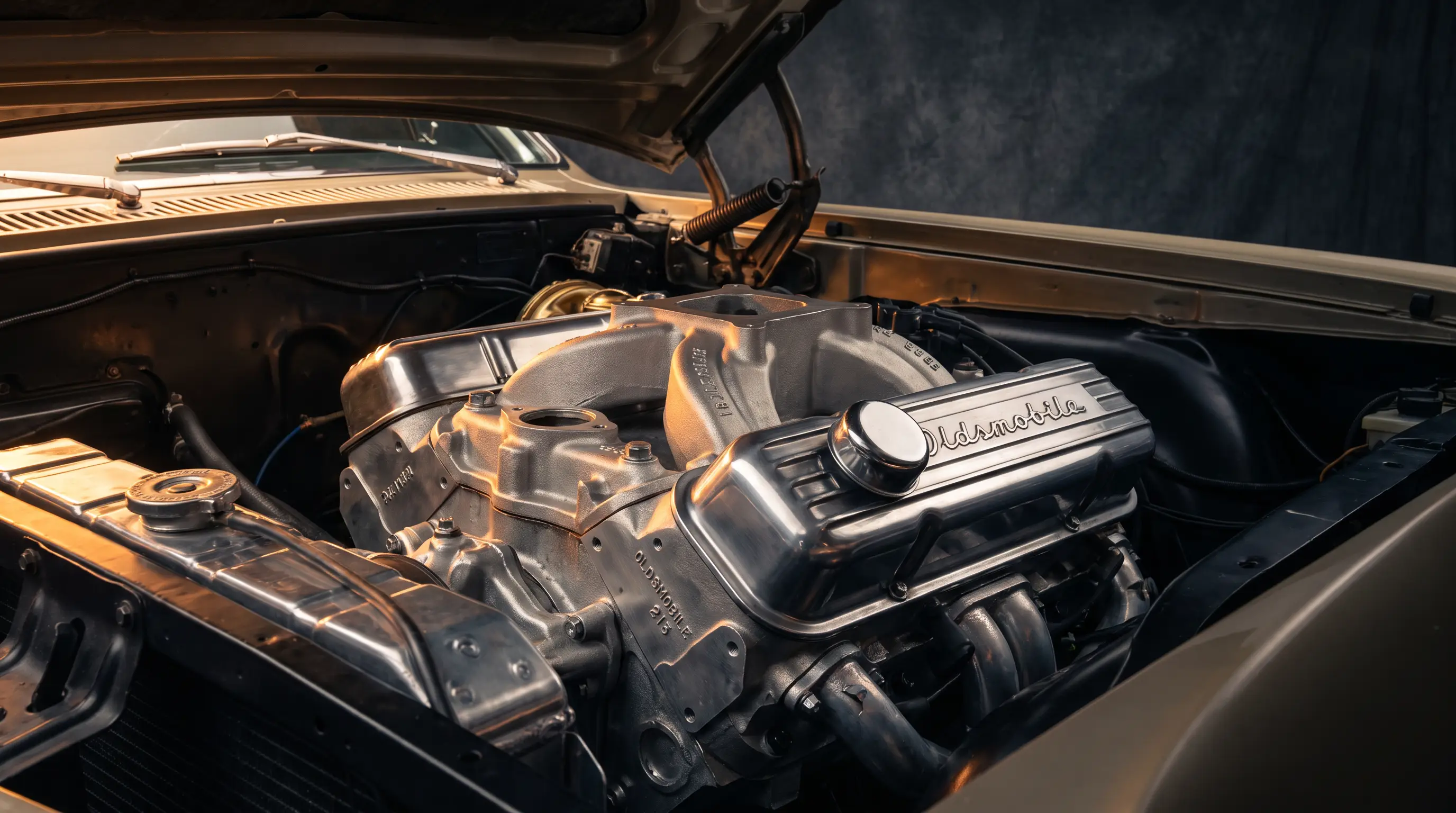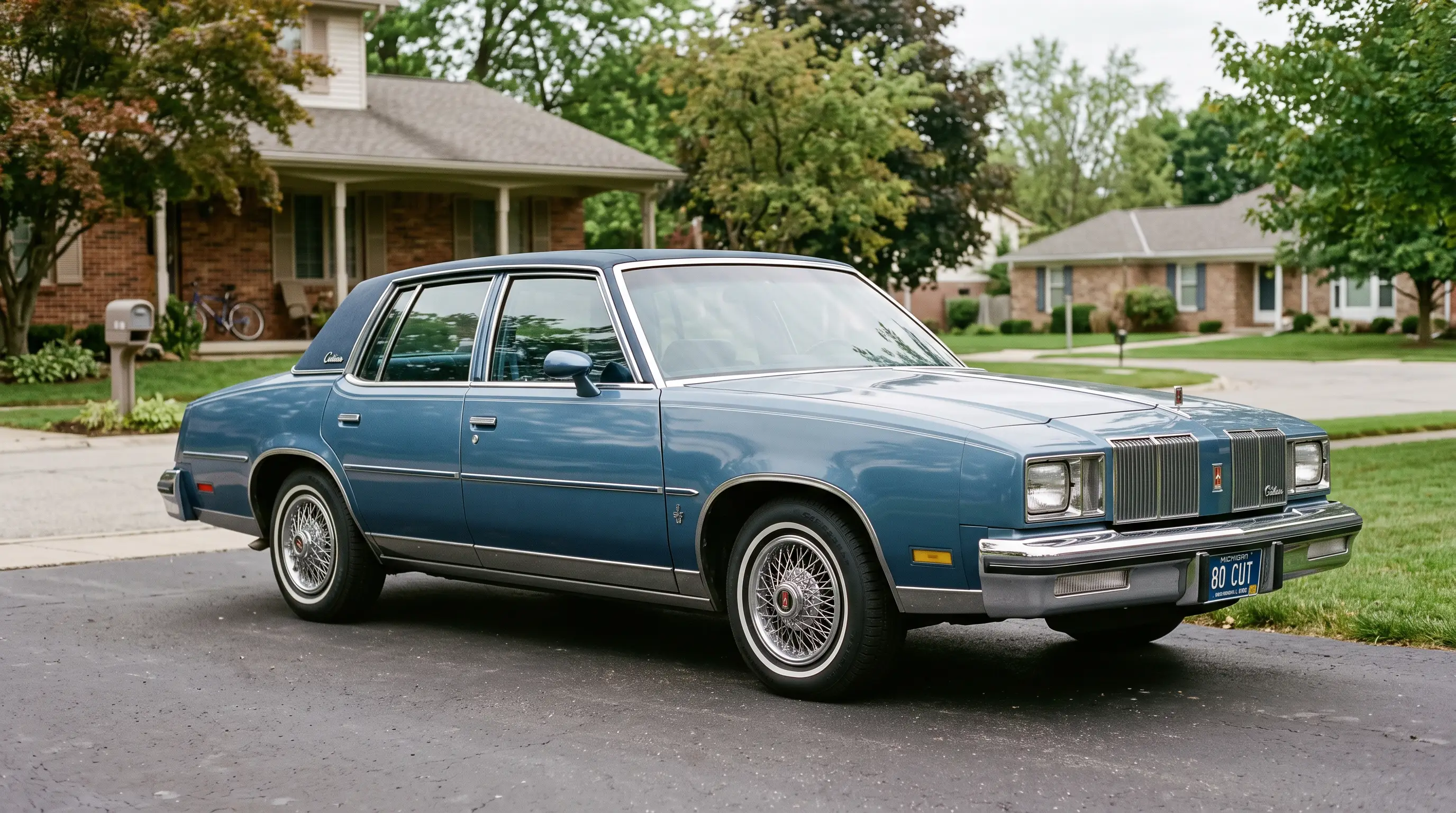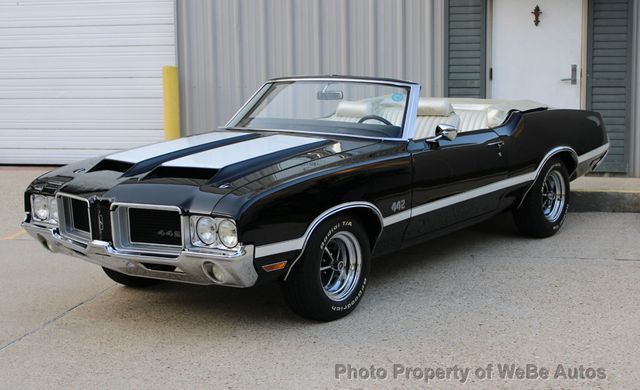
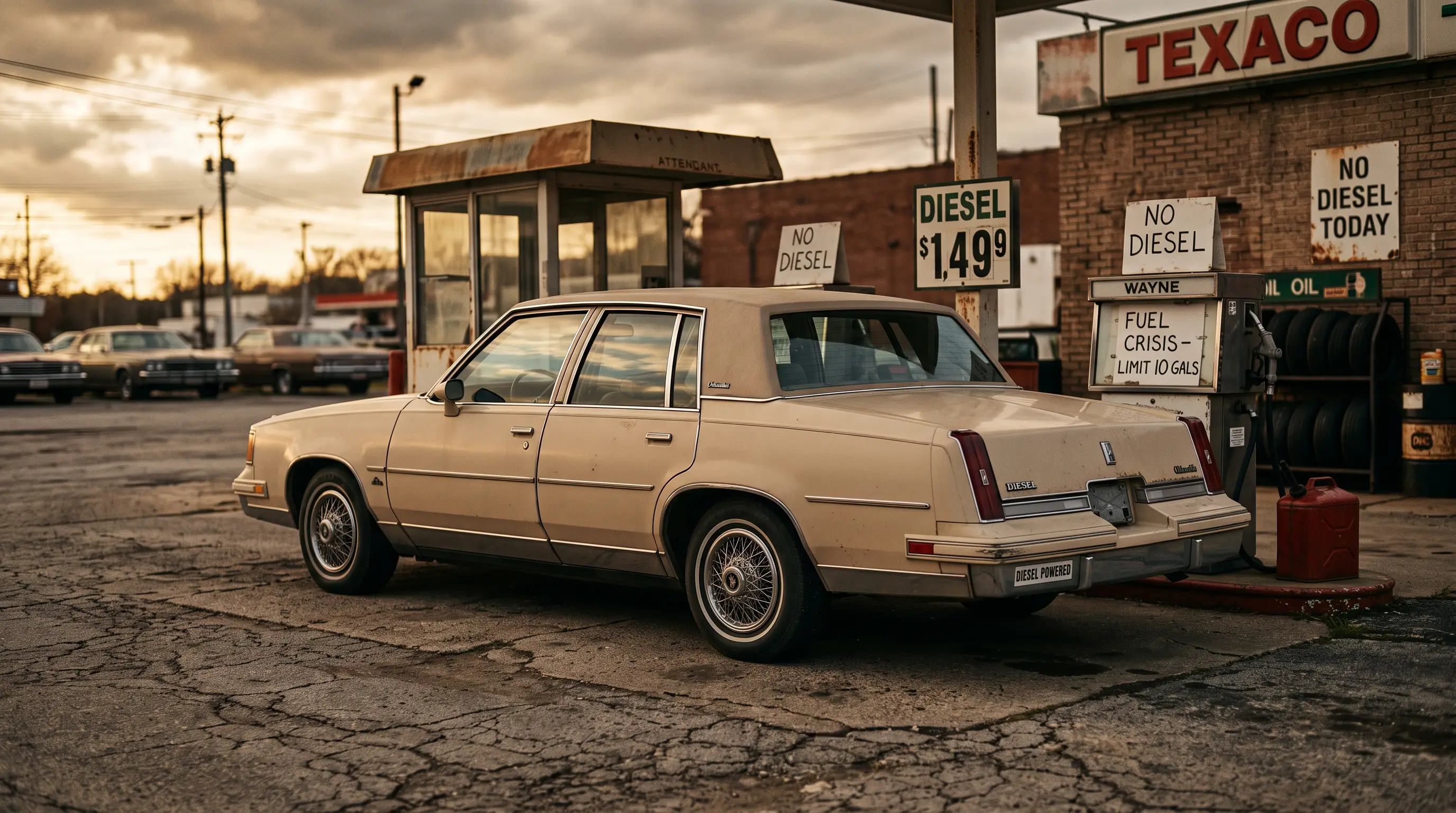
The oldsmobile diesel 350 failed at a rate high enough to trigger a federal class action, and GM settled it by extending warranties on hundreds of thousands of cars. That is not a footnote, that is the headline. Oldsmobile's diesel V8 arrived in the Cutlass Supreme and its stablemates for 1978 promising 30 percent better fuel economy during a real gas crisis, and it left a reputation for diesel passenger cars that General Motors, and honestly the whole American car industry, never fully recovered from.
Why Oldsmobile built a diesel in the first place
The timing explains everything. Gas lines in 1979 made fuel economy a buying decision, not a preference, and diesel fuel was cheap and plentiful. GM's engineering shortcut was to take the existing gasoline 350 Rocket V8 block, already tooled and already in mass production, and adapt it to compression ignition rather than design a diesel from scratch. That decision saved development time and money. It also skipped the structural reinforcement a real diesel block needs to survive compression ratios roughly twice what the gas engine was built for.
The diesel 350 carried over the head bolt design and pattern from the gas engine to reuse existing tooling, where a true diesel design needs more clamping force to hold the head down against combustion pressures that a gasoline engine never sees. Under sustained load, head bolts stretched, gaskets blew, and coolant found its way into cylinders it had no business being in.
The failures owners actually lived through
Head gasket and head bolt failures got the engine its reputation, but they weren't the only problem. GM's diesel injection system had no water separator in the fuel line, a component diesel fuel systems need because diesel, unlike gasoline, tends to accumulate water from condensation and contaminated pumps. Water reaching the injection pump and injectors on this engine caused expensive damage that a properly filtered system would have prevented. Owners who bought a car to save money on fuel found themselves paying for injection pump replacements instead. The diesel ran a 22.5:1 compression ratio, roughly three times what a comparable late-1970s gas 350 was built around, and that added stress showed up in bottom-end wear that a comparable gas 350 simply never experienced.
The lawsuit and what it actually changed
Owner complaints piled up fast enough that regulators and courts both got involved, and GM's response came in stages, a tacit admission that the failure rate was a design problem, not a run of bad luck. In July 1980 GM issued an extended 5-year/50,000-mile warranty covering the head bolt retainer ring defect and offered to reimburse owners for earlier water-contamination repairs, though the reimbursement window ran only about 90 days and not every owner got the notice. That August, the Federal Trade Commission filed a formal complaint accusing GM of failing to disclose known defects in the diesel's fuel injection system, and separate owner lawsuits eventually pushed GM into covering a large share, reported at up to 80 percent, of the cost of replacement engines for qualifying claims. Dealers absorbed a wave of warranty claims that outpaced anything a mainstream engine program of that era typically generated, and word of mouth among owners spread faster than any single settlement notice could contain. The damage to Oldsmobile's reputation outlasted the settlement paperwork. Diesel passenger cars in America never really recovered the market confidence they had going into 1978, and that hesitation shaped how American buyers thought about diesel for decades afterward, well past the point where later diesel engines fixed the underlying problems.
Where the diesel fits against Oldsmobile's other V8s
| Engine | Fuel | Known issue |
|---|---|---|
| 350 diesel (1978-85) | Diesel | Head bolt/gasket failure, water contamination |
| 350 gas Rocket V8 | Gasoline | Donor block for the diesel, no compression-ignition issues |
| 307 V8 | Gasoline | Reliable but modest output, covered from another angle |
"Thirty percent better fuel economy sounds great until the head bolts let go at forty thousand miles. GM took a gas block, gave it a diesel compression ratio, and kept the same bolt count. That's not an engineering decision, that's a spreadsheet decision, and the owners paid for it."
— Dan Reeves
Why the fuel economy promise still mattered
It's worth remembering why buyers took the risk at all. Diesel fuel in the late 1970s was cheaper than gasoline at most pumps, and diesel engines routinely returned better highway mileage than a comparable gas V8 simply because of how compression ignition burns fuel. Oldsmobile's advertised 30 percent economy improvement over a gasoline 350 wasn't a fabricated number, it reflected a genuine advantage the technology could deliver when it worked correctly. That's what made the failures so frustrating for owners. The underlying economic case for a diesel Cutlass Supreme was sound. The execution wasn't.
Other manufacturers watched what happened to Oldsmobile and drew their own conclusions. Volkswagen and Mercedes continued building diesel passenger cars through the 1980s with far better reliability records, in part because they had years of diesel-specific engineering behind their designs rather than a converted gasoline block. GM's diesel program never fully recovered the credibility it needed to compete with that approach domestically, and Oldsmobile didn't attempt another diesel passenger car engine after this one was retired in 1985.
Buying a diesel Cutlass today
A surviving diesel Cutlass Supreme is a genuine rarity now, not because production numbers were tiny but because so many were converted to gasoline power or simply scrapped once repair costs exceeded the car's value. That scarcity gives a well-documented, correctly repaired survivor real curiosity value among Oldsmobile collectors who want the full arc of Oldsmobile Rocket power, warts and all, rather than just the celebrated engines.
For the fuller arc of Oldsmobile's Cutlass history, the diesel is one chapter among many, and it's worth reading against the gas-engine years that bracketed it on both sides. If you're hunting for a well-documented example yourself, a classic Oldsmobile Cutlass for sale with clear engine paperwork is worth more than one with a clean paint job and no history at all.
Sources and notes
- Wikipedia: Oldsmobile Diesel Engine
- autoevolution: Oldsmobile Diesel V8, The Engine That Swore Americans Off Diesels
- CarBuzz: The Engineering Failure That Killed the Oldsmobile Diesel Engine
- Riverside Green: 1978 Oldsmobile Delta 88 Diesel, In Defense of the Olds 350 Diesel V8
- Diesel Hub: 350 Olds Diesel Specs & History
- Curbside Classic: 1980 Oldsmobile Delta 88 Royale Coupe With Diesel V8