
The Model T was a Highland Park car. The Model A was not. When Ford restarted volume production in the fall of 1927, the main line ran at the River Rouge plant in Dearborn, Michigan, a complex that had spent a decade growing from riverbank land into the largest industrial site the company owned. The record on the river Rouge plant is better than the legends about it, and the record is enough. This piece follows the plant from its land purchase to the day the 20 millionth Ford rolled out, and keeps to what the sources actually support.
Car Features
7 min read
River Rouge: The Complex That Built the Model A
How Ford's River Rouge plant in Dearborn went from boats and tractors to building the Model A, and what the record says about its scale.
If you want the background on how Ford learned to move work past a standing worker in the first place, start with more on the assembly line cars. What follows is the next chapter: what happened when that method was moved into a plant built to make nearly everything itself.
From farmland to an industrial city, 1915 to 1928
Ford bought the Rouge land in 1915. Construction began in 1917 and, by the usual account, continued in stages until 1928. That eleven year span matters, because the Rouge was never one building finished on one day. It was assembled the way the cars were, piece by piece, with each new unit feeding the next.
The first products had nothing to do with automobiles. In 1918 and 1919 the site built Eagle class patrol boats for the Navy. Fordson tractors followed from 1921. Cars came last. For most of the Model T era, the Rouge was the place that made materials and parts, while final car assembly stayed at Highland Park and the branch plants.
By the late 1920s the scale was hard to take in. Commonly cited figures put the complex at about 1.5 miles by 1 mile, with 93 buildings and roughly 16 million square feet of floor space. Around 100 miles of internal railroad track tied it together. It had its own docks, its own power plant, a steel mill, and a glass plant that opened in 1925.
| Date | Event at the Rouge |
|---|---|
| 1915 | Ford buys the land in Dearborn |
| 1917 | Construction begins |
| 1918 to 1919 | Eagle class patrol boats built for the Navy |
| 1921 | Fordson tractor production starts |
| 1925 | Glass plant in operation |
| October 27, 1927 | Model A production starts |
| Mid 1929 | Line at full capacity, about 9,000 units a day |
| April 14, 1931 | The 20 millionth Ford, a Model A, leaves the line |
| June 2, 1978 | Named a National Historic Landmark District |
Why the river Rouge plant got the Model A
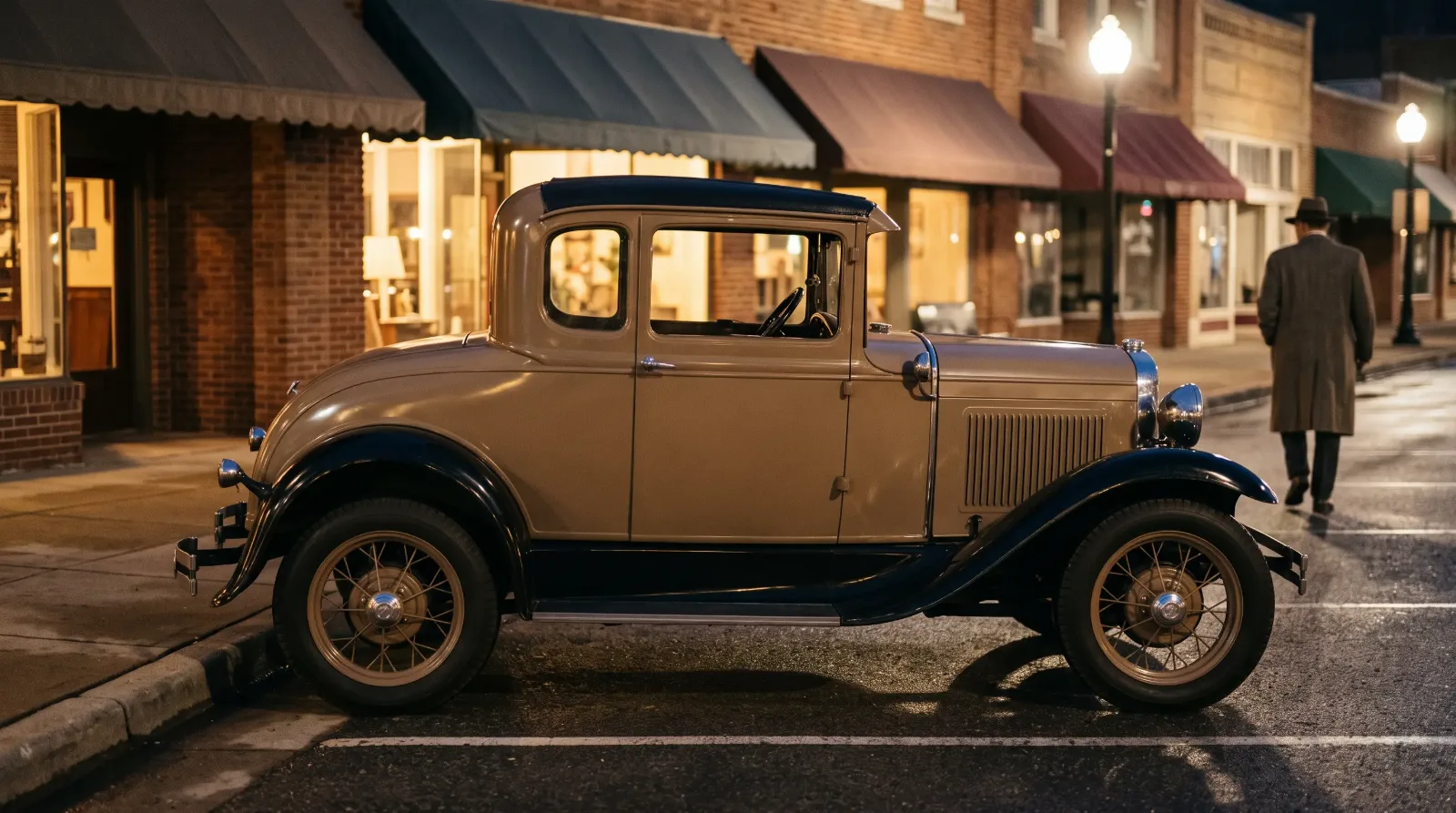
Ford ended Model T production at Highland Park on May 26, 1927. The new car could not simply drop into the old plant. It had a new engine, a sliding gear transmission, four wheel brakes and a body that shared nothing with its predecessor. Ford's own material on the 1928 car says no parts carried over from the Model T, and that the Model A was the first car assembled at the Rouge.
So assembly moved. Ford's tooling, presses and line work were rebuilt around a plant that already made steel and glass on site. Highland Park did not go dark: Fordson tractors and trim work stayed there, and it later became Ford's principal US tractor plant. But passenger car assembly shifted to Dearborn for good.
The gap between the two cars has been described as anything from three months to six. The dates themselves are firm. The Highland Park T line stopped on May 26. Ford's own release puts the start of Model A production at the Rouge on October 27, 1927, after what it called a three month retooling shutdown. The public introduction came on December 2. Volume production, the point at which dealers could count on deliveries, came later still. For the full sequence of that shutdown, see the 1927 changeover.
The slow start and the 1929 peak
A plant this size does not start at full speed. In the first weeks after October 27, output was a trickle next to what the complex had been built for. Dealers felt it. Ford's own history concedes that demand was high and that production lagged behind it through the early months of 1928.
The ramp took well over a year. Ford's figures place the Rouge line at full capacity in mid 1929, at about 9,000 units a day. That was the year Ford took back the US sales lead from Chevrolet, 1,507,132 cars to 1,328,605. The plant and the sales chart moved together. For how that year fit into the car's four year run, read the Model A story.
The Rouge was not the only place that built Model As. Branch assembly plants across the country, and Ford plants abroad, assembled the car as well. A Ford branch list from early 1930 names 35 US branches, and most of them were assembly plants as well as distribution points. What is clear is that the Rouge was the source: engines, frames, glass and stampings flowed out of Dearborn to be put together elsewhere.
"People like to say every Model A came out of the Rouge. It is closer to say that every Model A depended on it. The cars were assembled in many places; the parts that made them came from one."
Tom Ramirez
What the Rouge made under one roof
The phrase often attached to the Rouge is that ore went in one end and cars came out the other. As a slogan it works. As a description of the Model A, it needs care. The complex did have the pieces to make that true for a large share of the car: a steel mill, a glass plant, a power plant, and docks that could take in raw materials by water.
The glass plant is the detail worth remembering on a Model A. Ford lists the Triplex shatterproof safety windshield among the car's firsts for the company in the low price field. Having glass production at the same site as the assembly line was a practical advantage when a new type of windshield had to be supplied in volume.
Workforce figures for the complex run as high as 100,000. The Henry Ford places that peak in the 1930s, when more than 100,000 people worked at the Rouge, so it is a mistake to read it as a Model A head count. Treat it as the scale the Rouge reached a few years after the A, not the size of the crew that launched it.
The Rouge in the Depression and after
The plant that peaked in 1929 had a harder time two years later. On April 14, 1931, a black Model A Town Sedan came off the Rouge line as the 20 millionth Ford, with Henry Ford at the wheel and Edsel beside him. It was a celebration staged against falling sales.
Sales kept falling through 1931, the last Model A model year, and final assembly ran into March 1932, mostly in Canada. By the winter of 1931 to 1932 mass layoffs had cut deep into the Rouge workforce, and tens of thousands of Dearborn jobs had disappeared as the Depression deepened.
The plant's name stayed in the news for reasons Ford would rather have avoided. On March 7, 1932, at least 3,000 marchers walked from Detroit to the Rouge in the Ford Hunger March; four were killed that day and a fifth died in August. On May 26, 1937, the Battle of the Overpass took place at the plant. In 1978 the complex was named a National Historic Landmark District.
The Model B and the 1932 V8 replaced the Model A on the same Rouge floor, which closes the part of the story that belongs here. How Ford's dealers turned all that output into sales is the full story on the other side of the factory gate.
Sources and notes
Related Reading
Have a
Ford Model A
for Sale?
Reach thousands of serious classic car collectors across the US.
Sell It Here →
Selling a classic? Here's how: sell my classic car
Are You a Classic Car Dealer?
List your full inventory and connect with targeted classic car buyers.
Join as a Dealer →

About the author
Tom Ramirez
Corvette researcher and historian based in Bowling Green, Kentucky. Two decades documenting Corvette production history from original factory records.
Related Listings - Ford Model A


Comments
Be the first to comment on this article.