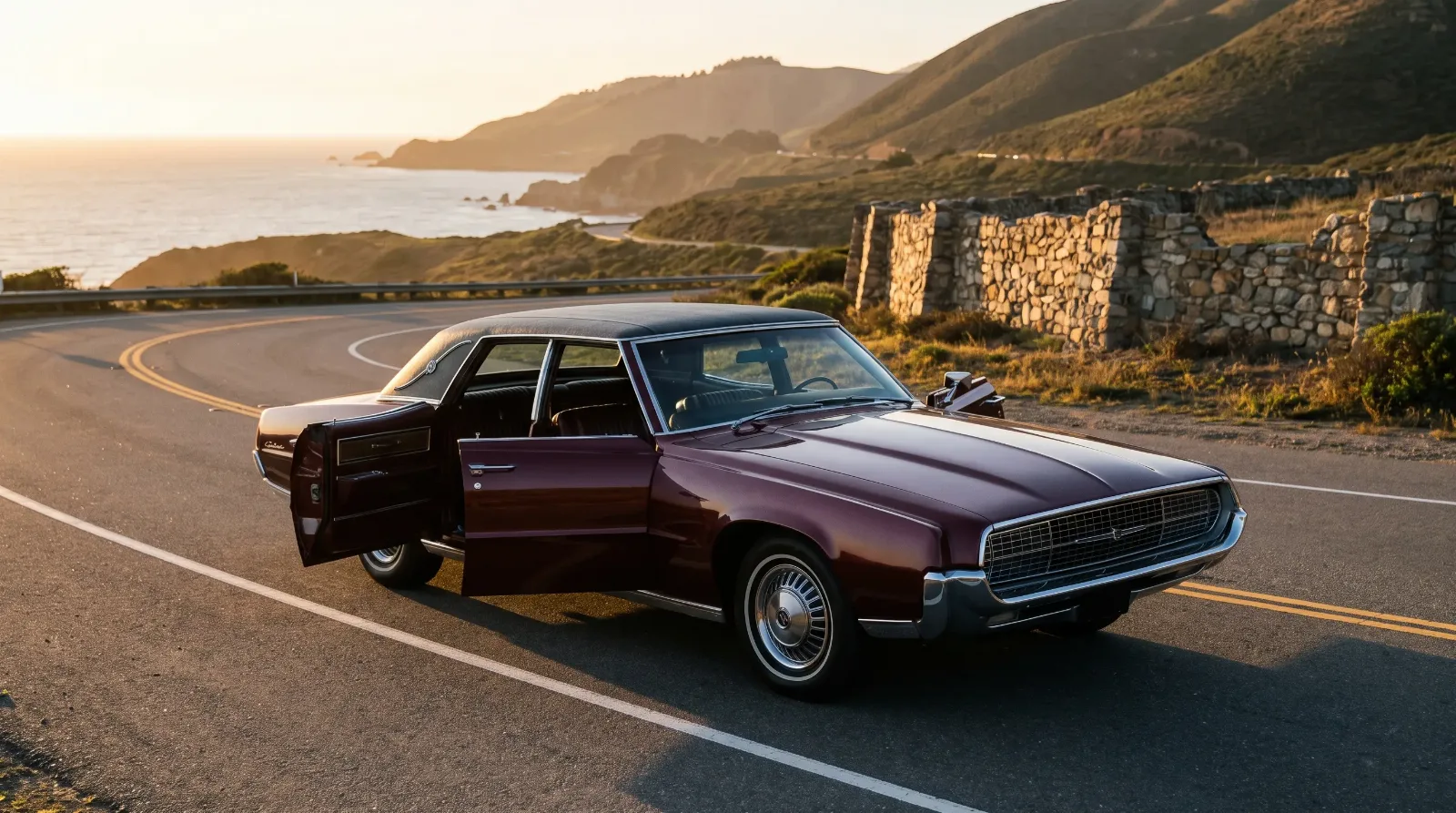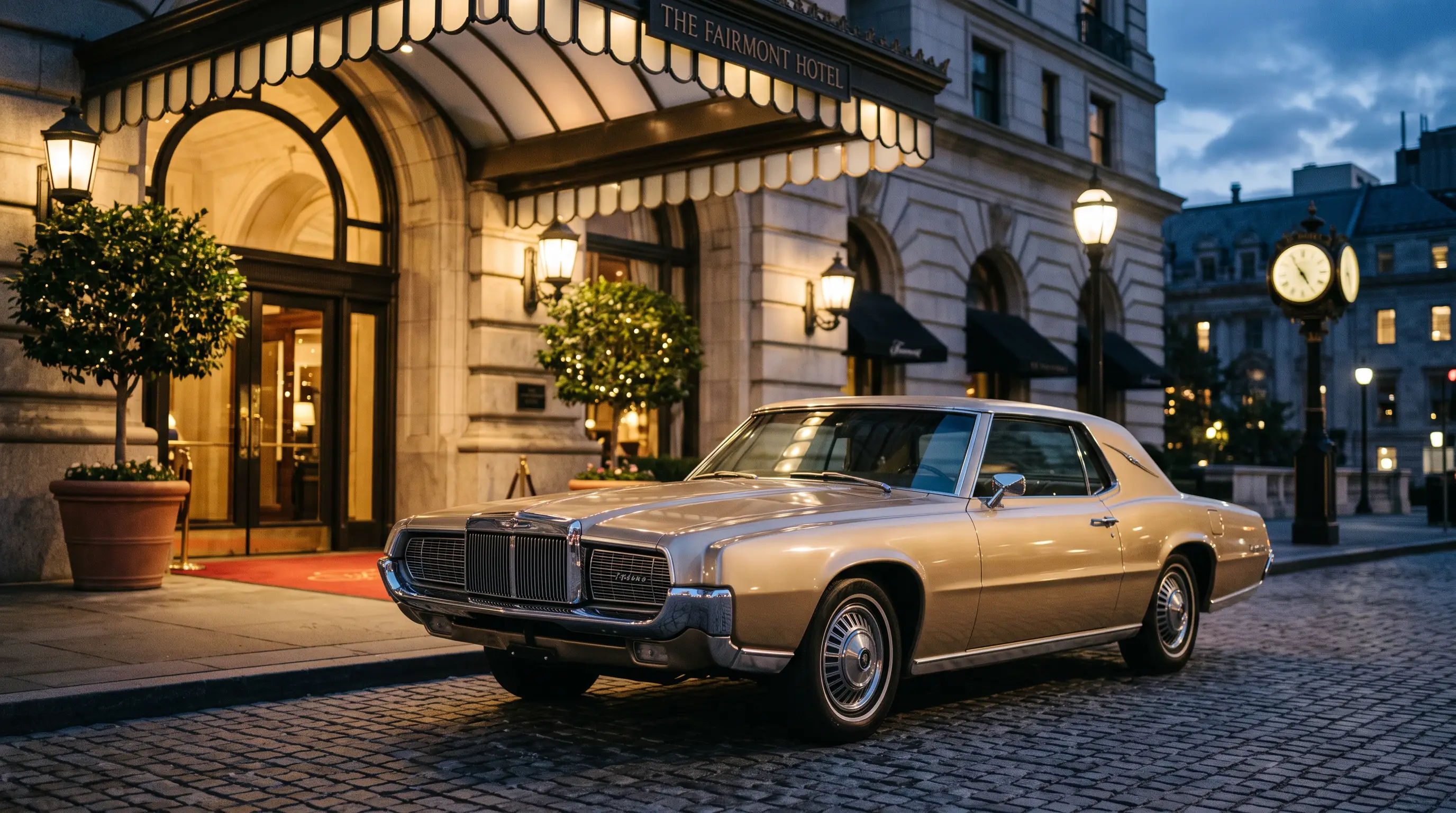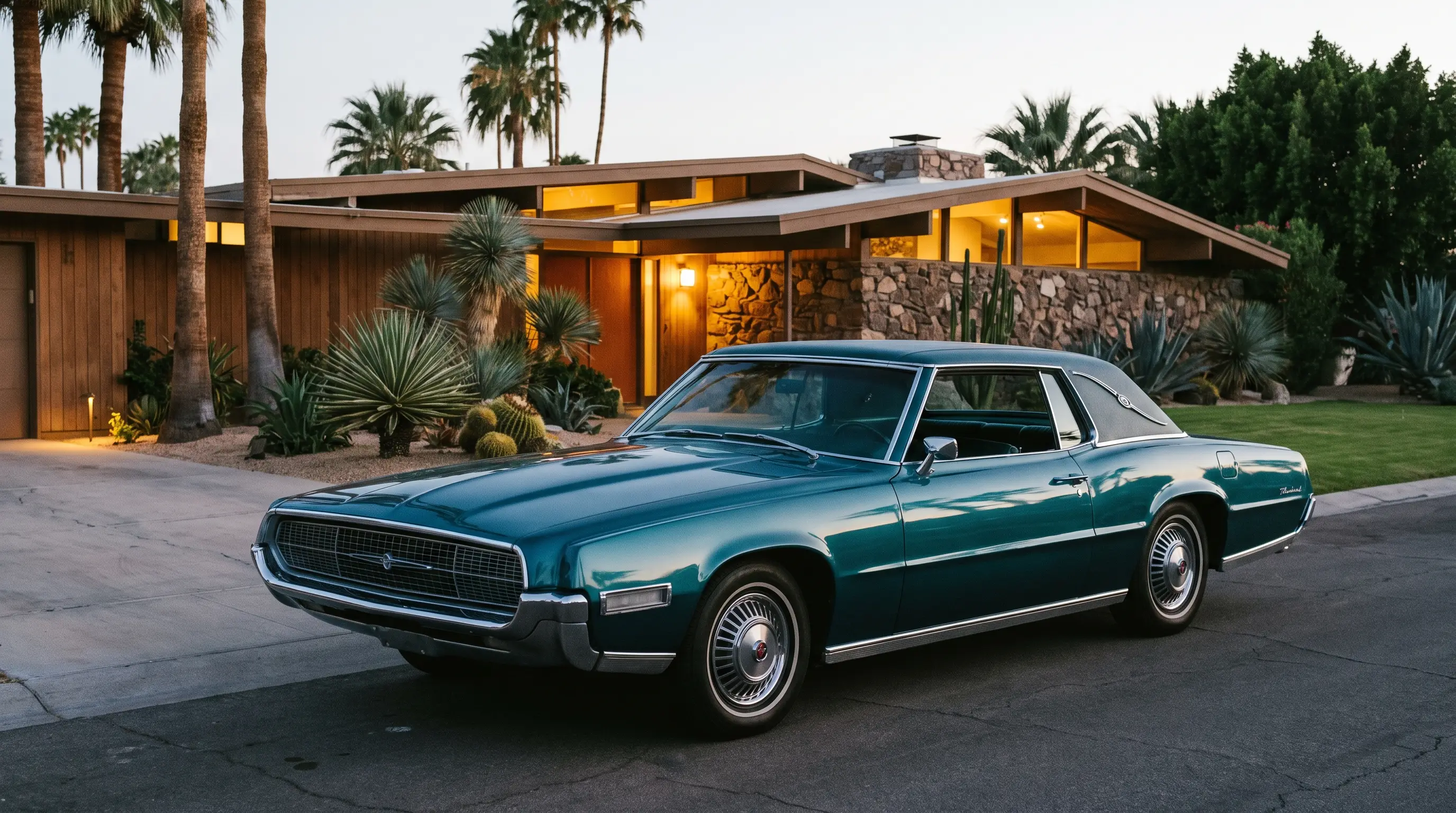
The 1967 thunderbird styling program is one of the more disciplined design exercises Ford undertook in the 1960s, and it deserves a closer look than it usually gets. Rather than simply lengthening the existing 1964-66 body or grafting on new trim, Ford's designers started with a genuinely new platform and used it to solve a specific problem: how do you make a personal luxury coupe feel wider, lower, and more substantial than its predecessor while still reading unmistakably as a Thunderbird. The answer they arrived at, a full-width grille with hidden headlights, a low beltline, and sculpted flanks that swept back into the tail, became the visual foundation for the entire fifth generation that followed.
The full-width grille and hidden headlights
Central to the 1967 redesign was a wide, jet-intake-inspired grille that spanned the full width of the front fascia, with headlights concealed behind body-colored doors that opened only when needed. This was not a new trick for Ford, hidden headlights had appeared on Thunderbirds since 1965, but the 1967 execution integrated them more seamlessly into the grille itself, creating a cleaner, more unified front end than the outgoing fourth-generation car had managed. The effect was deliberate: a Thunderbird with its headlights closed looked almost featureless up front, a smooth, uninterrupted mask, which made the moment the headlights opened feel like a small piece of theater every time the car was started at night.
Behind that grille sat a completely new structure, larger and heavier than the 1964-66 car it replaced, and here Ford actually reversed course on engineering: rather than continuing the unibody construction used since 1958, the 1967 Thunderbird moved to body-on-frame construction with rubber body mounts, a change made to suit the car's larger, more Lincoln-adjacent direction. The wheelbase grew to 115 inches for the two-door models, and Ford introduced a stretched 117.2-inch wheelbase specifically for the new four-door Landau, the first four-door body style the Thunderbird nameplate had ever carried. Designers used that extra length not to add visual bulk but to stretch the character lines running down the car's flanks, giving even the four-door version a coherent, coupe-like profile despite its added doors.
Sequential taillights as a signature detail
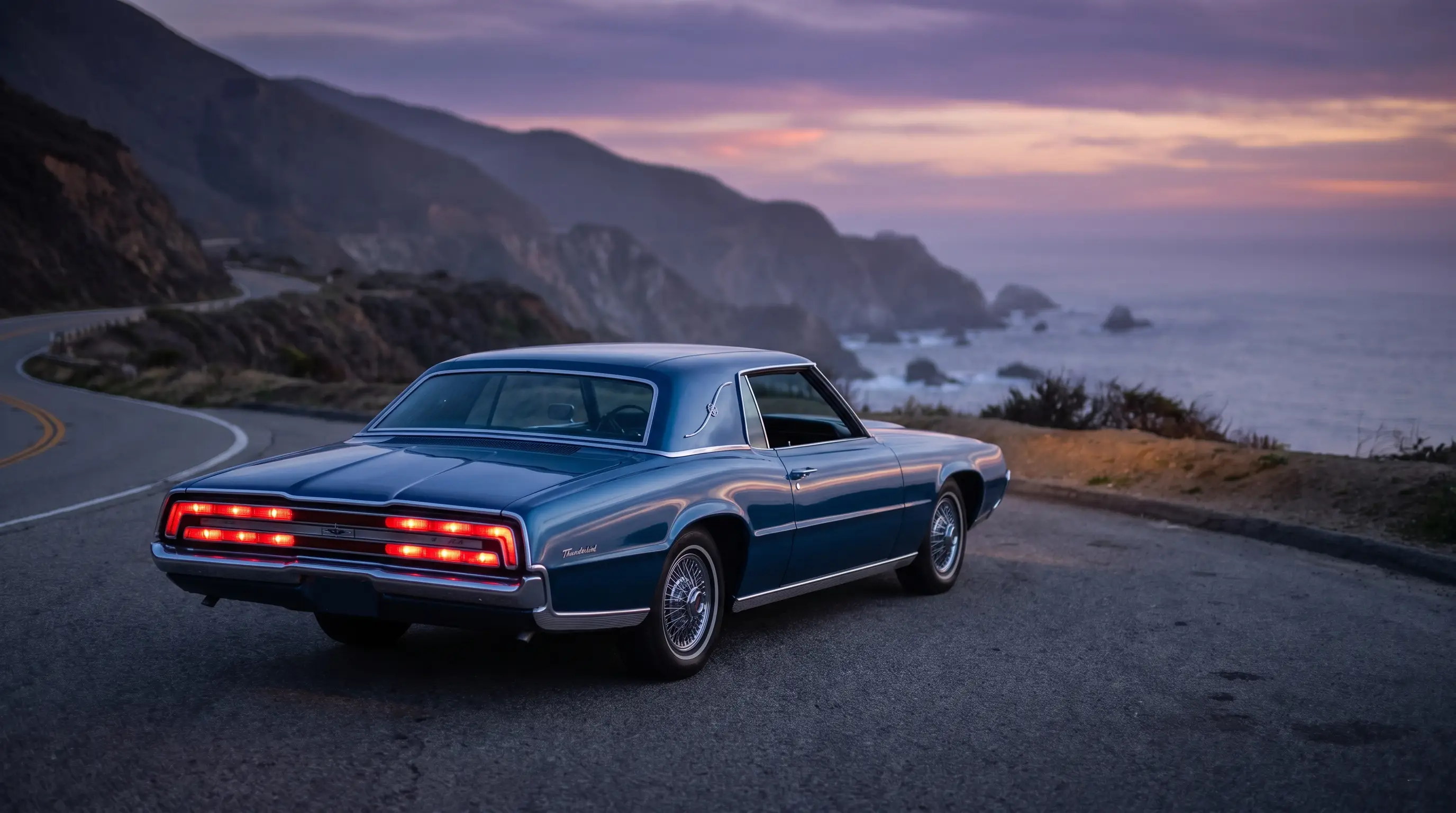
At the rear, the fifth-generation Thunderbird carried forward the sequential turn signal system that Ford had introduced in 1965, where each segment of the wide taillight lit in sequence to indicate a turn rather than flashing all at once. By 1967, this feature had become closely associated with the Thunderbird brand, distinctive enough that owners and dealers alike treated it as a genuine selling point rather than a minor gimmick. The taillight design itself was reworked for the new body, wider and more integrated into the rear fascia, but the sequential lighting effect carried over unchanged, preserving one of the most recognizable details from the previous generation.
Three body styles, one design language
Ford offered the redesigned Thunderbird in three distinct body styles for 1967: a two-door hardtop, a two-door Landau with a vinyl roof and simulated landau irons on the C-pillar, and the new four-door Landau with its rear-hinged doors. Getting all three to share a single, coherent design language was a genuine styling challenge, since the four-door body in particular risked looking like an awkward stretch of the coupe rather than a purpose-built design. Ford's solution was to keep the greenhouse proportions consistent across all three variants and to let the character line running along the beltline carry through uninterrupted from the front fender to the tail, regardless of how many doors sat in between. It worked well enough that period reviewers rarely singled out the four-door as visually compromised, a real achievement for a body configuration that had no direct Thunderbird precedent to build on.
"What impresses me most about the 1967 redesign, looking at surviving cars and period documentation together, is how disciplined the execution was. Ford could easily have let the four-door body pull the design in an awkward direction, and instead the styling team held the line on proportion and detailing across all three variants. That kind of consistency does not happen by accident."
- Sarah Whitfield
How the styling aged through the generation
The core styling language established in 1967 proved durable enough to carry the Thunderbird through 1969 with only minor trim revisions, before Ford introduced a more dramatic pointed front-end treatment for 1970 and 1971 that departed from the hidden-headlight formula. That later change, whatever one thinks of it, only underscores how strong the original 1967 design was: it took a genuinely new grille and headlight treatment to move the Thunderbird's face in a new direction, because the original execution had aged well enough that Ford saw no need to touch it for three full model years.
For collectors and researchers trying to place any individual fifth-generation Thunderbird correctly, understanding the 1967 styling program is the necessary starting point, and it pays to read the background on how this generation came together before evaluating a specific model year in isolation. The design decisions made for 1967 shaped every Thunderbird that followed through 1971, and recognizing which details are original to that redesign versus later revisions is essential to dating and documenting any surviving example correctly.
Evaluating styling on a surviving car
Anyone examining a fifth-generation Thunderbird today should pay close attention to the condition of the hidden headlight doors and their vacuum-operated mechanisms, since these components were complex when new and are frequently non-functional on surviving cars today. Trim tags and build sheets remain the most reliable way to confirm exact body style and options, particularly on cars that may have had trim swapped or replaced during earlier restoration work. For those drawn to this design language specifically, it is worth taking time to seek out a car that retains its original grille, headlight doors, and taillight assemblies, since these are the components most closely tied to the car's original styling intent and the ones most often compromised by incorrect replacement parts. Current listings are a good place to compare surviving examples firsthand and find a classic Thunderbird worth pursuing.
How the design was received in period
Contemporary automotive press treated the 1967 redesign as a significant event rather than a routine model update, and coverage at the time focused heavily on the four-door Landau as the genuine novelty of the launch. Reviewers generally praised the hidden headlight grille as a clean, modern execution, though some period commentary noted that the car's growing size and weight pulled it further from the sportier character of the original two-seat Thunderbird than some longtime owners preferred. That tension, between the nameplate's sporty origins and its increasingly luxury-focused present, ran through nearly every review of the 1967 car, and it is a useful lens for understanding why the styling program leaned so heavily on driver-focused details even as the overall car grew larger and more comfort-oriented.
Dealer showroom material from the period also emphasized the styling as a selling point in its own right, with brochures dedicating significant space to illustrating the hidden headlight sequence and the sequential taillights in action, features that photographed well and translated easily into print advertising. That marketing emphasis reflects how central these two styling details were to the car's identity at launch, and it explains why both features remained essentially untouched through the following two model years even as other trim details shifted around them.