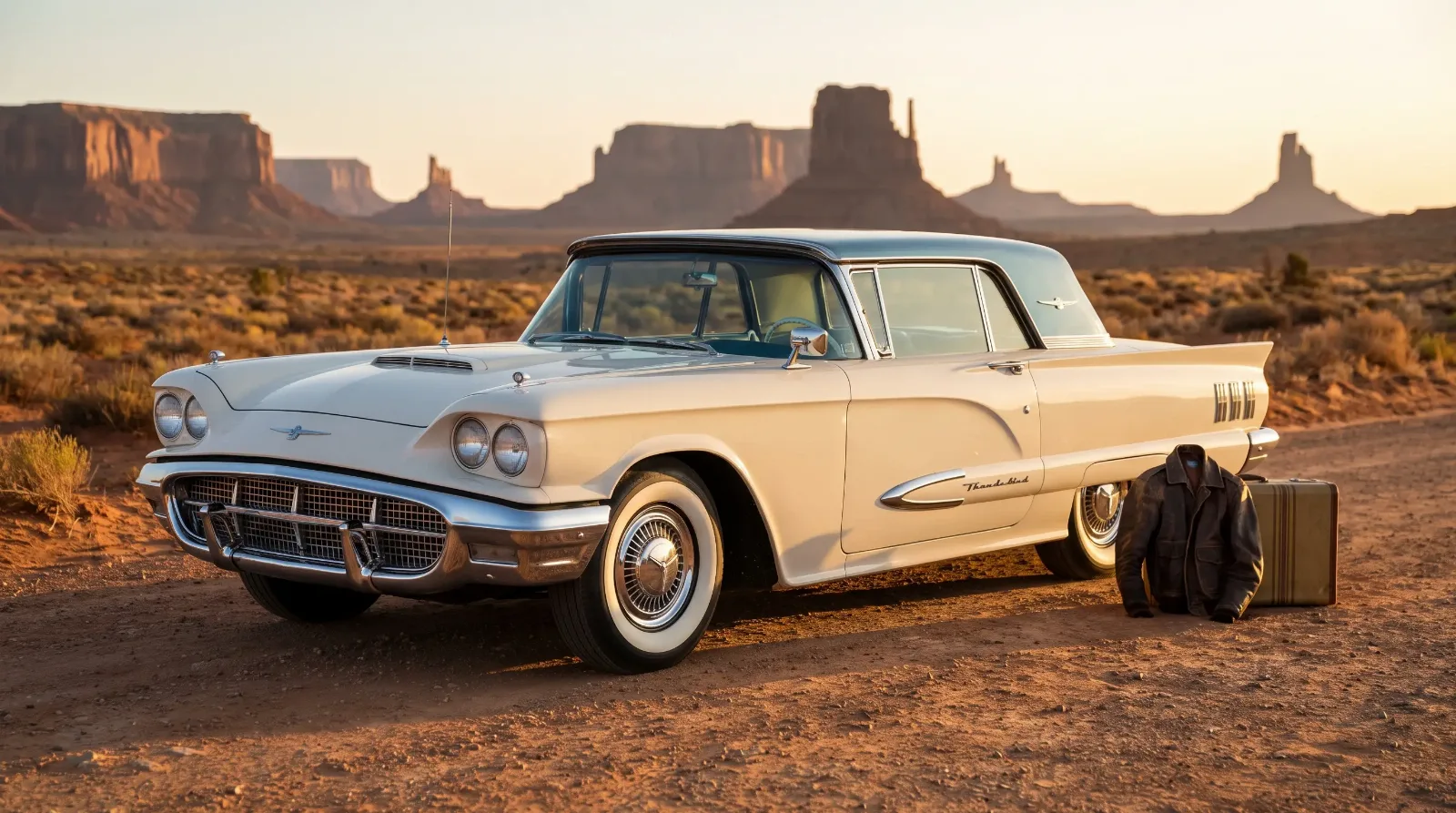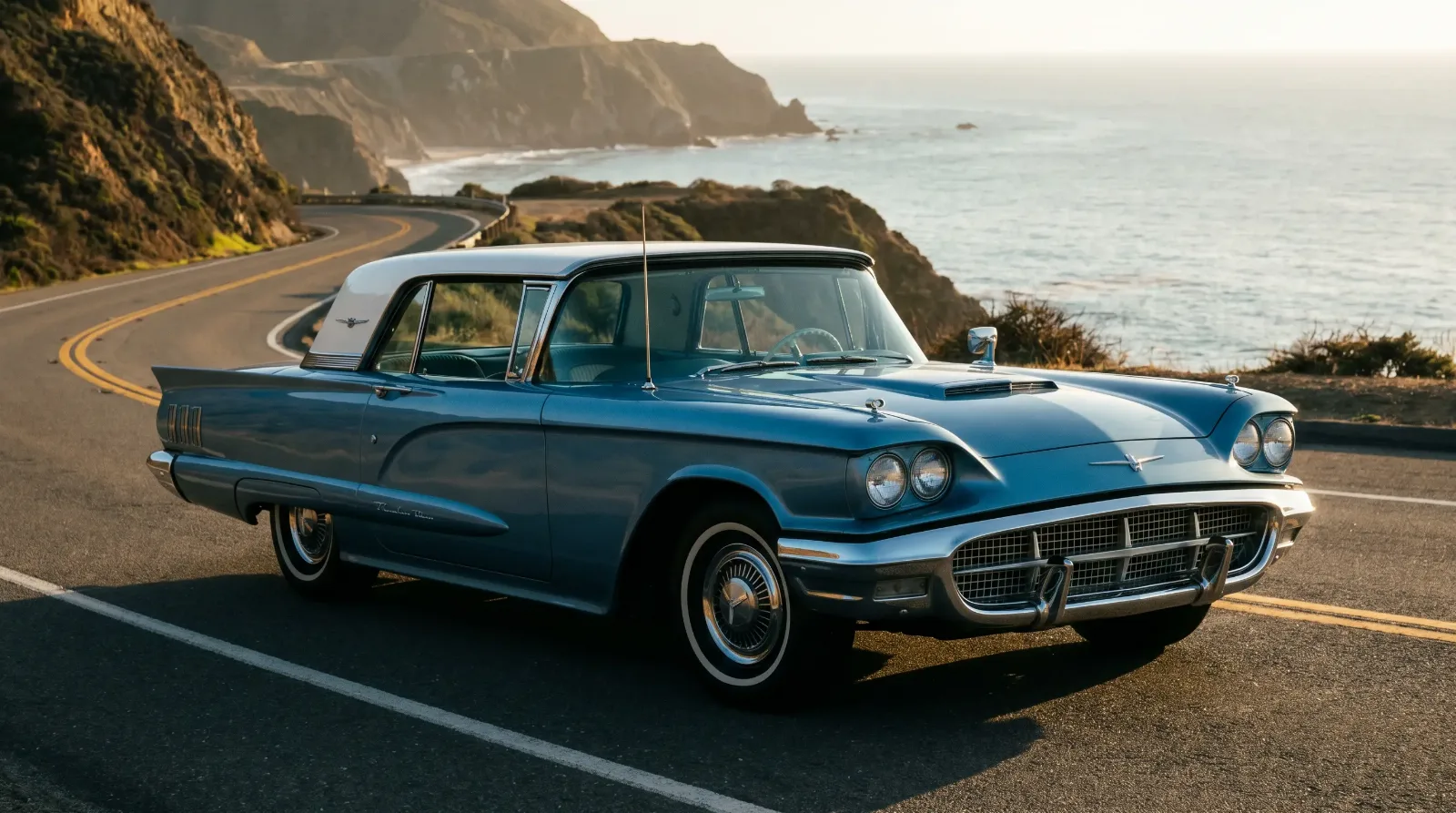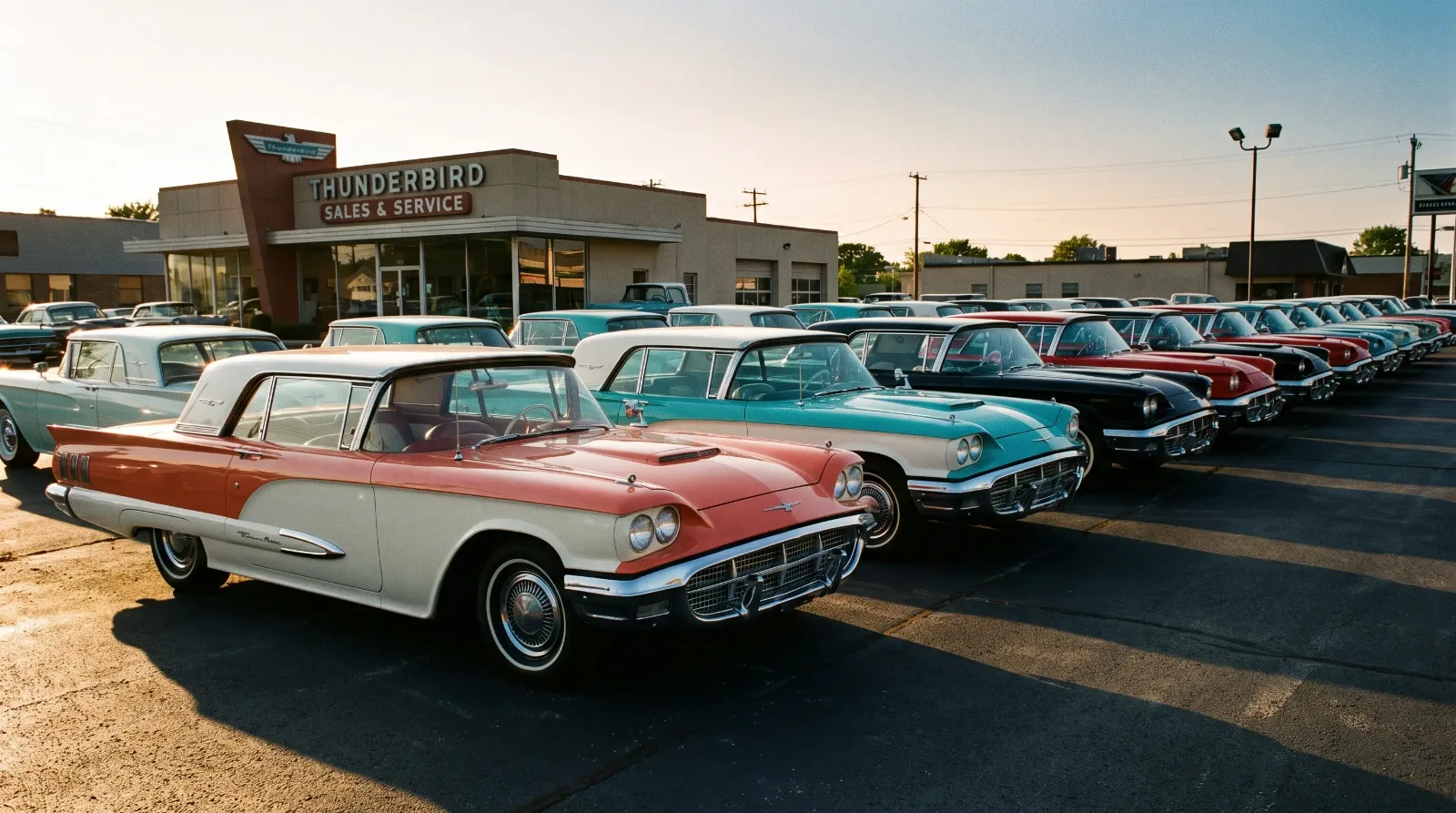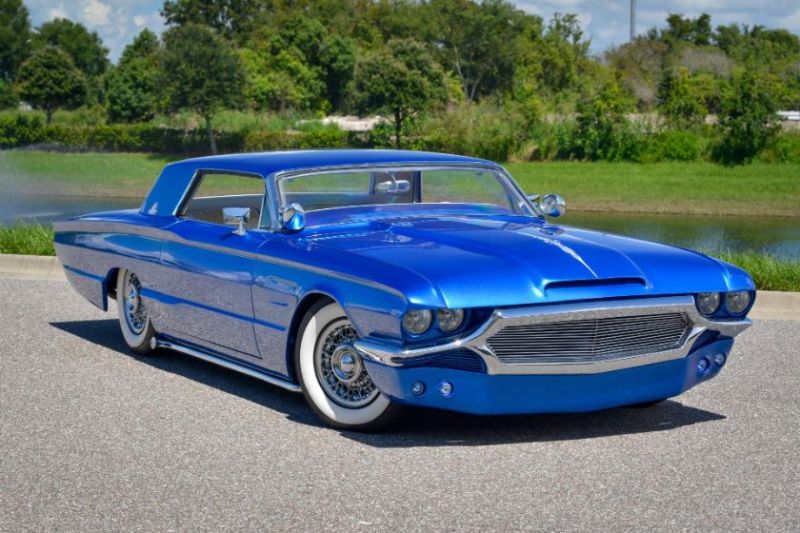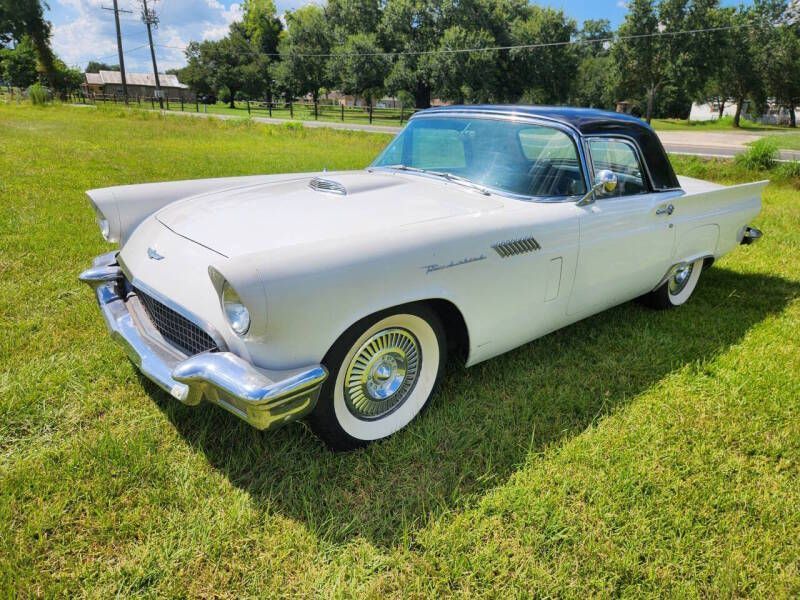
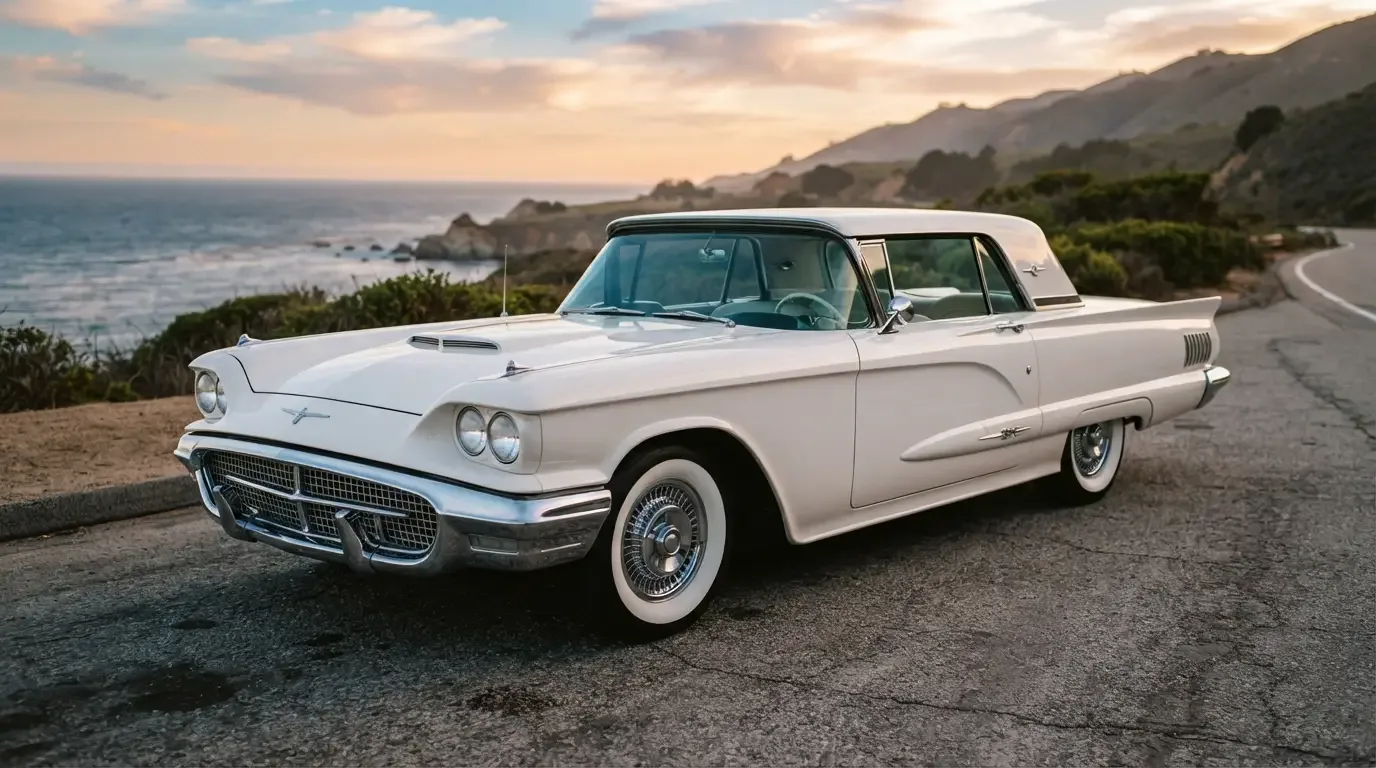
1958 Thunderbird value depends on three things that matter more than nostalgia: condition, documentation, and which body style you're looking at. The Square Bird generation is not a single market. Hardtops, convertibles, and cars carrying the optional 430 V8 all trade in different bands, and treating this generation as one homogenous price point is the fastest way to overpay or underappraise.
What the market actually pays
Solid, driver-quality Square Bird hardtops in the 1958 to 1960 range have traded at auction for roughly $10,000 to $20,000 depending on condition and originality, while well-documented convertibles with functioning power tops command a real premium, often landing in the $25,000 to $40,000 range for strong examples. Cars in concours or near-concours condition with full documentation push well beyond those numbers, sometimes significantly, at specialist auctions where buyers are competing specifically for correctness rather than just a running, driving example.
These ranges move with the broader classic car market, and 1950s American cars generally have not appreciated as fast over the past decade as some later muscle car segments have. That's not a knock on the Square Bird, it's a market reality worth knowing before you set expectations for either buying or selling.
Condition beats rarity in this segment
Unlike some collector cars where a rare factory option drives the entire value conversation, Square Bird pricing is driven overwhelmingly by condition and originality rather than production numbers on any single option. This generation was built in large enough volumes that no reasonably common configuration commands scarcity pricing on its own. A clean, honest, mechanically sound car with matching numbers and good paint will consistently outsell a rarer trim combination that's been neglected or poorly restored.
That's actually good news for buyers on a budget. You don't need to chase a specific rare option code to get a genuinely satisfying car in this segment. You need to prioritize a seller who can document the car's history and a body that hasn't been compromised by rust repair or accident damage.
The 430 V8 premium, and whether it's worth chasing
Cars equipped with the optional 430 V8 typically carry a modest premium over 352-equipped examples in similar condition, reflecting both the option's rarity and the genuine performance difference it delivered when new. Whether that premium is worth paying depends entirely on what you want from ownership. If you're planning to drive the car regularly, the 352's better parts availability and lower repair costs arguably make it the smarter long-term hold, premium or no premium. If you're buying primarily as a collector piece where originality and factory option content drive your decision, the 430 has a legitimate case.
My actual buy recommendation for most people entering this segment: a well-documented, honest 352-equipped hardtop or convertible in solid condition. It's the version of this car that gives you the best combination of ownership cost, parts availability, and resale liquidity, and it's not chasing a premium that only pays off if you're specifically targeting the top tier of this market.
"The 430 is a legitimate option to pay for if originality is your entire thesis. For everyone else, you're paying a premium for a harder car to live with."
- David Mercer
Liquidity and where to sell
The Square Bird has a stable, if not explosive, collector base, which translates into reasonable liquidity at the right auction houses and through specialist dealers who understand the model. It is not a segment where you'll struggle to find a buyer for a genuinely good example, but it's also not a market where speculative flipping makes much financial sense given typical holding costs against realistic appreciation rates. Buy this car because you want to own it and drive it, not as a short-term investment vehicle.
| Configuration | Typical condition range | Relative value position |
|---|---|---|
| 352 hardtop, driver quality | Solid, running, some cosmetic wear | Entry point for the segment |
| 352 convertible, functioning top | Good original or restored | Meaningful premium over hardtop |
| 430 hardtop or convertible | Documented, matching numbers | Modest premium over 352 equivalent |
| Concours-level, either engine | Full documentation, show quality | Top of the market, engine secondary to condition |
Where the market is heading
Values for 1950s American cars broadly, the Square Bird included, have moved more slowly over the past decade than muscle car segments from the following generation, and there's a demographic reality behind that trend worth acknowledging plainly. The buyers who remember these cars firsthand from new are aging out of the active collector market, and the generation replacing them has shown stronger nostalgia-driven demand for 1960s and 1970s performance cars than for 1950s personal luxury coupes. That doesn't mean the Square Bird is a bad hold, it means realistic expectations matter more here than in segments riding a stronger generational tailwind right now.
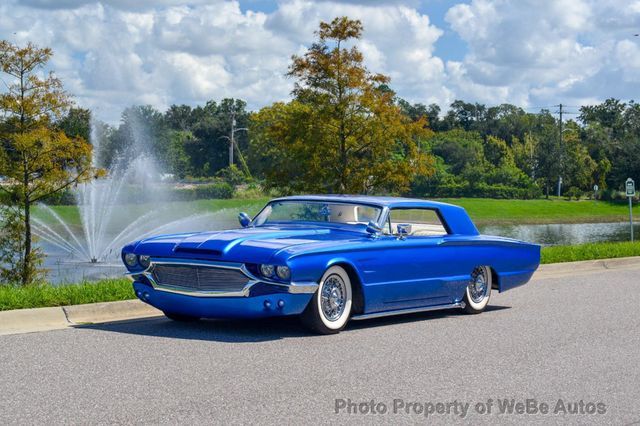
What tends to hold value best within this generation, regardless of broader market direction, is documented originality and mechanical soundness over flash. A modified or heavily customized Square Bird, however well executed, generally sells to a smaller pool of buyers than a correct, honest original, because the modification narrows the car's appeal to people who specifically want that modification rather than the broader collector base who values this generation for what it originally was.
Financing and insurance considerations
Classic car financing and agreed-value insurance are both readily available for a car in this price range, and buyers should get an actual insurance quote before finalizing a purchase rather than assuming standard auto coverage applies. Agreed-value policies, common in this segment, protect you against a total loss being valued at a generic depreciated number rather than what the car is actually worth as a documented collector piece, and the premium difference compared to standard coverage is usually modest relative to the protection it provides.
A note on inflated auction reporting
Be skeptical of headline auction numbers that circulate without full context. A single exceptional sale, a factory 430 convertible with rare documented ownership history selling at a marquee auction house, gets reported and repeated until casual buyers assume that price represents the whole market. It doesn't. Most Square Birds change hands privately or through regional auctions at figures well below whatever outlier number made the enthusiast press that year. Anchor your expectations on realistic comparable sales for the specific configuration you're evaluating, not the best single result anyone can find with a search engine.
Before you buy
Get a pre-purchase inspection from someone who knows this specific generation, not a generalist classic car mechanic. Square Bird-specific issues, top mechanism function on convertibles, unibody rust patterns in the rockers and floors, correct trim tag and paint code verification, are easy for a non-specialist to miss and expensive to discover after the sale. For the broader context on how this generation came to exist and what made it a genuine departure from the two-seat Thunderbird before it, the whole picture is worth reading before you start shopping seriously. When you're ready to look at real inventory, find a classic Thunderbird and bring a specialist along for the first real look.