
Affordable classic cars still exist in 2026, but the money buys something different from what most first-time shoppers picture. Ten thousand dollars will not put a numbers-matching 1960s V8 coupe in your garage. It will buy a sound, usable car from the 1970s, 1980s or 1990s, a tired example of something more desirable, or a solid project with paperwork. The skill is knowing which of those three you are looking at, and pricing it that way before you hand over cash.
Ownership & Lifestyle
16 min read
Affordable Classic Cars: What $5,000 to $10,000 Really Buys in 2026
What $5,000 to $10,000 buys in the 2026 classic car market: the models, the condition, the hidden costs and how to avoid overpaying.
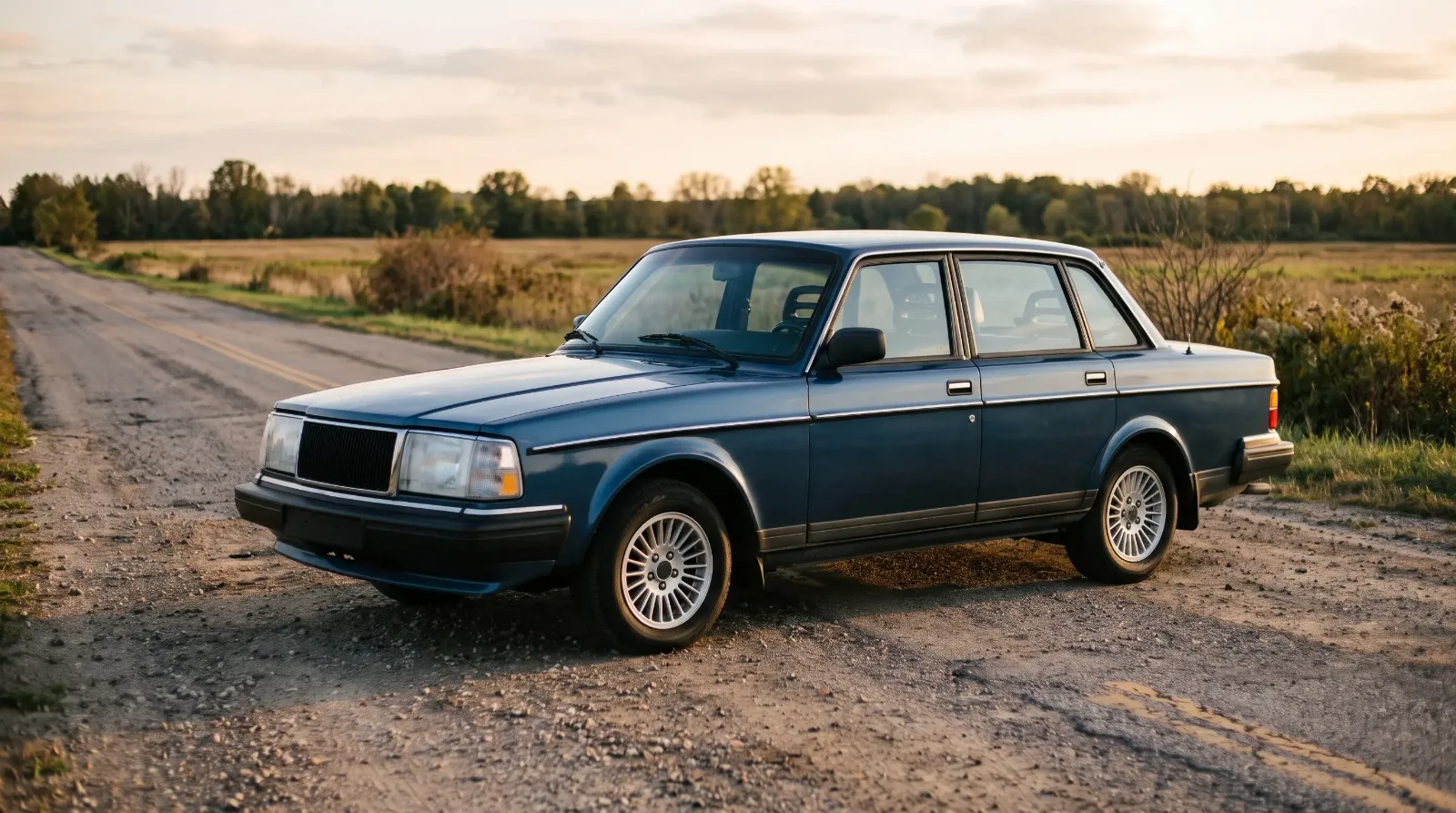
This guide works through the $5,000 to $10,000 band the way a market analyst would: which cars live there, what condition that money actually buys, where the hidden costs sit, and how to keep from overpaying. The numbers below are ranges, not promises. Prices move with condition, region and season, and the asking price on a listing is the start of a conversation, not a valuation.
What affordable classic cars look like in 2026
The first thing to understand is that the budget end of the hobby has shifted forward in time. Twenty years ago, $10,000 bought a decent 1960s sedan or a rough muscle car. Those cars have since climbed out of reach for most buyers, pushed up by restoration costs, a shrinking supply of solid bodies, and steady demand from collectors who grew up with them. What fills the band now is mostly what buyers of that earlier era overlooked: personal luxury coupes of the late 1970s, square-bodied sedans, 1980s sports cars, and early 1990s cars that crossed the 25-year line long ago.
That shift is not a bad thing. Many cars in the band are easier to live with than their older relatives. They have electronic ignition, front disc brakes, better rust protection in some cases, and parts that are still on the shelf at ordinary auto parts stores. A late 1980s convertible or a diesel sedan from the early 1980s can be a daily driver in a way a 1955 sedan usually cannot.
The band also splits cleanly into two halves. Around $5,000, you are mostly buying driver-quality cars with visible flaws, or common models in honest shape. Between $7,500 and $10,000, you start to buy either better examples of those same common cars or entry-level examples of models with a stronger following. The gap between those halves is often condition, not model.
The $5,000 tier: honest drivers and common models
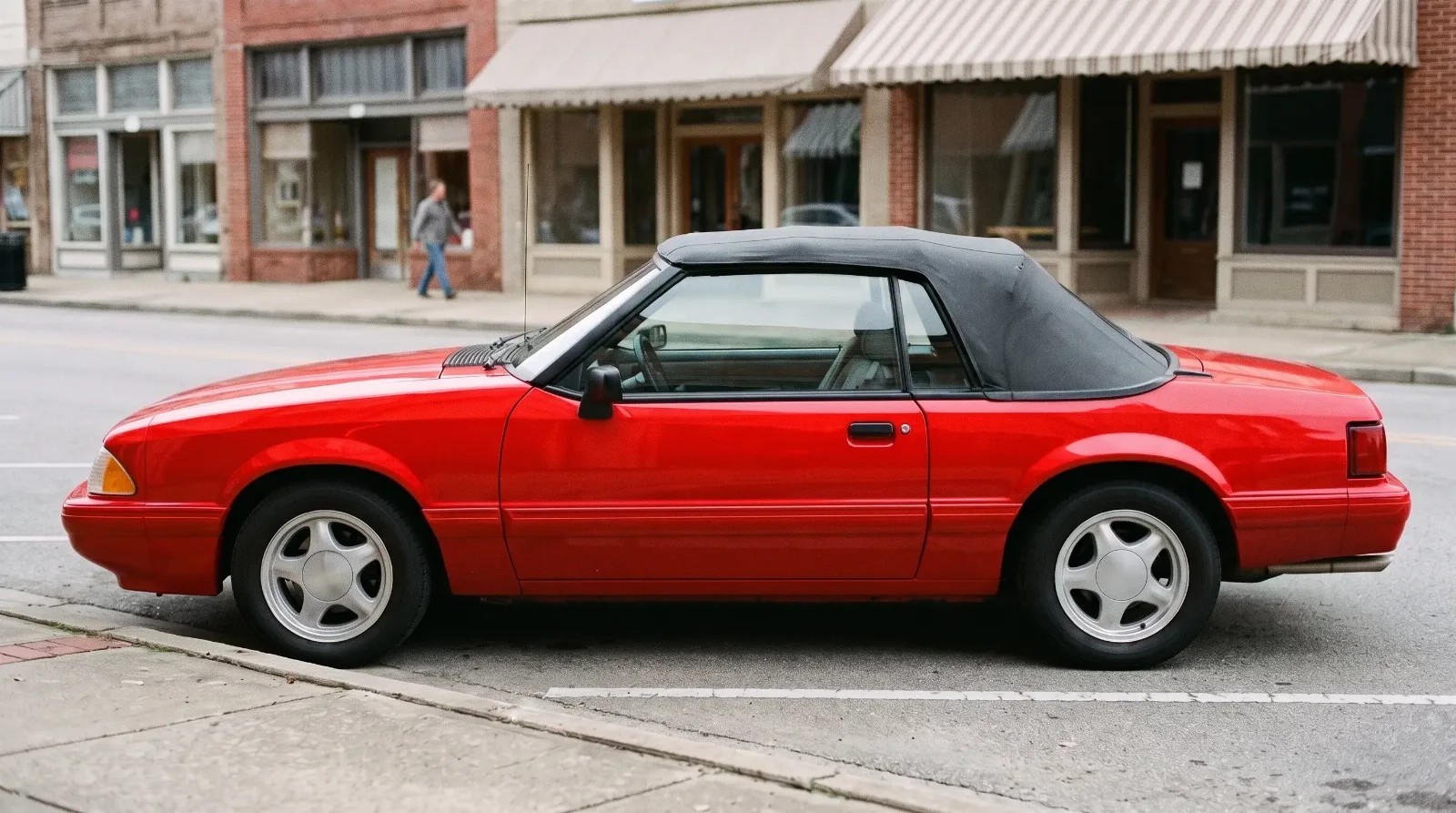
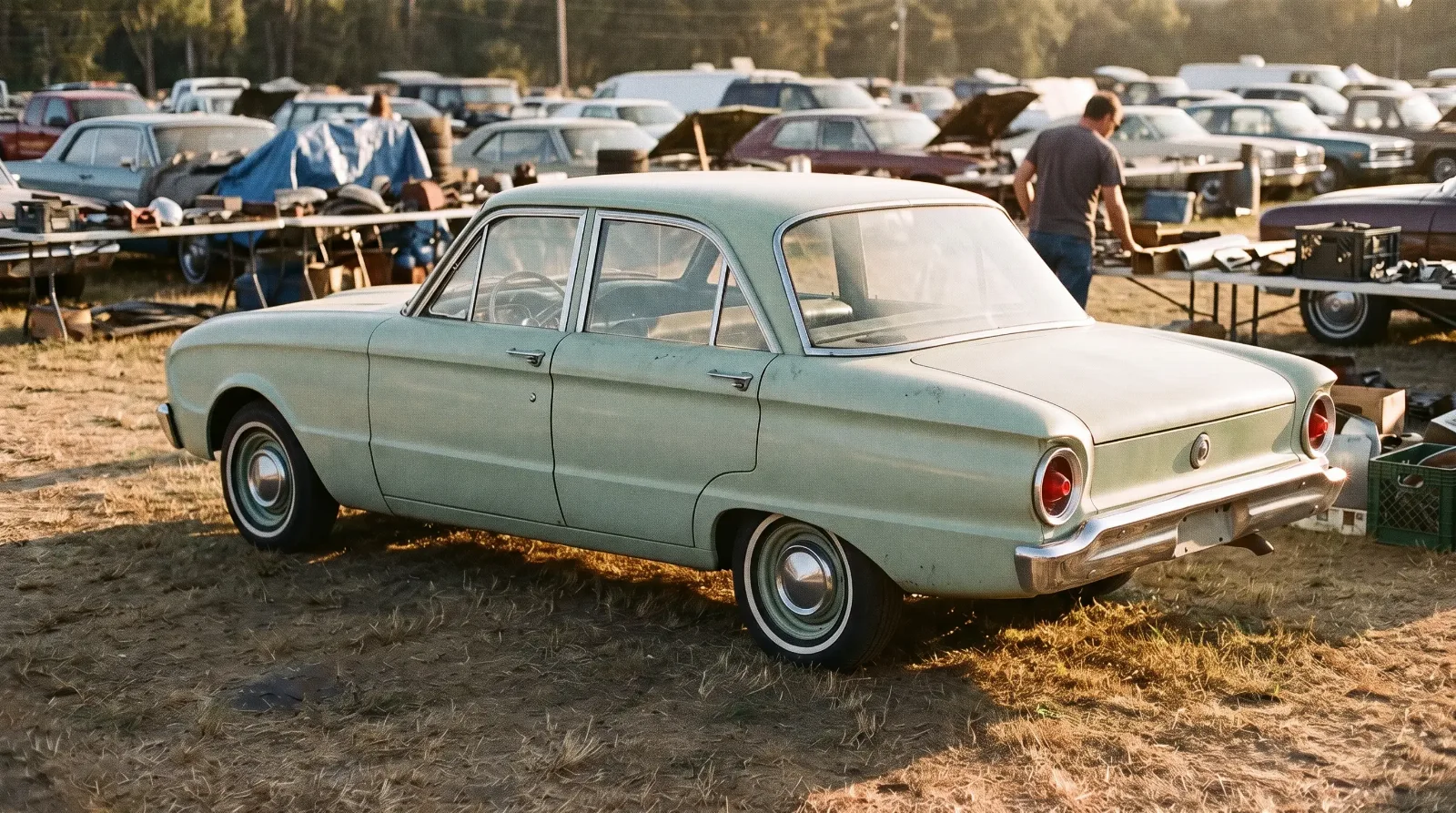
At the bottom of the band, the cars that make sense are the ones built in large numbers. Volume keeps prices down and parts available. Think of the Volvo 240 series, sold in the US for the 1975 to 1993 model years, the Mercedes-Benz W123 sedans built from late 1975 to 1985, full-size American sedans like the Chevrolet Caprice and Ford LTD Crown Victoria, and the four-cylinder and V6 versions of the Fox-body Ford Mustang.
At this money, expect a car that runs and drives, needs some attention, and has cosmetic issues. Paint is often original and faded, or an older respray. Interiors show wear. There may be a dash crack, a sagging headliner, or a radio that no longer works. None of that is a deal breaker. What matters is the structure underneath and whether the drivetrain has been looked after.
The listings for classic cars for sale under $5,000 are where this tier is easiest to study. Read twenty of them before you call about one. You will see the same models over and over, and the asking prices will start to cluster. That cluster is closer to market value than any single listing.
Three patterns repeat in this tier:
- Common sedans and wagons in driver condition, often with a long ownership history and service records.
- Small sports cars, such as the MGB and Triumph Spitfire, in tired but complete condition, usually the later rubber-bumper cars.
- Desirable models in poor condition, sold as projects, which are only a bargain if you have the skills, space and budget to finish them.
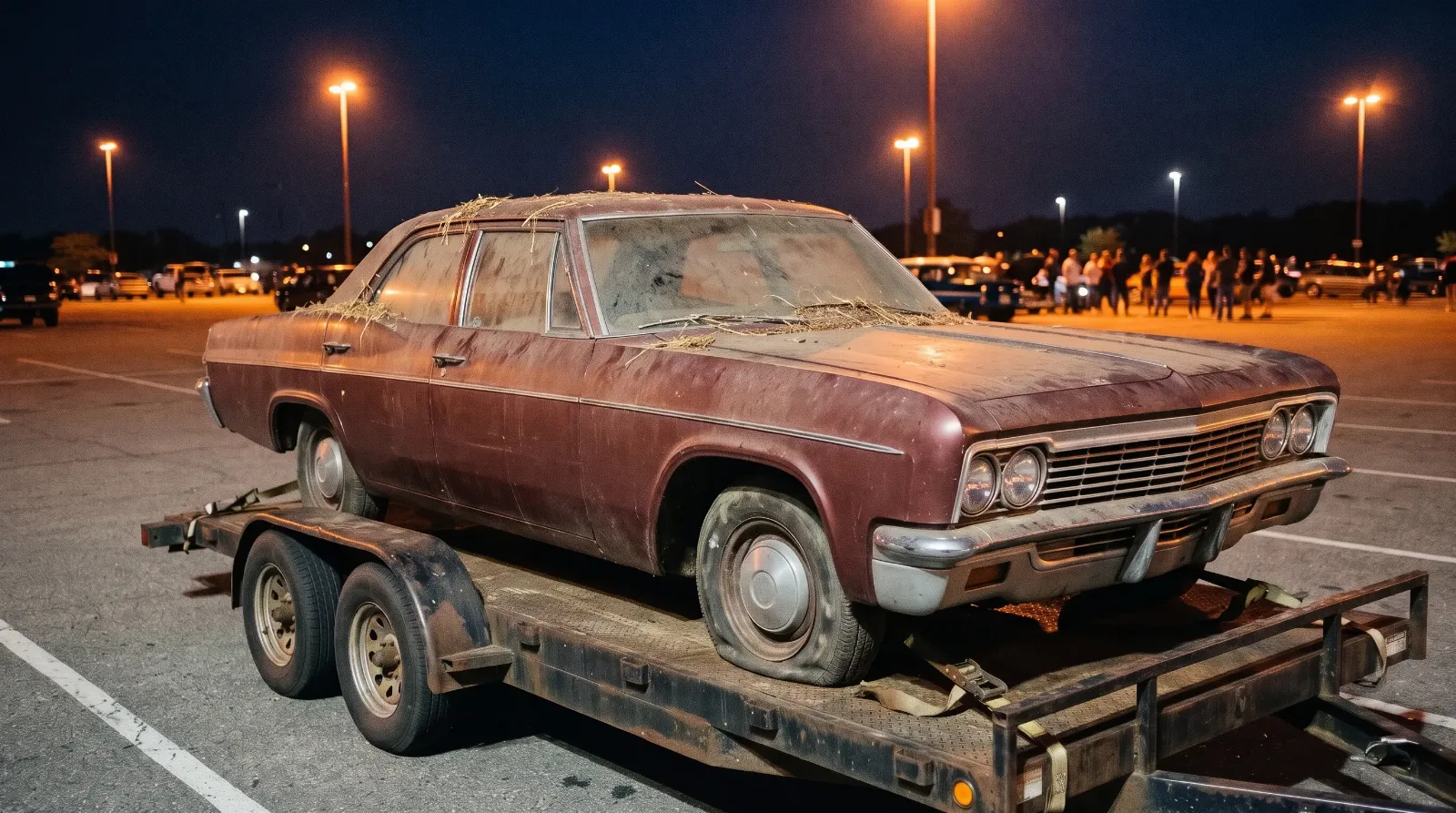
The third group is where most buyers lose money. A $5,000 project that needs $15,000 of work is a $20,000 car, and very few of the cars sold as projects in this tier are worth $20,000 when finished.
The $7,500 to $10,000 tier: better cars, wider choice
Moving up a few thousand dollars changes the conversation. In this half of the band, you can buy a clean example of a common model, the kind with straight panels, a decent respray or well-kept original paint, and a sorted mechanical history. You can also start to reach entry-level examples of cars with a stronger collector following.
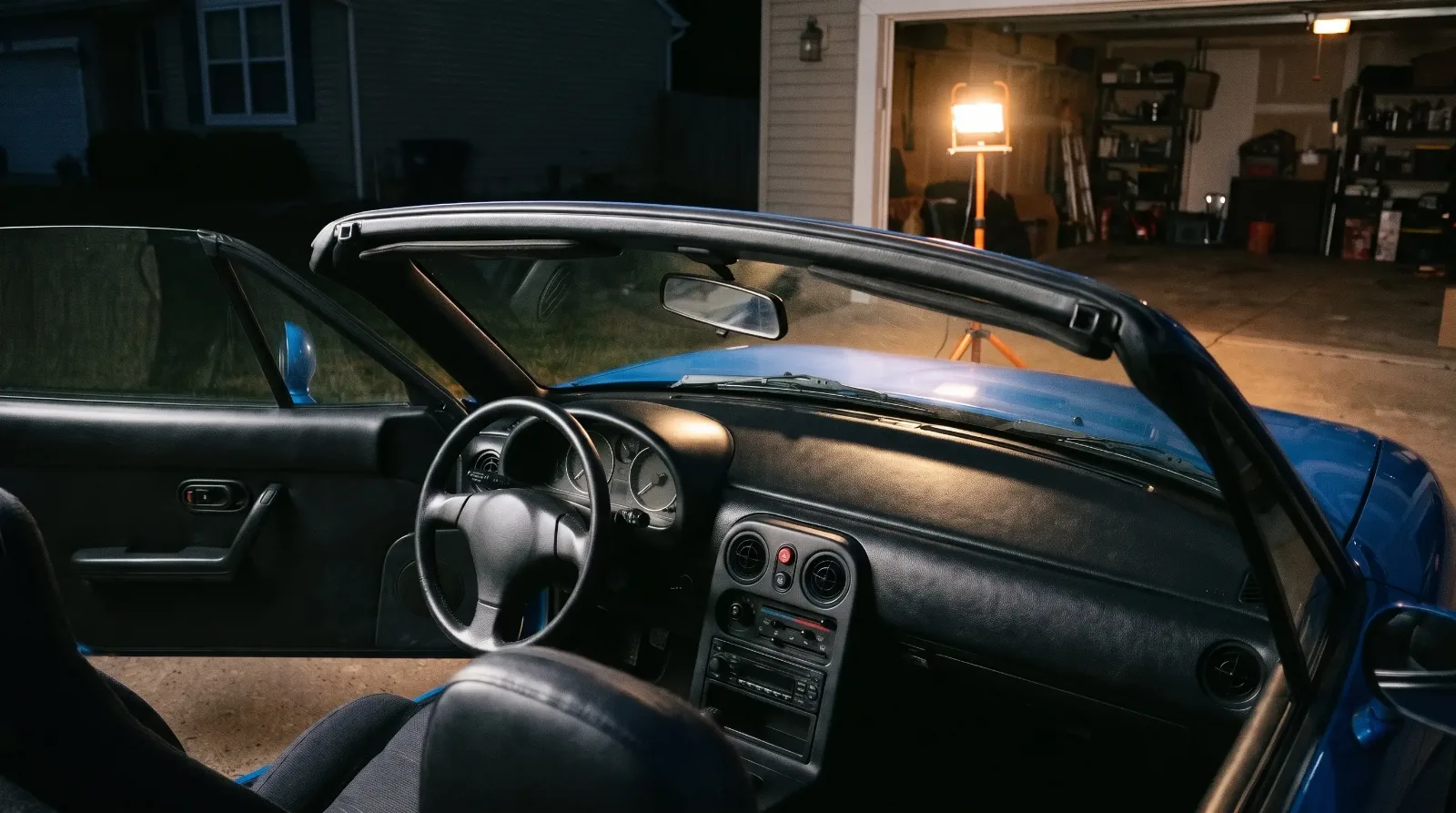
Examples that tend to appear in this range include the first-generation Mazda MX-5 Miata (1990 to 1997 model years in the US), early C4 Chevrolet Corvettes, especially the 1984 model, which Hagerty's price guide valued at about $9,100 in #3 (good) condition in October 2025, third-generation Chevrolet Camaro and Pontiac Firebird coupes, the Pontiac Fiero (1984 to 1988), and personal luxury coupes like the Lincoln Mark VI, Cadillac Eldorado and Ford Thunderbird of the late 1970s and early 1980s.
The interesting thing about this tier is that the extra money rarely buys more car in terms of size or performance. It buys condition and confidence. A $9,000 Miata with records and a fresh top is often a better purchase than a $9,000 V8 car that needs paint, brakes and a cooling system. Both cost the same on day one. Only one of them still costs $9,000 after the first year.
"At this price, the best car is usually the one somebody already spent money on. You cannot buy a restoration for $10,000, but you can buy the tail end of someone else's."
David Mercer
Buyers who stretch to the top of the band should also look at what sits just above it. Many cars that trade at $11,000 to $14,000 in good condition can be found at $9,000 to $10,000 with a fixable issue, such as a tired interior or a non-original color. If that issue is cosmetic and the structure is sound, those can be some of the best buys in the band.
Models that keep showing up in the band
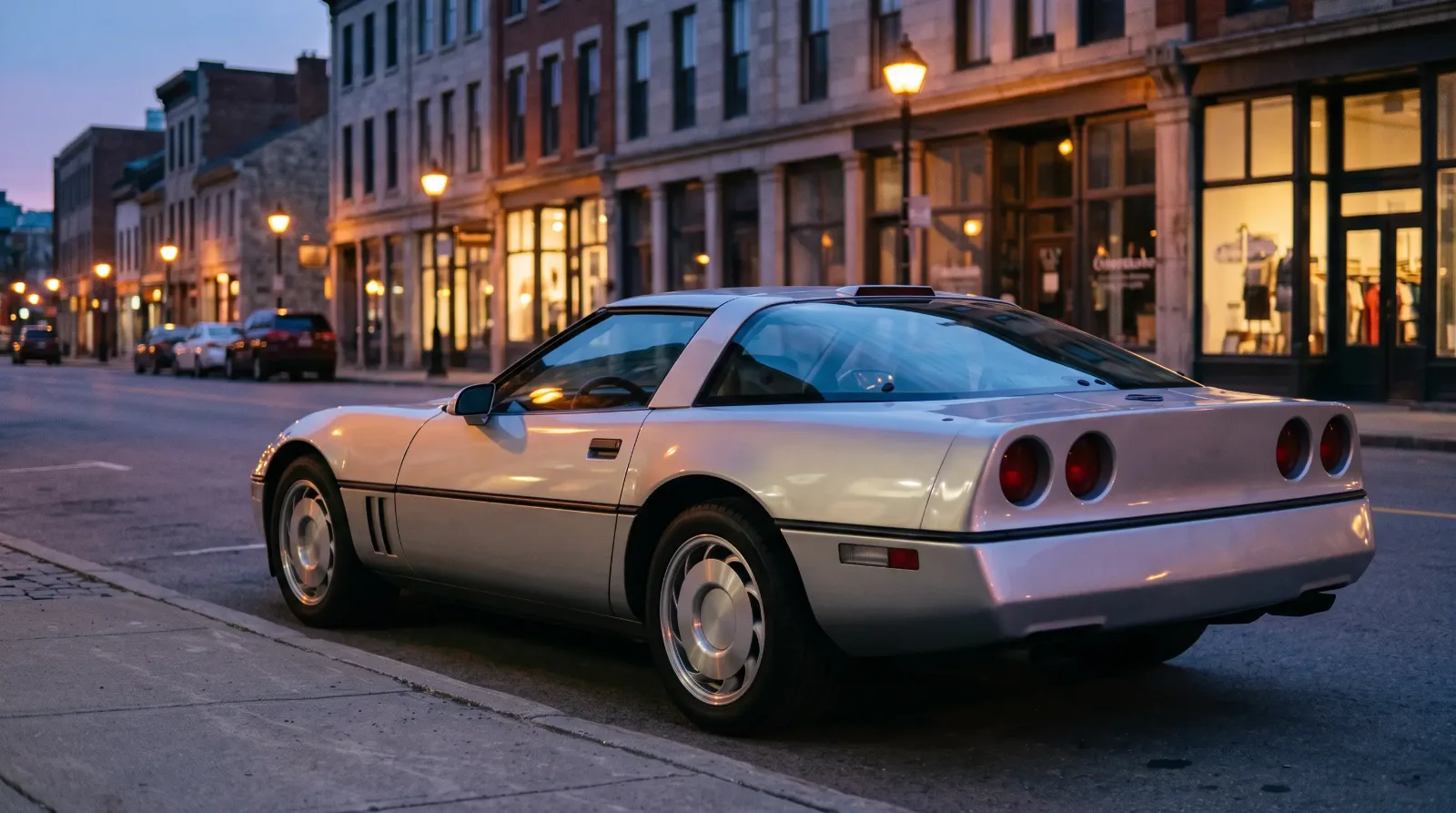
The table below groups models that regularly trade between $5,000 and $10,000 in driver condition. Treat the ranges as starting points for research. Regional differences are large: a rust-free car from a dry state can command a premium over the same model from a road-salt state, and that premium is usually worth paying.
| Model | Years | Typical driver range (as of late 2026) | Why it sits in the band |
|---|---|---|---|
| Volvo 240 sedan and wagon | 1975 to 1993 | $5,000 to $10,000; Hagerty put a #3 1990 240 DL sedan at $11,300 (April 2025) | Huge production, simple mechanicals, loyal following |
| Mercedes-Benz W123 (240D, 300D) | 1977 to 1985 (US) | $4,000 to $10,000; a 278,100-mile 1983 300D Turbodiesel sold for $4,277 (July 2025) | Durable diesels, plenty built, rust is the main risk |
| Mazda MX-5 Miata (NA) | 1990 to 1997 | $6,000 to $10,000 for drivers; clean cars now often sell for more | Large supply, cheap parts, rising slowly |
| Chevrolet Corvette C4 (early) | 1984 to 1989 | $6,500 to $10,000; Hagerty #3 for a 1984 coupe was $9,100 (October 2025) | Lots built, early cars less valued than later ones |
| Ford Mustang (Fox body, four-cylinder or V6) | 1979 to 1993 | $3,000 to $9,000; a rusty 1988 LX 2.3 convertible sold for $2,350 (September 2026) | V8 cars cost more; base cars share the shape |
| MGB roadster and GT | 1962 to 1980 | $6,000 to $10,000 for later cars; Hagerty listed a 1967 Mk I roadster at $12,700 (April 2025) | Very large production, strong parts supply |
| Lincoln Town Car and Cadillac DeVille | 1980s to 1990s | $3,500 to $8,000; Hagerty #3 for a 1990 Town Car was $5,200 (April 2024) | Low demand for big sedans, many survivors |
| Pontiac Fiero | 1984 to 1988 | $5,000 to $9,000; Hagerty put a good 1986 base coupe at about $5,000 (2025) | Early reputation still weighs on prices |
The ranges reflect our reading of the market as of October 2026, built from Hagerty price guide snapshots from 2024 and 2025 and recent Hagerty Marketplace results. Check current sold prices for the exact car before you make an offer.
Notice what the list has in common. Almost every model was built in large numbers, has an active owners' community, and was overlooked by the first wave of collectors. Those three factors are what keep a car affordable. When one of them changes, usually the third, prices move. The NA Miata and the third-generation Camaro IROC-Z are examples of cars that have been leaving the band at the top as nostalgia buyers arrive.
The list leaves out pickups on purpose. If a truck suits you better than a car, the same budget goes further there, and our guide to cheap classic trucks under ,000 covers where those still turn up.
Condition is worth more than the badge
Most price guides sort cars into condition classes, often from concours at the top to project at the bottom. The exact labels vary, but the logic is the same: a car in excellent condition can be worth two or three times the same model in fair condition. For buyers at this price, that spread matters more than the choice of model.
Here is how the condition classes usually map to the $5,000 to $10,000 band:
- Driver (#4 fair to a weak #3 on Hagerty's scale): runs, drives and stops reliably; cosmetic flaws are obvious; may need small mechanical jobs. This is where most of the band sits.
- Good (#3): presentable from ten feet, sorted mechanically, few needs. Common models reach this level at the top of the band. Excellent (#2) cars of almost anything collectible sit above it.
- Project: does not run, or runs poorly; structural or mechanical work needed. Desirable models in this condition are the ones that appear to be bargains.
The 1994 to 1996 Chevrolet Impala SS shows how this works. Hagerty figures quoted in October 2026 put it at about $23,500 in #2 condition and $15,500 in #3, and only #4 cars dip under $10,000. Same car, same badge: condition alone decides whether it fits the band.
The practical rule is to buy the best example you can afford of a model you will be happy with, rather than a weaker example of a model you want more. A good common car is easy to sell later. A rough desirable car only sells to someone with the same optimism you had, and that buyer usually wants a discount for it.
Documentation sits on top of condition. A folder of receipts, a service history and, ideally, the original window sticker or build sheet can be worth real money. It also cuts the time you will spend figuring out what has been done. At this price level, a car with records and a few flaws often deserves more of your budget than a cleaner-looking car with no history at all.
Originality matters less in this band than it does at the top of the market, but it still matters. An unmodified car is easier to value, easier to sell and less likely to hide amateur wiring or mismatched parts. Mild, reversible changes like wheels or a stereo are fine. Engine swaps, cut springs and non-factory turbochargers make a car harder to price and harder to resell.
The costs that do not show up on the listing
The purchase price is the smallest part of owning a budget classic for more than a year or two. Running costs separate a sensible purchase from a regrettable one. Plan for these before you shop.
Catch-up maintenance. Assume every car you buy in this band needs fluids, filters, belts, hoses, brake work and tires within the first few months, regardless of what the seller says. Old tires are a particular risk: a tire can look good and still be too old to trust. Put a number on this first round before you buy, not after the car is in your driveway.
Insurance. Classic car insurance with agreed-value coverage is often much cheaper than a standard policy, but it usually comes with conditions such as pleasure use only, mileage tiers with some insurers, a requirement for a locked garage, and another vehicle for daily use. The terms vary by insurer, so read them before you sign. If you plan to drive the car every day, a standard policy may be the only choice, and the price difference can change the math on the whole purchase.
Storage. A car that lives outside in a wet climate will lose condition every season. If you do not have a garage, price in storage or a quality cover, and factor in the rust risk if neither is possible.
Parts and labor. Common models are cheap to keep running because parts are plentiful and many shops know them. Rare trim, obscure imports and limited-production variants can turn a $50 job into a two-week wait for a part. Before you buy, price out a set of brake pads, a water pump and a windshield for the specific car. The answer will tell you a lot.
Where budget buyers lose money
The same mistakes repeat across the band, and they are predictable. Most of them come from paying for potential rather than for the car in front of you.
Rust under fresh paint. A newly painted car at this price deserves extra suspicion. Body filler and fresh paint can hide rot in floors, rockers, frame rails and the bottoms of doors and fenders. Bring a magnet and a flashlight, look underneath, and lift the carpets and the trunk mat if the seller allows it. Structural rust repair is the single most common way a cheap car becomes an expensive one.
The "just needs" listing. Phrases such as "just needs a battery", "ran when parked" and "easy fix" are rarely as simple as they sound. If the fix were easy, the seller would usually have done it. Price a non-running car as a non-running car.
Paying for rarity that the market does not reward. A rare option or a low-production trim level is only worth extra if buyers actually pay for it. Check sold prices, not asking prices, for the specific variant before paying a premium. Many limited editions from the 1970s and 1980s were trim packages that add little value today.
Ignoring paperwork. A missing title, a title in someone else's name, or a VIN that does not match the paperwork can cost more time and money than any mechanical repair. Walk away from title problems unless you know exactly how your state handles them.
"Asking prices tell you what sellers hope. Sold prices tell you what buyers did. When the two are far apart, believe the buyers."
David Mercer
How to buy well in this band
A good purchase at this price is mostly preparation. The steps below are simple, and skipping any one of them is how most buyers end up overpaying.
Pick two or three models, not ten. Narrow the field early. Learning the weak points of a few models is far more useful than knowing a little about many. Join an owners' forum or club for each one and read the buying guides they publish.
Track sold prices. Spend a few weeks following completed sales for your shortlist, from auctions, classifieds and club sales. Write them down with condition notes. After a month, you will have your own price guide that is more current than any published one.
Set the budget as a total, not a purchase price. Decide the total amount you will spend in the first year, including purchase, catch-up maintenance, insurance and registration. Then work back to what you can pay for the car. For most buyers in this band, that means looking at cars priced a little under the top of their range.
Inspect in person, or pay someone who will. Photos hide almost everything that matters on an old car. If the car is far away, a paid inspection by a local specialist is worth the cost. Ask for a cold start, a test drive and photos of the underside.
Negotiate on facts. Use what you found in the inspection and what similar cars actually sold for. A specific list of needed work, with rough costs, is the most persuasive argument a buyer has. Sellers respond better to facts than to lowball offers.
Be ready to walk away. There will be another car. In the common models that dominate the band, there are usually dozens for sale at any given time. The buyer who is willing to wait almost always pays less than the buyer who is in a hurry.
Is $10,000 enough for a classic car in 2026?
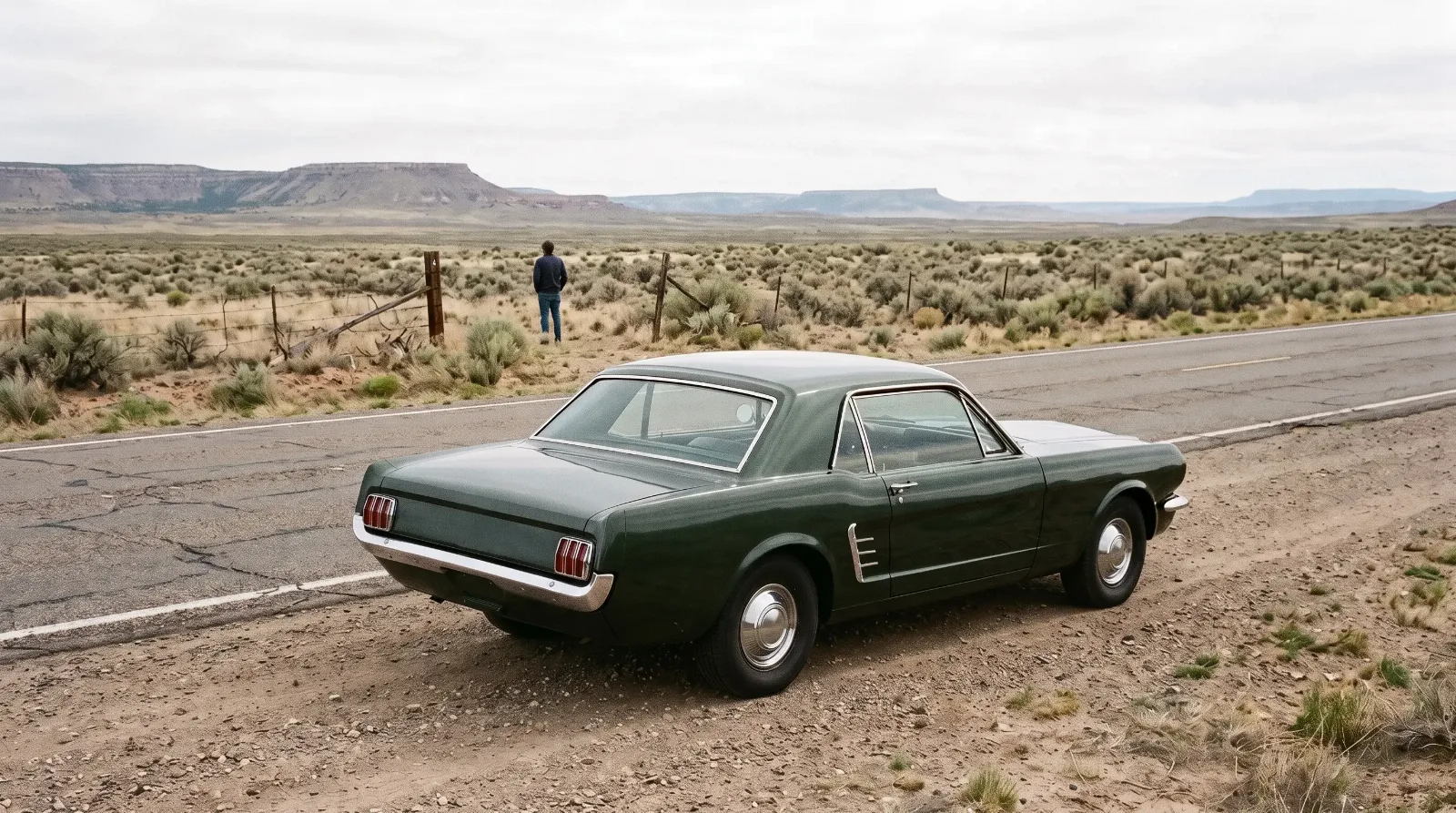
Yes, with the right expectations. The band between $5,000 and $10,000 will not buy a restored 1960s icon, and buyers who expect that will be frustrated. What it buys is a usable, characterful car from the decades just before modern electronics took over: a car you can drive on weekends, work on in a home garage, and sell later for something close to what you paid if you bought well.
The cars in this band also have the most room to appreciate, though that should never be the reason you buy one. Models that sit here today because collectors overlooked them are the ones most likely to move up as a new generation of buyers arrives. The NA Miata and Fox-body Mustang are recent examples of that pattern. Nobody can say which car is next, and anyone who claims to know is guessing.
The better reason to buy is the one that has always driven the hobby at this level: a car that is fun to own, affordable to run, and easy to share with other people who like the same thing. Buy on condition, budget for the first year, track sold prices instead of asking prices, and keep money in reserve. Do those four things, and the $5,000 to $10,000 band is one of the most rewarding places in the classic car market to start.
Sources and notes
- Volvo 200 Series: production years and North American model years
- Chevrolet Impala SS buying guide, with Hagerty values by condition (October 2026)
- Mazda MX-5 (NA): Chicago debut and US model years
- Hagerty Marketplace: 1983 Mercedes-Benz 300D Turbodiesel result, July 2025
- Hagerty Marketplace: 1990 Lincoln Town Car result, September 2026
- Hagerty Marketplace: 1988 Ford Mustang LX 2.3 convertible result, September 2026
Related Reading
Have a
Classic Car
for Sale?
Reach thousands of serious classic car collectors across the US.
Sell It Here →
Selling a classic? Here's how: the best sites to sell a classic car
Are You a Classic Car Dealer?
List your full inventory and connect with targeted classic car buyers.
Join as a Dealer →
#budget classics
#classic car market
#First Classic Car
#affordable classic cars
#classic car prices
#buying a classic car

About the author
David Mercer
Classic car market analyst with two decades of experience tracking collector car valuations, auction results, and investment trends.
More in Ownership & Lifestyle
Comments
Be the first to comment on this article.