
The best cheap project cars for beginners are not the cheapest cars. They are the cars you can order every part for. A $4,000 car with no parts support will cost you more, and take longer, than a $7,000 car where every bolt, panel and seal is in a catalog with a part number next to it. For a first project, the catalog is the car.
Ownership & Lifestyle
6 min read
Cheap Project Cars for Beginners: Platforms With Deep Parts Catalogs
For a first project, the parts catalog matters more than the price. The Mustang, Nova, Dart, Falcon, Beetle and MGB lead the list.

That is the rule this whole piece hangs on. If you are still deciding what kind of build you want, start with picking a cheap project. This one is about which platforms make that build possible for someone doing it for the first time.
Why parts support matters more than purchase price
A beginner makes mistakes. You will strip a thread, crack a trim clip, lose a bracket and order the wrong gasket. On a well-supported car that costs you a few dollars and a couple of days of shipping. On an orphan car it costs you weeks of searching swap meets and forums for a used part that may not exist.
Deep parts support also means deep information. Popular platforms have assembly manuals, reprinted factory shop manuals, wiring diagrams and thousands of people who have done your exact job and filmed it. That is worth more than any tool you will buy.
And it means you can finish. Most projects that die in a garage die waiting for a part. Pick a car where that does not happen.
Cheap project cars for beginners with the deepest catalogs
These platforms have reproduction parts down to the body shell or close to it. The price column is a relative guide for a complete, running or recently running car with fixable rust, not a quote: project prices move fast, so check current sales for the exact car before you shop.
| Platform | Years | How deep the catalog goes | Project price, relative (2026) |
|---|---|---|---|
| Ford Mustang | 1965 to 1973 | Ford-licensed reproduction shells (1965 convertible, 1967 to 1968 and 1969 to 1970 fastback), nearly every panel and trim part | Highest of this list |
| Ford Mustang (Fox body) | 1979 to 1993 | Huge mechanical and performance aftermarket, growing trim support | Middle; clean GTs and 5.0 cars cost more |
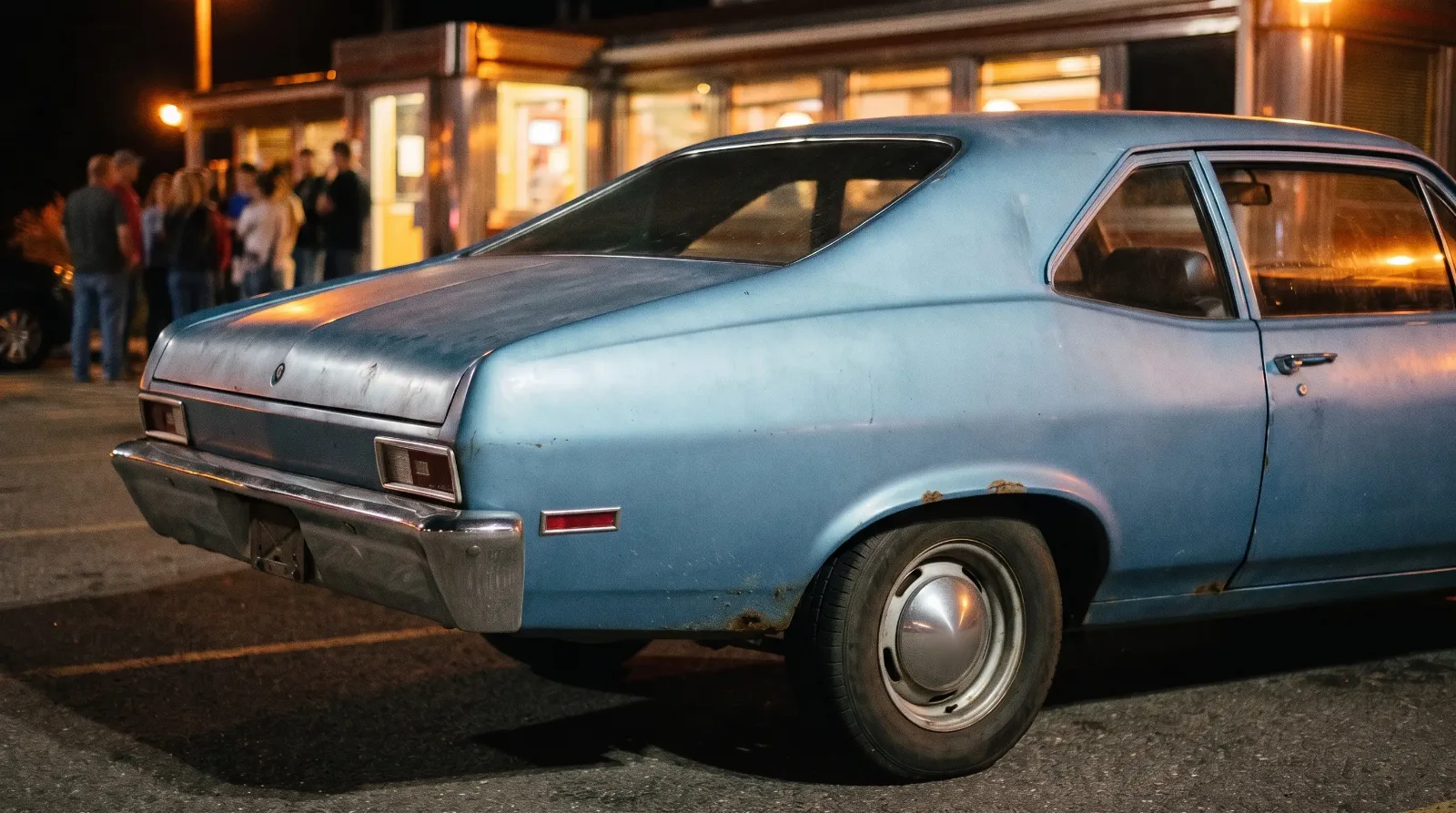
| Chevrolet Nova | 1968 to 1974 | Most panels, full interior, all mechanical | Middle to high, V8 cars most |
| Dodge Dart / Plymouth Valiant and Duster | 1967 to 1976 | Most panels and mechanical, interior kits | Middle; six-cylinder sedans and coupes cheapest |
| Ford Falcon | 1960 to 1965 | Most mechanical, many panels, shares parts with early Mustang | Low to middle |
| Volkswagen Beetle | 1958 to 1979 | Nearly everything, including floor pan halves and body panels, at low cost | Low to middle |
| MG MGB | 1962 to 1980 | New roadster and GT shells from British Motor Heritage, nearly every part | Low to middle |
Notice what is missing. The 1955 to 1957 Chevrolet and the first-generation Camaro have catalogs as deep as anything here, but even rough projects of both are priced as collector cars, well above the other platforms in this table. Deep catalog, wrong price.
Picking between them
All of these cars work for a beginner. Which one fits you depends on what you want to do with it, and how much you want to learn at once.
For the simplest mechanicals, it is the Beetle or a six-cylinder Falcon or Valiant. Few systems, few wires, lots of room. You can learn the whole car in a winter.
For the most parts, period, take the early Mustang. Anything you break, someone sells new. The catch is price: early Mustang projects are no longer cheap, and the good ones go fast.
For speed on a budget, look at the Fox-body Mustang or a V8 Nova or Dart. Small-block V8, light body, a performance aftermarket that never stopped. The Fox is also the newest car here, which means fuel injection on the 5.0 from 1986 and fewer rust traps.
For a sports car, it is the MGB. Small, slow by modern standards, and supported by a parts network that can supply almost anything, including a new shell. It is a different kind of project, with British electrics, but the catalog is as deep as any American car's.
Whatever you pick, decide your ceiling before you buy. Our piece on how much to spend on a project covers that number in detail.
"Before you buy any project, open the parts catalog for it and find the floor pans, the door seals and the brake lines. If you cannot find all three, keep looking at cars."
Mike Sullivan
How to check the catalog before you buy
Do this at the kitchen table, before you look at a single car.
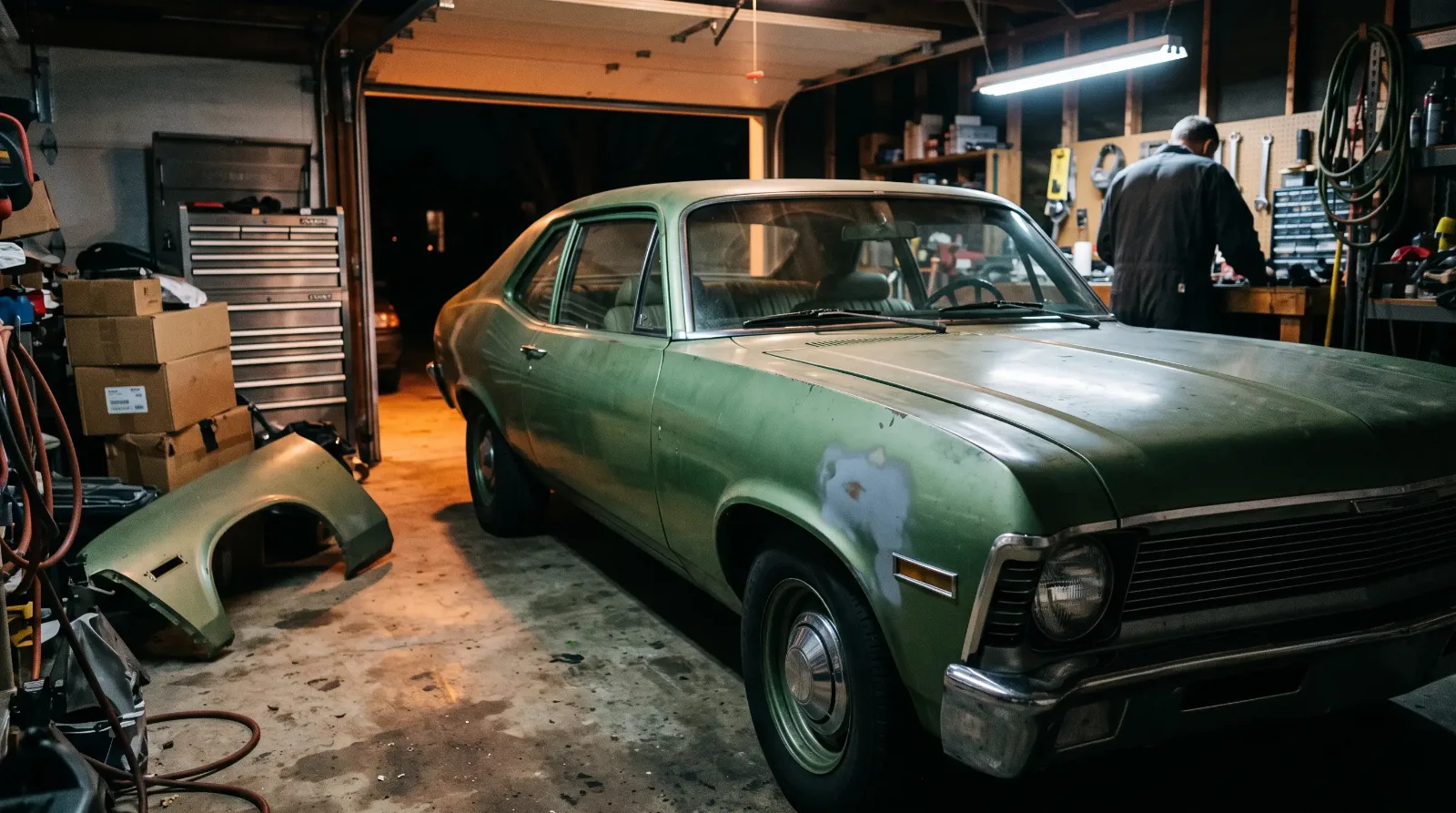
Then go look at cars. Buy the most complete one you can afford, even if it needs more mechanical work, because missing trim and small parts add up faster than engine work. A car with every piece in a box beats a running car with half its interior gone.
Last thing. Do not let the deep catalog trick you into buying a rust bucket. Reproduction panels are available, but cutting and welding them is not a beginner job. A beginner should be bolting parts on, not fabricating. Find a solid body, and let the catalog handle the rest. If you want to see how these platforms compare with other budget options, read our affordable classics guide, or browse project cars under $5,000 and start shopping with the catalog open in the next tab.
Sources and notes
- Old Cars Weekly: Dynacorn and Ford reproduction Mustang bodies
- Wheels-Alive: British Motor Heritage MGB shell production
- Just Kampers: Beetle 1955 to 1970 floor pan half
- Wikipedia: Ford Mustang (first generation)
- Wikipedia: Ford Mustang (third generation)
- The Truth About Cars: Ford-approved 1965 Mustang body shell
Related Reading
Have a
Classic Car
for Sale?
Reach thousands of serious classic car collectors across the US.
Sell It Here →
Selling a classic? Here's how: sell my classic car
Are You a Classic Car Dealer?
List your full inventory and connect with targeted classic car buyers.
Join as a Dealer →
#affordable classic cars
#Ford Falcon
#first project car
#classic car parts
#MGB
#cheap project cars for beginners
#VW Beetle

About the author
Mike Sullivan
Detroit-area muscle car enthusiast and restoration specialist with three decades of hands-on experience working on American iron.
More in Ownership & Lifestyle
Comments
Be the first to comment on this article.