
A project car budget is a valuation exercise before it is a shopping list. The car you buy for $4,000 is not a $4,000 car; it is a claim on every dollar you will put into it until you either sell it or stop. Most projects that turn into money pits do not fail because the owner was careless. They fail because nobody wrote down, on day one, the number at which the project stops making financial sense. This article is about setting that number and holding to it.
Ownership & Lifestyle
8 min read
How Much to Spend on a Project Car Before It Turns Into a Money Pit
Set a project car budget from the finished value, hold a reserve for hidden work, and know the signs that a cheap classic has become a money pit.
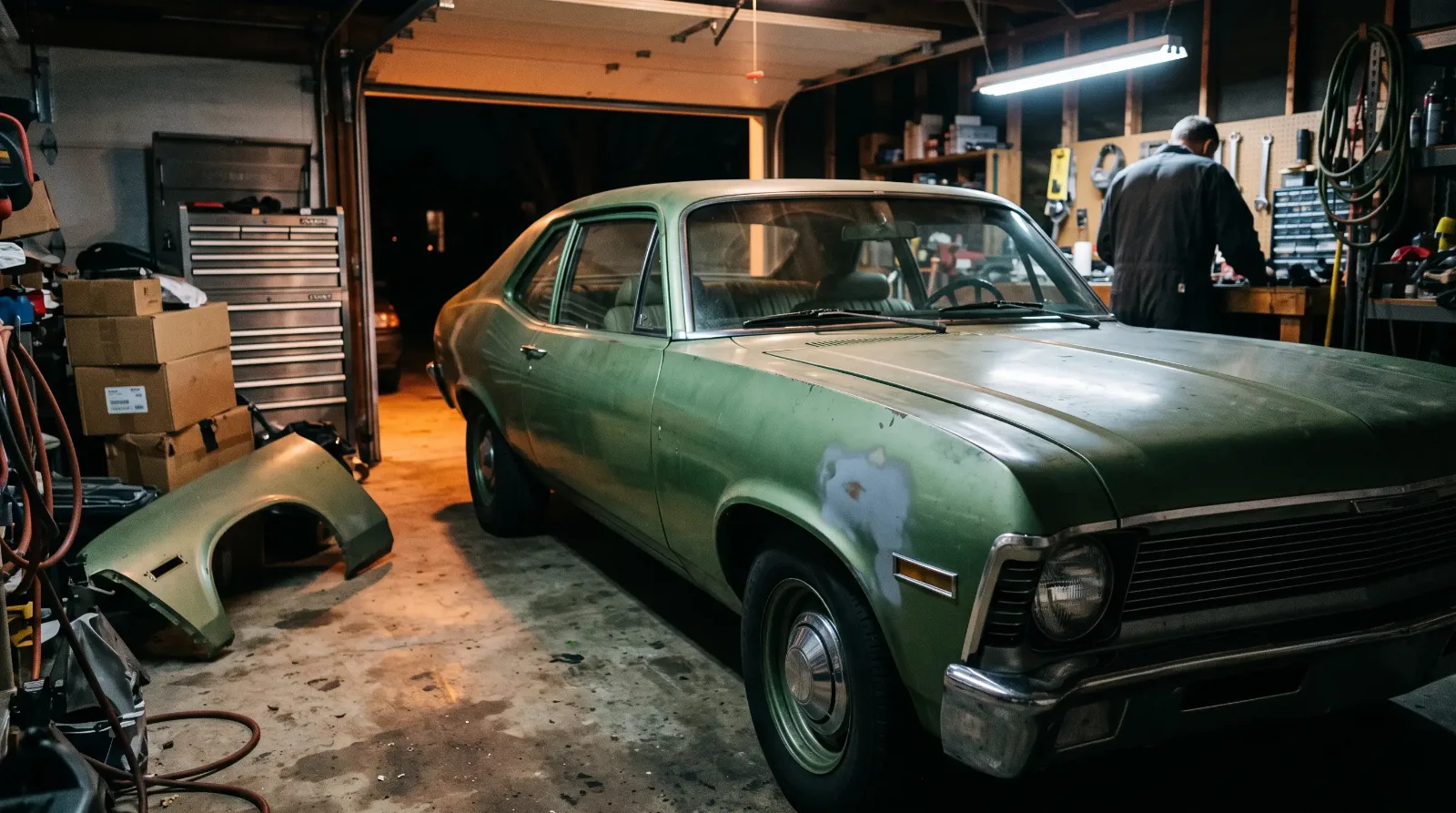
If you are still choosing the car itself, start with the best cheap project cars and come back here once you have a platform in mind. The budget logic below works for any of them, but it works best on a car with cheap, available parts.
Why a project car budget fails before the car does
The usual failure has a simple shape. The buyer budgets for what he can see: the dented fender, the tired seat, the engine that smokes on startup. Then the car comes apart and the hidden list begins. Floor pans that looked solid from above turn out to be undercoating over holes. The "rebuilt" carburetor was rebuilt by someone who left out a gasket. The wiring has three generations of splices in it.
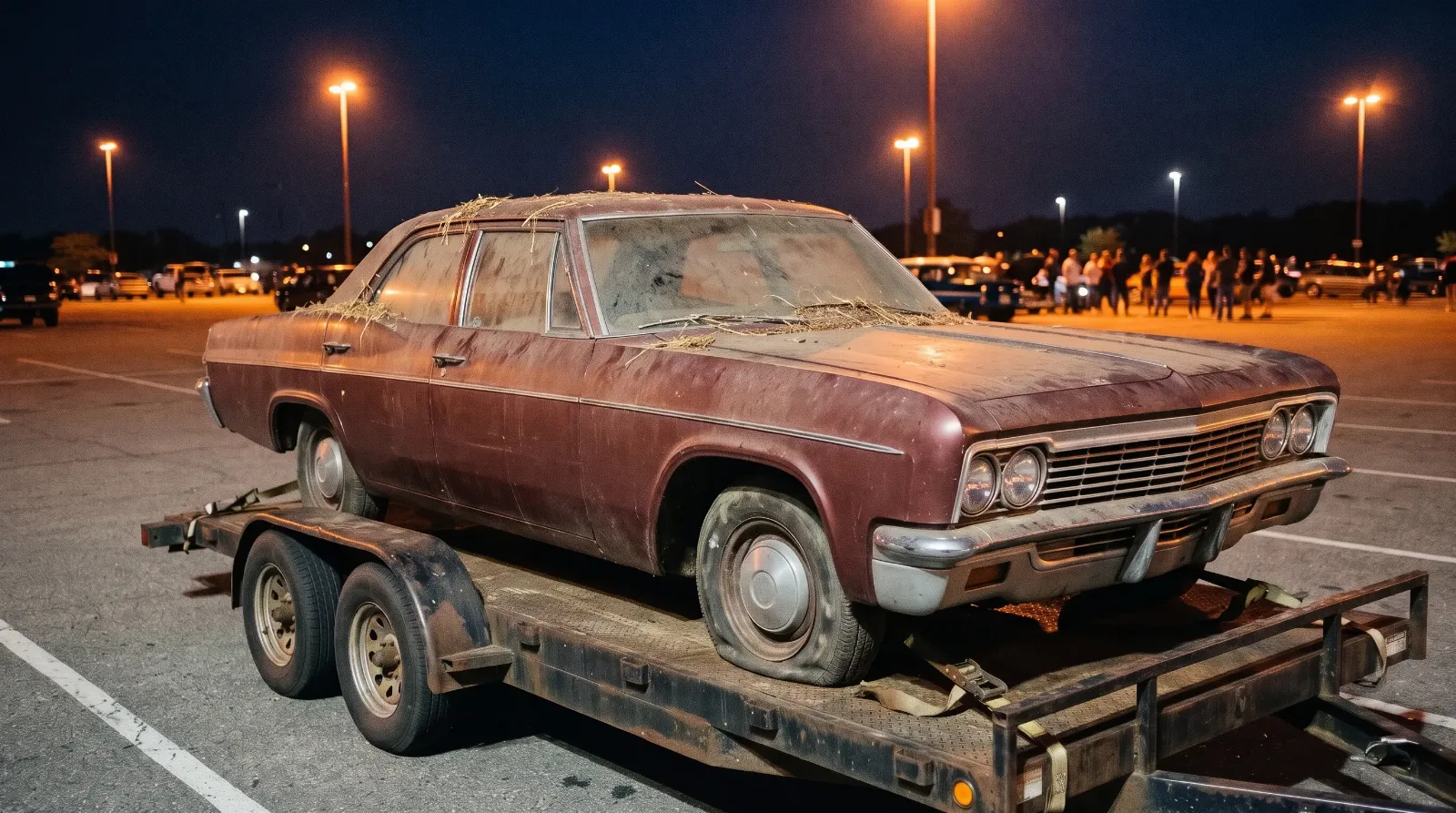
None of this is unusual. It is the normal condition of a $5,000 to $10,000 classic that has lived 40 or 50 years. The mistake is treating the visible faults as the whole bill. A listing's wording tells you a lot about how big the hidden list is likely to be, which is why it pays to know whether you are looking at a barn find or project car before you agree on a price.
The second failure is emotional, and it is harder to fix. After the first $3,000 goes in, the owner feels he has too much invested to stop. After $8,000, he feels it even more. Economists call this the sunk cost trap. The market does not care what you spent; it pays for what the car is when you sell it.
Set the ceiling from the finished value, not the purchase price
The only defensible way to set a project car budget is to work backward from the finished car. Find out what the same model sells for in the condition you realistically expect to reach. Not concours. Not "nicer than most." The condition a home mechanic with a modest shop can produce.
Then subtract. The ceiling is the finished value minus the purchase price, minus a reserve for the things you have not found yet. I use a reserve of 25 to 30 percent of the planned work for an average driver-quality project, and more for anything that has sat outside. That reserve is not pessimism. It is the price of the hidden list.
| Line | Example figure | How to get it |
|---|---|---|
| Finished value (driver condition) | $14,000 | Recent sold prices for the same model and condition |
| Purchase price | $5,000 | What you actually paid, plus transport |
| Room left before you are underwater | $9,000 | Finished value minus purchase |
| Reserve for hidden work (about 30%) | $2,700 | Held back, not spent on the plan |
| Spendable budget for planned work | $6,300 | What the visible list is allowed to cost |
The figures in the table are an illustration, not a quote for any particular car. The method is the point. If the visible list already costs more than the spendable line, you have overpaid for the car or picked the wrong car, and it is cheaper to learn that now than in month eight.
"A project is worth what the finished car sells for, minus the risk that you never finish it. Most buyers price the first part and forget the second."
Marcus Feld
The line items that sink a project car budget
Some costs scale gently. Upholstery, chrome and trim are expensive, but you can see them, quote them and do them in stages. Two categories behave differently, and they are where budgets break.
Rust and structure. Rust is the single largest variable in any cheap classic. Surface rust on a fender is cosmetic. Rust in the floor, the rockers, the frame rails or the rear frame extensions is structural, and it is priced by the hour at a body shop. A 2025 survey of US repair shops found the most common labor rate was $100 to $119 an hour, with nearly half of shops between $100 and $139, and body shop rates swing widely by region. At those rates a set of floor pans and rockers can absorb dozens of those hours before anyone talks about paint. Read up on what rust repair really costs before you write any number in the rust line.
Paint. Paint is not one price. A driver-quality respray and a full strip to bare metal are different jobs, and the second can cost many times the first. AAA puts a basic single-coat job at about $300 to $1,000 and a high-end job, stripped to bare metal with several coats, at about $5,000 to $20,000. Paint also sits on top of bodywork, so the bill grows with every hidden dent.
Drivetrain surprises. An engine that runs is not an engine that is healthy. Compression and leak-down tests cost little and tell you whether you are budgeting for a tune-up or a rebuild. Skip them and you are guessing.
One way to control the parts side is buying a parts car of the same model. On a common platform it can supply trim, glass, brackets and small hardware for less than buying them one at a time. On a rare one, it may be the only source. Either way, it only saves money if you have room to store it and the discipline to sell what you do not use.
When to stop: signs a project has become a money pit
A money pit is not a car that costs a lot. It is a car whose remaining cost to finish is larger than the value it will add. You can spot the turn if you keep a running ledger, which almost nobody does. Keep one. A spreadsheet with dates, parts, labor and receipts is also the documentation that supports your sale price later.
Watch for these signs:
- The reserve is gone and the visible list is not finished.
- The structural repair estimate came back higher than the purchase price.
- You are buying parts for a stage you have not reached, to "save money later."
- The car has not moved under its own power in more than a year.
- Your finished value estimate keeps rising to justify the spending.
The last one deserves attention. When the owner starts telling himself the finished car will be worth more than comparable cars, the budget has stopped being a budget. The market sets the finished value. Your receipts do not.
Exit options that protect what you already spent
Stopping is not failure. It is a decision about liquidity. A project car sells best at one of two moments: before you take it apart, or once it runs, drives and stops. The worst moment is in the middle, in boxes, with the parts bagged by someone who is no longer sure which bolts go where.
If you hit the ceiling, you have three practical choices. Sell it as a running, documented project and let the next owner continue. Part it out, which on a popular model can return more than a whole-car sale but takes months and storage. Or reset the plan downward: finish to a safe driver standard instead of the show car you once pictured. That last option is the one most owners overlook, and it is often the one that keeps the car on the road.
The buyers who do well with cheap projects tend to be the ones who picked a forgiving car to begin with. If you have not bought yet and want a gentler start, read more here about classics that suit a first owner. Then set the ceiling, write it down and treat it as a number you do not get to renegotiate halfway through.
Sources and notes
Related Reading

Have a
Classic Car
for Sale?
Reach thousands of serious classic car collectors across the US.
Sell It Here →
Selling a classic? Here's how: the best sites to sell a classic car
Are You a Classic Car Dealer?
List your full inventory and connect with targeted classic car buyers.
Join as a Dealer →
#rust repair
#project cars
#classic car restoration
#car valuation
#affordable classic cars
#project car budget

About the author
Marcus Feld
Accredited collector-car appraiser who reads the market through hammer prices, condition tiers and risk.
More in Ownership & Lifestyle
Comments
Be the first to comment on this article.