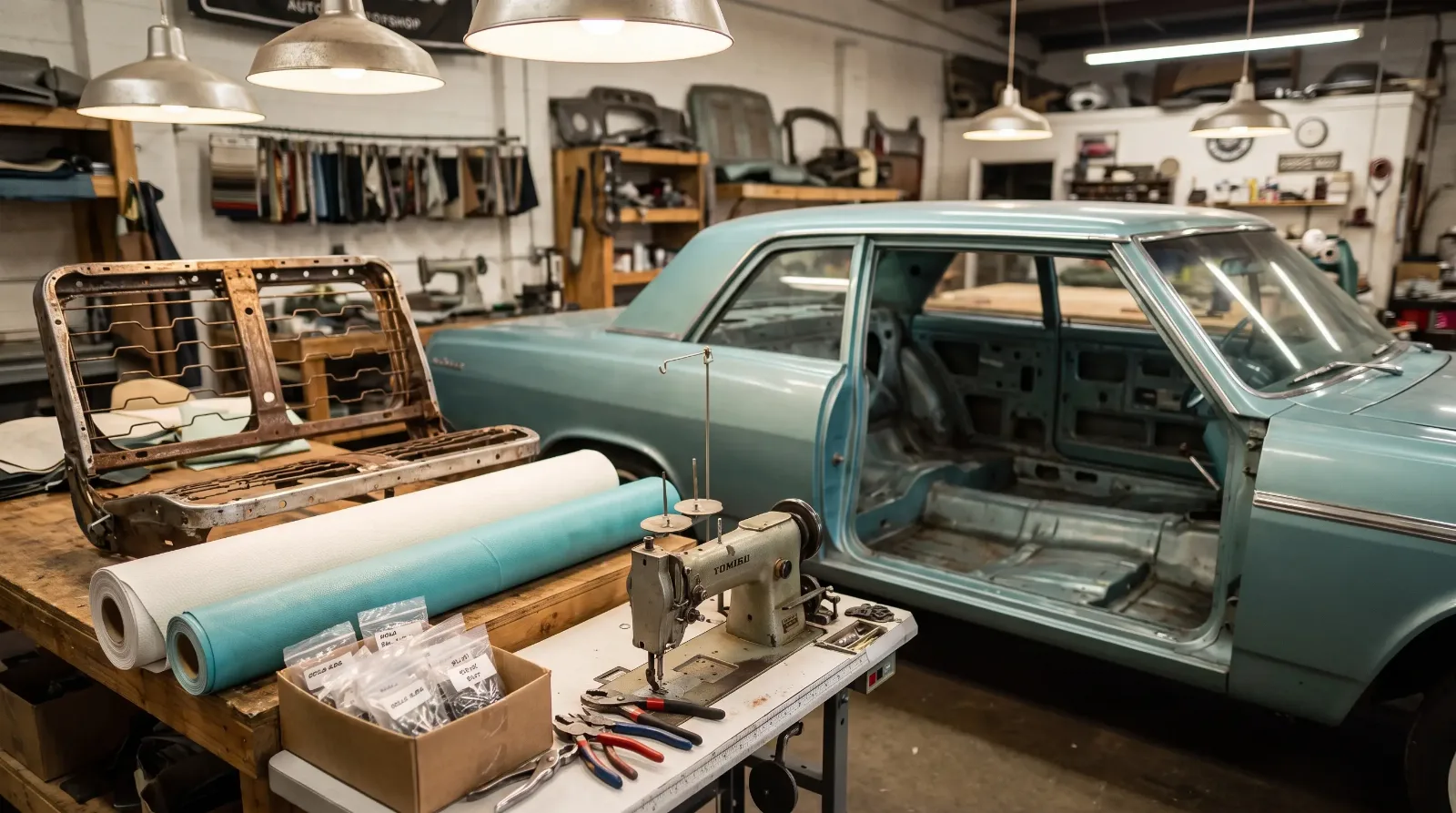
An interior is a set of decisions made one stitch at a time. Choose a pre-sewn kit and you are buying someone else's pattern, someone else's grain, and a promise that the pieces will fit the frames in your car. Choose custom sewing and you pay for a person's time, a craftsman's eye, and the freedom to match what a specific car left the factory with. Both routes can produce a beautiful result. Which one suits a given car depends on originality, budget, and how much of the work you will do yourself.
What a kit actually includes
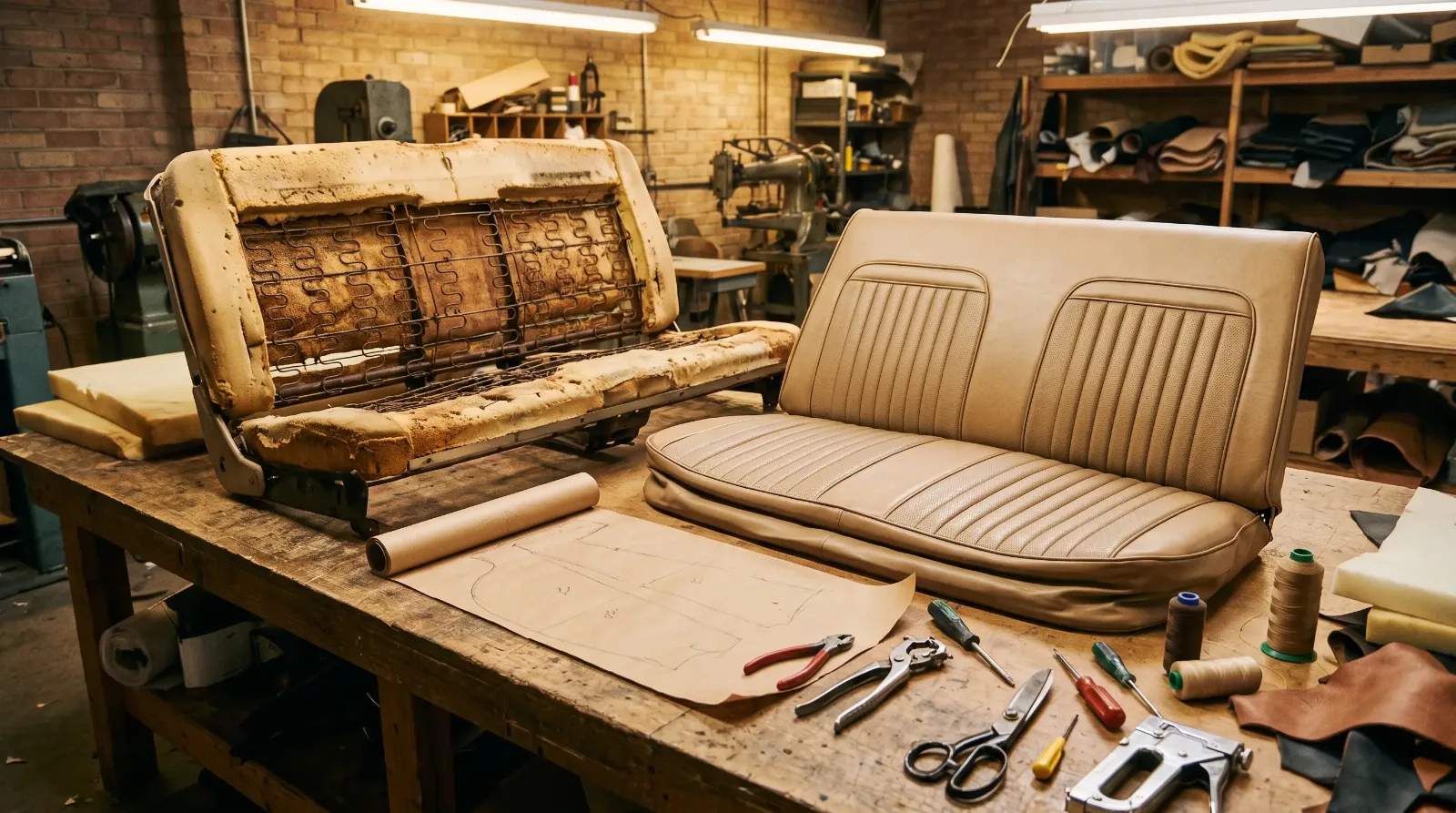
A classic car upholstery kit is a set of pre-cut, pre-sewn covers for seats, door panels, and sometimes headliner, carpet, and trim. Suppliers make them from patterns taken off original cars or reproduced from factory documents. Popular makes and models have the best selection, and reputable sources will list the materials they use, such as vinyl, cloth, or leather, and the pattern details, such as pleat width, stitch style, and piping.
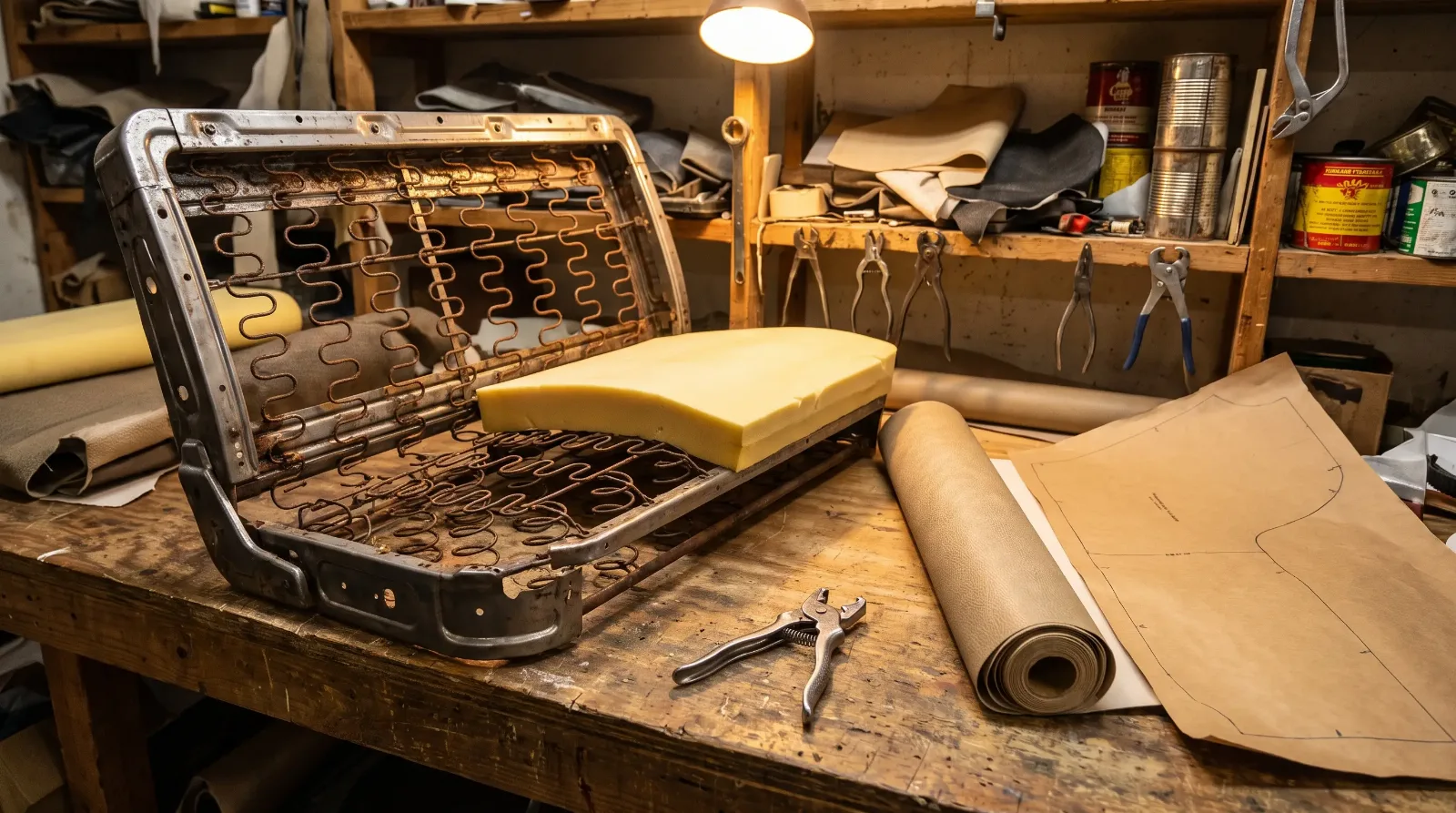
A kit does not include foam, springs, or frames. Those are separate repairs. A kit also assumes your seat structure is correct. If a seat has been modified, or if the car had factory options such as bucket seats or special bolsters, the kit may not match. Always confirm the trim code and seat style before ordering.
What custom-sewn means
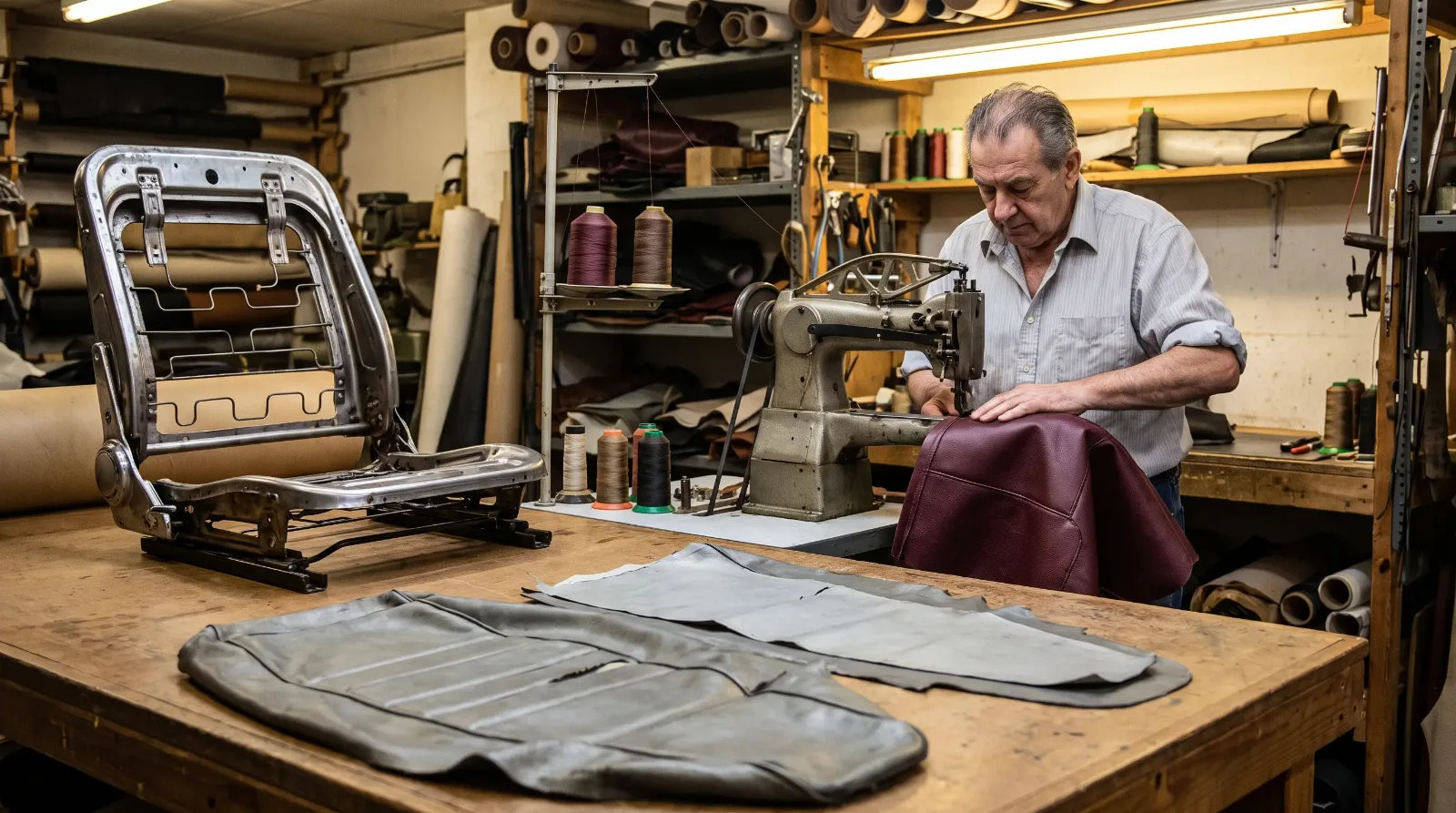
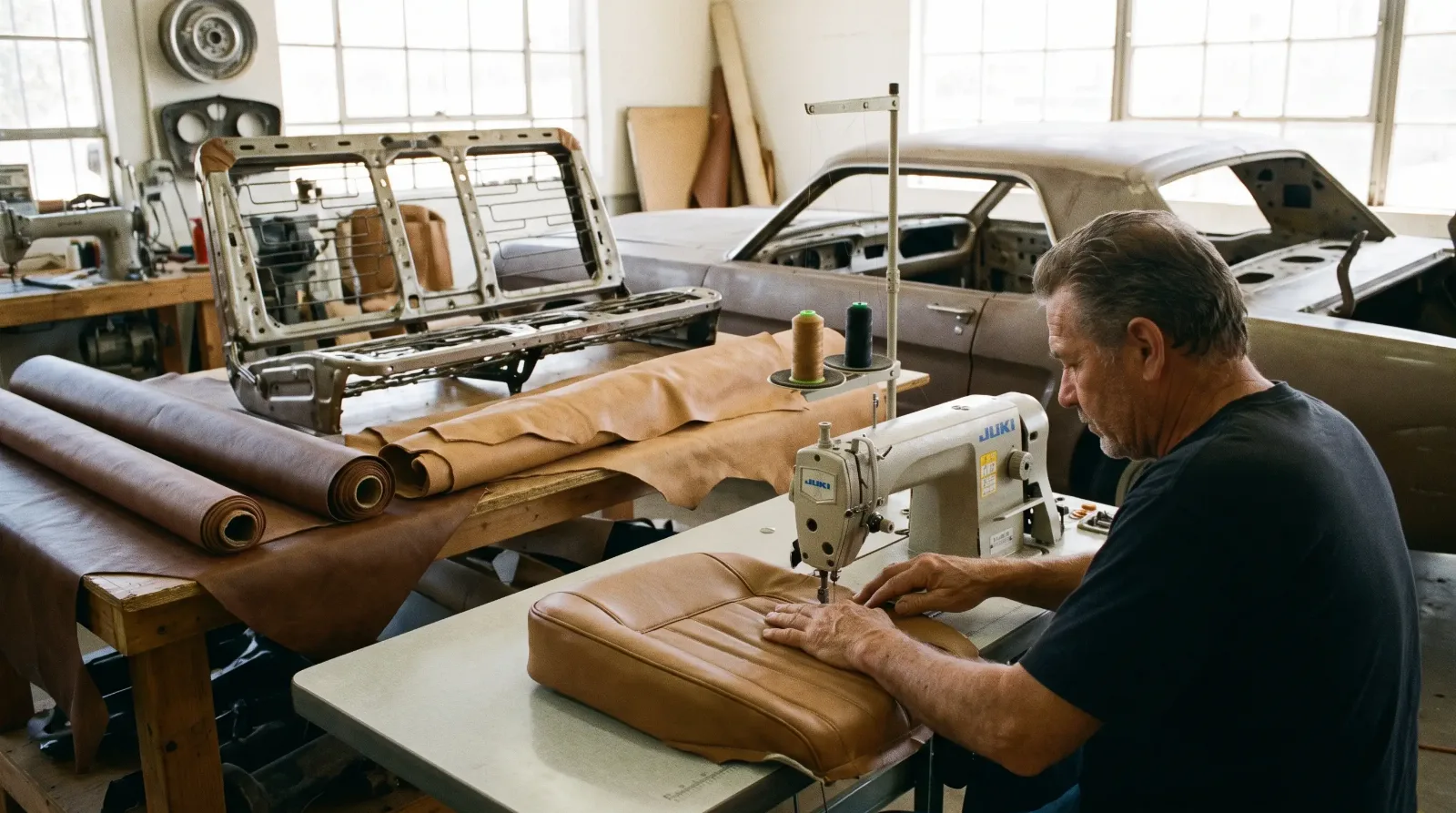
Custom upholstery starts from the car, not a catalog. A trimmer removes the old covers, uses them as patterns, selects materials, and sews new covers to fit your seat frames. For cars with no kit available, or where originality matters, this is often the only route. It also lets you correct problems kits cannot, such as a seat with an altered frame.
The cost lies in labor. A skilled trimmer can spend a day or more on a single pair of front seats, and shop rates vary by region and reputation. Expect to pay noticeably more than a kit, and expect a waitlist at good shops.
| Item | Kit (parts only) | Shop-installed (parts and labor) |
|---|---|---|
| Seat covers with new foam, front and rear | $500 to $2,000 | $1,500 to $5,000 |
| Full interior, driver quality | $1,800 to $5,000 | $5,000 to $12,000 |
| Leather instead of cloth or vinyl | Roughly $1,000 more on a basic retrim | Roughly $1,000 more on a basic retrim, and more for correct-grain hides |
| Show or concours interior, rare cars | Seldom a kit job | $15,000 and up, often far more |
Fully custom work from your own seat frames sits at the upper end of the installed column or above it, because pattern-making is added to the sewing. Complete pre-sewn interior sets for common cars start around $1,800, and small repairs such as a single tear or seam typically run $100 to $500.
Fit, grain, and the details that give a kit away
Kits vary in quality, and the differences show up in installation. Look at pattern accuracy first. A correct pleat spacing and the right angle of the sew line are among the first things an experienced eye notices. Grain matters too. Original vinyls from the 1960s and 1970s often had a distinct embossed grain, and the wrong texture gives away a modern replacement from across the room. Stitching thread color, thickness, and spacing follow the same rule.
Fit is the other issue. Covers that are slightly undersized will pull and wrinkle, and covers that are oversized sag. Some covers are cut snug so they stretch to fit, and a trimmer knows how to use heat to take out wrinkles. If you plan to install a kit yourself, practice on a spare seat. Vinyl relaxes when it is warm, not hot: a hair dryer is the safer choice for a beginner, and a heat gun on a low setting needs constant movement because overheated vinyl burns.
Originality, value, and what judges notice
A restoration aimed at a show field is a different project from a driver. Judged cars are typically scored on how closely materials, color, and pattern match the original, and a modern substitute vinyl can cost points. Concours cars often use reproduction material made to match original specifications, or carefully preserved originals. On a driver, comfort and durability matter more, and a quality kit with a close pattern is often the sensible choice. Upgrades that change the look, such as modern leather in a car that left the factory with vinyl, can hurt value with traditionalists and help it with those who want to drive.
The wider job of interior car restoration includes dash, carpet, headliner, and trim, and upholstery should be one of the last stages, once mechanical and body work are finished. Seat frames, springs, and foam are just as important as the covers, which we cover in the guide to reupholstering the seats.
"A seat cover is only as good as what lies beneath it. If the foam is dead and the frame is bent, the finest hide in the world will look tired in a season."
Sarah Whitfield
Where custom sewing is the better choice
Custom work makes sense in several cases. When the car has no kit available, when the seats have been altered, when the original pattern includes unusual details, or when you want a specific color or material that kits do not offer. Custom styles can also be the point of the build. A tuck and roll interior is as much about the sewing as the car, a style explored in our feature on lowrider tuck and roll interiors, where the pattern is the design.
When you choose a trimmer, ask to see finished seats, not just photographs, and ask what they do about foam, padding, and listings. A shop that wants to start with a clear scope and a written estimate is more likely to finish on time.
The bottom line
Use a kit when the car is common, the seat frames are sound, and you want a good result at a reasonable cost. Use custom sewing when originality, fit, or an unusual design matter more than price. Whichever you choose, put money into foam and frames first. Covers are the visible part of the job, but the work underneath is what lasts.
Sources and notes
- EngineerFix, cost to reupholster a classic car, supports kit pricing from a few hundred dollars to about $1,800 for a complete interior set
- ThePricer, how much it costs to reupholster a car, supports per-seat and small-repair cost ranges
- The Seat Shop, how to get wrinkles out of vinyl, supports using gentle warmth, not high heat, to relax vinyl
- Street Tech, installing pre-sewn seat covers, supports hair dryer versus heat gun advice and foam handling
- Wikipedia, Upholstery, supports the coach trimmer history