
Every club has a guy who swears his car was robbed. The score sheet, though, usually tells a different story. Somebody found a Phillips screw where a slotted one belonged, or a hose clamp the factory never used, and a few points walked out the door. Concours judging is mostly a paperwork argument that gets settled on the car, one fastener at a time.
Restoration & Tech
7 min read
Concours Judging: How Points Are Deducted (AACA, NCRS, Concours d'Elegance)
How concours judges deduct points at AACA, NCRS and concours d'elegance events, what each system rewards, and how to prepare a car so the paperwork settles the arguments.
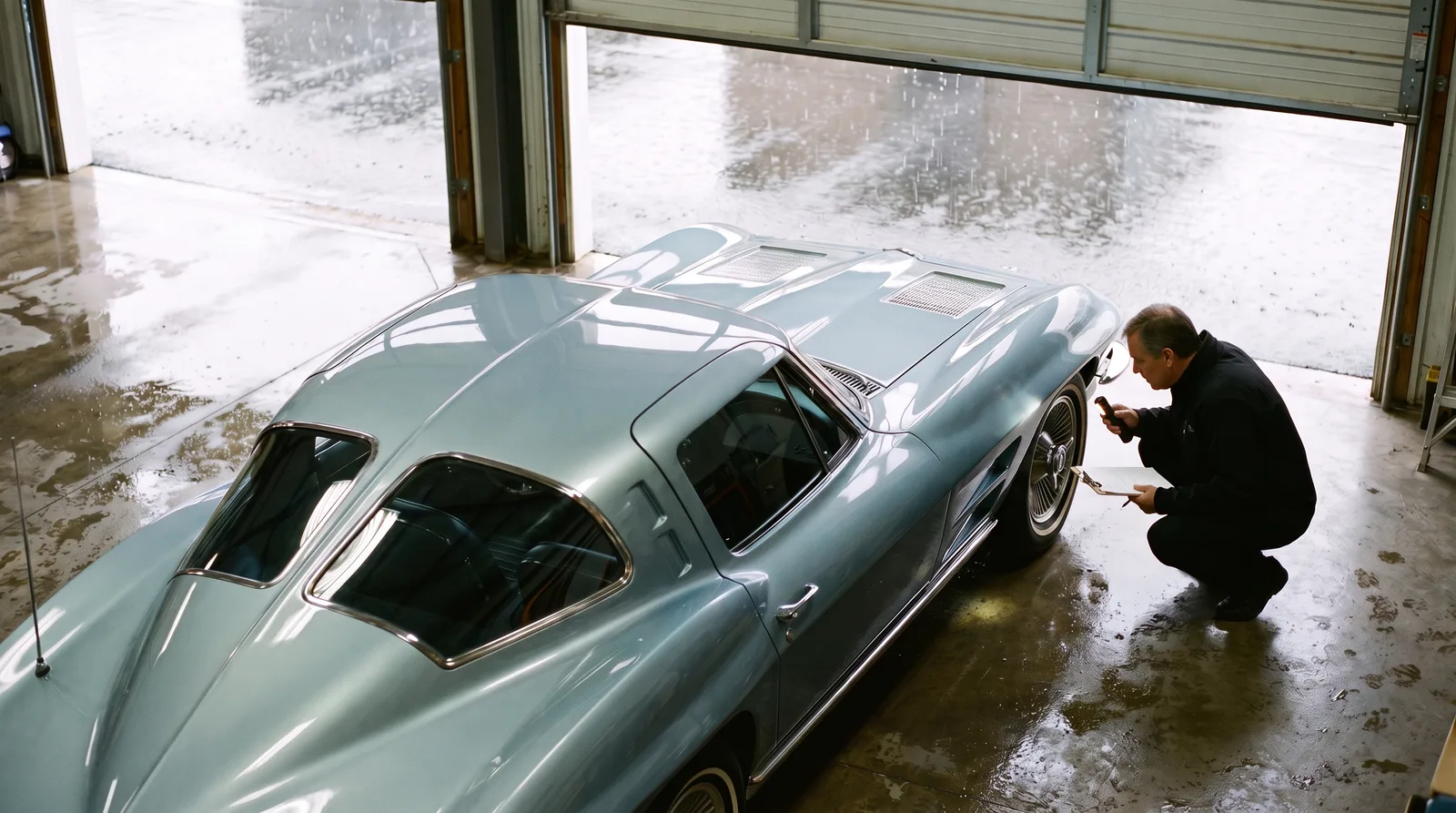
Three systems matter most to American owners: AACA, NCRS, and the concours d'elegance. They look alike from the rope line and score very differently. Here is how each one works, and how the deductions pile up.
Two philosophies: originality and elegance
The big split is between judging against a factory standard and judging as a piece of automotive art. AACA and NCRS lean on the first. They ask what left the factory, and how closely the car matches it. A concours d'elegance leans on the second. It asks whether the car is correct, authentic and beautifully presented, often against a historical or period standard rather than a factory checklist.
That difference changes what costs you points. At a factory-standard event, a repaint in the correct original color but with a modern paint system might cost you. At a d'elegance, the same finish may be fine if it is correct in appearance and flawlessly executed, while an inaccurate period detail will hurt more. Know which event you are entering before you detail a single thing.
How AACA judging works
The Antique Automobile Club of America runs a point-based system where cars are scored on a 400 point scale: every car starts with 400 and the judging team deducts points from there. Teams of judges look at areas such as the body, interior, engine and chassis, and deductions are taken for incorrect, missing or poorly finished items, each with a point value set by the guidelines.
AACA also uses a graded structure. A car is first judged for a Junior award, which requires deductions of 35 points or fewer. After that it moves to the Senior category, which requires fewer than 25 points of deduction, and Senior cars can then be shown in the preservation class and at the Grand National show, where the bar is higher still. Many owners treat the progression as the point of the exercise, because it rewards a car that stays correct over years instead of one that peaks for a single show.
How NCRS judging works
The National Corvette Restorers Society judges Corvettes against factory assembly details, down to the specific finish on a bolt and the exact color of a daubed paint mark. The system is built around the idea that a car should look the way it did when it left the factory, and judges work from detailed judging manuals for each model year. NCRS calls its main system flight judging: a car is scored against the standard rather than against other cars, from a 4,500 point base. A score of 94 percent or better earns Top Flight, 85 to 93.9 percent Second Flight, and 75 to 84.9 percent Third Flight. NCRS also runs a Driver Judged option for cars that are driven, with different expectations from a fully judged car.
This is documentation territory. Tank stickers, build records and period photographs matter, because a judge can only credit what is correct and proven. Owners who show a binder of references usually settle disputes on the spot. If you have your eye on one of these cars, browsing NCRS-judged Corvettes shows how much the certification process shapes what the market asks for, and the piece on what the Bloomington Gold and NCRS certifications mean for buyers goes into the buyer side.
How a concours d'elegance differs
A concours d'elegance is invitational and selective, usually run with class judging. At Pebble Beach, for example, class judges who are experts on a marque examine each car for authenticity and correct restoration, and a car starts from 100 points with deductions for each flaw. Other judges weigh design, styling and elegance. The public mostly sees class awards and a Best of Show, which is chosen from the class winners.
Pre-war cars, coachbuilt cars and one-off bodies get evaluated against period standards. Reproduction shortcuts that a point system might forgive can be a problem here if they are visible or inauthentic. The unforgivable offenses tend to be the same everywhere: dirt, leaks, mismatched finishes, and signs of a car that was built for the show instead of the road it was meant for.
| System | What it judges | How points are lost |
|---|---|---|
| AACA | Authenticity and condition, starting from 400 points | Incorrect, missing or poorly finished items by category |
| NCRS | Factory correctness for Corvettes, by model year | Wrong fasteners, finishes, markings, hoses and decals |
| Concours d'elegance | Authenticity, design integrity, presentation | Inaccuracy, visible shortcuts, poor finish or condition |
Where points actually disappear
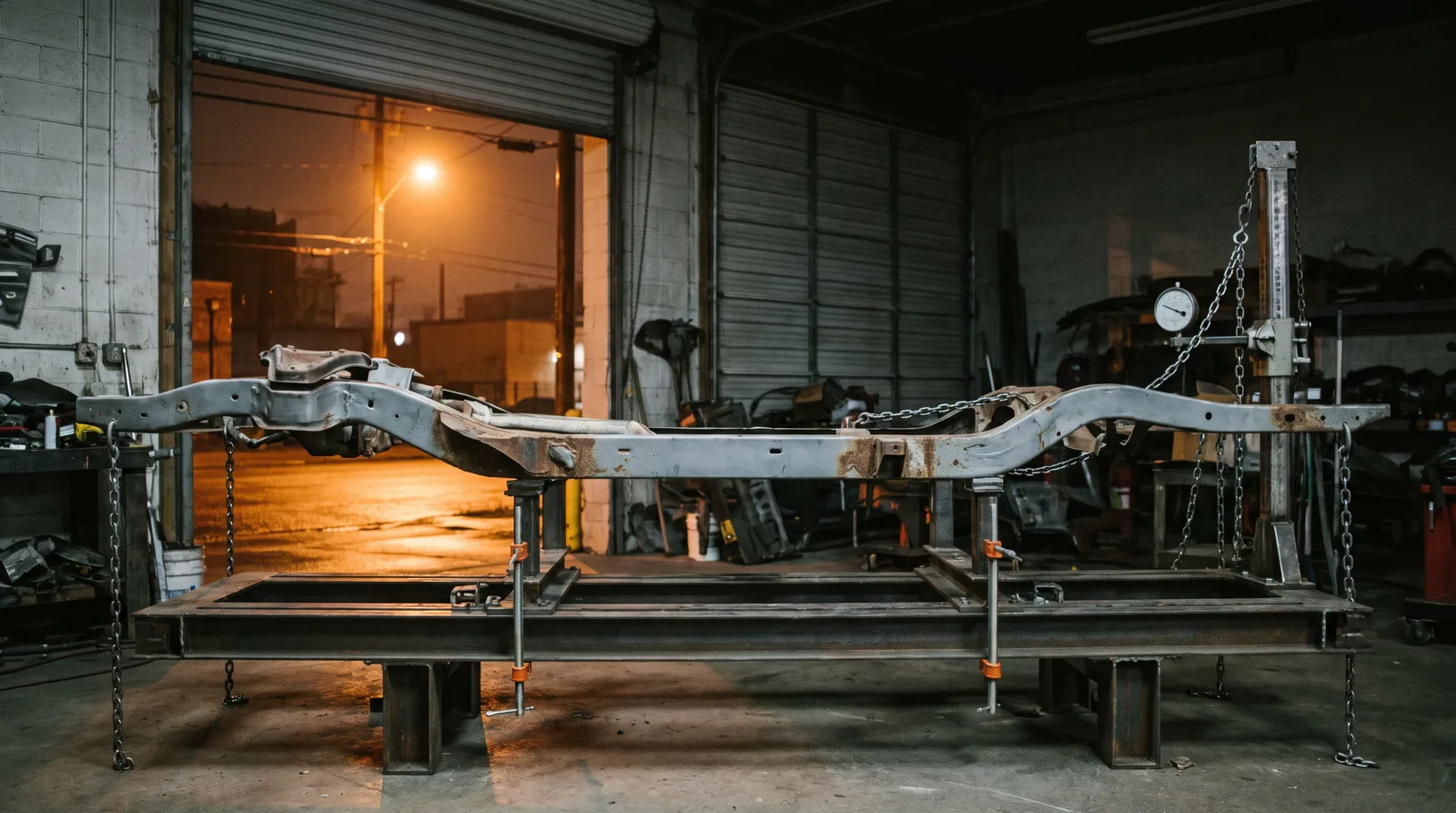
Most deductions are small, and they stack. Common ones include incorrect hose clamps, replacement decals, wrong battery cables, modern hardware, over-restored finishes, incorrect tires, and missing factory markings. Under the car, a clean frame with the wrong finish costs as much as a dirty one. Paint and metal quality get scrutinized, and uneven gaps or wavy panels draw deductions, which is why structural preparation matters. If the foundation is off, no amount of detail work hides it, and any frame repair has to be done before anything is judged.
Over-restoration cuts both ways. A car that is shinier than it was when new can lose points at a factory-standard event. Judges are looking for what the plant produced, with the plant's imperfections where those were original. Documentation is the answer, because a judge who sees proof usually gives the benefit of the doubt.
Preparing a car for judging
Pick the event and the class first, then study the judging guide for that year and model. Build a binder with every reference you have: original documents, factory photos, receipts, period brochures. Tour the car with a judge's eye, and ideally with a friend who knows the standard and will say what they see.
The work itself runs through a shop, a skilled volunteer, or both. If the restoration is not done yet, choose one of the concours-level restoration shops that works to a specific judging standard and ask which events their finished cars have scored at. And decide early how deep the restoration goes, because the concours restoration levels are not interchangeable with a good driver build.
"Nobody argues with a tank sticker. Bring the paper, and half the debate is over before the judge opens the hood."
Wayne Coburn
The bottom line
Judging rewards correctness, proof and discipline. Choose the system that fits the car, learn its rules, and prepare against the sheet instead of against your own taste. The score will tell you what the judges saw. The binder tells them why they should believe you.
Sources and notes
- AACA Concourse Judging (Crosley Automobile Club guide), 400 point start, Junior at 35 or fewer deduction points, Senior under 25, Grand National
- Old Cars Weekly, Q&A with Kit Foster, AACA uses 400 point scoring
- NCRS judging awards, 4,500 points and Top, Second and Third Flight percentages
- National Corvette Restorers Society, flight judging against how cars left the factory, not a cleanliness contest
- Old Cars Weekly, how cars are judged at Pebble Beach, class judges, 100 point deductions, Best of Show from class winners
- Concours d'Elegance (Wikipedia), general judging standards and condition expectations
Related Reading
Have a
Classic Car
for Sale?
Reach thousands of serious classic car collectors across the US.
Sell It Here →
Selling a classic? Here's how: sell my classic car
Are You a Classic Car Dealer?
List your full inventory and connect with targeted classic car buyers.
Join as a Dealer →

About the author
Wayne Coburn
Longtime Corvette owner, judge and club figure who knows the cars, the records and the people behind them.
More in Restoration & Tech



Comments
Be the first to comment on this article.