
A pickup is not a car with a bed bolted on. I say that because I have seen owners hand a truck to a shop that builds beautiful sedans and get a very pretty, very wrong result. Trucks were built as tools, with different frames, different sheet metal, different cabs, and a parts supply that follows its own rules. The shop you want is the one that already knows all that.
Restoration & Tech
6 min read
Restoring a Classic Truck: Finding a Shop That Knows Pickups
A pickup is not a car with a bed. Here is what a classic truck restoration shop should know about frames, cabs, parts and honest estimates, and what to ask before you hire one.
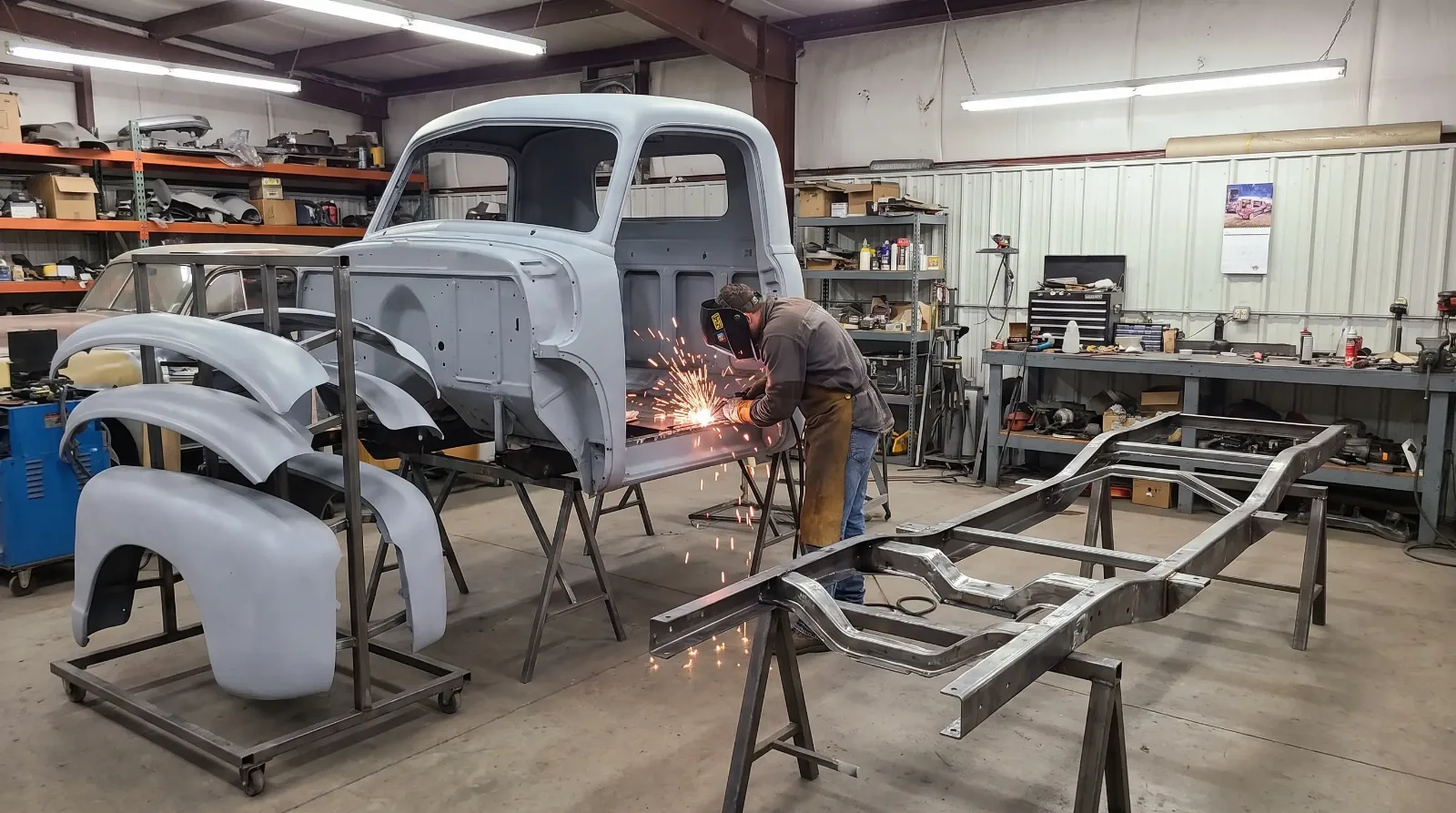
If you are starting the search, truck restoration shops near you is a fair place to begin, but you will need to know what to ask once you have the list.
What a truck specialist knows that a car shop may not
Start with the frame. Most classic pickups ride on a separate ladder frame, and the condition of that frame, especially on a truck that worked for a living, decides the whole job. A shop that handles trucks regularly knows where cracks hide, how a ranch truck gets its frame abused, and when to repair versus replace. It also knows the cab and bed are separate assemblies that can be treated separately, which changes how the work is scheduled.
Next is parts. Reproduction support for popular pickups from the 1960s through the 1980s is better than many people expect, but it is uneven by model and year. A truck shop knows which panels are available, which are fitted well, and which require work before they go on. It also knows where to find used cab corners, floor sections, and bed parts, because those are the rust areas that matter. The same shop will know the difference between an original piece and a pattern part, which matters if you plan to be judged.
| Truck item | What to ask the shop | Why it matters |
|---|---|---|
| Frame | How do you check and straighten it? | A bent or cracked frame spoils alignment and fit |
| Cab corners and floors | Do you repair or replace? | Common rust areas on many pickups |
| Bed | Is the wood or steel floor original type? | Affects authenticity and cost |
| Drivetrain | What have you rebuilt on this model? | Parts and rebuild knowledge differ from cars |
| Paint | Single stage or base clear? | Period correct finish may be required |
Frame off versus a lighter approach
Many pickups are good candidates for a full tear down because the body and frame separate neatly. Doing frame-off on a pickup means media blasting the frame, replacing worn bushings, and rebuilding the running gear before the cab goes back on. On a truck with a sound frame and a tired cab, a lighter approach may be smarter and cheaper. A good shop will help you decide instead of selling you the biggest job.
Be honest with yourself about the finished purpose. A farm truck that you want to drive to the lumber yard does not need the same restoration as one headed to a judged show. Some of the best trucks I have seen are preserved with their original character kept intact, and an honest shop will tell you when patina is the better choice.
Questions to ask a shop about trucks
Ask how many pickups the shop has finished and whether they have done your model. Ask to see one. Ask who does the metalwork on a cab and whether those are the same people who do the paint. Ask how they handle a frame that turns out worse than expected, and whether they will bring you in before they replace it. Then ask for references from truck owners, not car owners.
Price is part of the conversation, and I will not pretend otherwise. A full restoration can cost more than the finished truck is worth on the open market, and that is true of plenty of cars, too. Get a written estimate with a range, understand what is excluded, and decide with eyes open. If you are still shopping for the right project, browsing classic trucks for sale can help you find one with a better starting point than the one you have.
"A truck that worked hard tells you what it went through. A good shop reads that and quotes the job you actually have, not the one in the brochure."
Robert Halloran
Parts support and budget reality
Ask the shop where it sources sheet metal, trim, and mechanical parts for your truck, and how it handles items that cannot be found. Some trucks need a donor cab or a fabricated panel. Some need machine work that a general shop will farm out. Know in advance which parts are on the shop's side and which you are expected to provide, and write it down. A rough budget range for your specific truck, with a line for unknowns, is the honest way to start. Anyone who gives you a single number before looking at the frame is guessing.
Distance and logistics
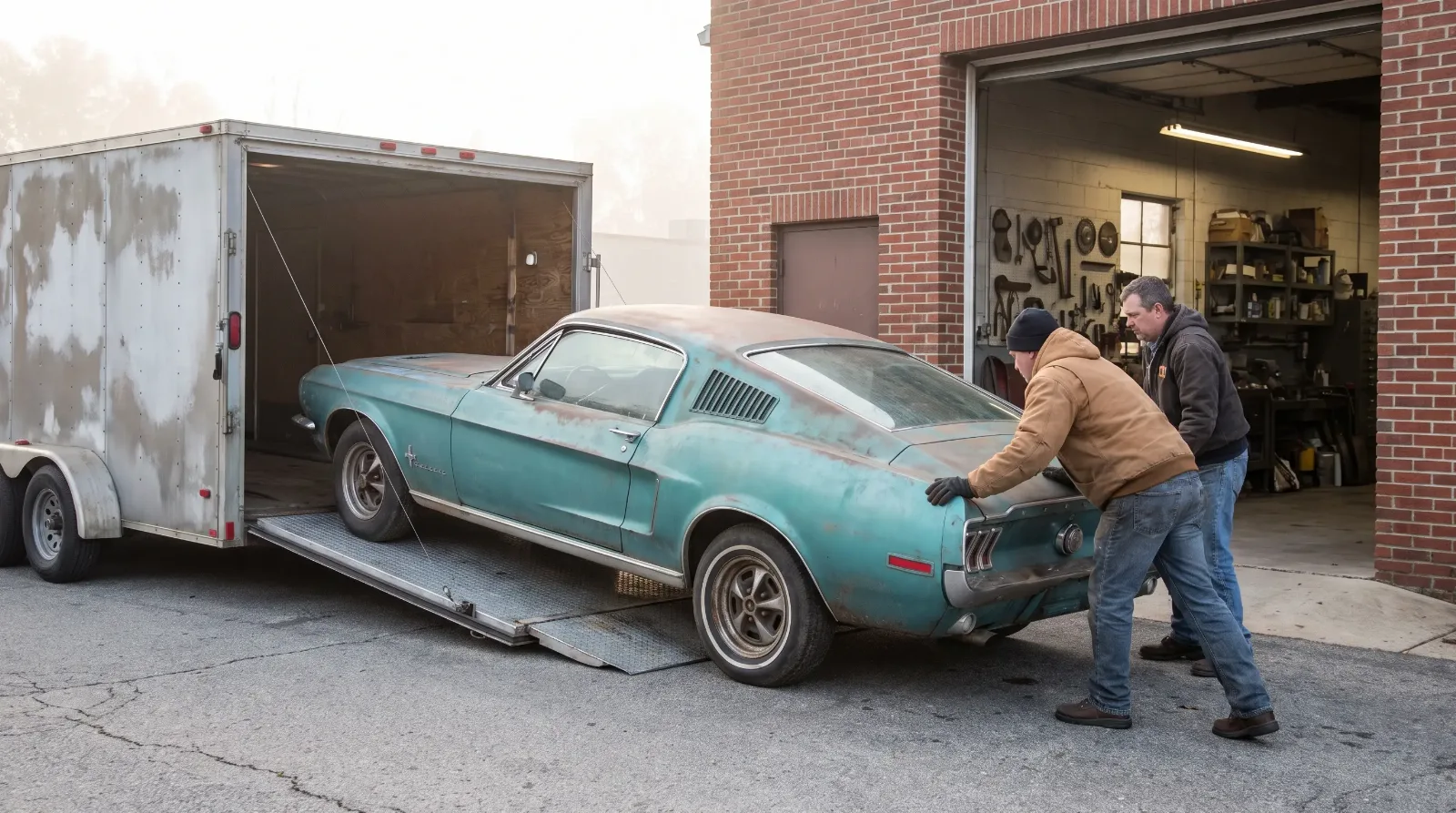
The right shop may not be in your state. Truck specialists are scattered, and it is common to ship a pickup a long way to reach one. Factor that into the budget: transport, insurance, and the cost of visiting. Our guide on shipping to an out-of-state shop covers the details, and most of it applies to a truck, though you should confirm the carrier can handle the size and weight.
If you are new to the whole idea, start with the overview in our beginner guide to restoring a classic truck and then come back here with a clearer sense of what you need. And when you are ready to compare shops across all vehicle types, the general process is in the general shop guide.
A truck deserves a shop that treats it as a truck. Find one that does, and the rest of the project gets a lot easier.
Sources and notes
- Chevrolet Advance Design, Wikipedia, 1947 to 1955 production and cab interchange across weight classes
- Chevrolet C/K, Wikipedia, 1967 to 1972 generation kept the ladder frame with a redesigned body
- Ford F-Series, fourth generation, Wikipedia, new frame for 1965 used through 1979
- Are any cars still made with body-on-frame? SlashGear, body-on-frame construction surviving in pickups and SUVs
- Specialist versus general restoration shops, ClassicCars.com Journal, marque specialists for exceptional cars, general shops for standard models
- Tips for finding the right restoration shop, All Chevy Performance, visiting the shop, inspecting current projects, staff turnover, in-house versus outsourced work
Related Reading
Have a
Classic Car
for Sale?
Reach thousands of serious classic car collectors across the US.
Sell It Here →
Selling a classic? Here's how: the best sites to sell a classic car
Are You a Classic Car Dealer?
List your full inventory and connect with targeted classic car buyers.
Join as a Dealer →

About the author
Robert Halloran
Texas-based classic truck enthusiast with decades of experience buying, restoring, and writing about American pickups from the 1940s through the 1980s.
More in Restoration & Tech
Comments
Be the first to comment on this article.