
Most of the best restoration work is not close to where the owner lives. A shop with the right specialty might be a thousand miles away, and the car has to get there in one piece. How you handle that trip matters more than most owners think, because a car that is damaged in transit starts the project behind.
Restoration & Tech
7 min read
Shipping Your Car to an Out-of-State Restoration Shop
How to ship a classic car to an out-of-state restoration shop: enclosed versus open transport, vetting carriers, insurance, preparation, and the bill of lading.
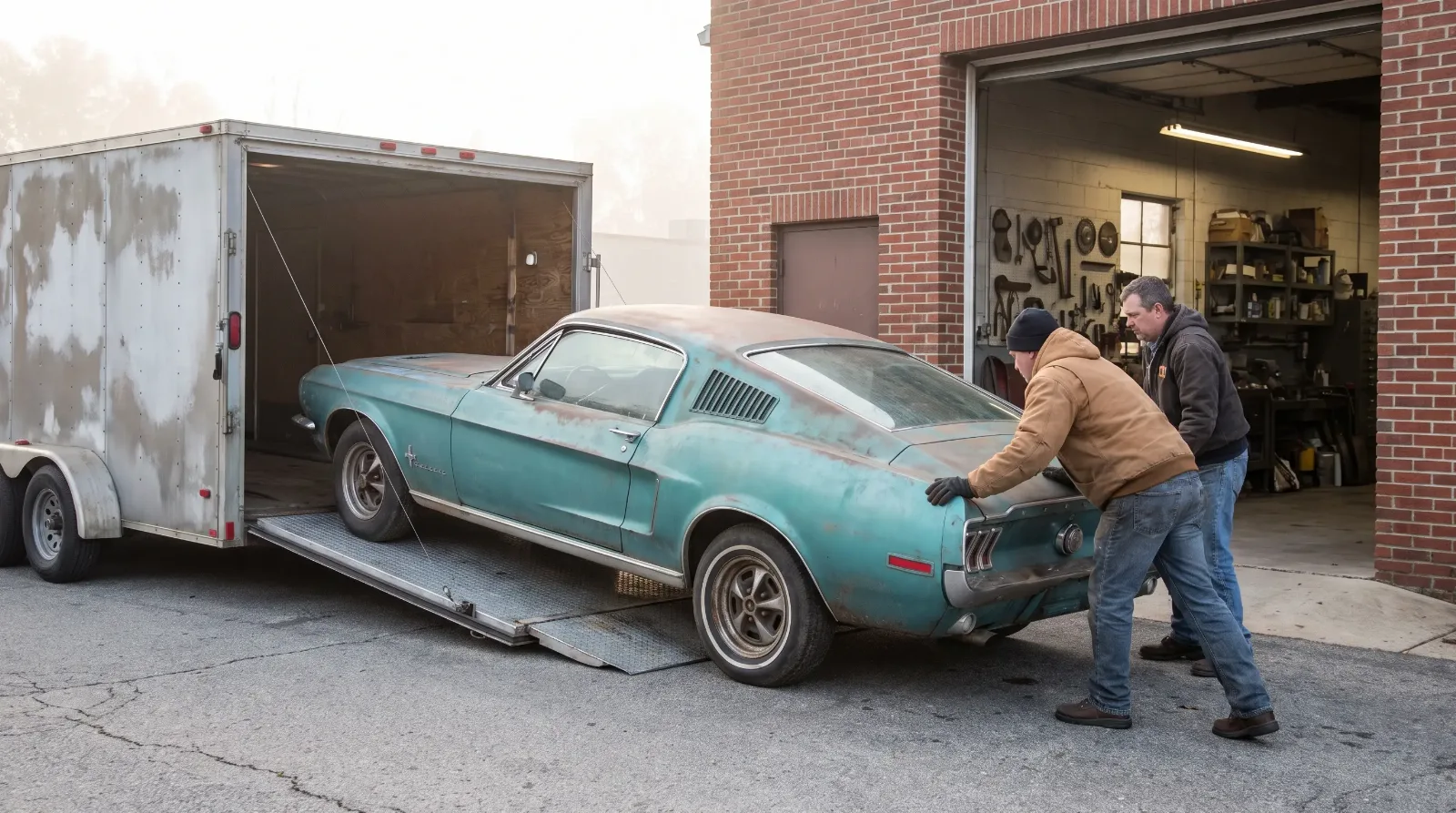
The good news is that this is a solved problem, with sensible choices and a few traps. If you are weighing shops across the country, plan on shipping and treat it as part of the budget from the start.
Enclosed or open transport
For a classic car, enclosed transport is the usual recommendation. The trailer protects the car from road debris, weather, and the wandering eyes of people who might want to look at it. Open carriers cost less, and many cars travel that way without trouble, but a car with exposed bare metal, a fragile finish, or a low front air dam is a better fit for an enclosed trailer. A car headed to a restoration is often partly disassembled or not running, which changes the picture further.
| Option | Typical advantage | Typical drawback |
|---|---|---|
| Open carrier | Lower price, more availability | Exposed to weather and debris |
| Enclosed carrier | Protection, privacy, often more care | Higher price, fewer trucks |
| Dedicated or soft sided hauler | Fewer cars on the load | Highest price, scheduling limits |
Prices vary with distance, season, and the route, so get several quotes and read them closely. Carrier guides commonly put the enclosed premium somewhere around 15 to 50 percent over open, depending on the car and the distance, and expect rates to change from one year to the next.
Vetting the carrier
Do not choose on price alone. Confirm the carrier's registration with the Federal Motor Carrier Safety Administration, and ask for proof of insurance. The FMCSA's public records let you check whether a carrier's authority is active before you pay anything, and the broker you book with may not be the carrier that actually hauls the car, so check both. Ask what the policy covers, what the deductible is, and whether it applies to a classic that has an agreed value. A carrier's insurance may be limited, and your own policy may or may not cover a car in transit, so call your insurer before the truck arrives.
Ask the carrier how many cars are on the trailer, whether it has a lift gate or ramps suited to a low car, and how they handle a car that does not run. Look at reviews, but read the negative ones for patterns. A single bad experience is noise, and a repeated one is a signal.
Insurance in transit and at the shop
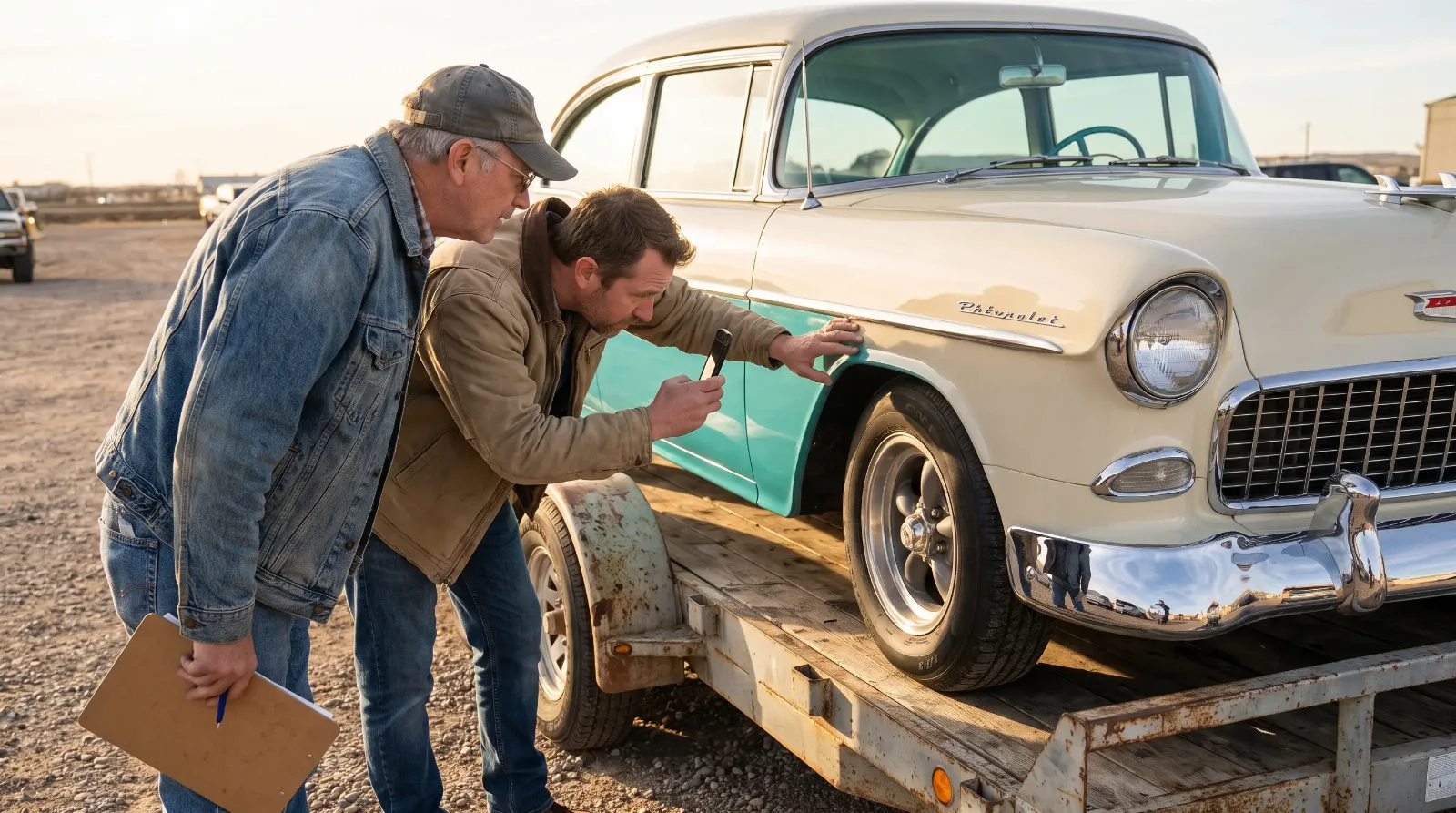
Insurance deserves its own call. Ask your agent whether your collector policy covers the car while it is on a carrier, and while it sits at the shop with parts removed. Some policies treat a car in a restoration differently from one that is complete, and some insurers offer separate coverage for a car under restoration. Ask the shop for its garage keepers coverage and get a certificate, so you know what protects the car if there is a fire, a theft, or vandalism. Collision is often an optional part of that coverage, so ask whether it is included. Do this before the car moves, not after something goes wrong.
Preparing the car
Photograph every panel, and record the odometer and fuel level. Remove loose items, and tell the carrier about any quirk: a hood latch that sticks, a hard to find tow point, a clutch that does not release. Leave about a quarter of a tank of fuel, which is a common carrier request. Disable the alarm if there is one, and give the driver a key.
If the car does not run, say so up front. Non running cars need winching, and some carriers charge extra or will not take them. Check that the tires hold air and the brakes release, or the loading will be harder than anyone expected.
At pickup and delivery
Be there, or send someone who knows the car. Walk around it with the driver, note any existing damage on the bill of lading, and get your copy. At delivery, do the same walk before you sign. Once you sign a clean report, any claim becomes much harder. If the car goes straight to a shop, make sure the shop is expecting the truck, has someone to receive it, and has agreed to inspect it on arrival and report any damage.
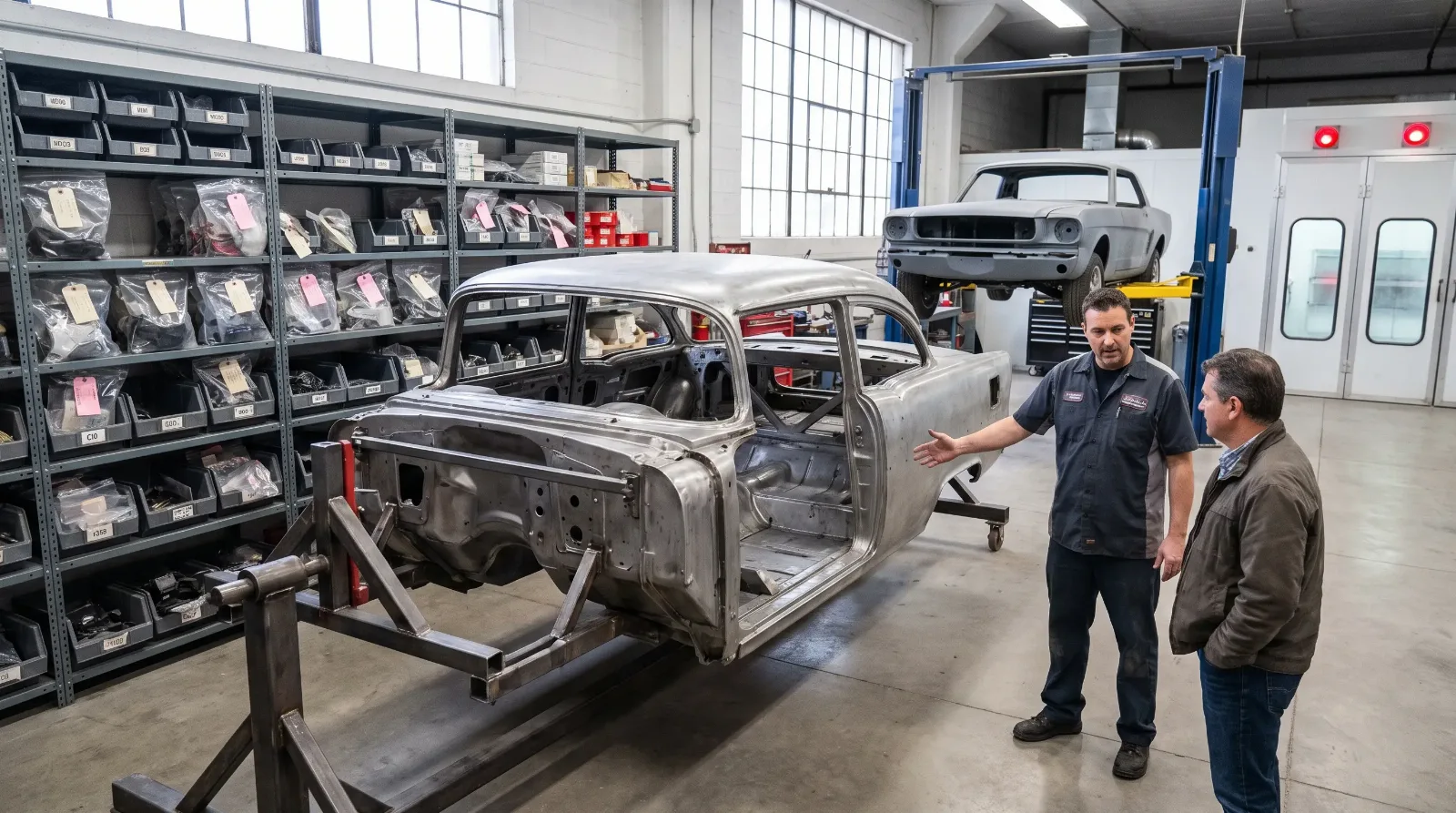
That last point ties into the broader process of selecting a restoration shop. A shop used to out of state customers will have a procedure for receiving cars and a list of carriers it trusts, and the best ones will share it.
"Pay for the better trailer once and you save yourself the argument about whose fault a scratch is. The cheapest quote is rarely the cheapest trip."
David Mercer
Timing and scheduling the move
Carriers rarely pick up on the exact day you request. Most quote a pickup window of several days, and a classic that is not running can add delay if the driver has to arrange a winch. Coordinate the arrival with the shop so the car does not land before anyone can receive it, and so it is not left outside overnight. Winter routes may be slower because of weather, and summer is peak season for auto transport. Booking two to four weeks ahead in the off season, and longer in summer, usually gives you more choice of carrier and a firmer date.
Budgeting and related checks
Add transport both ways to your estimate, along with insurance and your own travel for site visits. On a long project you may want to see the car in person at key stages, and that is a real cost. Compare it against the savings or quality gain of the distant shop to see whether the numbers still work.
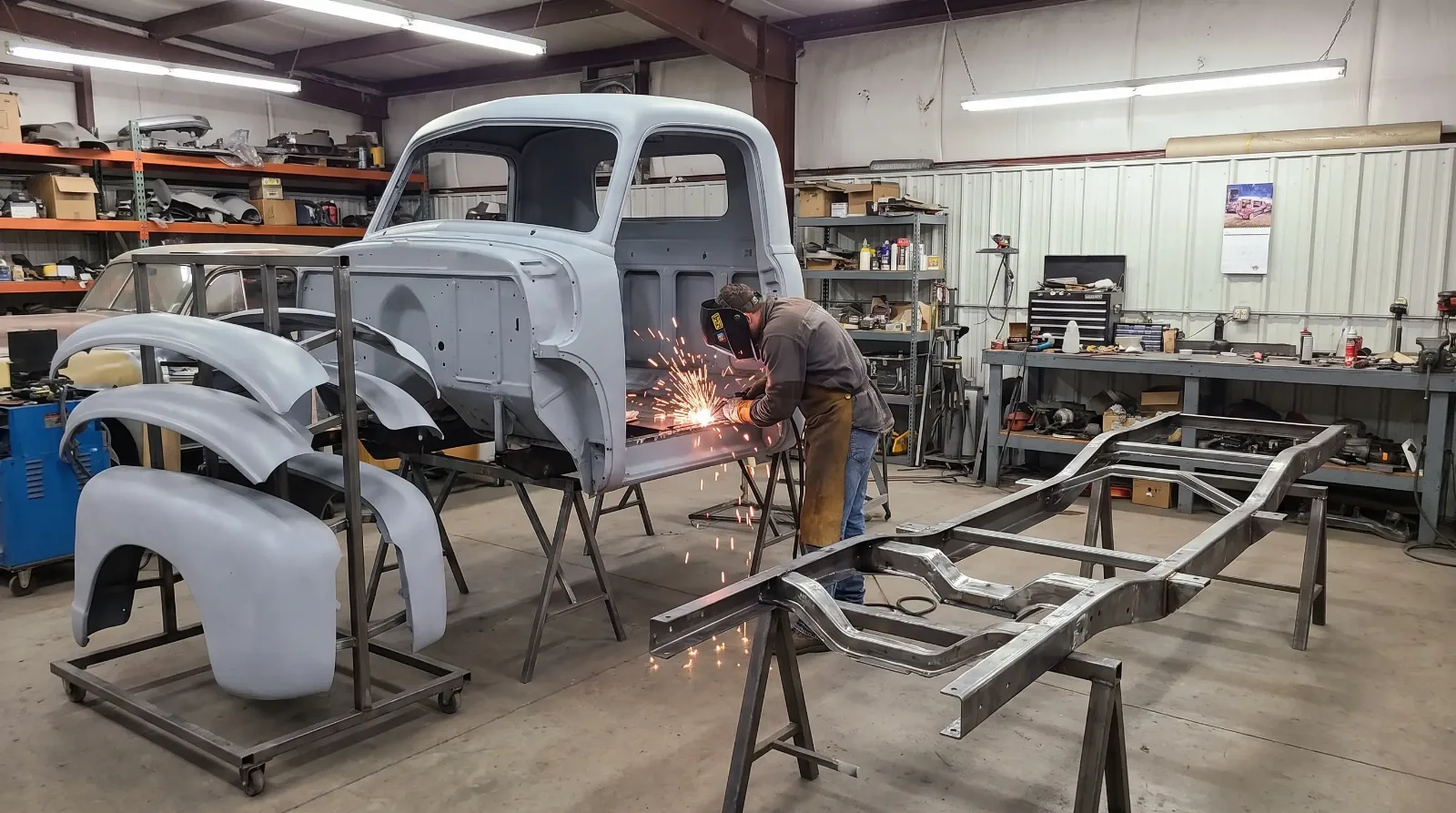
Also ask the shop who will actually be doing the work. A shop's name matters less than the hands on the car, which is why it is worth reading up on technician training before you commit. A long haul is only worth it if the people at the other end are right for the job.
Plan the trip like the rest of the project: in writing, with photographs, and with a clear idea of who is responsible at each step. Do that, and the transport leg is one of the easiest parts of the whole restoration.
Sources and notes
- Bekins: what to know before shipping your car cross-country, supports the quarter-tank fuel guidance, pickup windows, bill of lading, peak season and booking lead times
- Ship a Car Inc: open vs enclosed car shipping, supports the enclosed price premium and insurance differences
- Ship a Car Inc: verifying USDOT and MC numbers, supports checking a carrier's FMCSA record and the broker versus carrier distinction
- Hagerty classic car insurance, supports the existence of coverage for a car under restoration
- Alkeme: garage keepers insurance explained, supports fire, theft and vandalism coverage with collision depending on the form
Related Reading
Have a
Classic Car
for Sale?
Reach thousands of serious classic car collectors across the US.
Sell It Here →
Selling a classic? Here's how: sell my classic car
Are You a Classic Car Dealer?
List your full inventory and connect with targeted classic car buyers.
Join as a Dealer →

About the author
David Mercer
Classic car market analyst with two decades of experience tracking collector car valuations, auction results, and investment trends.
More in Restoration & Tech
Comments
Be the first to comment on this article.