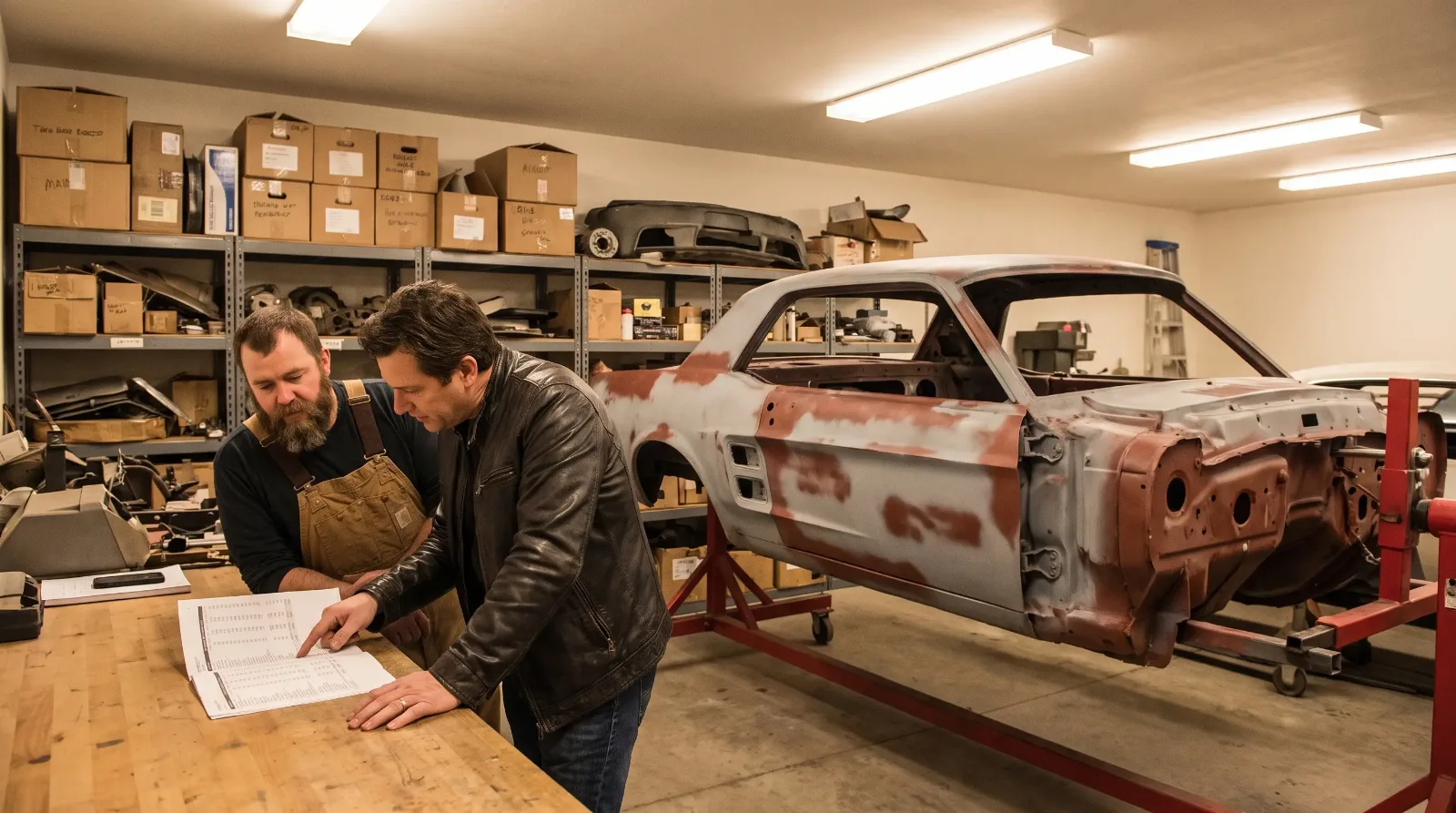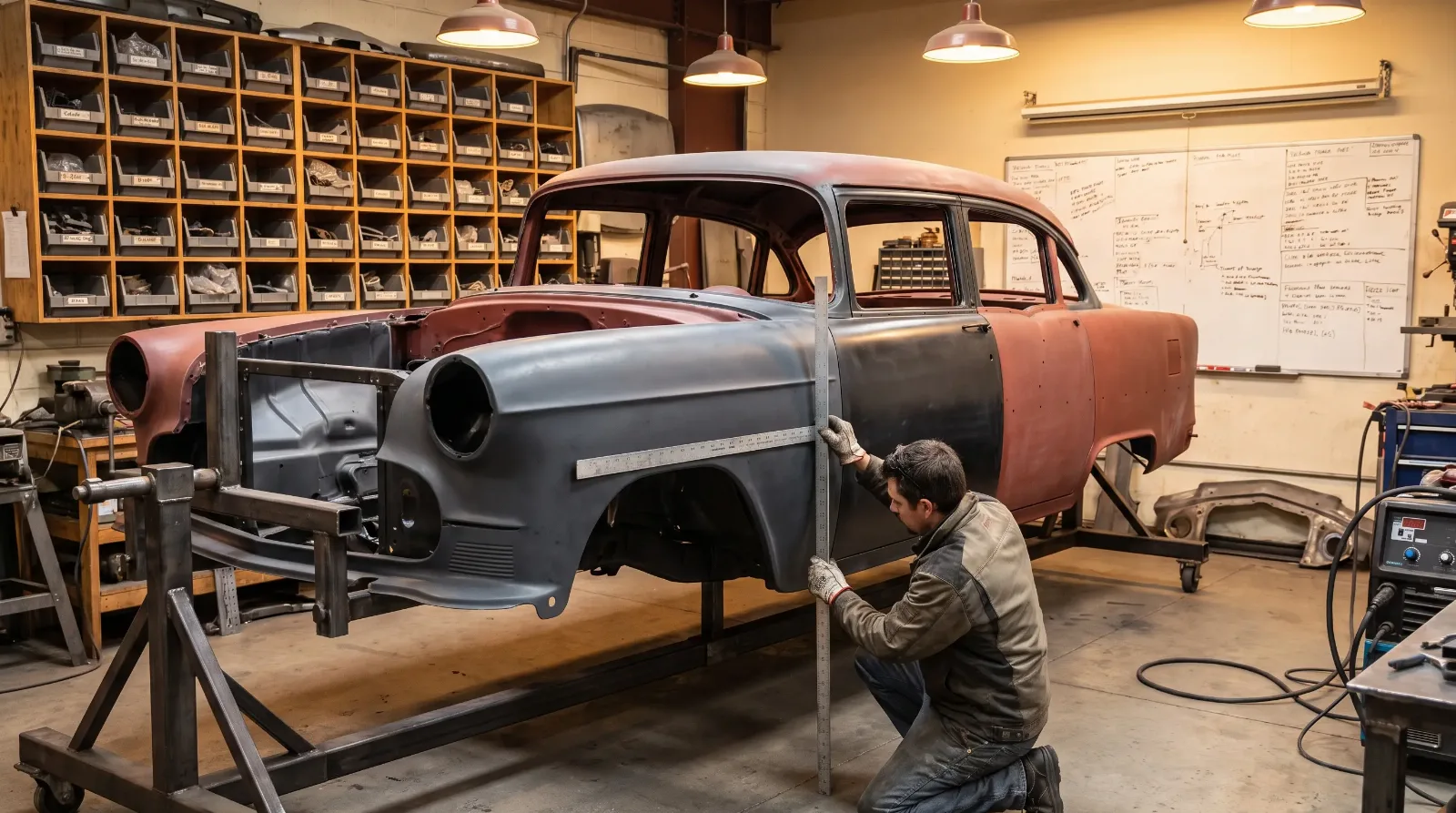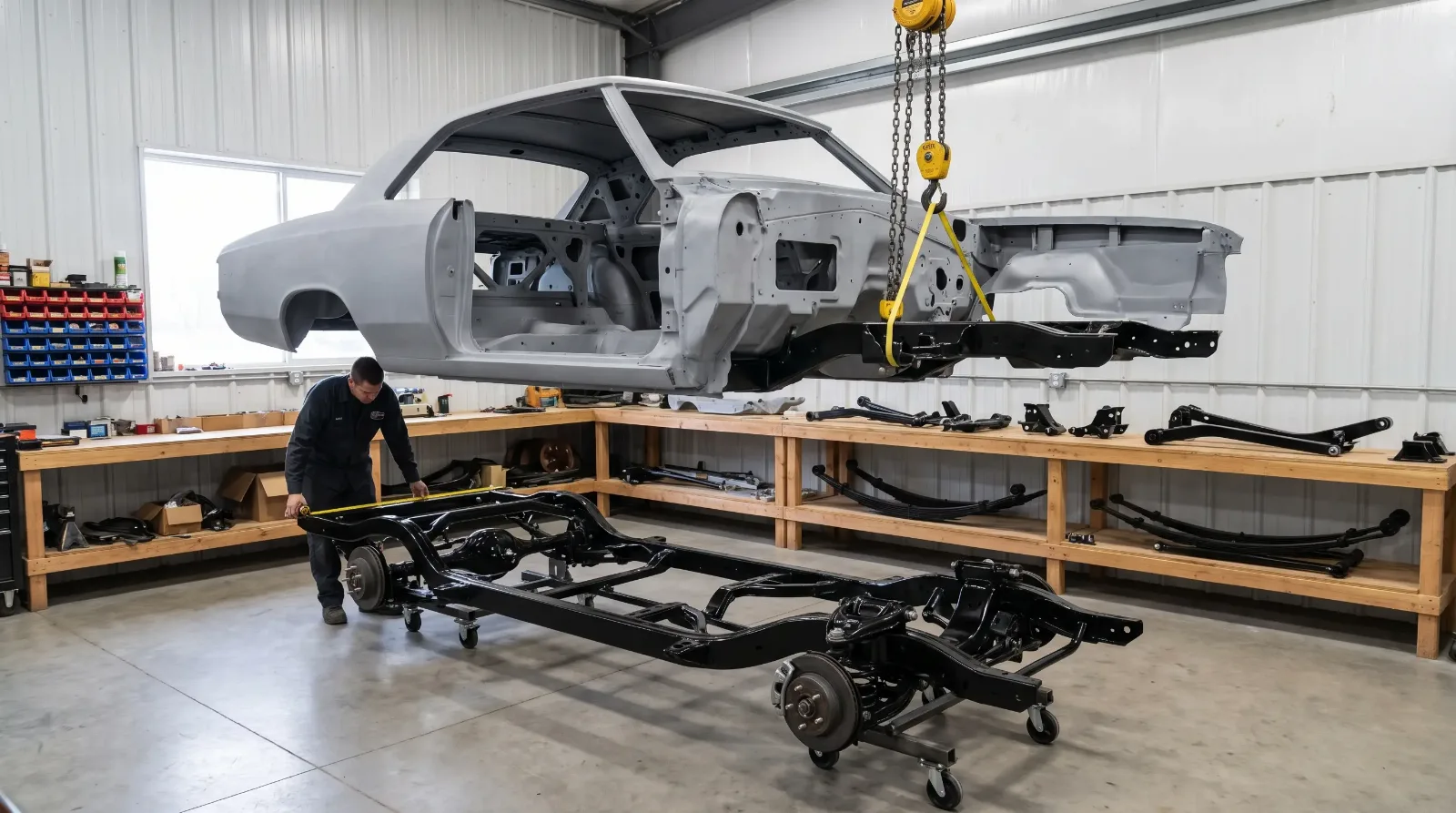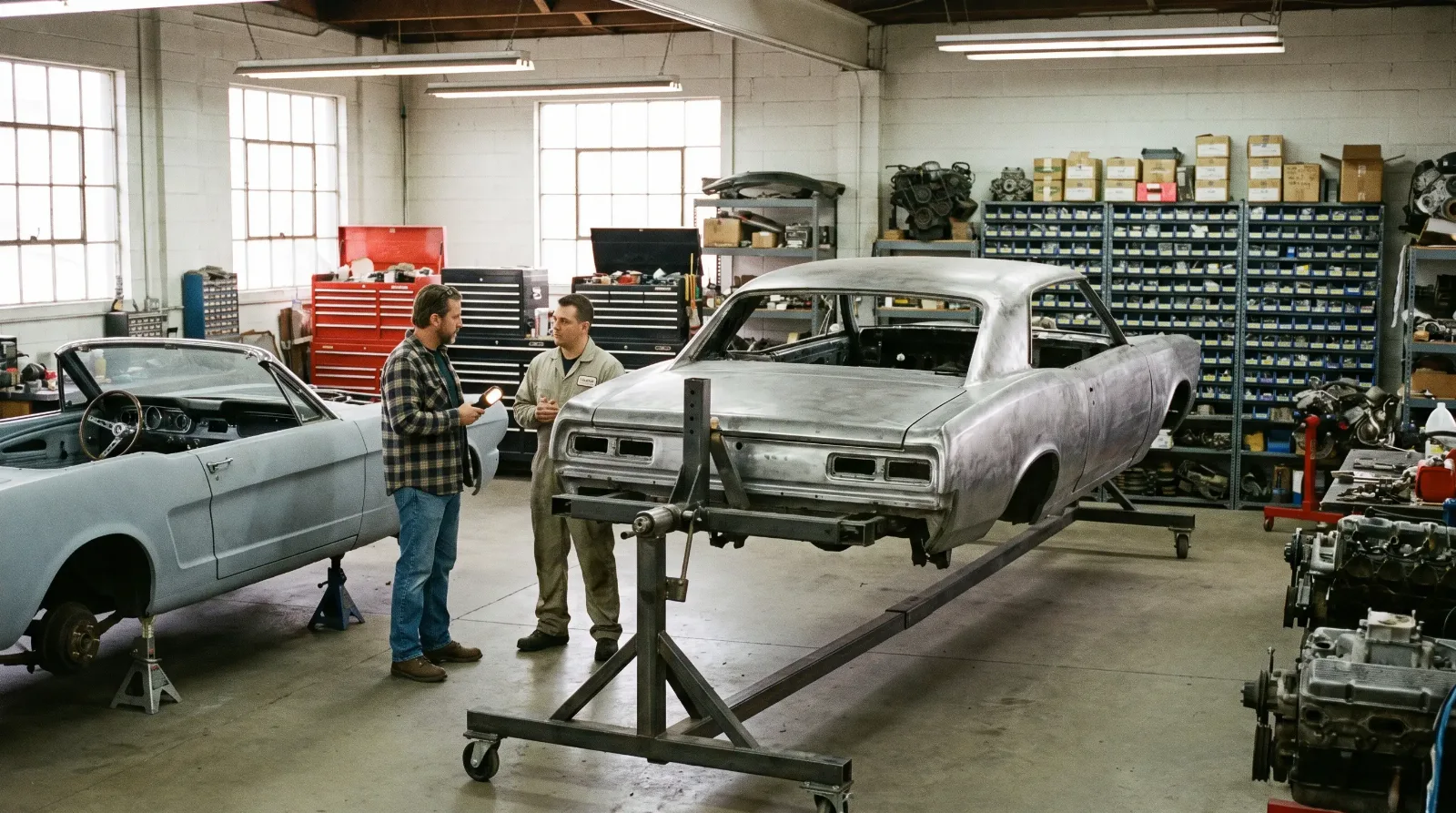
Rust is the line item that decides whether a project car is a bargain or a lesson. A car that is cheap to buy because it is rusty is only cheap if the metal repair costs less than the discount, and that calculation is where most buyers get it wrong. Here is what floor, rocker, quarter panel and frame repair costs in 2026, how the price moves with the repair method, and where the numbers stop making sense.
Why rust cost is hard to quote
Metalwork is billed by the hour, and the hours depend on what is behind the visible damage. A bubble in a quarter panel is usually the surface of a larger problem: corrosion starts inside seams, boxed sections and cavities, so the repair area you can see is a fraction of the area that needs attention. Shops therefore quote visible work and re-estimate after blasting or cutting. Treat any pre-strip figure as provisional. For how rust sits inside the broader budget, see restoration costs in 2026.
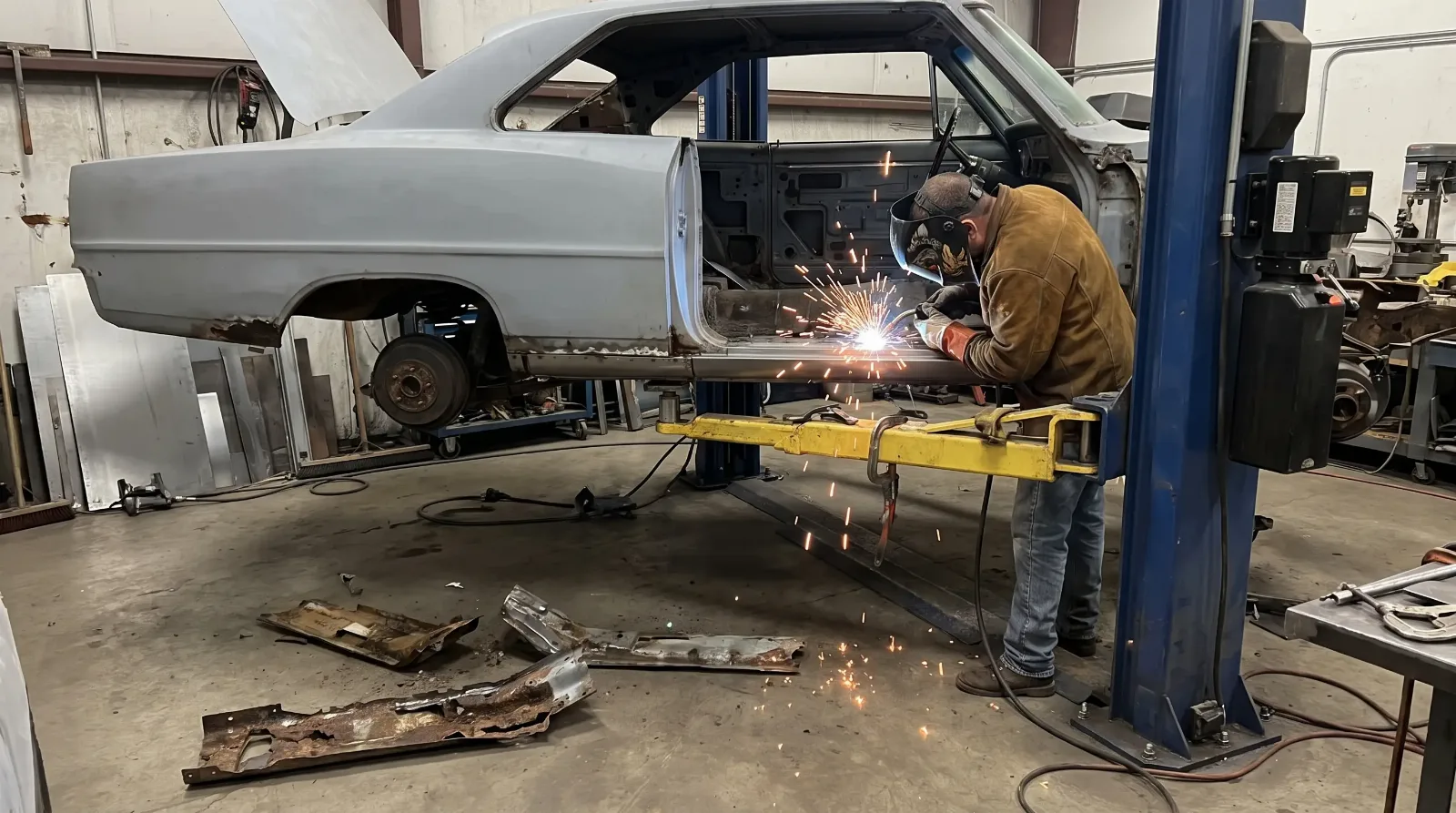
Two repair philosophies drive the price. Patch repair cuts out the bad metal and welds in fabricated sections, preserving original panels. Replacement uses a reproduction panel, which is faster when one is available and well made, and can be cheaper in labor but costs more in parts and in fit-up time. Neither is always right, and a good shop will explain which it prefers and why.
What common repairs cost
There is no published price list for individual rust repairs, so the table below gives rough cost levels in words rather than dollar figures. They assume professional shop work at roughly $85 to $150 an hour (about $125 typical, and $175 or more at concours and marque specialists), and they vary a great deal by model, panel availability and how far the corrosion has spread. For scale, teardown, blasting and rust repair together are usually budgeted at about $8,000 to $20,000 on a driver-level restoration and $20,000 to $50,000 or more at show level. Treat the table as a way to rank problems, not as a quote.
| Repair | Rough cost level | Notes |
|---|---|---|
| Floor pans (patch or full replacement) | Low to mid four figures | Full pans cost more if the body must be braced |
| Rocker panels and inner sills | Low to mid four figures per pair | Structural on unibody cars |
| Quarter panels (patch or replace) | Low to mid four figures per side, more if the inner wheelhouse is gone | Skin versus full panel changes labor |
| Trunk floor and drop-offs | A four-figure job in most cases | Often paired with rear frame rail work |
| Frame rail section or repair | Four figures for a section, can run well into five figures for heavy rot | Alignment and measurement add hours |
| Cowl and firewall area | Mid four figures and up, depending on hidden damage | Hard to access; often hidden damage |
Floors and rockers
Floors rust where water collects: under carpet, around seat mounts, along seams. A single pan is a modest job. The cost jumps when the damage reaches the inner rockers or the transmission tunnel, because those members tie the body together and the car often has to be supported while they are replaced. On unibody cars, rocker and floor repair is structural. Because a unibody body shell is the load-carrying structure, a poor repair here can affect stiffness and how the doors align, so cheap shortcuts cost more later.
Quarters, cowls and lower panels
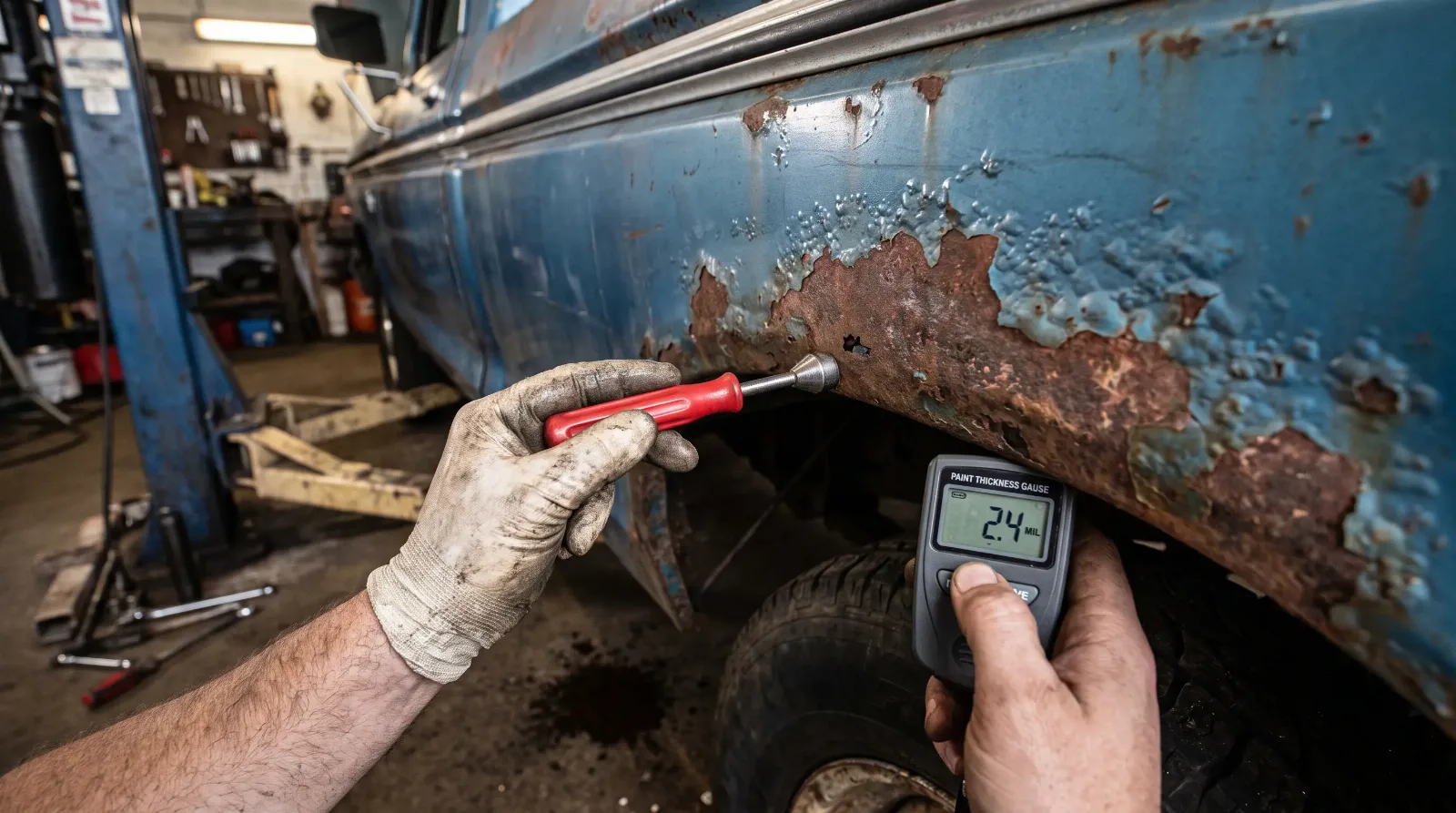
Quarter panels, rear wheel arches and lower fenders rust from the inside out. A repair panel is only as good as the metal it is welded to, and where the inner wheelhouse is gone the job grows. Cowl rust is the one that surprises people: leaks from the cowl vent area run down into the floor and firewall, and the work is awkward because everything is attached to it. These are also the areas where a shop's skill shows. Metal that is hammered and finished well needs little filler. Metal that is poorly fit needs a lot of it, which is a problem the paint will eventually reveal. Cost for the finish side is covered in our look at paint and bodywork.
Frames and structure
A body-on-frame car can hide serious corrosion in boxed rails, especially near the rear axle and behind the front wheels. Frame repair is priced on measurement and labor, and a bent or rotted frame requires a frame table to restore geometry. When the frame needs substantial work, the more sensible conversation is often a full separation of body and chassis, which is where the frame-off restoration cost comes into play. The jump in price is real, but the work is also more complete, and if the frame is already compromised it may be the cheaper path overall.
When rust repair stops making sense
Run the arithmetic before you buy, and keep in mind that restoration spending is rarely recouped at sale unless the car is rare and valuable. Add a 20 to 30 percent contingency to the metalwork estimate, since hidden rust is the usual cause of overruns. Take the asking price, add the estimated rust repair, then add paint and finish, mechanical work, and interior. Compare the total with what a sound, finished example sells for. If the gap is small, you are paying a premium for the privilege of doing the work, and you would do better to buy a good car. Rust repair makes sense when the model is rare, when the donor car is cheap, or when the car has documentation that a finished example would lack. For a candid breakdown of where the line falls, read our analysis of what is fixable and what is a money pit.
- Probe rockers, floors and seams with a magnet and a pick, not just your eyes.
- Look at the inside of the wheelhouses, the trunk floor and the cowl drains.
- Ask what percentage of the underside has been repaired and whether the repairs are visible.
- Price the repair before negotiating, and use the estimate as leverage.
"The cheapest rusty car is not the one with the lowest ask. It is the one where the metal repair can be bounded before you sign. Unknown rust is priced like it is the worst case, because eventually it is."
David Mercer
Buying a project with honest rust
The best project buys are the ones where the rust is disclosed, photographed and understood: surface corrosion in the lower panels, a clean frame, and a seller who has not covered anything up. If you want to see what that looks like in practice, browse project cars with honest rust and bring an inspection list. A project that arrives with documented rust and a fair price leaves room in the budget for the repair. A project with hidden rust and a high price leaves room for regret.
Sources and notes
- Classic Industries: car rust repair and auto body panels, supports the patch panel versus full replacement panel guidance and the surface, moderate and severe rust tiers
- Hagerty: how much does it cost to restore a classic car, supports hidden rust surprises at teardown, budget contingency and the point that restoration is rarely recouped
- Wikipedia: Rust, supports why rust keeps spreading under its own layer and why moisture, road salt and crevices speed it up
- Wikipedia: Unibody, supports the point that a unibody shell is the load-carrying structure of the car
- Wikipedia: Vehicle frame, supports the body-on-frame and boxed rail construction described in the frames section