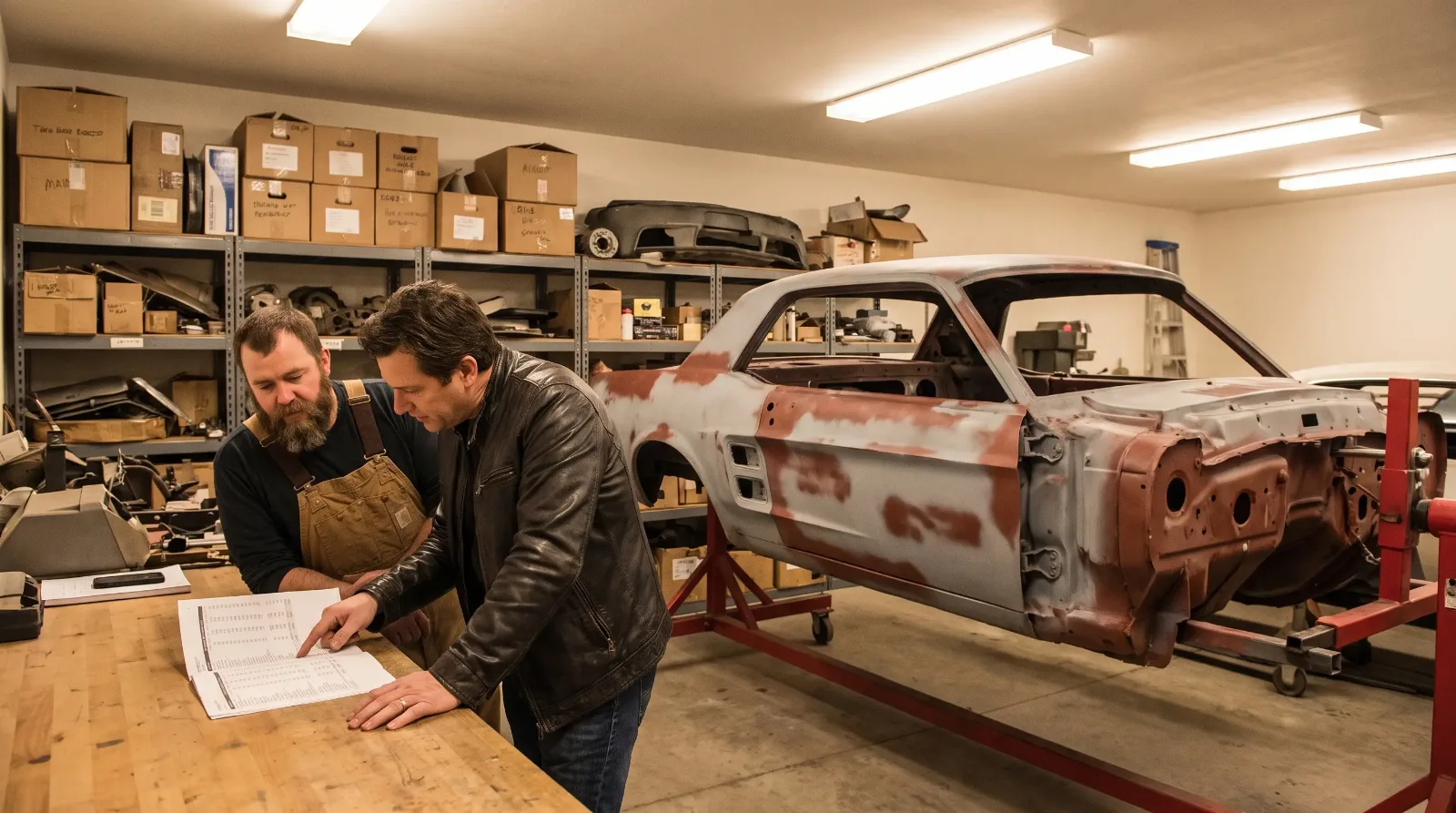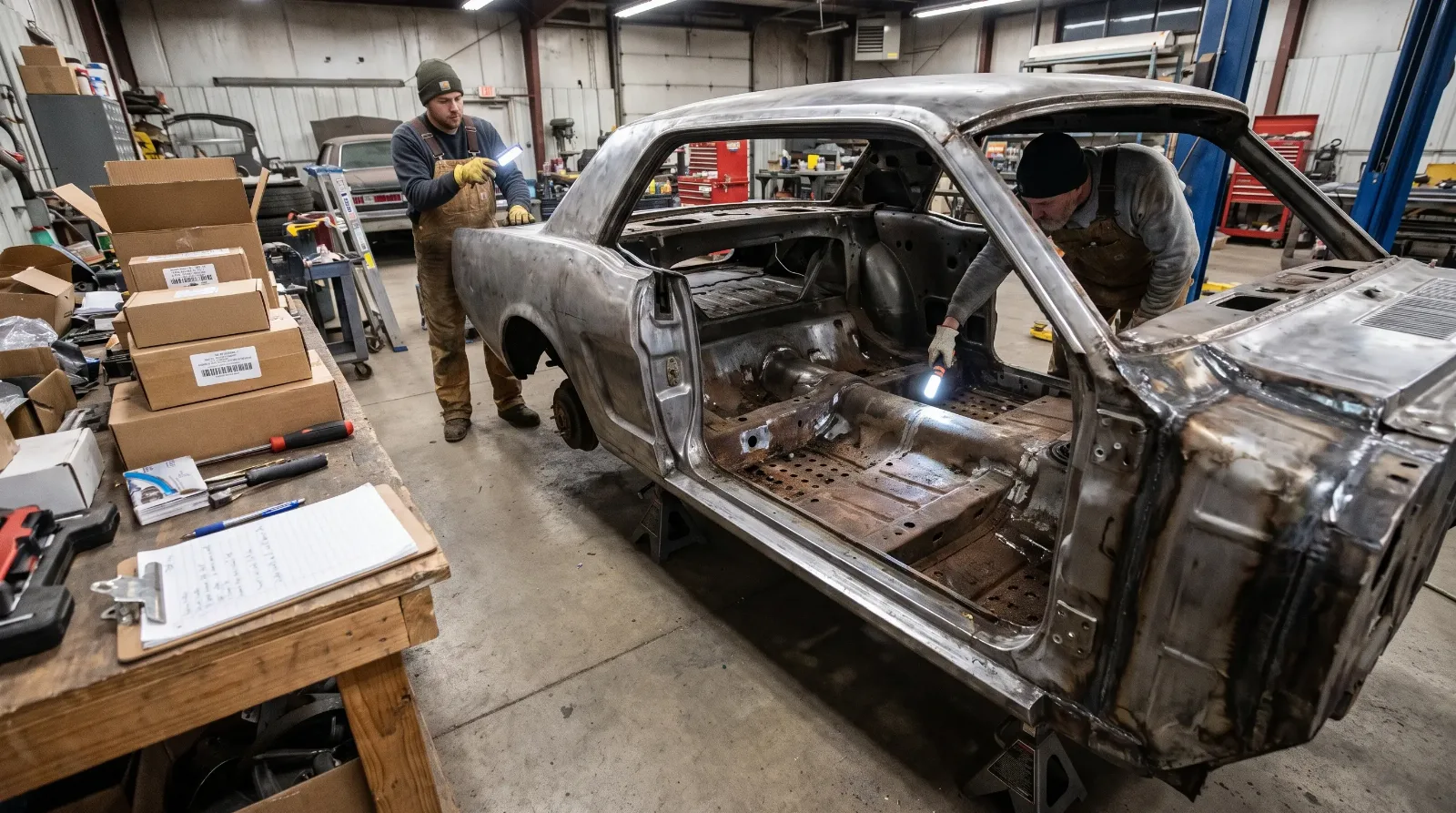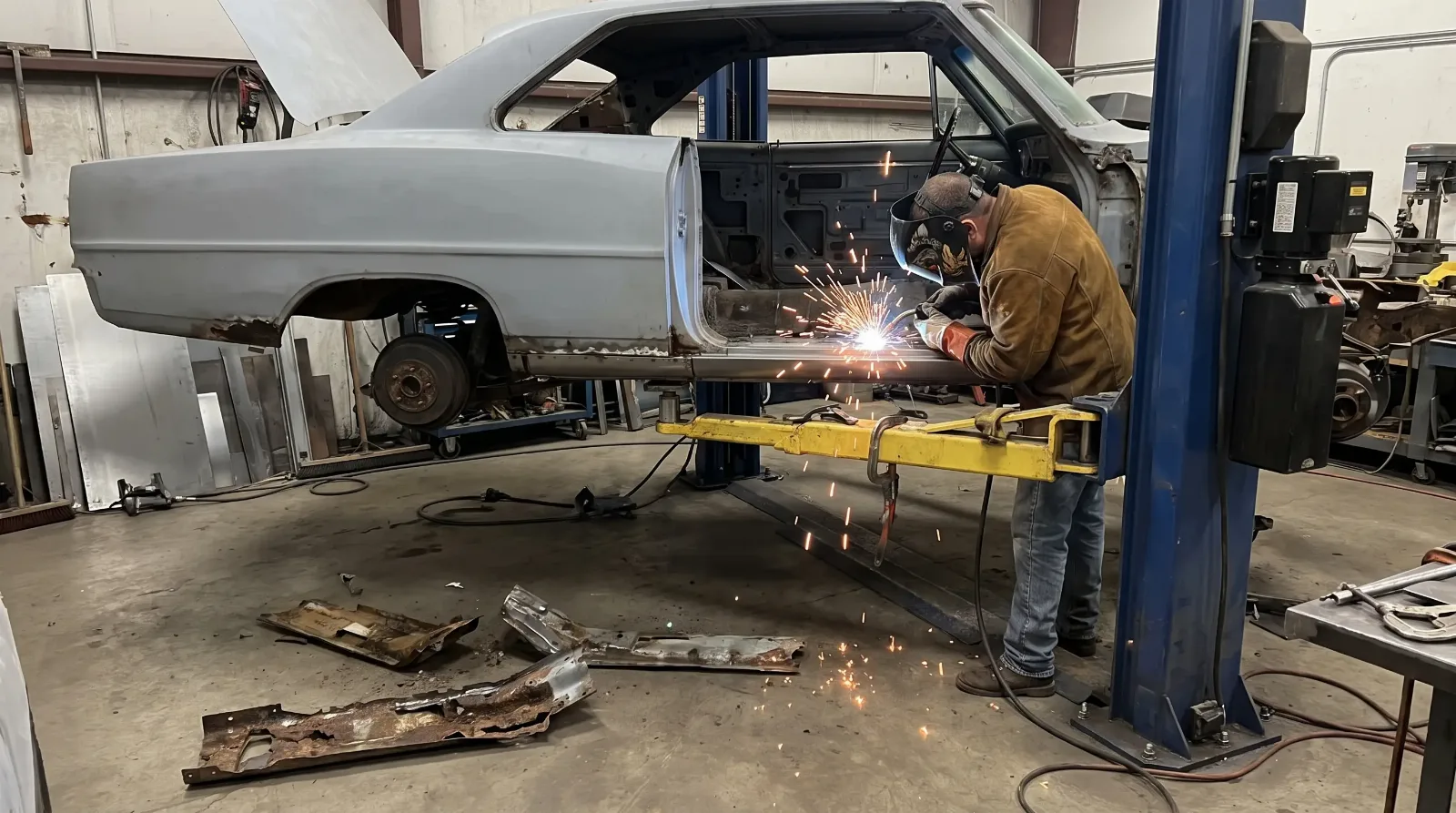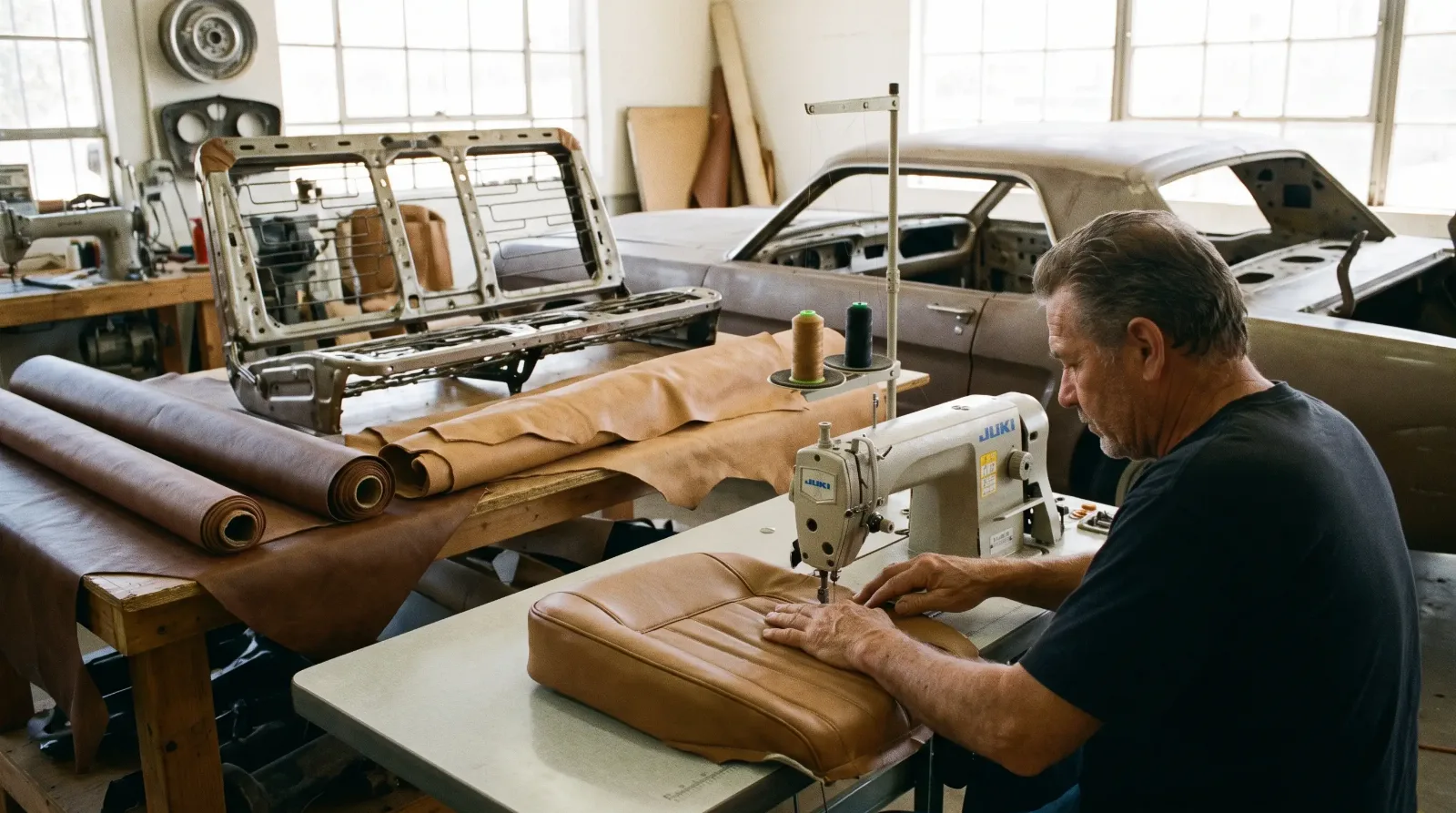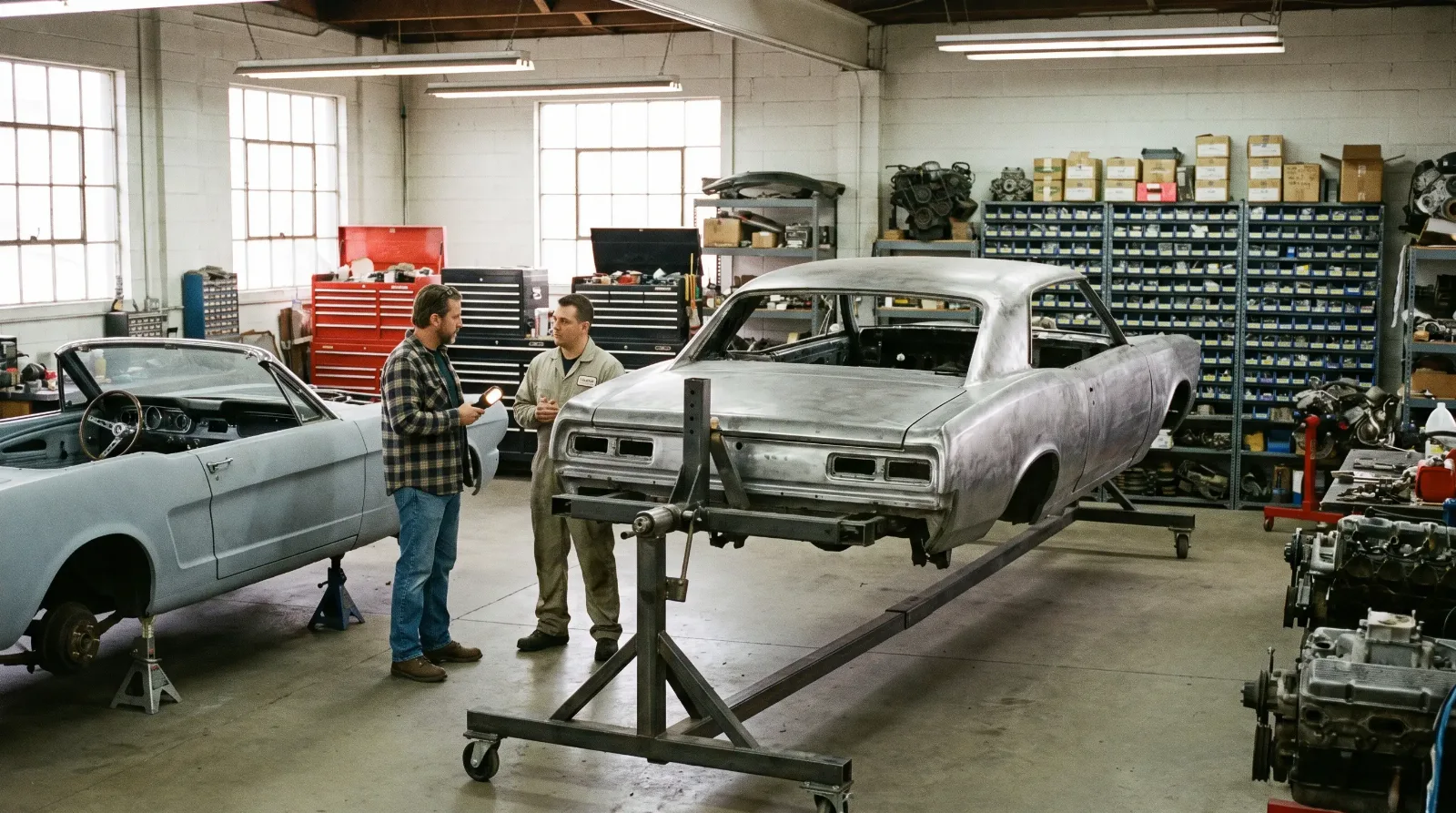
The honest answer to how long a classic car restoration takes is that it depends on the car's starting condition, the finish level, and the shop's backlog, and that most projects run longer than the first estimate. A well-organized driver-quality restoration at a professional shop often takes a year or more of calendar time, and some builders describe 9 months to over a year for a rotisserie job at roughly 700 to 1,000 hours. A show-quality build, which can run 1,000 to 2,000 shop hours, commonly takes well beyond that, often two years or more, and top concours builds longer still. A hobbyist working nights and weekends should plan on considerably more.
Typical timelines by project type
Duration scales with scope. A mechanical refresh, where the engine, brakes and suspension are rebuilt and the body is left alone, can be done in a few months. A cosmetic restoration that involves paint and interior on a sound car takes longer. A complete restoration that strips the car to bare metal takes longest, because the work is sequential: you cannot paint a body that still has metal to fix, and you cannot assemble a car whose paint is not cured.
| Project type | Typical professional timeline | What drives it |
|---|---|---|
| Mechanical recommissioning | A few months | Parts availability, engine and brake work |
| Cosmetic (paint and interior) | Several months | Prep quality, paint schedule, trim |
| Driver-quality full restoration | Often a year or more (roughly 500 to 1,000 shop hours) | Metalwork, parts sourcing, shop backlog |
| Show-quality or concours | Often two years or more (roughly 1,000 to 2,000 hours, far more at concours level) | Documentation, correctness, finish work |
These are soft working ranges, not promises, and the hours are the sturdier guide: at roughly $125 an hour typical, labor hours also set the cost. Shops differ in how they count time: some quote hands-on duration and some quote the calendar from deposit to delivery, and the second is always longer.
The sequence of a restoration
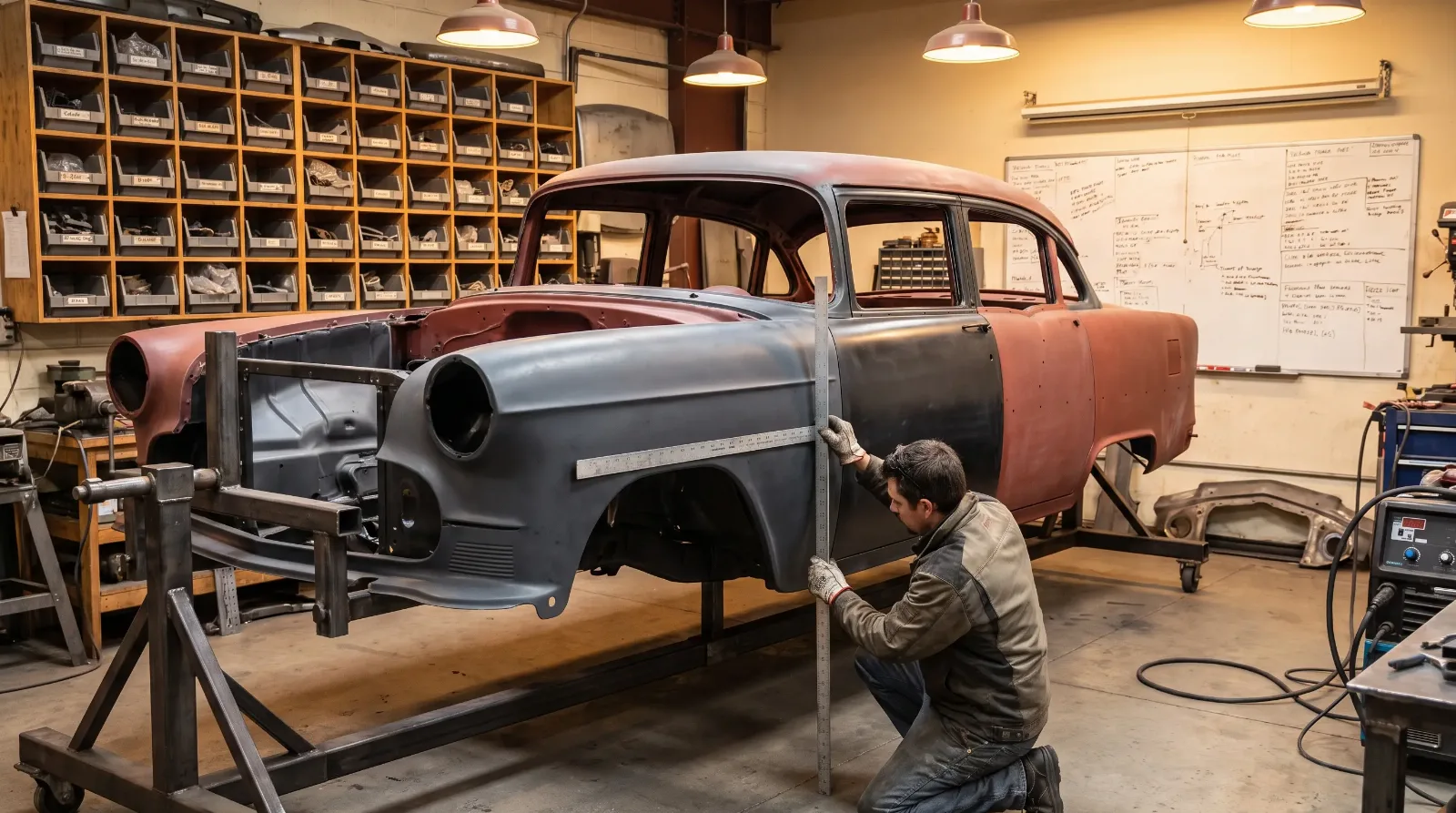
A full project moves through predictable phases. First comes assessment and documentation: photographs, a parts inventory, and a decision on finish level. Disassembly follows, then media blasting or chemical stripping, which reveals the real condition of the metal. Metalwork and body prep are the largest block of labor and the least predictable. Paint comes after body panels are fit and aligned, followed by mechanical work, wiring, interior, glass and trim. Final assembly and shakedown bring the car back to running order, and the shakedown often finds its own punch list.
Because the phases depend on each other, a delay early cascades. A body that waits for a panel from a supplier delays paint, which delays final assembly. Shops that run several cars at once schedule work in slots, and a slot that gets missed can cost weeks.
What stretches the schedule
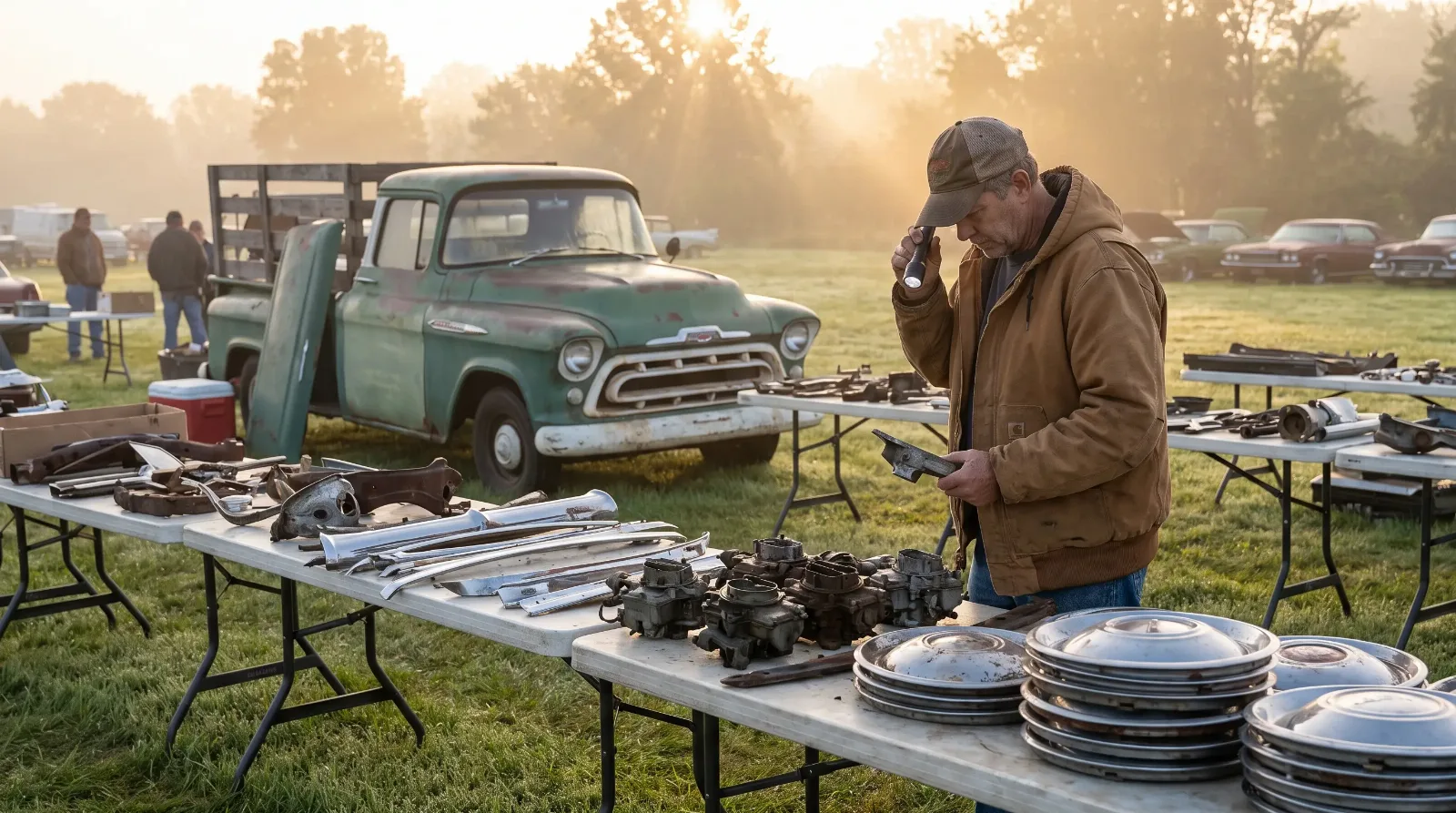
Rust and body condition are the biggest unknowns. A car that looked solid can need floors, rockers and quarters once it is stripped, and the cost side of that is covered in what rust repair costs. Parts availability is next: reproduction parts for popular models arrive quickly, while rare trim, correct castings and model-specific hardware can take weeks or months to locate. Third is shop backlog. Many reputable shops are booked well ahead, with queues that one restoration magazine put at 1 to 18 months or more, and a car can wait in that queue before any work starts. Ask for the start date separately from the duration.
Owner decisions also matter. Changing the finish level, deciding to replace rather than repair, or deferring approvals leaves the car idle. Sublet work such as chrome plating, upholstery and engine machining runs on the vendors' timelines, and those vendors can be backed up as well.
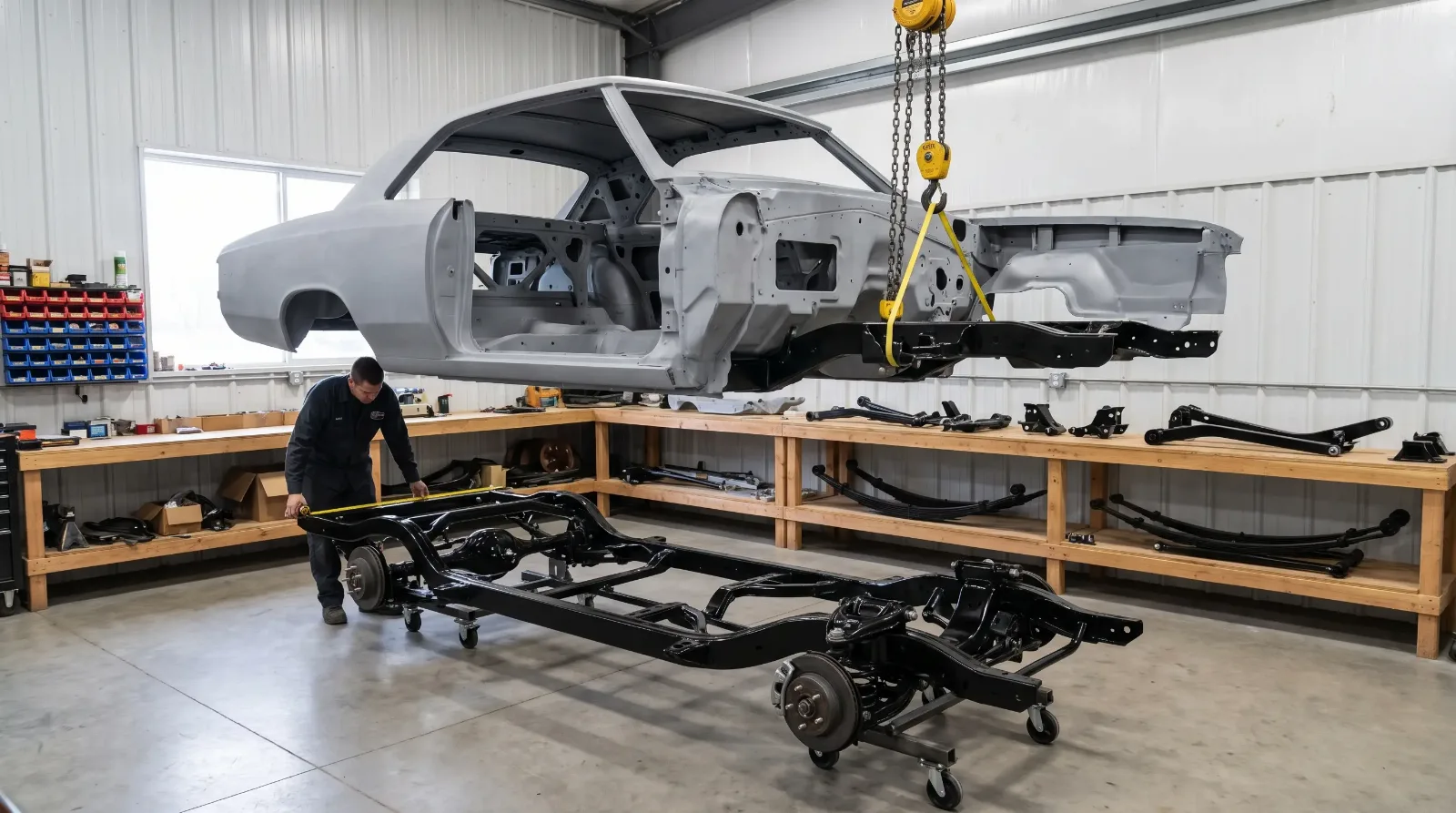
Frame-off versus in-frame timelines
Pulling the body from the frame adds time at the front end and usually saves some later, because the chassis, floors and underside are accessible. Choosing a frame-off job is the typical route for a ground-up build and is the main reason such projects run well beyond a year. A body-on restoration, with the body left on the chassis, is faster but limits what can be fixed and finished underneath. The right choice depends on the car's condition and your goal, and it is worth asking a shop to estimate both.
Reading a shop's quoted timeline
A quoted duration is only useful if you know what it assumes. Ask whether the clock starts at deposit, at drop-off, or when the shop actually begins work. Ask whether it includes sublet vendors, and whether it assumes the parts are already on hand. A shop that says eighteen months for a car that has not been opened is giving you a hope, and a shop that says eighteen months after a documented teardown is giving you a plan. The difference matters when you are scheduling an event, a sale, or a milestone birthday around the finished car.
It also pays to ask how many cars the shop is working on at once and who the lead technician on yours will be. Turnover inside a shop can add weeks, and a project that changes hands midway loses time to re-learning the car.
How to keep the schedule honest
Ask for a milestone schedule with dates for each phase, not a single completion date. Ask what happens to the schedule when a delay is the shop's fault versus a vendor's or yours. Request regular photographs and a written status after each milestone, so you can catch slippage when it is a week rather than a season. Keep your own decisions prompt: a shop waiting on an owner's choice is not the shop's delay.
- Order long-lead parts before disassembly where you can.
- Agree in writing on the finish level before metalwork starts.
- Confirm the shop's start date, not only the duration.
- Build a buffer of several months into any date you share with family or an event organizer.
For a real example of how a single model plays out, see our account of a Camaro restoration timeline from start to finish. Time also feeds cost: labor, storage and carrying costs grow with the calendar, and that is part of the full cost picture.
"A restoration date is a forecast with a depreciation curve. The longer the project runs, the more it costs, and the less reliable the original number becomes. Price the delay, not just the work."
Marcus Feld
Sources and notes
- All Chevy Performance, Restoration Resolution, rotisserie restoration hours, 9 months to over a year, and shop queues of 1 to 18+ months
- Hagerty, How much does it cost to restore a classic car, restoration takes weeks and months, labor rates, and costs rarely recouped
- Wikipedia, Car restoration, the usual order of work from disassembly through reassembly and that full restorations can take many years
- FenderBender, auto repairs delayed by supply chain issues, how parts waits stall shop work (collision repair context)
- AOL / Clever Dude, 4 reasons your car might be taking forever in the shop, parts shortages and shop backlogs as general causes of delay