
Imagine a Saturday morning at a regional meet, a folding table at the edge of the lot, and a man behind it with a shoebox of small parts, each one wrapped in a rag. A stranger walks up holding a cracked bracket and says nothing, just holds it out. The man looks at it, reaches into the box without checking, and hands back the same bracket, whole. That small exchange, repeated in thousands of parking lots, is how car clubs have kept old cars alive.
Restoration & Tech
6 min read
Marque Clubs and Registries as Parts Sources
Car club parts are often the best supply chain a restorer has. How marque clubs, registries, vendor lists, and swap tables help you find parts and trusted shops.
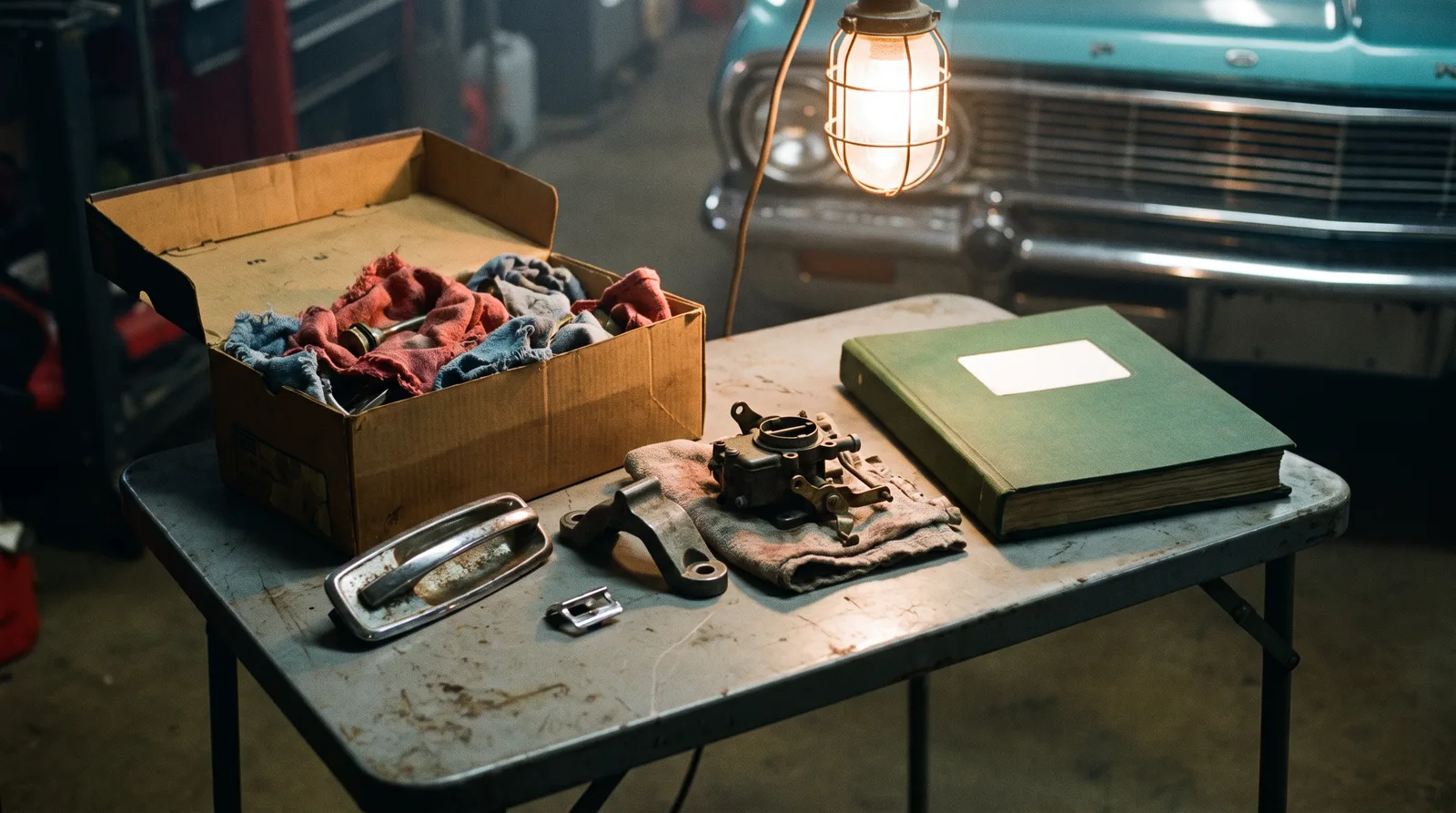
The club is not a side note to restoration parts sourcing. For many marques it is the supply chain. Catalogs go out of date and companies fold, but a club of owners keeps a living memory of who has what, who can make it, and who can be trusted.
What a club actually offers
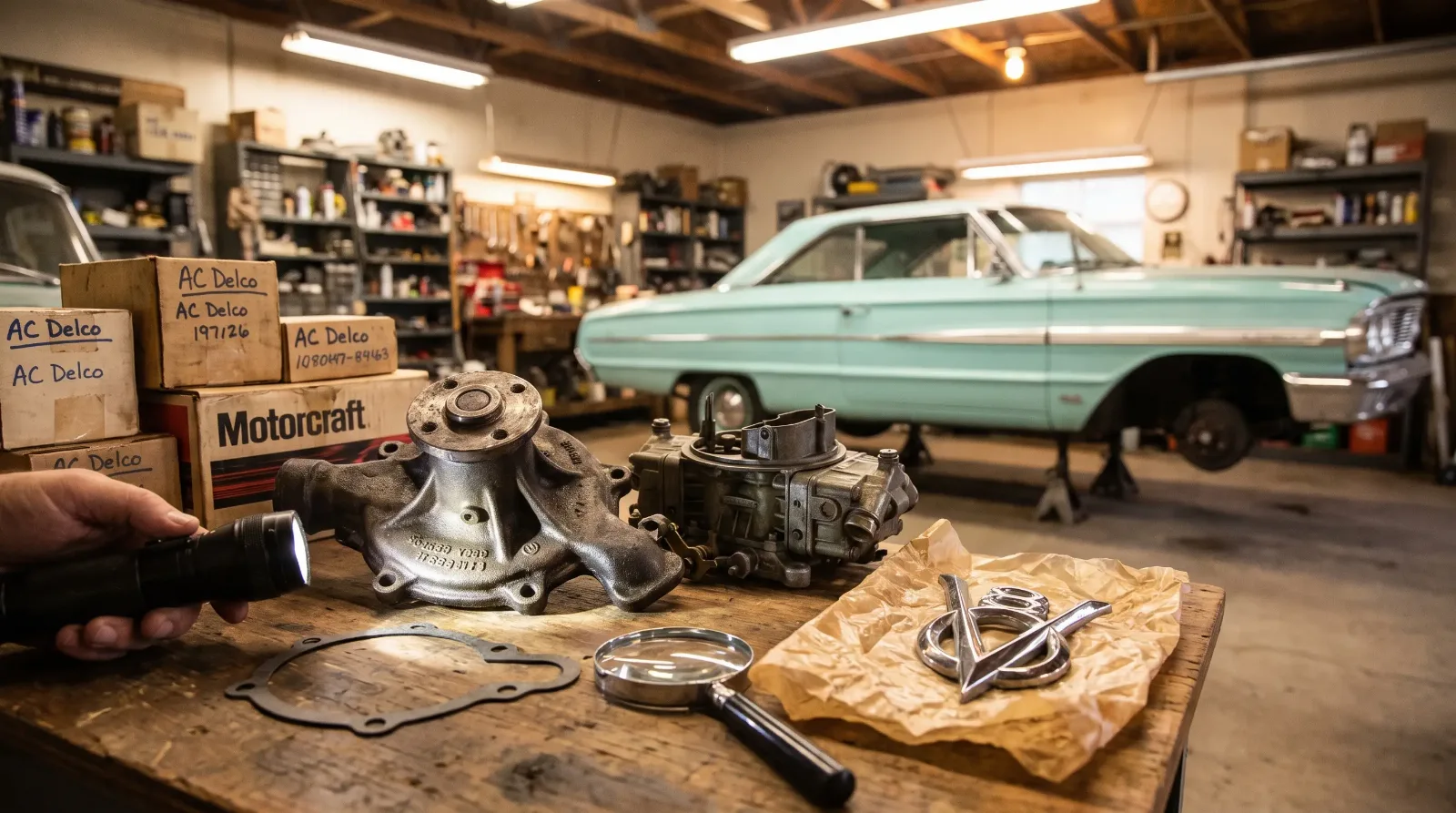
The benefits are plain once you list them. Most clubs publish a newsletter or magazine with classified ads, run a members' forum, and keep technical advisors who answer questions about a given model. Larger organizations keep parts departments or approved vendor lists, and some commission reproduction parts when enough members ask for the same item. A few clubs run a parts bank for items too rare to reproduce, lending or selling from a shared stock.
Membership fees are usually modest, often a few dozen dollars a year (the AACA lists $45 annually, the Fairlane Club of America $48 in the U.S.), and in return you get an audience of people who already own what you are looking for. A post asking for a part in a club forum often gets a quick answer, and the answer frequently includes a part number, a photo, and a warning about a common mistake.
| Resource | What it gives you | Typical use |
|---|---|---|
| Classifieds | Used and NOS parts from members | Finding specific items |
| Technical advisors | Identification, interchange, fitting advice | Before you buy |
| Approved vendor lists | Vetted suppliers and shops | Choosing who to trust |
| Registries | Production and ownership records | Authenticating a car or part |
| Meets and swap tables | Parts in person | Bargains and hands on checks |
Registries and records
Registries do something different from clubs. They collect data on surviving cars, such as VIN and build records, option codes, and ownership history, and they can often tell you whether a part belongs on your car. For some marques, a registry may hold copies of build sheets or production records that the factory no longer has. Contact them before you buy a rare part, since a registry may know that your car left the factory with a different part than the catalog says.
Records also help you find the market. A registrar who knows where every surviving example sits can tell you which owner has a spare trim set, and can sometimes introduce you. That introduction is worth more than any ad.
Club recommended shops and vendors
Parts are only half the story. Clubs know which restorers do honest work, and the shops they name tend to know the marque in depth. When you are choosing a shop for a bigger job, club-recommended shops are a safer starting list than a general web search, because a shop that cheats club members does not stay on the list for long. Ask other members how long a job took and what it cost, and treat their answers as data.
The same approach works for vendors. A club member who has bought from a supplier three times knows more about that supplier than any review. Ask about shipping, accuracy of listings, and how problems were handled. Honest vendors earn repeat business inside a club, and dishonest ones tend to be dropped quickly.
Small parts and details
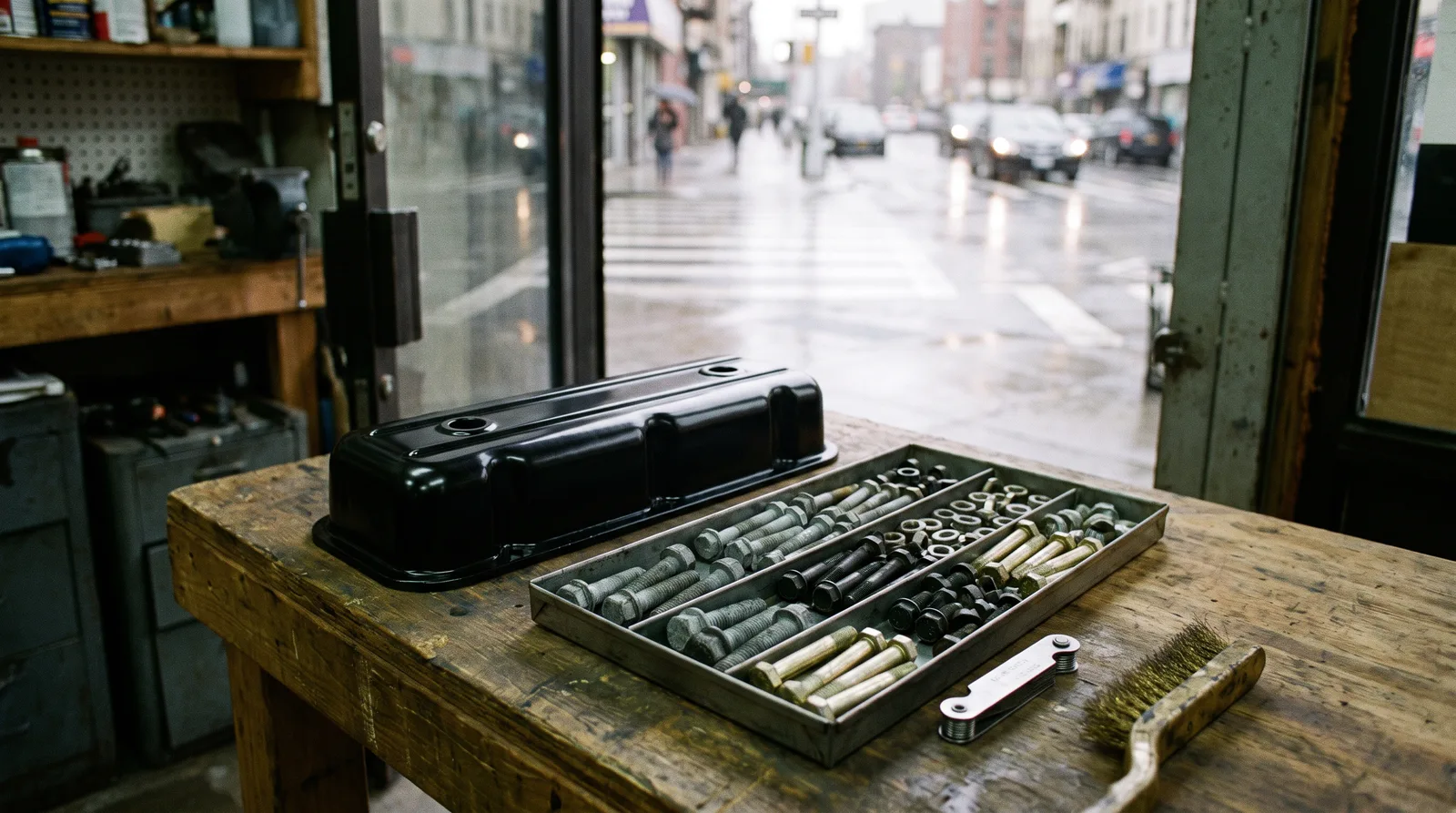
The unglamorous items often come from clubs. Hardware, clips, clamps, and bolts are small, easy to lose, and hard to identify, and members who have restored the same model know exactly which ones were used. For correct fasteners, a member who has measured and photographed the original hardware on a surviving car is a better source than a hardware store chart.
"People think they are joining a club to get parts. They stay because someone handed them the part, and then asked how the car was running."
Nora Beckett
How to be a good member
Clubs run on reciprocity. Answer questions when you can, share part numbers and photos after you solve a problem, and return borrowed parts or tools on time. Offer your leftovers, because the part you replaced may be the exact one someone needs next month. Show up to a meet or a work day. Members trust people they have met, and a face at a table opens more doors than a username.
When a club will not have it
Some parts are too rare even for the club. In those cases, the club is still useful, since members may know who has a pattern, who can fabricate, or which overseas supplier carries the item. Use the club to narrow the search, then widen it with the other channels you have. Few restorers finish a car without help, and the ones who do usually started by asking.
There is a quieter benefit as well. A club gives a restoration a deadline and an audience, since members will ask how the car is coming and want to see it at the next meet. That social pressure keeps projects moving, and the parts you need tend to appear once people know what you are building. The first request is the hardest, and after that the hobby tends to answer.
Sources and notes
- National Corvette Restorers Society, technical advisors, magazines, chapters and member forum
- NCRS judging and awards, judging against factory standards
- Antique Automobile Club of America, library, judging, Hershey meet and $45 annual dues
- Fairlane Club of America dues and benefits, technical advisors by year group, classifieds and $48 U.S. dues
- Lancaster Insurance on owners' clubs, help finding spares and a club that remanufactures parts
- Hagerty: how much does it cost to restore a classic car, advice to consult forums and local clubs for parts
Related Reading
Have a
Classic Car
for Sale?
Reach thousands of serious classic car collectors across the US.
Sell It Here →
Selling a classic? Here's how: where to sell your classic car online
Are You a Classic Car Dealer?
List your full inventory and connect with targeted classic car buyers.
Join as a Dealer →

About the author
Nora Beckett
Automotive features writer and photographer who tells the human stories behind the cars, from show fields to cross-country road trips.
More in Restoration & Tech
Comments (1)
E
Ed K.
2 days ago
The fastener section rings true. When a member measures original hardware, does any club actually keep that data somewhere, thread pitch, head markings, lengths? Plenty of us measure, but somebody has to write it down.