
European and Japanese classics sit on opposite ends of the parts spectrum, and both surprise American owners. A Porsche or a Mercedes has a factory still in business that treats its history as a product. A Datsun or a Toyota has a factory that, until recently, did not care. In both cases the parts exist, but you have to know where to look, and the answers have changed a great deal in the last ten years. For general principles of classic car parts restoration the main guide is the place to start.
Restoration & Tech
6 min read
Sourcing Parts for European and Japanese Classics
Where to find European classic car parts and Japanese equivalents: factory classic programs, heritage parts, specialists, overseas auctions, and part number cross checks.
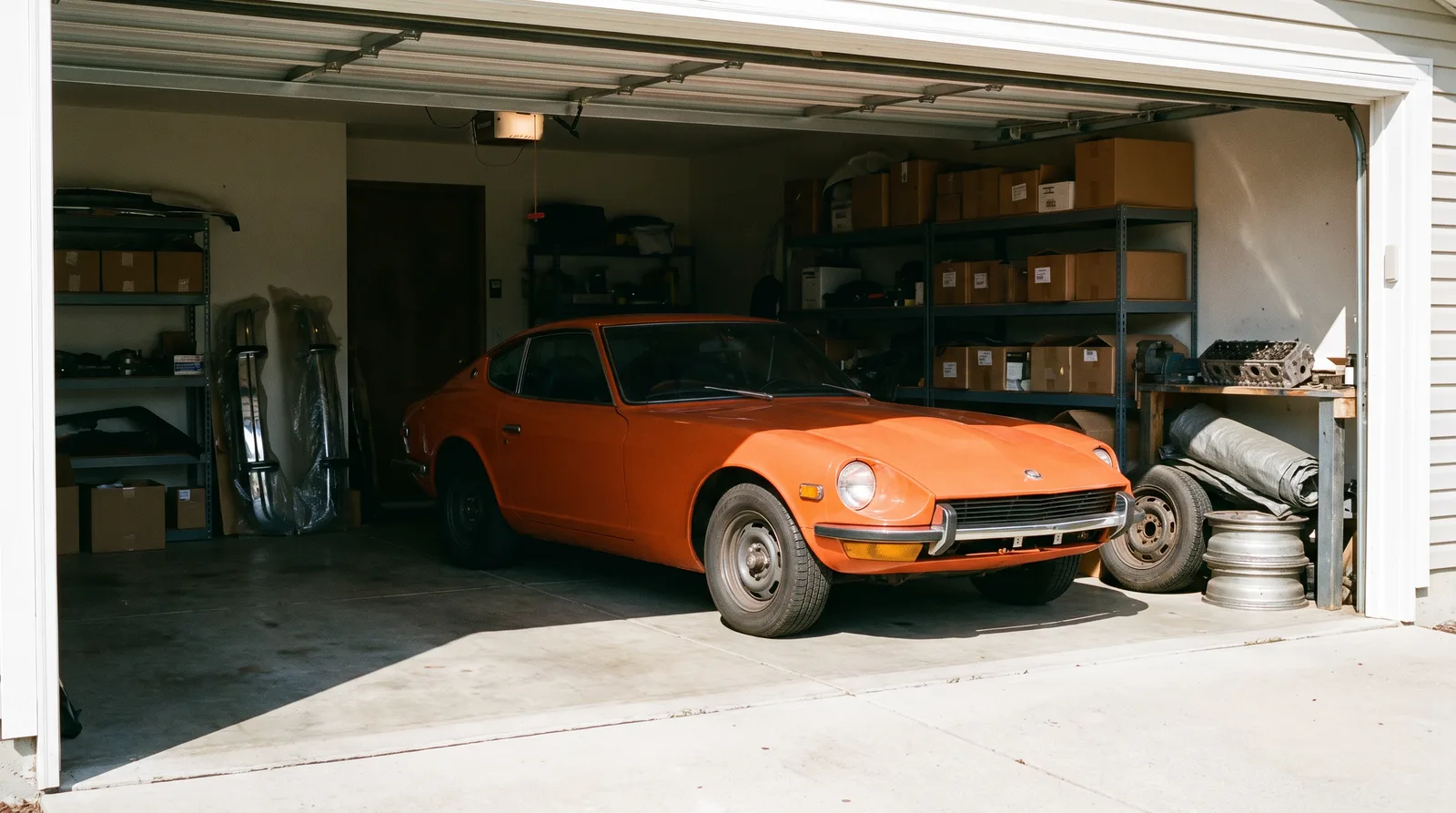
European factory classic programs
Several European makers run formal classic divisions that supply original or remade parts. Porsche Classic supplies parts for older Porsches and has reissued discontinued items, such as the indicator and tail lights for classic 911s that had not been available as official spare parts since the 1990s. Mercedes-Benz Classic runs a parts operation for older models, and BMW Classic and Jaguar Classic do the same for their own cars, with new and reissued parts made to original specifications. These programs are not cheap, but the parts are correct and carry factory part numbers, which matters for documentation and for judging.
Start with the factory, then move to the independent specialists. If you own one of the classic Porsche 911s from the 1960s through the 1990s, the factory program and a mature aftermarket both exist, and the question is usually which version of a part you want, not whether one exists. The gap appears in the less famous models, where the factory program ends and the independent market takes over.
| Source | Strength | Weak point |
|---|---|---|
| Factory classic program | Correct parts, documentation | Price, limited range for lower volume models |
| Marque specialist | Deep stock, expertise | Quality varies between lines |
| Salvage and breakers | Original parts, cheap | Condition unknown, shipping cost |
| Overseas dealers and auctions | Rare items, JDM specific | Shipping, customs, language |
Japanese heritage programs
Japanese makers started late and are now catching up. Toyota announced a GR Heritage Parts project in 2019, beginning with parts for the A70 and A80 Supra, and Nissan's Nismo Heritage program began in 2017 with about 80 parts for the R32 Skyline GT-R, later extended to the R33 and R34. Mazda runs a restoration parts program for the first generation Miata that began in Japan in 2017 and expanded to the United States in 2019, with more than 1,100 reproduced parts. These programs are limited to popular models and sell mostly through Japanese dealers, so you may need a forwarder or an importer to buy.
For everything outside those programs, the Japanese used market is deep. Auction sites and salvage yards in Japan carry original parts, and proxy buying services will bid and ship for a fee. Expect to pay shipping that can rival the part price for bulky items, and expect to wait weeks. Customs rules also apply, and vehicle import rules differ from parts rules, so check the current federal rules before you ship a car shell or an engine.
Cross checking part numbers
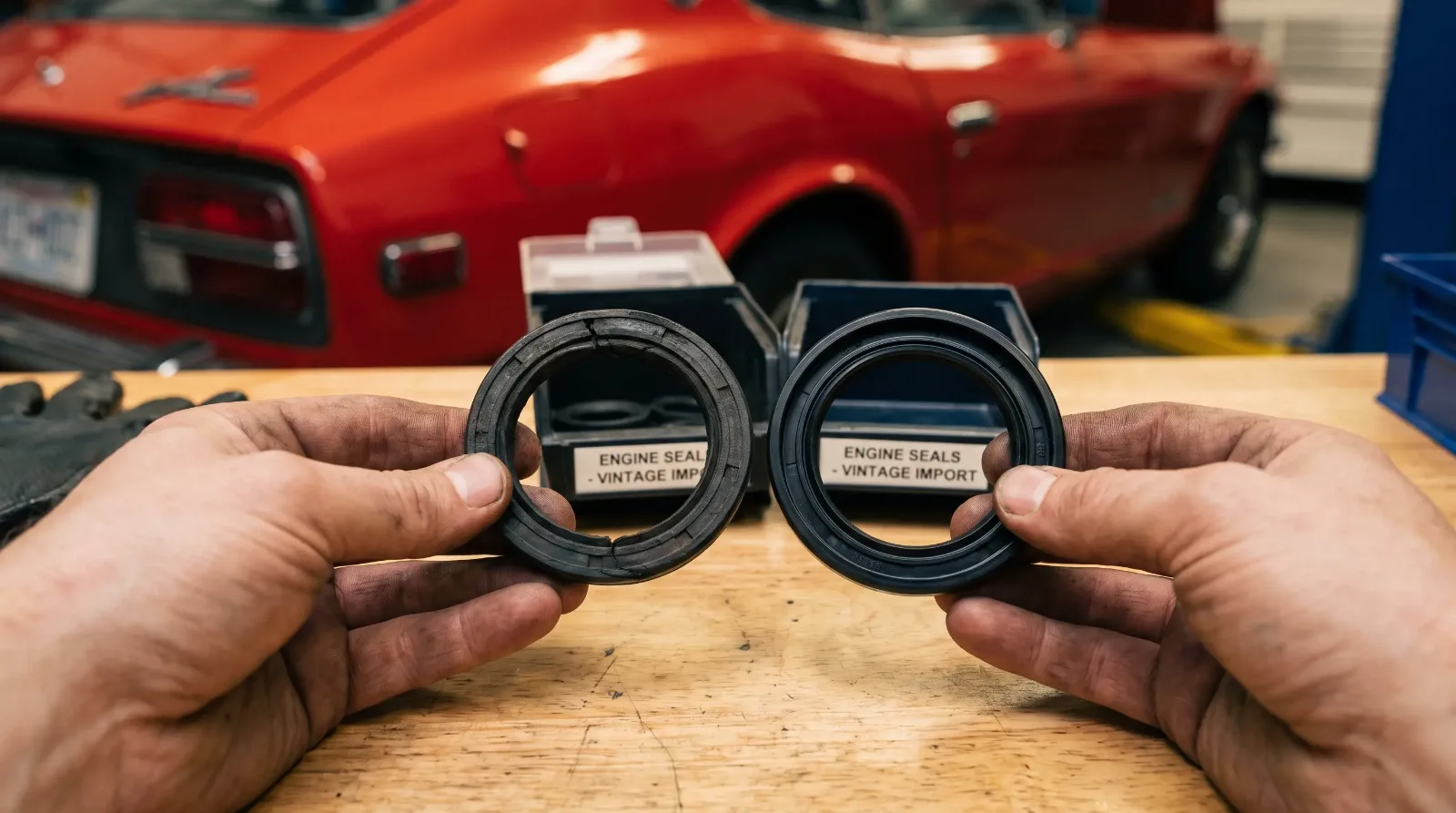
Documentation is the engineer's friend here. European and Japanese cars carry part numbers that are traceable, so build the habit of recording them. Use the factory catalog or a microfiche archive, then confirm with the VIN. Be careful with market variants: a US specification car can differ from the European or Japanese equivalent in lamps, bumpers, emission components, and fuel systems. A part number from the wrong market can be the right shape and the wrong function.
Interchange tables are valuable. Many European cars share parts with other models from the same group, and many Japanese cars share engines and switchgear across models. The history of a luxury pair shows the principle at its largest, since the piece on parts and service commonality between Rolls-Royce and Bentley siblings explains how shared engineering made life easier for owners of both. Look for the same logic in your car's family.
Where to find the knowledge
Technical forums, factory service manuals, and owner groups hold the answers, and many of them are free. Your best resource is often one of the marque clubs, which maintain parts lists, know which vendors are reliable, and can tell you which numbers are superseded. For a lower volume model, the club may be the only source of information.
"Write down the part number, the market, and the build date before you order anything. Ninety percent of wrong parts are not wrong. They are for a different car than the one in your garage."
Emily Chen
Budget and patience
Expect factory prices for correct parts, and expect to pay for shipping on overseas finds. Set aside money for the parts you did not know you needed, since foreign cars tend to reveal their needs as they come apart. Order early, and order everything on a project in batches to save shipping. A methodical owner with a good parts list will finish faster than a lucky one.
Do not forget the plain consumables. Gaskets, seals, bushings, filters, and belts for most European and Japanese classics are made by the same suppliers that equipped the factory, and the supplier part is often the original design at a lower price than the factory box. Identify the supplier number from the old part, look for the maker rather than the carmaker, and you will find that the unglamorous half of a restoration is the easiest half to source. Order them early, since a car that sits disassembled waiting on a ten dollar seal is the most avoidable delay in any project. Keep a labeled bin for each system so nothing gets lost, and tape the part number to the bag.
Sources and notes
- Porsche Newsroom: 911 indicator and tail lights available again, Porsche Classic reissuing parts discontinued since the 1990s
- GTPlanet: Toyota heritage program for A70 and A80 Supra, the 2019 announcement of the GR Heritage Parts project
- The Drive: Nismo Heritage program debuts with 80 R32 parts, Nissan's 2017 program for the R32 Skyline GT-R
- The Drive: Mazda expands first-gen Miata restoration parts program to the US, 2017 Japan start, 2019 US expansion, 1,100 plus parts
- GHY: Importing cars into the U.S. under the 25-year rule, federal DOT and EPA exemption, age counted from manufacture date
Related Reading
Have a
Classic Car
for Sale?
Reach thousands of serious classic car collectors across the US.
Sell It Here →
Selling a classic? Here's how: the best sites to sell a classic car
Are You a Classic Car Dealer?
List your full inventory and connect with targeted classic car buyers.
Join as a Dealer →

About the author
Emily Chen
Bay Area engineer with a deep focus on vintage Japanese and European performance cars. Approaches classic car research and restoration with an analytical eye.
More in Restoration & Tech
Comments
Be the first to comment on this article.