
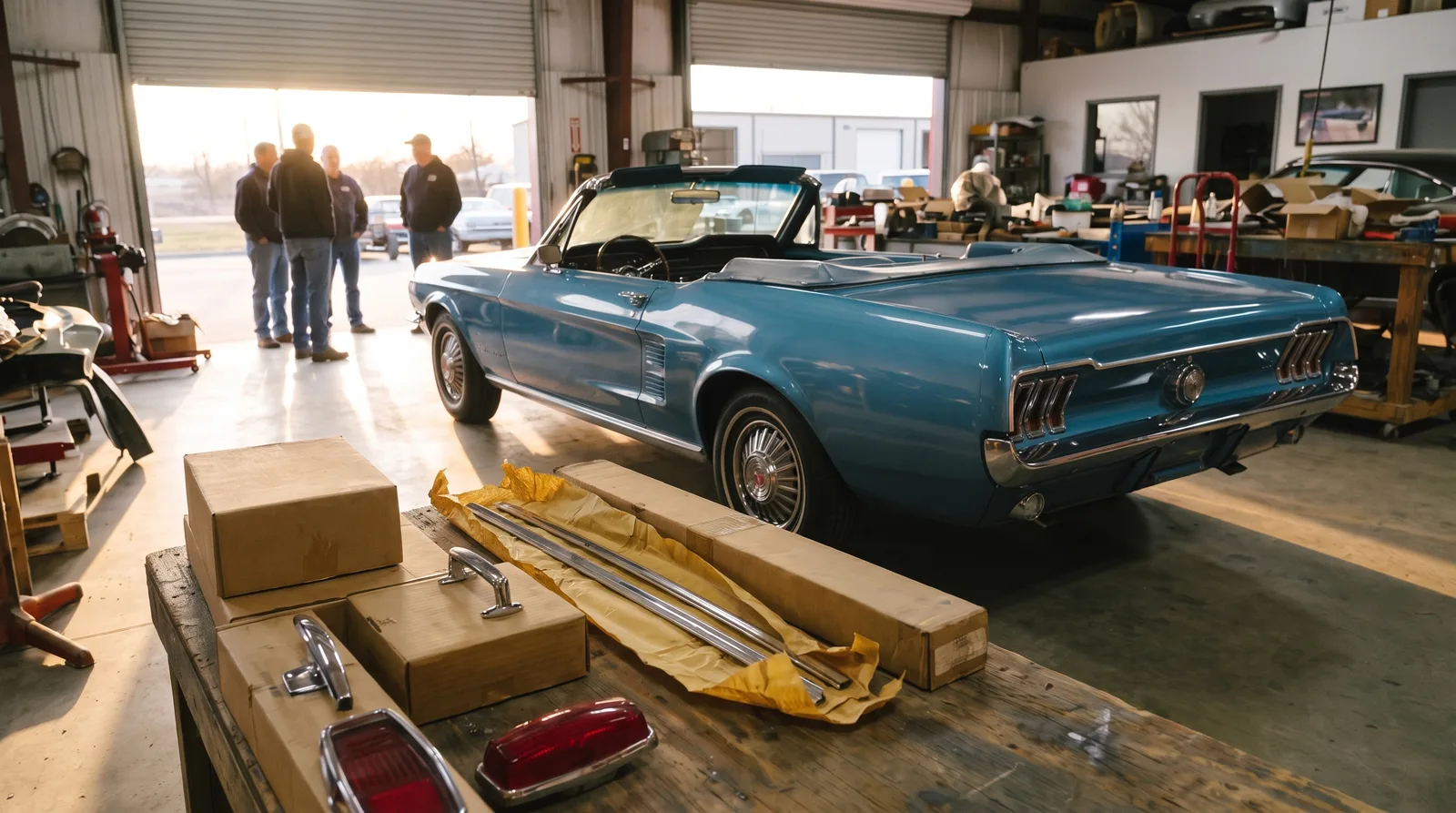
Every club has a story about the guy who took a numbers-matching car to a very good shop that had never touched that brand. The paint was gorgeous. The inspection marks were in the wrong place, the hose clamps were the wrong type, and the judges noticed in about ninety seconds. The reverse story exists too: the specialist whose waiting list is three years and whose quote was a third higher than the shop around the corner. Neither shop was bad. They fit different cars and different goals. Browse our directory of restoration shops and you will find both kinds, and the choice between them is worth making before you start calling.
Restoration & Tech
6 min read
Marque Specialist vs General Restoration Shop
Should a numbers-matching car go to a marque specialist or a general restoration shop? A look at where each one earns its rate, and where the extra cost is not worth it.
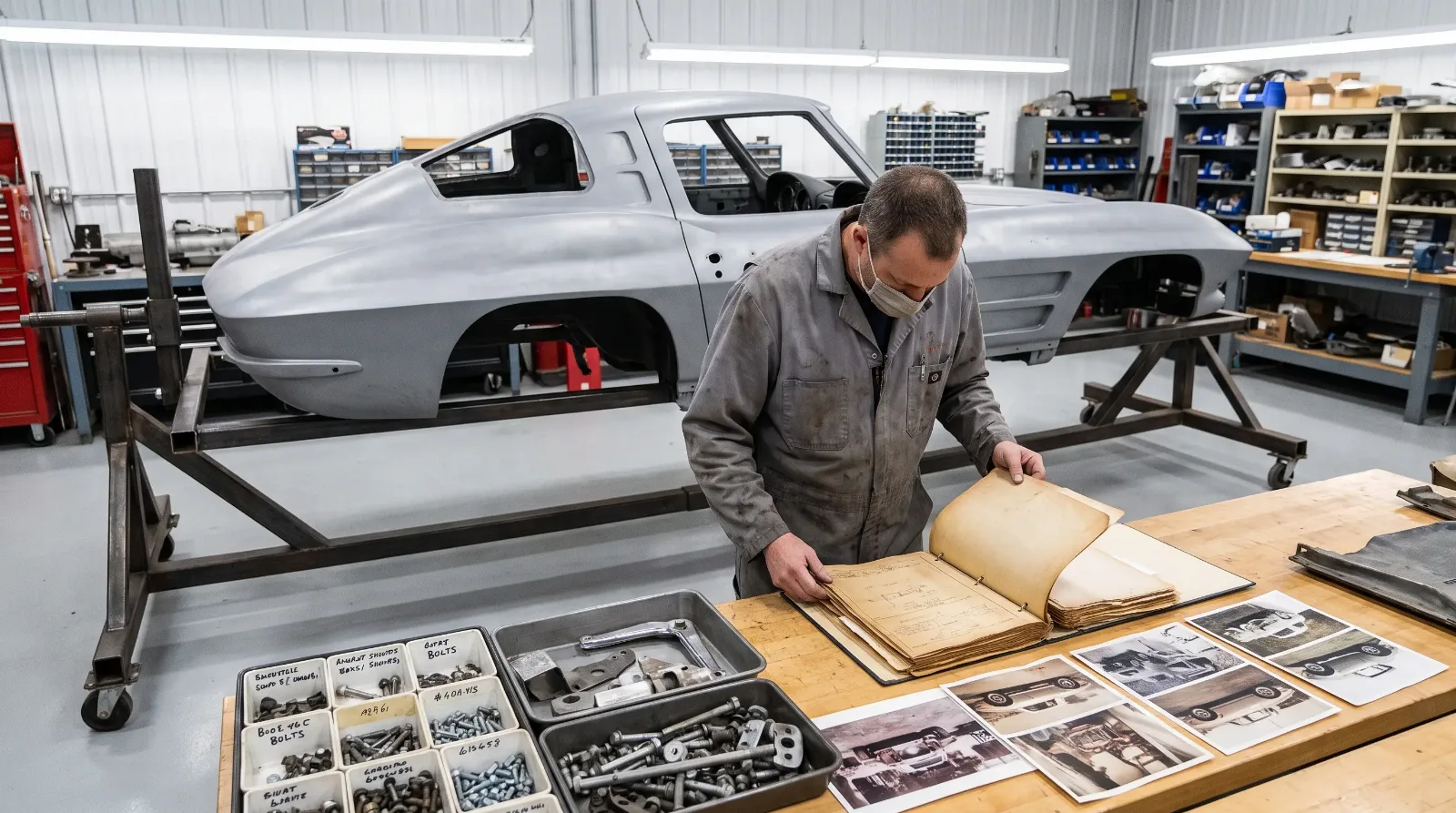
What a marque specialist actually brings
A specialist's value is accumulated knowledge about one family of cars. They know where the factory welded, which parts were stamped and which were cast, what the underside paint looked like on a given build, and which reproduction parts fit and which only look right in a catalog. That knowledge shows up in small, expensive places: correct fasteners, correct finish on brackets, correct markings, and a faster diagnosis when a hidden problem appears.
Specialists also usually have parts networks and records. They know who has original sheet metal, which reproduction supplier is reliable, and which sub-assemblies are better rebuilt than replaced. Many keep reference cars or documentation sets. For brands with an active registry or judging program, the shop has often already been through its standards.
That matters most when a car will be judged for originality. Anyone who has read about what Bloomington Gold and NCRS certifications mean knows the scoring rewards factory-correct detail, and a shop that does not know the details cannot reproduce them. Documentation drives value in those circles, so correctness is not fussiness. It is the asset.
What a general restoration shop brings
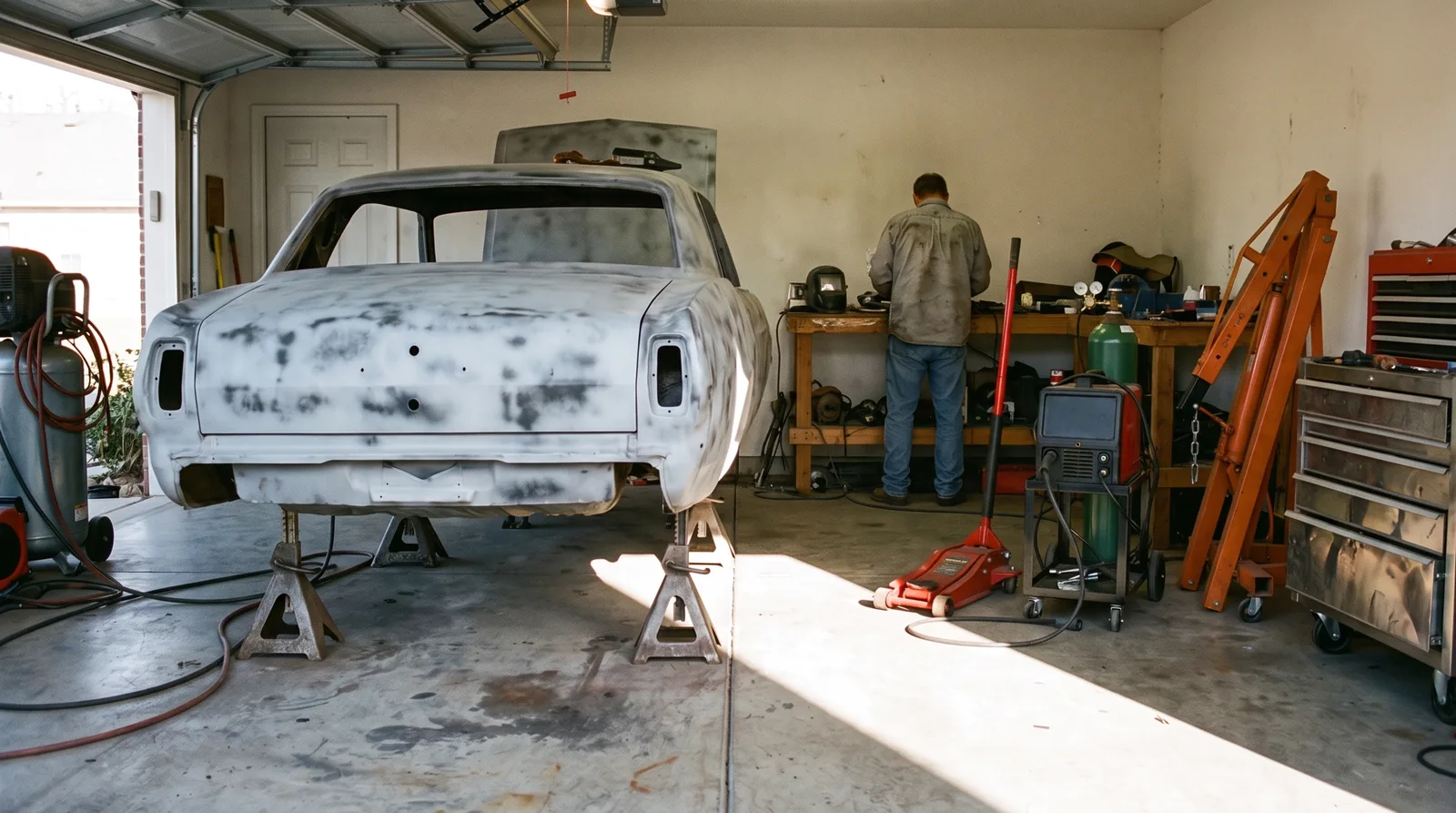
A general shop sells breadth. Its crew has probably done domestic muscle, European sports cars, prewar cars and the odd truck, which means deep metal, paint and mechanical fundamentals and the ability to solve a problem nobody has seen before. For cars with small followings, there is no specialist to choose, and a skilled generalist with the right research habits will do very well.
Generalists can also be easier on schedule and price. A marque specialist in a popular brand often has a long queue and an hourly rate to match, and concours and marque specialists often charge $175 an hour or more, with the high end reaching about $225, against roughly $85 to $150 (about $125 typical) at most independent restoration shops. A general shop may be able to start sooner and charge somewhat less, though the savings can vanish if the crew spends hours learning what a specialist already knows.
| Factor | Marque specialist | General shop |
|---|---|---|
| Originality and correctness | Strong, often documented | Depends on research and owner input |
| Parts sourcing | Established network | Varies by project |
| Wait time | Often long | Often shorter |
| Cost per hour | Usually higher | Usually lower |
| Unusual problems | Seen before, fast diagnosis | Strong fundamentals, slower on brand quirks |
| Best for | Judged, numbers-matching cars | Drivers, custom work, small-following cars |
Match the shop to the goal, not the badge
The question is not which type is better. It is what the car is for. A rare, documented example headed for judged shows, or one whose value depends on factory correctness, belongs with a specialist. The extra cost may be partly offset by a stronger sale price and by avoiding rework, though most restorations are not fully recouped at sale unless the car is rare or valuable.
A driver-quality restoration, a restomod, or a car where the owner values good looks and reliable function over strict originality is often better served by a strong generalist. So is a brand with no specialists nearby. Shipping a car across the country for a marque shop adds transport cost and a distance that makes oversight harder.
Think of the buyer too. If you plan to sell, ask which type of shop your future buyer will respect. In the Corvette world, a car with a recognized specialist's name on the paperwork changes how buyers read it. Anyone shopping classic Corvettes sees how much of the asking price rides on documentation and the restoration's pedigree.
What the paper trail should show
Ask any shop what documentation it produces. A specialist should return the car with a photo record of the work, a list of correct parts and sources, and a statement of what was restored against what was replaced. A general shop that does the same is doing the work a specialist would. A shop that cannot show a documented past job is selling you an opinion, and in a market that pays for provenance, an undocumented restoration sells for less when it is time to move the car.
Hybrid approaches, and how to test a specialist's claim
You do not have to choose one shop for everything. Some owners send body and paint to a generalist known for metalwork, then take mechanical assembly or final detail to a marque specialist. Others hire a specialist as a consultant, paying for an inspection and a punch list while a general shop does the labor. That works only with clear scope and a signed agreement about who is responsible for what.
When a shop claims to specialize, test it. Ask what the common reproduction pitfalls are on your model. Ask how many of your exact model they finished in the last five years. Ask where a particular marking or finish belongs on your year. The answer should be quick and specific. Hedging means the specialty is a marketing line.
"Everybody in the club had an opinion about which shop was best. The ones who settled it pulled the build sheet, set it beside the car, and checked."
Wayne Coburn
Where this leaves you
Define the goal first: judged, driven, sold, or handed down. Then shortlist two specialists and two generalists, visit them, and compare plans on identical scope. Each type does a different job, and knowing who does what across the whole shop landscape, from restoration to collision to custom work, keeps you from hiring the right people for the wrong task. For the broader process, the guide to choosing a shop walks through references, financial checks and the questions to ask before anyone touches your car.
Sources and notes
- National Corvette Restorers Society, supports that NCRS judges cars against how they left the factory, not against each other
- Bloomington Gold, supports its Corvette certification programs and award verification service
- Concours d'Elegance (Wikipedia), supports that concours judging weighs originality as much as condition
- Conservation and restoration of road vehicles (Wikipedia), supports restoration styles and that full restorations often exceed market value
- ClassicCars.com Journal on specialist versus general shops, supports using specialists for exceptional cars and general shops for standard models
Related Reading
Have a
Classic Car
for Sale?
Reach thousands of serious classic car collectors across the US.
Sell It Here →
Selling a classic? Here's how: sell my classic car
Are You a Classic Car Dealer?
List your full inventory and connect with targeted classic car buyers.
Join as a Dealer →

About the author
Wayne Coburn
Longtime Corvette owner, judge and club figure who knows the cars, the records and the people behind them.
Pushing back on the idea that a driver is better served by a generalist. My 1951 Power Wagon is a worker, not a show truck, and the general shop that rebuilt it before I owned it set up the PTO driveline without a shear pin and filled the transfer case with the wrong oil. None of that would cost a point at a judged event; all of it shows on a grade with a load on the winch. On a working truck, correctness is about function first.
Working trucks make the case for a specialist better than show cars do. We had a fellow at the club whose '67 big-block roadster came back from a very good general shop looking perfect, and on the first long run the side pipes cooked the rocker trim. The specialist he finally took it to pulled out the factory assembly page and showed him the heat shield that never went back on. Correct isn't only about points.