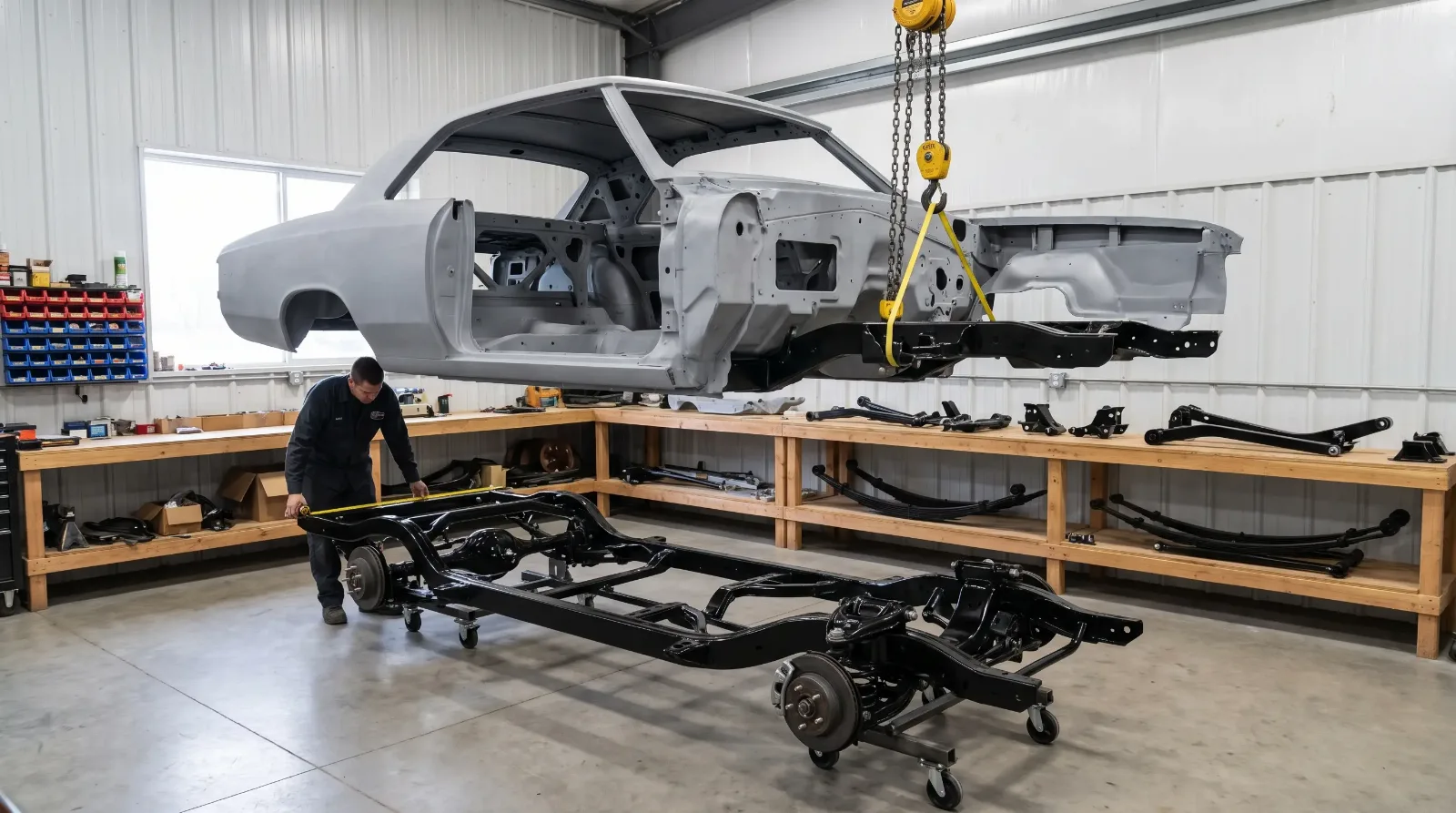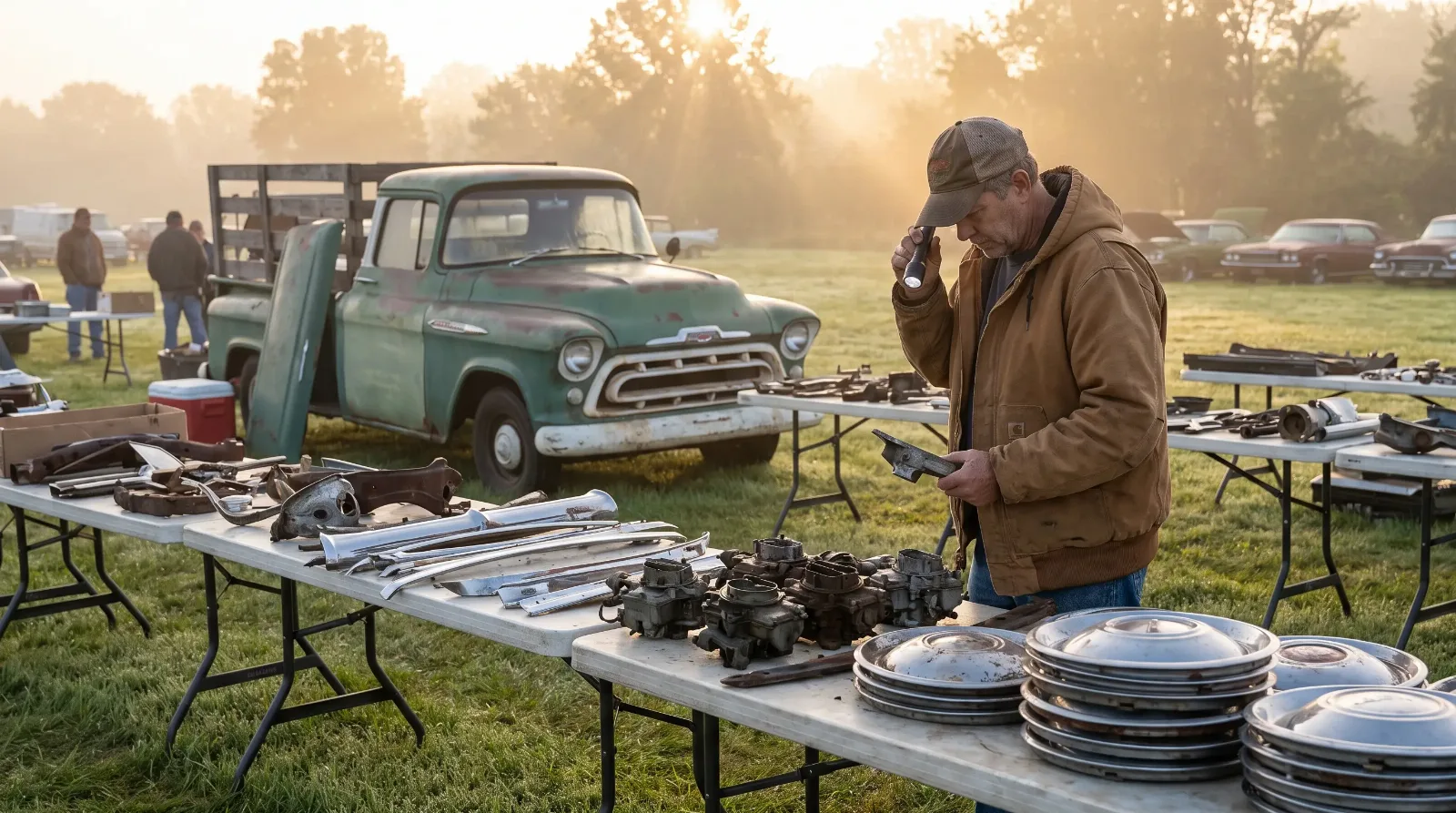
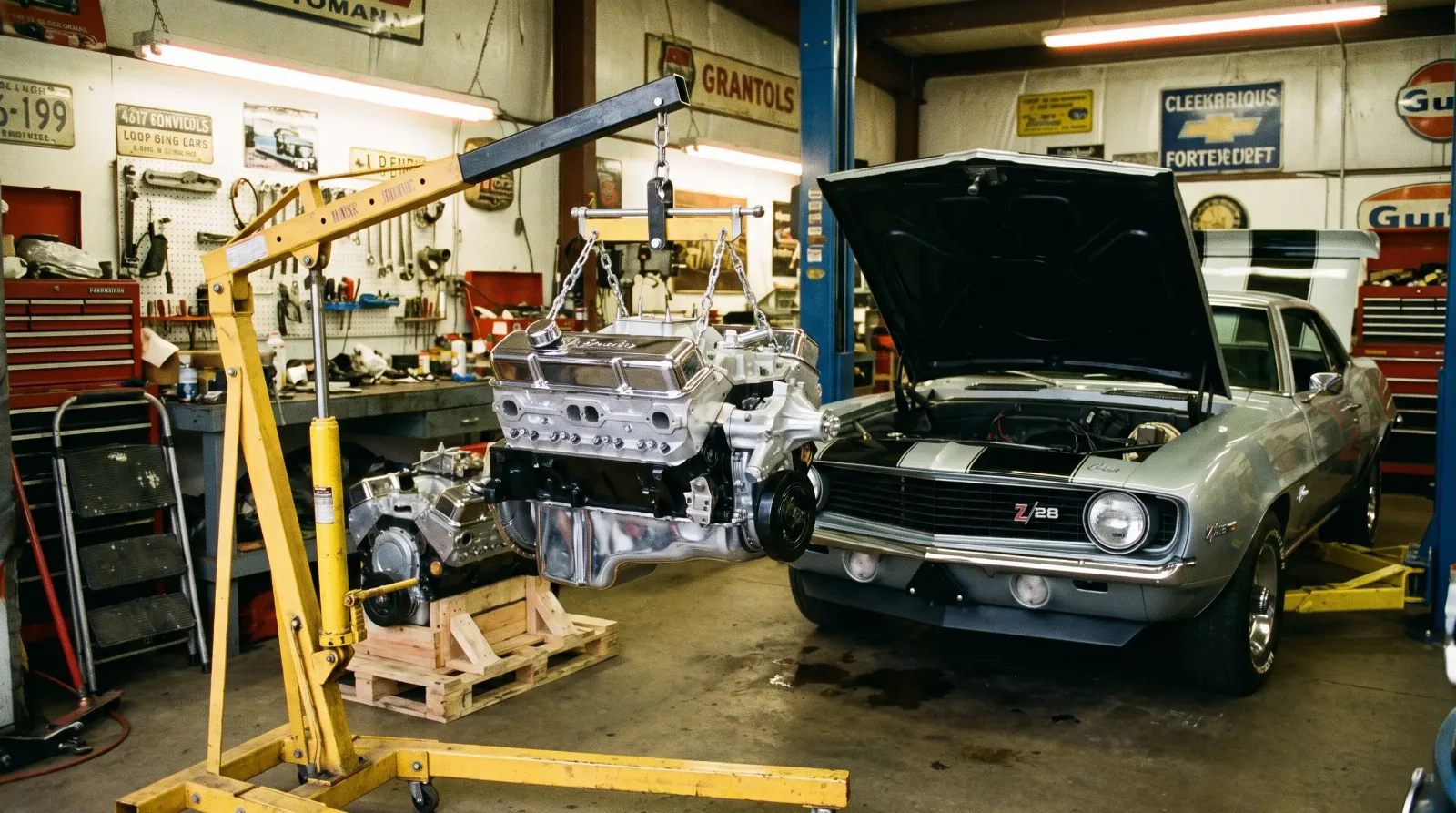
Every engine decision comes down to one question: what do you want the car to do when it is finished? Answer that first and the rebuild, crate or swap choice mostly makes itself. Answer it last and you spend money twice.
Here are the three paths, with numbers. Dollar figures are 2026 US dollars, and they move with the engine family, so treat them as starting points. Where no firm range exists, we use words instead of inventing a number.
Path one: rebuild the original
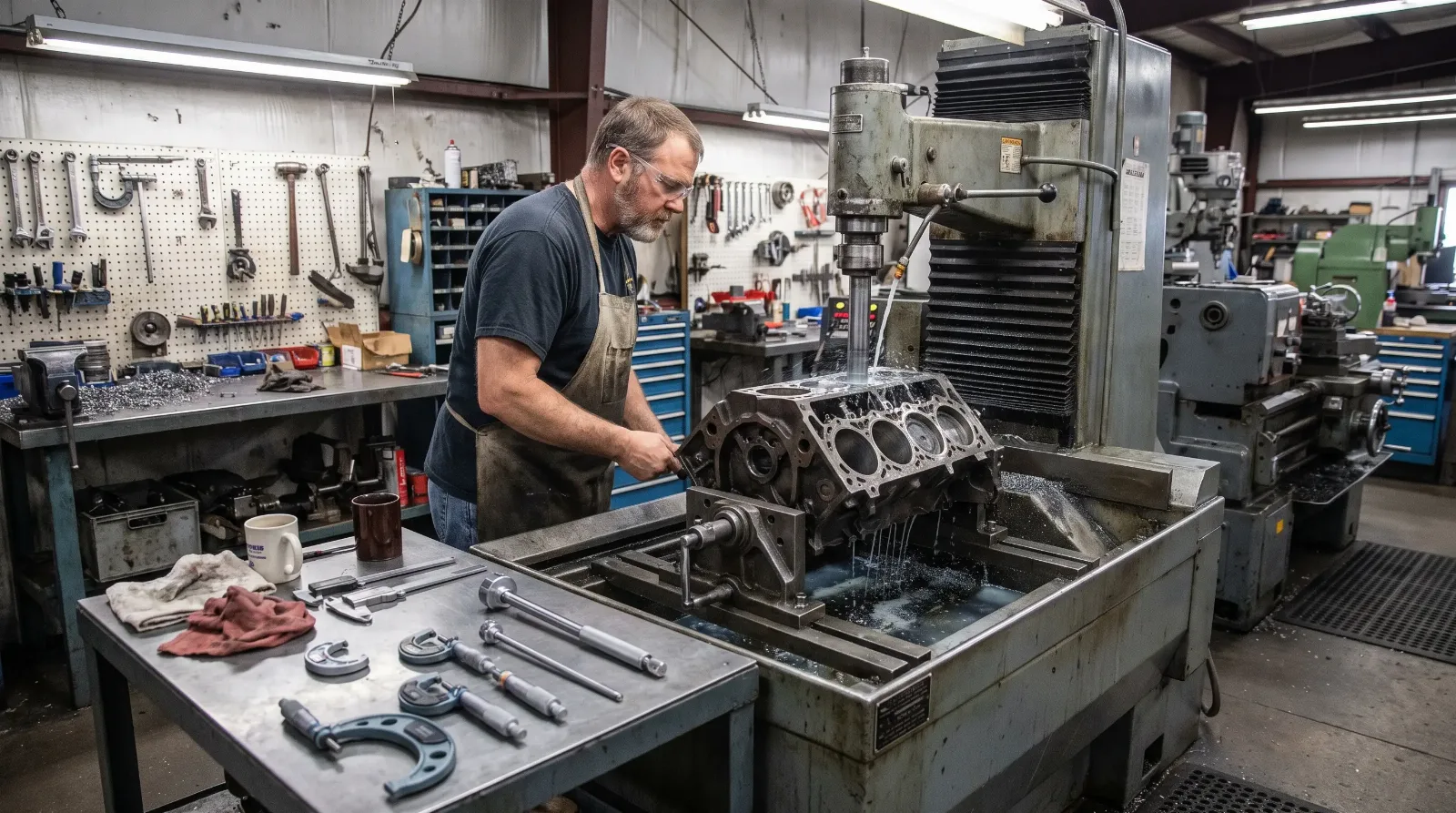
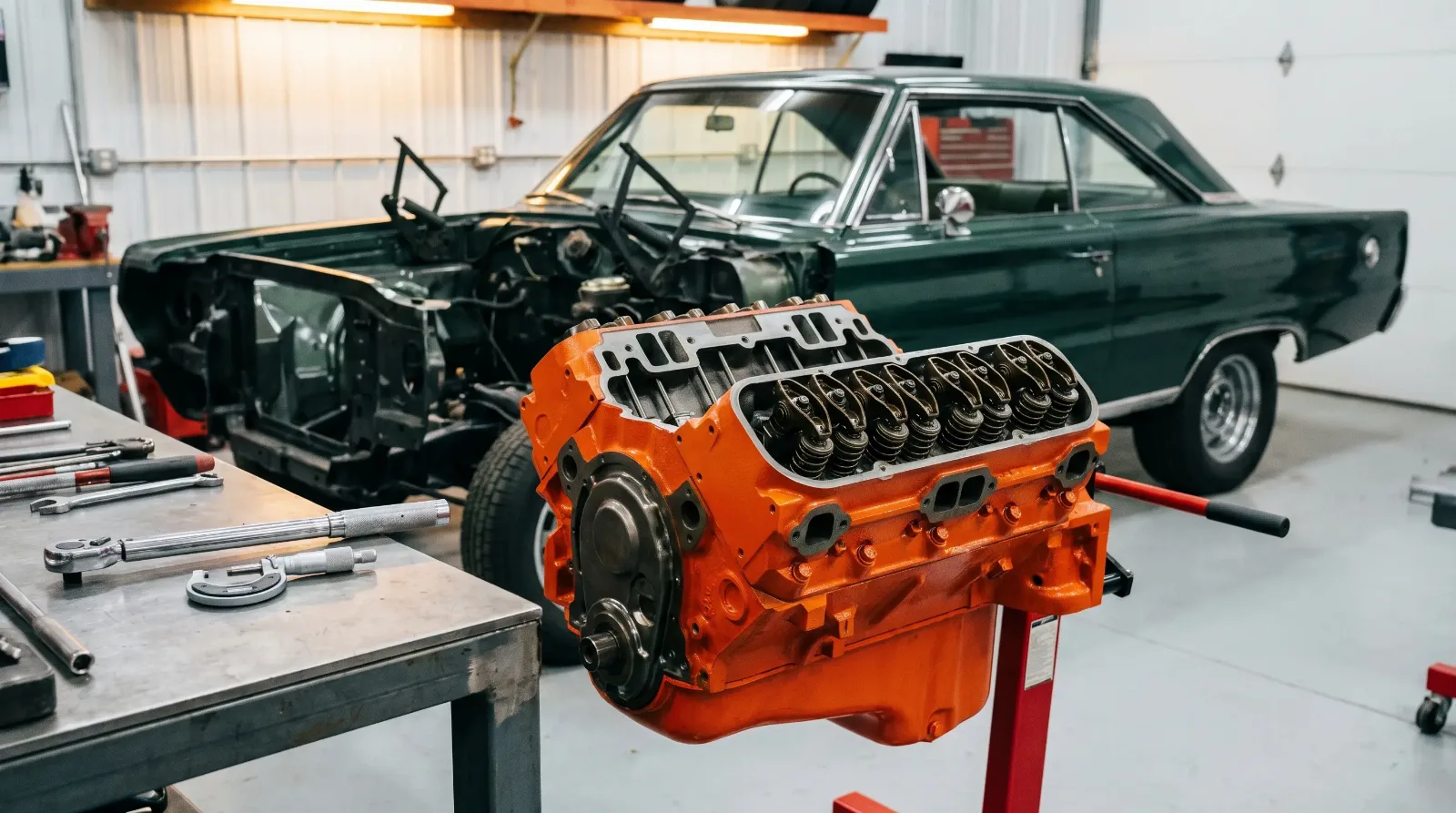
A rebuild keeps the original block, and with it the stamped numbers, casting date and the car's identity. If the car is a numbers-matching muscle car or anything a collector will inspect, this is the default. The engine in the car is part of what you are selling later.
A shop-built stock long block for a common small-block V8 usually runs about $4,000 to $8,000, depending on how much machine work the block needs and what parts go in. Performance builds cost more, and rare engines with scarce heads, cranks or pistons can double that. The cost is driven by the condition of the core. A block with a cracked cylinder wall or a worn-out crank journal pushes a job toward the top of the range or past it. Our classic car engine rebuild guide covers diagnosis, so you know what you are buying before you pull anything.
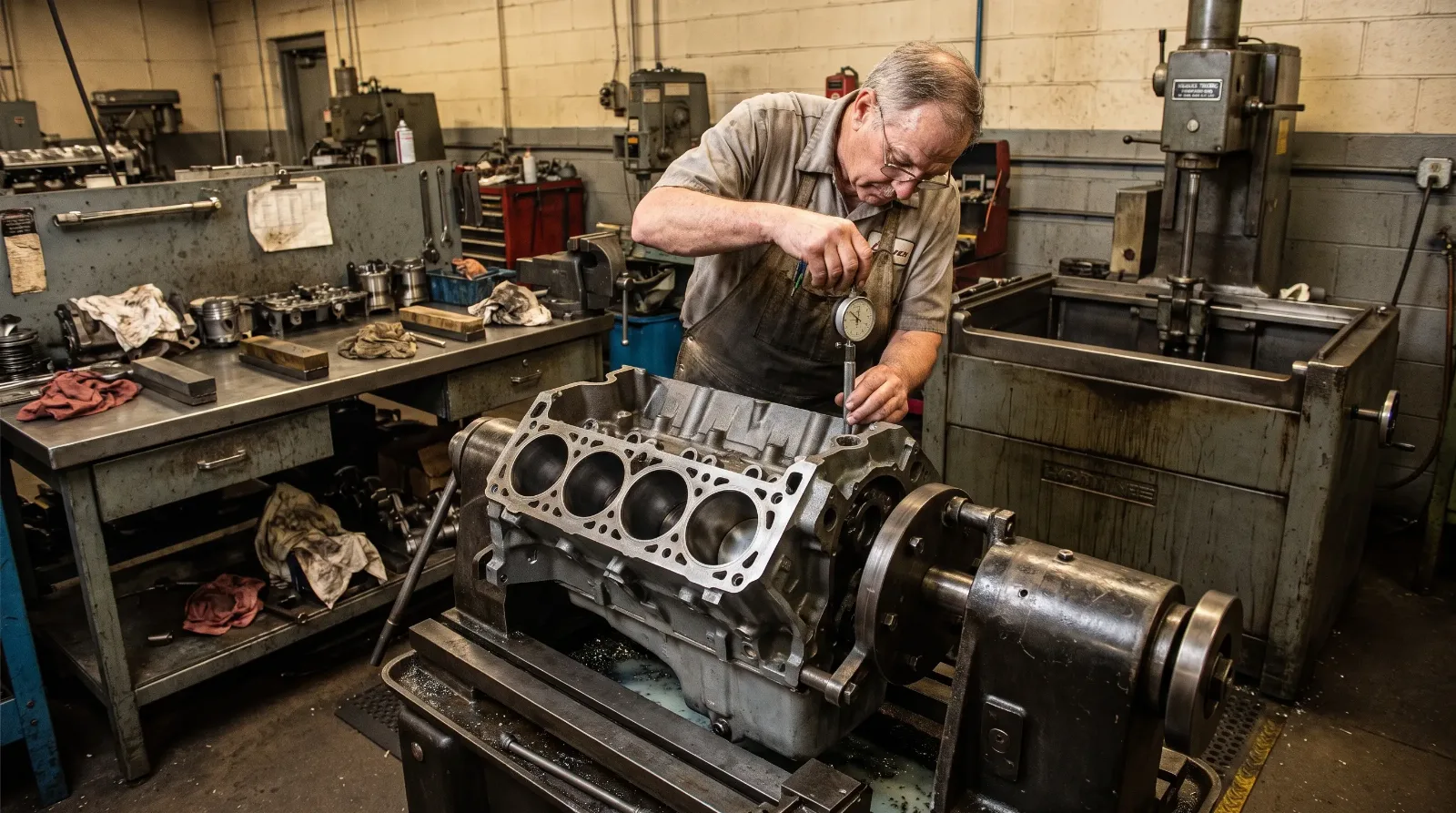
On a numbers-matching block, tell the machine shop where the stampings are before any work starts, because decking the block can cut them off. Output is what it was, give or take a small bump from a modern cam and better machining. Do not expect a rebuild to make a stock engine fast. It makes it correct and reliable.
Path two: crate engine
A crate engine is a new or remanufactured assembled engine, built to a known spec and shipped on a pallet. Some come with a parts warranty, so read the manufacturer's terms first, and a crate engine is often the fastest route back to a running car.
Prices span a wide range, and versions differ in how much they include: a long block has the assembled short block and heads, while a complete engine adds the intake and more. As a list price example, Hagerty reported in September 2026 that Summit Racing listed a Ford Performance 5.0-liter Gen 4X Coyote rated at 460 horsepower for $11,704.99. Carbureted long blocks and older designs are priced differently, so get current quotes for the engine you want. Horsepower varies by the exact part number, so read the manufacturer's spec sheet for the engine you are buying before you trust any advertised figure.
The trade is plain. You gain reliability, a known power number and a warranty. You lose the original engine, and often a chunk of the car's value if it was a collector-grade car. On a nice-but-not-rare driver, that is a fair trade. On a documented big-block car, it is a mistake. Our write-up of crate engines for a Camaro compares the common choices in detail.
| Path | Typical cost (2026) | Keeps originality | Best for |
|---|---|---|---|
| Rebuild original | About $4,000 to $8,000 for a stock long block | Yes | Numbers-matching and collector cars |
| Crate engine, carbureted | Varies by engine and how complete it is, get quotes | No | Drivers, period-looking builds |
| Crate engine, fuel injected | Higher, one 460 hp Coyote example lists at $11,704.99 | No | Daily use, modern reliability |
| Swap (LS, Coyote, Hemi) | Engine plus a full system of parts, often well above the engine price | No | Performance, restomods |
Path three: swap
A swap replaces the engine with a different family. The popular choices are the LS, the Coyote and the modern Hemi, and the appeal is easy to understand: they make more power, run cleaner and start every time. The real cost is not the engine. It is everything around it.
Then you add engine mounts, a wiring harness, a fuel system with a higher-pressure pump, an exhaust that clears the new layout, a cooling system, and usually a different transmission and driveshaft. Add it up and the total commonly lands well above the engine price, so price the whole system before you commit. Make sure the engine you choose is legal for the car: Stellantis, for example, says its crate Hemi engines are designed for vehicles built before model year 1976 or for competition use. The cheap way costs less on day one and more over time, because the wiring and fuel problems surface later.
Swaps change the car. To see why builders keep choosing them, read about why the LS swap is so common, and for the wider field of choices see the piece on LS, Coyote, Hemi and EV swaps.
Hidden costs that change the answer
Every path has a line item people forget. A rebuild needs a good core, and if the block is cracked you are shopping for another one before you spend a dollar on machine work. A crate engine needs a transmission that bolts up, a flywheel or flexplate that matches the crank and an exhaust that fits the chassis. A swap needs all of that plus a new fuel system and a tune.
Put every path on the same sheet of paper before you choose. List the engine, machine work, parts, mounts, fuel, wiring, cooling, exhaust, transmission, labor and the tune. Add a 20 to 30 percent cushion for the surprise you will find once the old engine is out. A path that looked $3,000 cheaper on the first estimate often ends up even once you count the whole job. Then ask what the finished car is worth in each form, because that is the number that matters at resale.
How to decide
Run the decision in this order. Is the car numbers-matching or documented? Rebuild, and stop thinking. Is it a driver where nobody will check the block stamp? Compare the rebuild quote to a crate engine, because the gap is often smaller than people expect. Do you want modern power and reliability and accept that the car is a restomod? Swap, and budget the full system, not the engine.
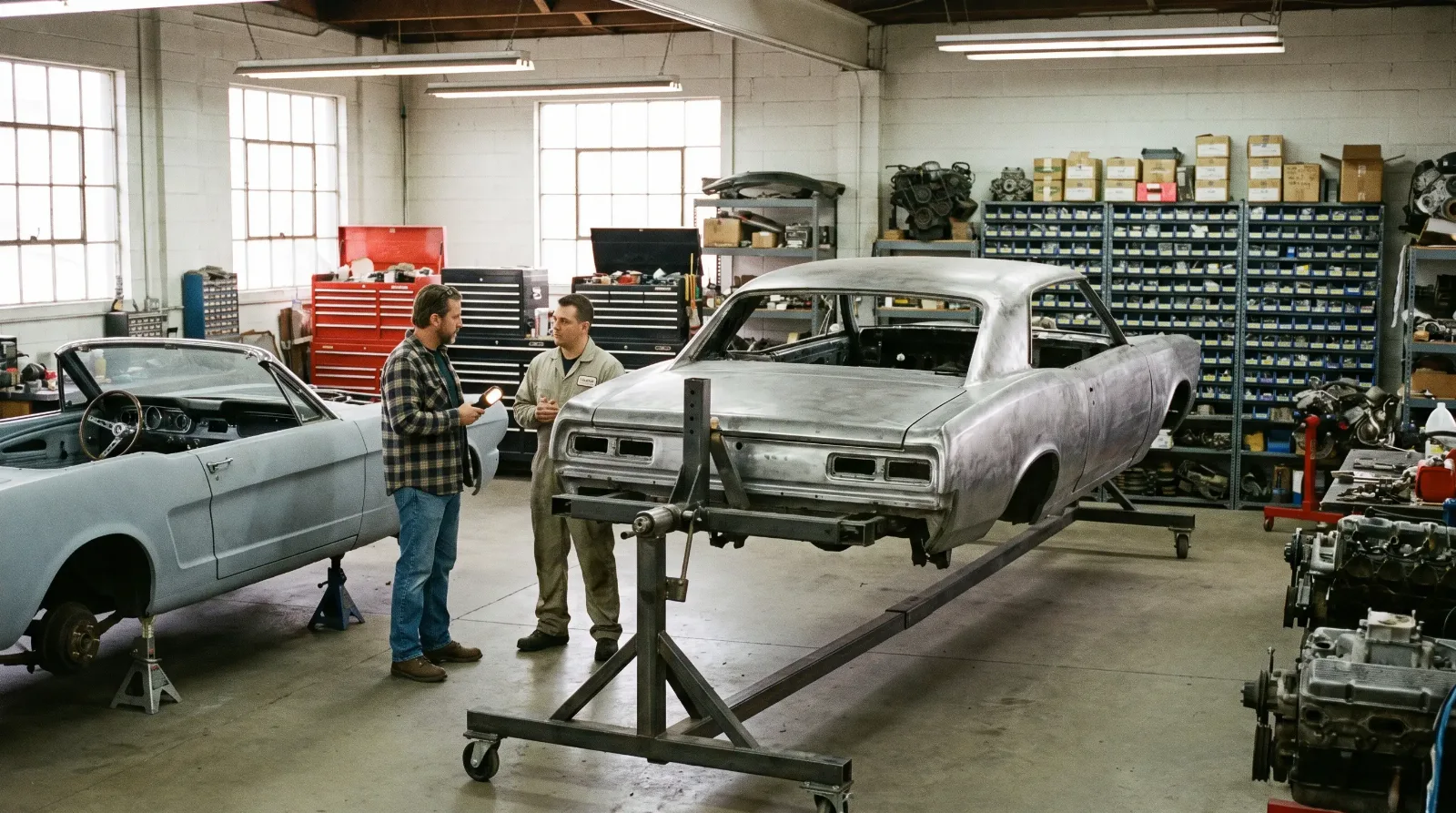
One more factor is the machine work. If your block needs a lot, the rebuild gets expensive fast. Read what machine shop work involves before you accept or reject a quote. And if you want someone else to do it, start with engine-capable restoration shops that handle full drivetrain jobs.
"The dyno sheet does not care how the engine got there. Pick the path that matches the car, then spend the money on the whole system, not just the motor."
Dan Reeves
What the market pays for each choice
Buyers notice engines. A correct, documented engine adds value to a collector car. A well-built swap adds value to a restomod, because buyers of those cars expect modern performance. Value gets lost in the mismatch: a swap in a collector car, or a worn original in a restomod. See what the market pays for swapped restomods and compare the asking prices against the build cost.
Whatever you choose, get it in writing: parts list, machine work, dyno or break-in procedure. The paperwork protects you at resale, and it is the only way to prove what is under the hood.
Sources and notes
- Hagerty Media: Powerful statement, crate engines could solve your problem (2026), crate engine types, the Summit Racing Coyote list price example, and the Stellantis Hemi usage warning
- Hagerty Media: Power in a box, why choose a crate engine, short block, long block and complete definitions, and component cost versus crate price
- Hagerty Media: "Rebuilt" is a relative term when it comes to engines, rebuild scope, and supporting systems that must match a fresh engine
- Hagerty Media: What to know before machining a numbers-matching engine block, why decking can remove stampings and lower value
- Hagerty Media: How numbers-matching came to matter for collector cars, why the original engine drives collector value
- Chevrolet Performance Parts: 350 small-block crate engines, manufacturer horsepower specs by configuration