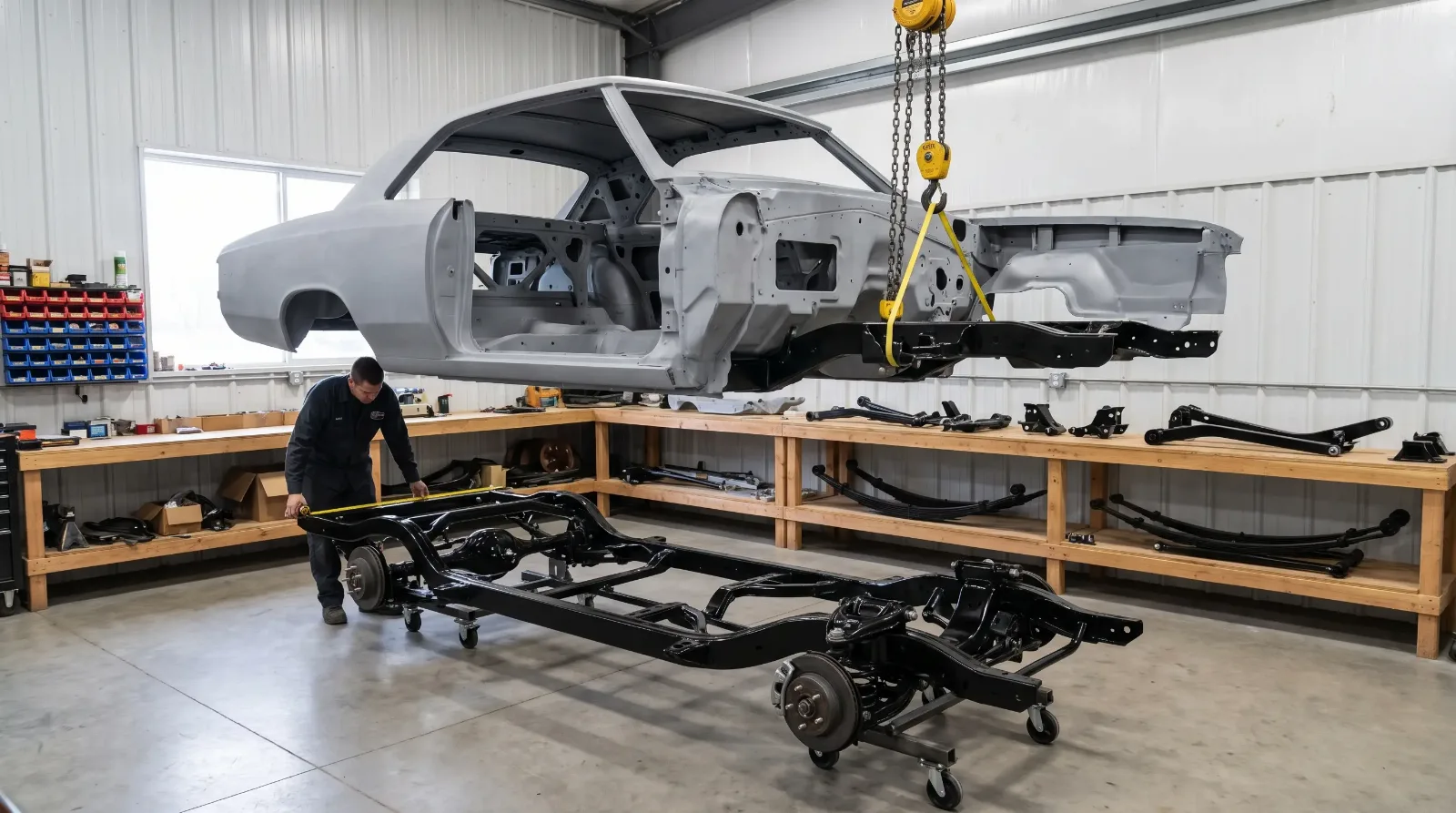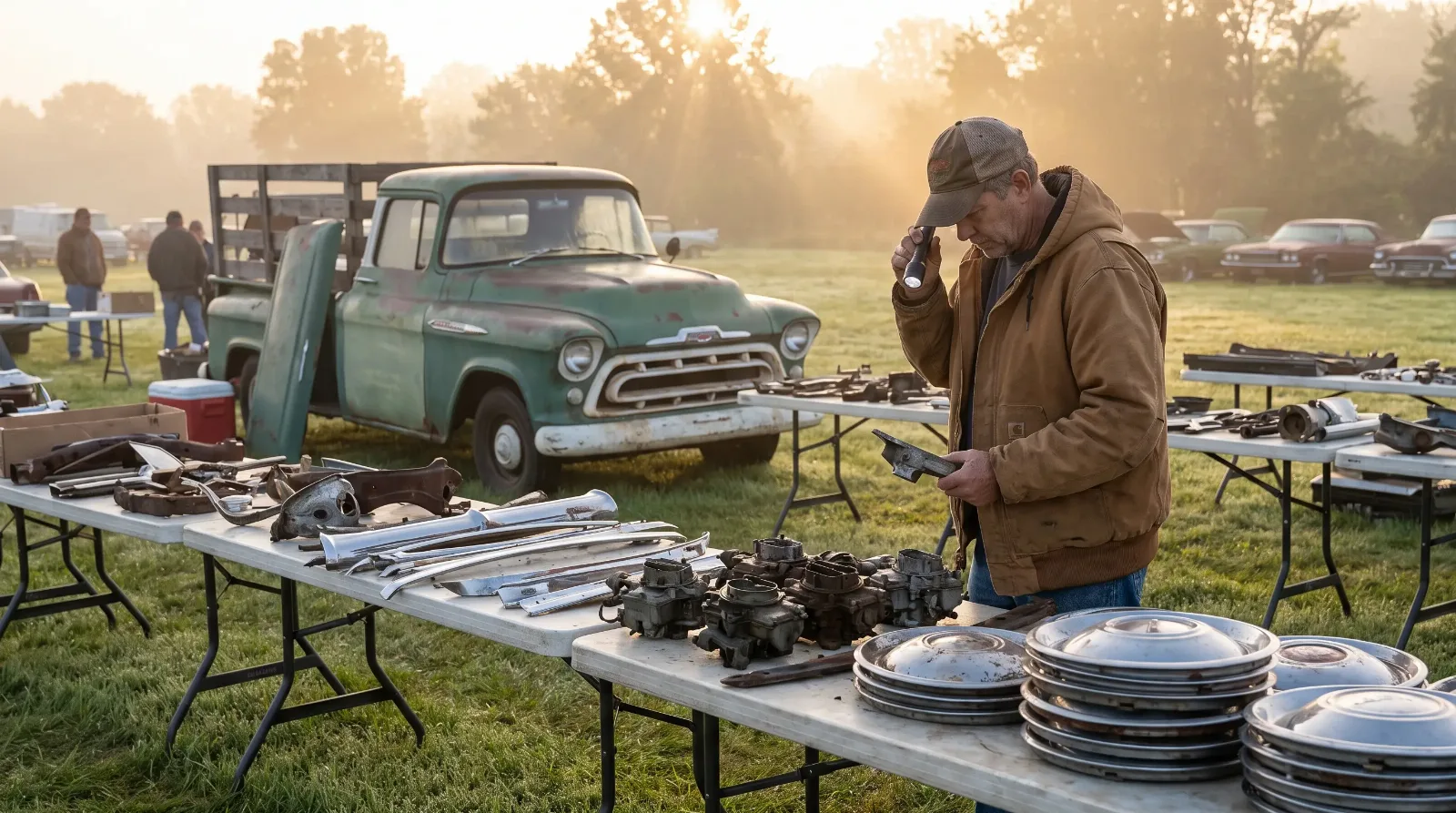
Engine catalogs love vague words. Short block, long block, complete engine, turn-key. Two vendors can use the same label for packages that differ by a thousand dollars of parts. If you do not know what is inside each one, you are comparing prices on things that are not the same.
Here is what each term normally means, what you have to add, and which one fits which car. Prices are 2026 US dollars, as ranges, and they depend heavily on the engine family.
Short block: the bottom end
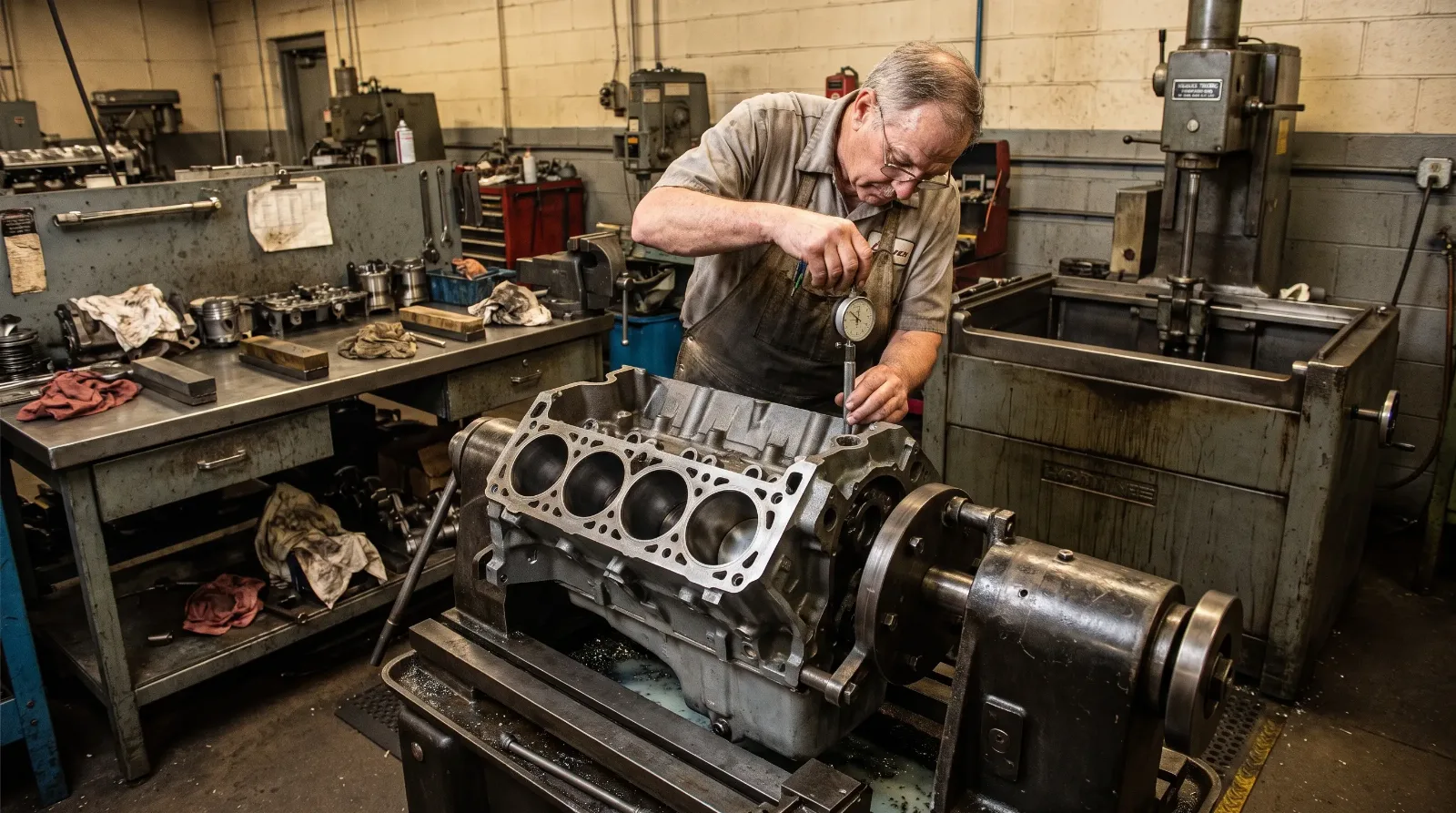
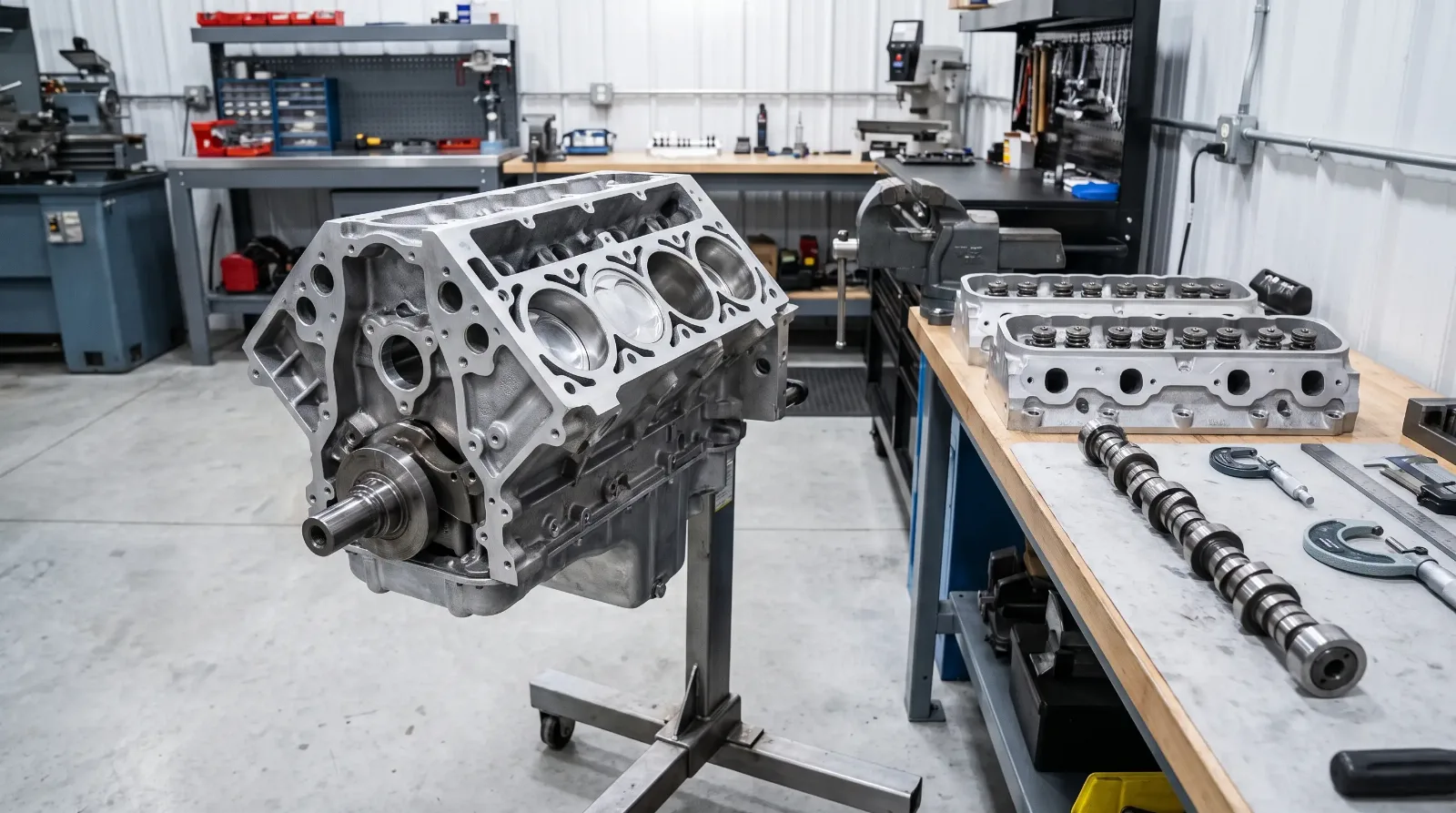
A short block is the foundation of the engine: block, crankshaft, connecting rods and pistons, usually with bearings and rings. The block is machined, the rotating assembly is installed, and that is it. No cylinder heads, no camshaft in some definitions, no valvetrain, no intake.
That last point is where vendors differ. Some include the camshaft and timing set. Some do not. Always ask for the parts list. Retail short blocks for common engines generally start in the $1,000 to $3,000 range for an average option, and performance builds cost more.
It makes sense when your heads are good, or when you want to choose your own cam, heads and intake. It is the right pick for someone who has a nice set of heads and a plan for the top end.
Long block: add the heads and valvetrain
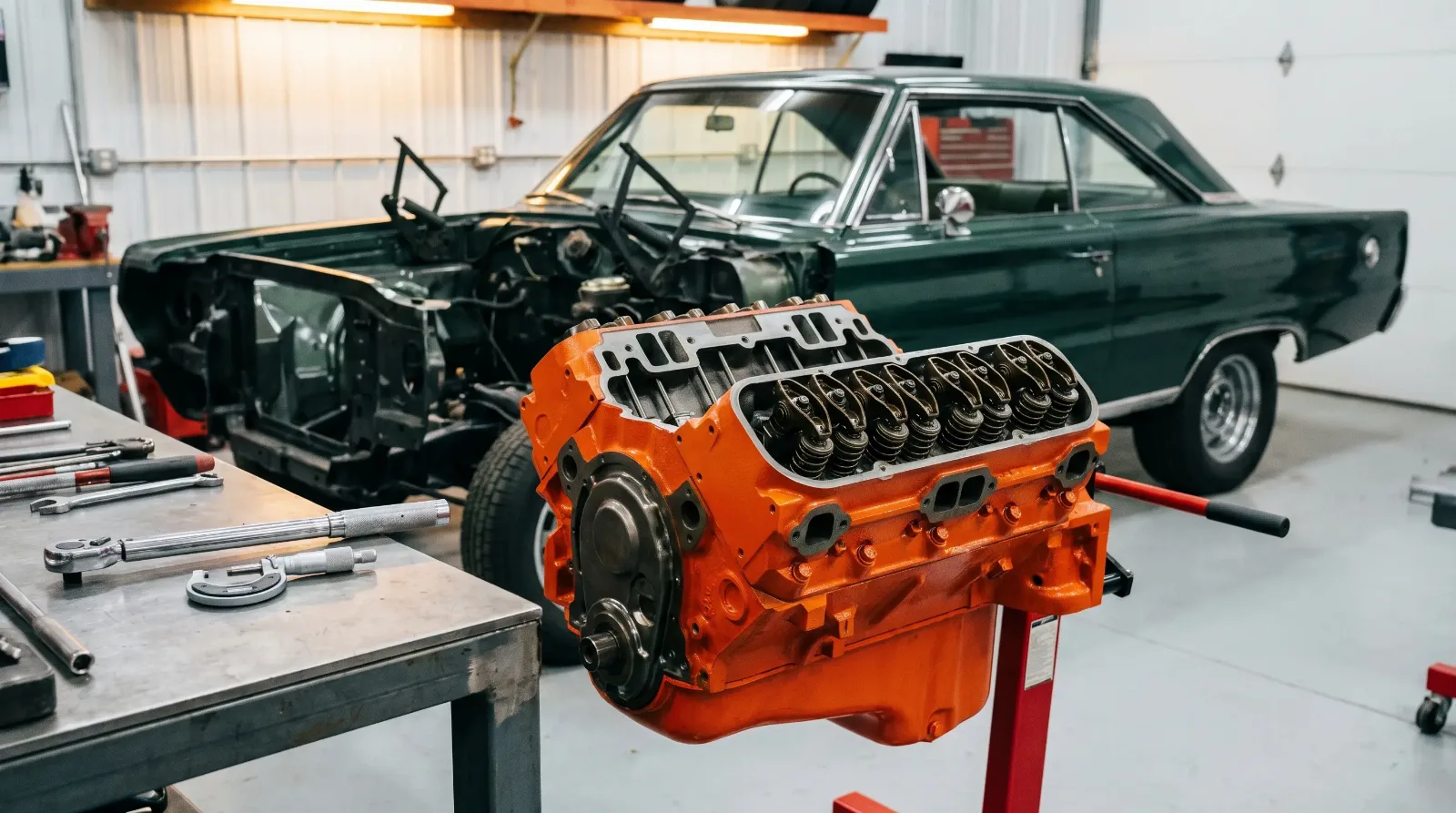
A long block is a short block plus the cylinder heads, camshaft, lifters, pushrods, rocker arms and timing set. Often the valve covers and oil pan are included. You still need the intake, carburetor or fuel injection, ignition, water pump, exhaust manifolds and accessories.
Remanufactured long blocks for common V8s are listed from roughly $2,600 to $5,000 at large retailers (usually with a core charge), while a shop-built stock long block typically runs $4,000 to $8,000, and big-blocks or rare engines can double that. It saves you the labor and the sourcing headaches of the top end, and it is the usual choice for a stock-style replacement.
| Package | Typically includes | You still need | Typical cost (2026 USD) |
|---|---|---|---|
| Short block | Block, crank, rods, pistons, bearings, rings | Heads, cam in some cases, everything above | Roughly $1,000 to $3,000 for an average common engine |
| Long block | Short block plus heads, cam, valvetrain, timing set | Intake, fuel, ignition, accessories | About $2,600 to $5,000 remanufactured; $4,000 to $8,000 shop-built |
| Complete or turn-key | Long block plus intake, carb or EFI, ignition, pump, sometimes headers | Fluids, mounts, hookups | The long block price plus several thousand dollars for the dressed parts; varies widely |
Complete or turn-key: the whole engine
A complete engine, sometimes called turn-key, adds the intake, carburetor or fuel injection, distributor or ignition, water pump, and often the alternator brackets and pulleys. In theory you bolt it in and connect hoses and wires. In practice you still need the mounts, the flywheel or flexplate and the cooling and fuel hookups.
Turn-key engines usually cost considerably more than a long block, and you pay for the added parts, the assembly labor and a broader warranty. They are most sensible for owners who want to be driving the car again quickly and do not care about originality.
What you are really paying for
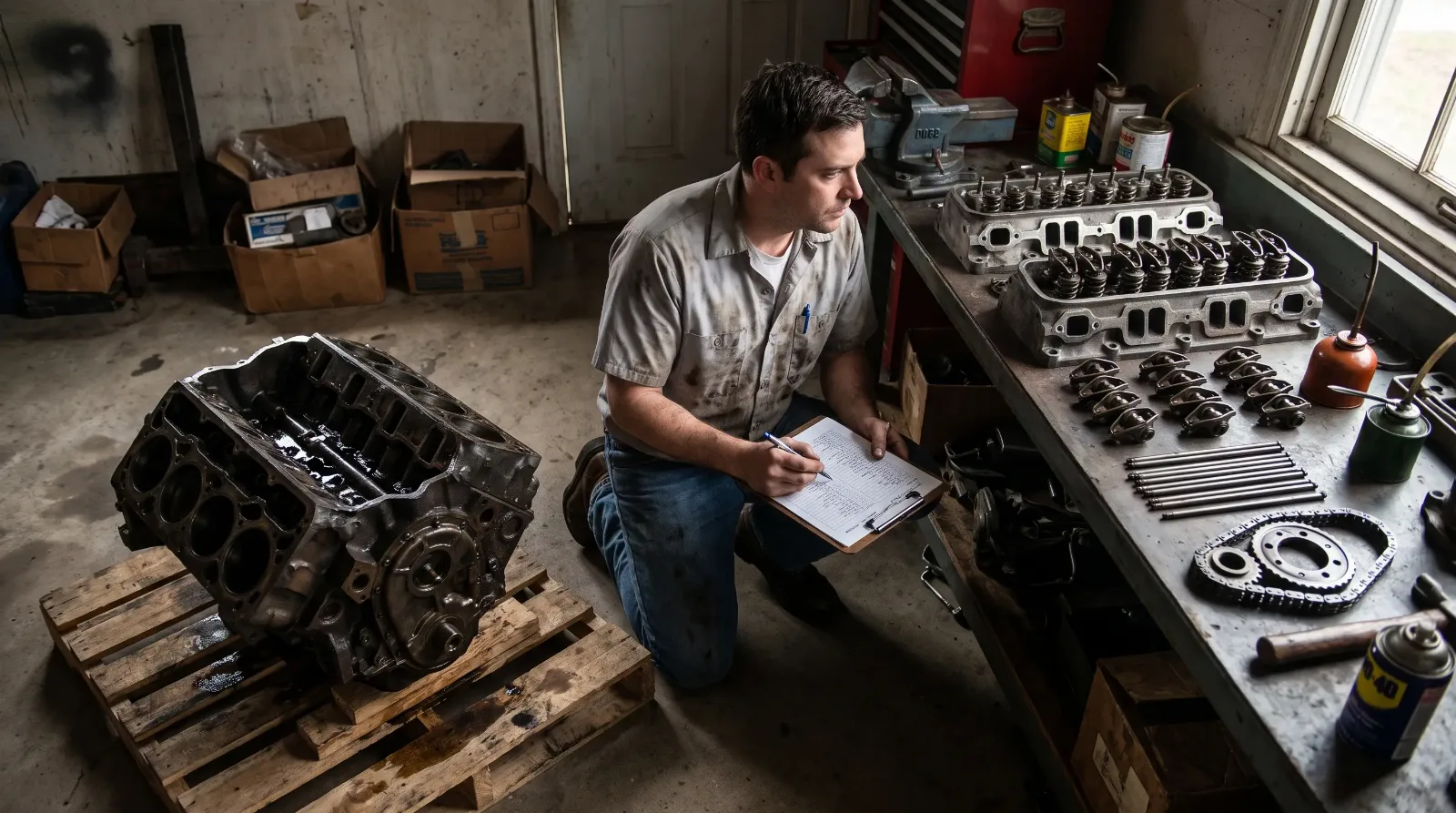
The price gap between these packages is mostly parts you would have to buy anyway, plus assembly labor. The risk is not overpaying. It is buying the wrong package and discovering you need to buy half of it again. Compare the three on a line-by-line basis: block, crank, rods, pistons, heads, cam, lifters, timing set, intake, ignition. Count what is missing and price it.
Check the block and crank too. Is the block new, reman or reused? Is the crank new or reground, and to which undersize? A rebuilt unit with a worn core is not the same as a new one. For the effect on overall budget, look at what current rebuild costs look like across a full project.
Labor and the stuff nobody lists
Assembly labor is the quiet part of the price. A shop that builds a long block from loose parts may charge roughly $850 to $1,650 for the work on a V8, at typical shop rates of $90 to $150 an hour, and you pay for it whether you see it or not. Gaskets, freeze plugs, an oil pump, a harmonic balancer and a fresh set of studs are small items that add up to a few hundred dollars. If a package leaves them out, price them yourself so the comparison stays fair.
Which package for which car
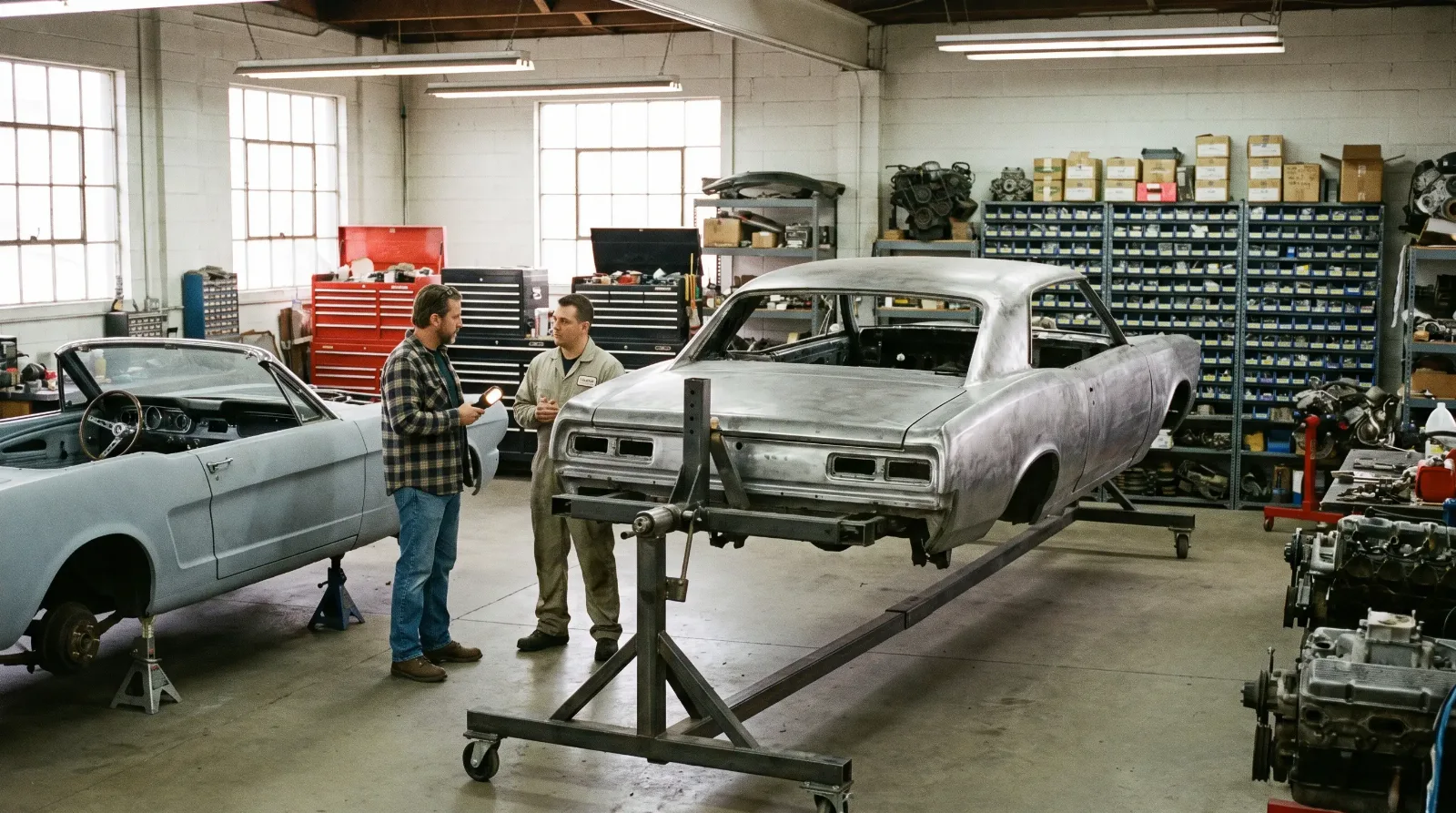
A numbers-matching collector car should stay on its original block, so rebuild it instead of buying a package. Our engine rebuild guide explains that path. For a driver, a long block is usually the best value. For a build where you will pick your own parts, a short block gives you the freedom. For a quick return to the road with no appetite for sourcing, go turn-key.
"Ask for the parts list, not the label. A long block from one catalog and a long block from another can be two different engines."
Dan Reeves
Warranty and break-in fine print
Assembled engines usually carry a warranty, but it often has conditions. Some require specific break-in oil, a particular cam break-in procedure and proof of installation by a shop. A few exclude engines that run on certain fuels or that are fitted to a higher-compression setup. Read the warranty before you pay, not after the engine fails, because a voided warranty on a $5,000 engine is a hard way to learn a lesson.
Keep the receipts, the build sheet and a log of the first start and the first few hundred miles. If a problem shows up, those records decide whether you get help or an argument. A package that includes a dyno or run-in sheet is worth more than one that does not, because it shows the engine actually ran before it left the shop.
Questions to ask the seller
- Is the block new, remanufactured or a reused core?
- What bore and crank sizes are installed?
- Is the cam and timing set included, and what is the cam spec?
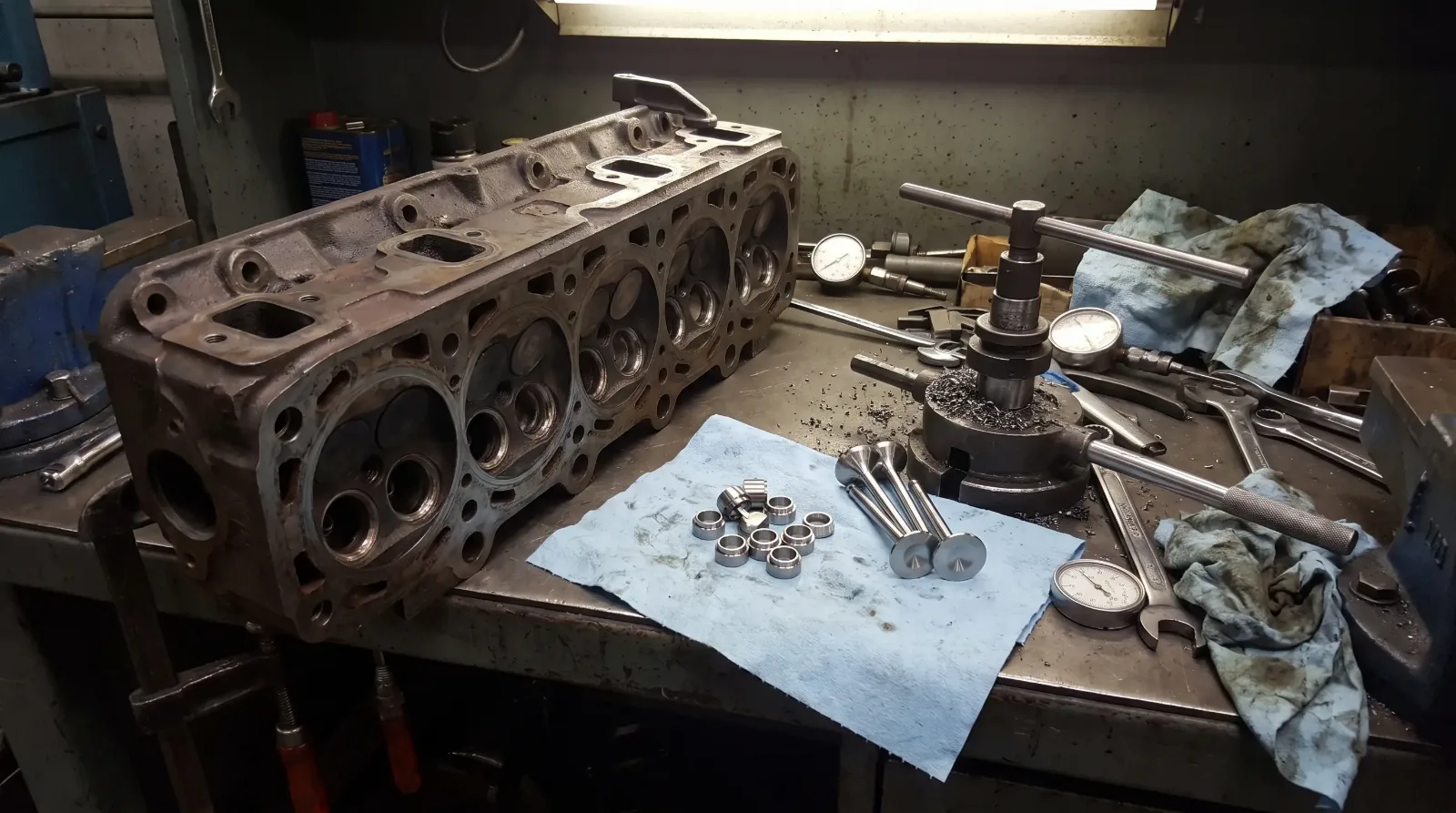
- Are the heads new or reconditioned, and with what valve seats?
- What is the break-in procedure, and what does the warranty require?
That last one matters more than most people think. Valve seat material is a real issue on older heads when you run modern pump gas, so read about unleaded fuel and valve seats before you commit to a long block with unknown heads.
Sources and notes
- The Drive, Short Block vs. Long Block Engines, definitions, short block price range, and that packages differ by brand
- SlashGear, What a crate engine package typically includes, short block, long block and turn-key contents and what you still need to buy
- SlashGear, Long block vs. crate engine, what each includes and why a long block lets you reuse parts
- SlashGear, Cheap crate engines under $5,000, retail long block prices (Chevy 350, Ford 302) and core return notes
- Capital Reman Exchange, Long blocks vs. complete engines, long block contents and how warranty coverage differs from a complete engine (a commercial remanufacturer, so treat it as a general guide)