
Owners ask me this after the first invoice, and the honest answer is that a restoration is a manufacturing job with no assembly line. A factory built the car in a day with specialized tools and thousands of identical parts. A restoration shop reverses that work by hand, one car at a time, using skilled labor whose time is the largest single cost. Why are car restorations so expensive? Mostly because the work is slow, and the people doing it are scarce.
Restoration & Tech
6 min read
Why Are Car Restorations So Expensive?
Labor hours, rust, parts, paint and scope creep: the real reasons car restorations cost what they do, and why a finished car often costs less than building one.
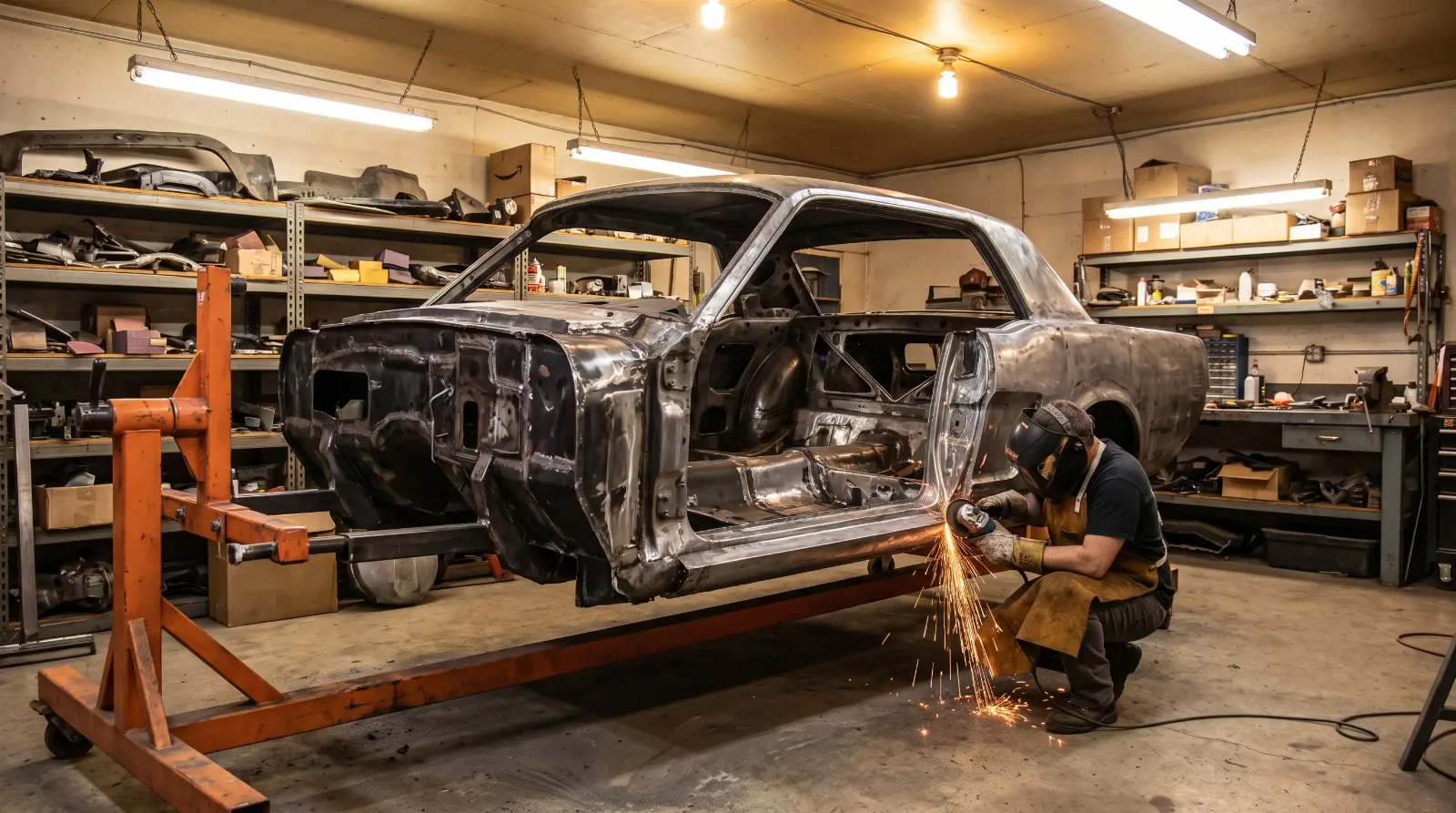
Understanding where the money goes is the best defense against overruns. Here are the drivers, roughly in order of impact.
Labor is the biggest line
A professional show quality restoration commonly takes roughly 1,000 to 2,000 shop hours, and concours level work can run 2,500 to 5,000 hours or more. At shop rates of about $85 to $150 an hour in 2026 (around $125 is typical, and marque specialists charge $175 or more), labor alone can reach into six figures. The hours are not wasted time. Disassembly, media blasting, metal repair, fitting panels, block sanding, paint, and reassembly with correct hardware all take real hours, and many steps repeat when a fit is not right.
Good tradespeople are also hard to find. Metal shapers, painters who can lay a flawless finish, and trimmers who can sew period correct upholstery take years to train. Their rates reflect the scarcity. A cheaper shop is usually cheaper because it works faster or skips steps, and the difference shows later in gaps, finish and durability.
Hidden rust and the problem of the unknown
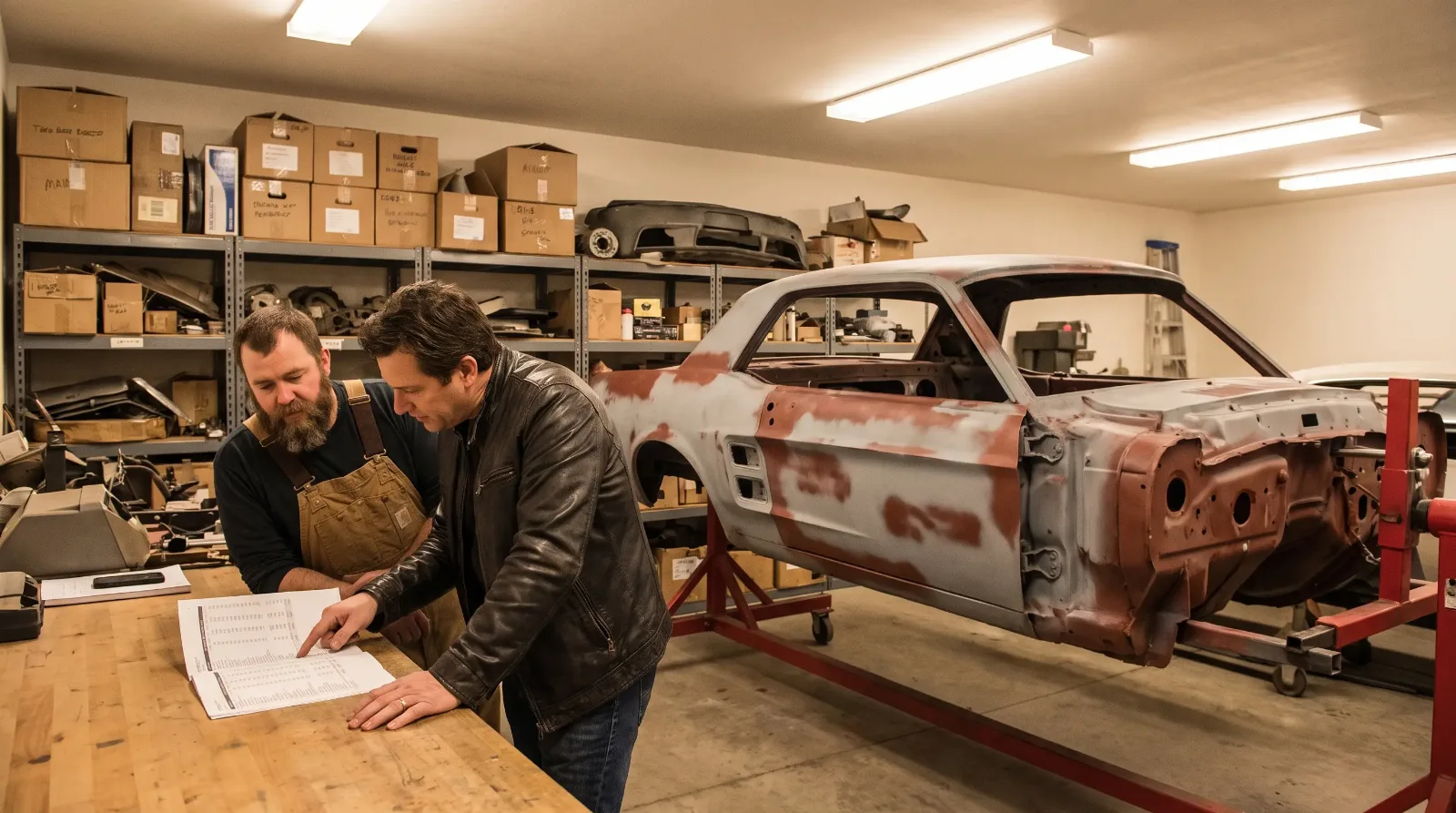
A car looks different with the paint off. Rust that is invisible under filler or in boxed sections shows up after stripping, and every estimate made before teardown is a guess. Floor pans, rocker panels, cowl and frame rails are the usual suspects. Repair panels cost money, but the labor to cut, fit and weld them properly, then finish the seams, costs more.
That is why experienced shops estimate in phases, and why an inspection before purchase is cheaper than any restoration surprise. A car with sound metal is worth a premium over a cheaper one that needs a body off rebuild.
| Cost driver | Why it grows | Typical scale, driver to show level |
|---|---|---|
| Labor | Hours multiply with every quality step | Largest single line: 500 to 1,000 hours for a driver, 1,000 to 2,000 for a show car |
| Paint and bodywork | Prep is most of the cost, not the color coat | About $12,000 to $25,000 driver, $30,000 to $70,000 show |
| Parts and plating | Reproduction quality varies, NOS is scarce | Chrome alone about $3,000 to $8,000 driver, $8,000 to $20,000 show |
| Interior and trim | Hand sewn, correct materials | About $5,000 to $12,000 driver, $15,000 to $30,000 show |
Paint is mostly preparation
A full bare-metal paint job often runs $20,000 to $40,000, and show or concours finishes $40,000 to $80,000 or more, and the spray is a small part of it. The expense is the stripping, metal finishing, priming and repeated block sanding needed to make panels truly straight. On a high end job most of the hours go to prep rather than spraying. Skip that work and the finish will show waves within a year.
Parts: the supply problem
Mass market cars with strong reproduction support, such as Mustangs and Camaros, have deep parts catalogs. Rarer or orphan cars do not, and a missing trim piece can take months to find or fabricate. Original parts that are correct for a numbers matching car command premiums, and reproduction parts often need modification to fit. Chrome plating, a labor intensive and regulated process, is its own expensive line. For how to find parts and what to expect from suppliers, see our notes on parts sourcing.
Scope creep and the quality ladder
Every restoration starts with a plan and tends to drift. A common rule of thumb is to add 20 to 30 percent contingency on top of the estimate, and more on cars from rust-prone regions; overruns of 20 percent or more are common. Once the car is apart, it is natural to replace the worn bushings, rechrome the bumpers, upgrade the interior, and refinish the underside. Each is reasonable on its own, and together they move a driver quality plan toward a show car at a show car price.
Decide the target level in writing before work starts, and make changes only through a formal change order. That one habit does more to control cost than any shopping around.
The cost of getting it right the second time
Another expense is rework. A panel that is welded in and finished before the fit is confirmed has to be cut out again, and a car painted before the glass and trim are test fitted will chip during assembly. Good shops dry fit everything before paint, and that discipline costs hours up front to save more later. Cheaper work often skips it, and the owner pays when the car comes back for paint repair, rust bubbling at a poorly sealed seam, or a door that will not close. In restoration, the first price is rarely the last price, so judge quotes by what they include and what they leave out.
"The bill is not high because the shop is greedy. It is high because the car was built by a factory in hours and has to be rebuilt by hand in months."
Marcus Feld
Why a finished car often costs less
The uncomfortable truth is that many restorations cost more than the finished car is worth, and Hagerty notes that owners rarely recoup the full cost unless the car is rare and valuable. Market value is set by what buyers pay for comparable cars, not by what was spent building one. Common models with plentiful supply are the worst offenders, since a build that costs more than a finished example sells for has to compete with that finished example. Rare cars can justify the spend, because there are few to buy. Before you commit, run the numbers against the market and see the full restoration cost in 2026 by quality level.
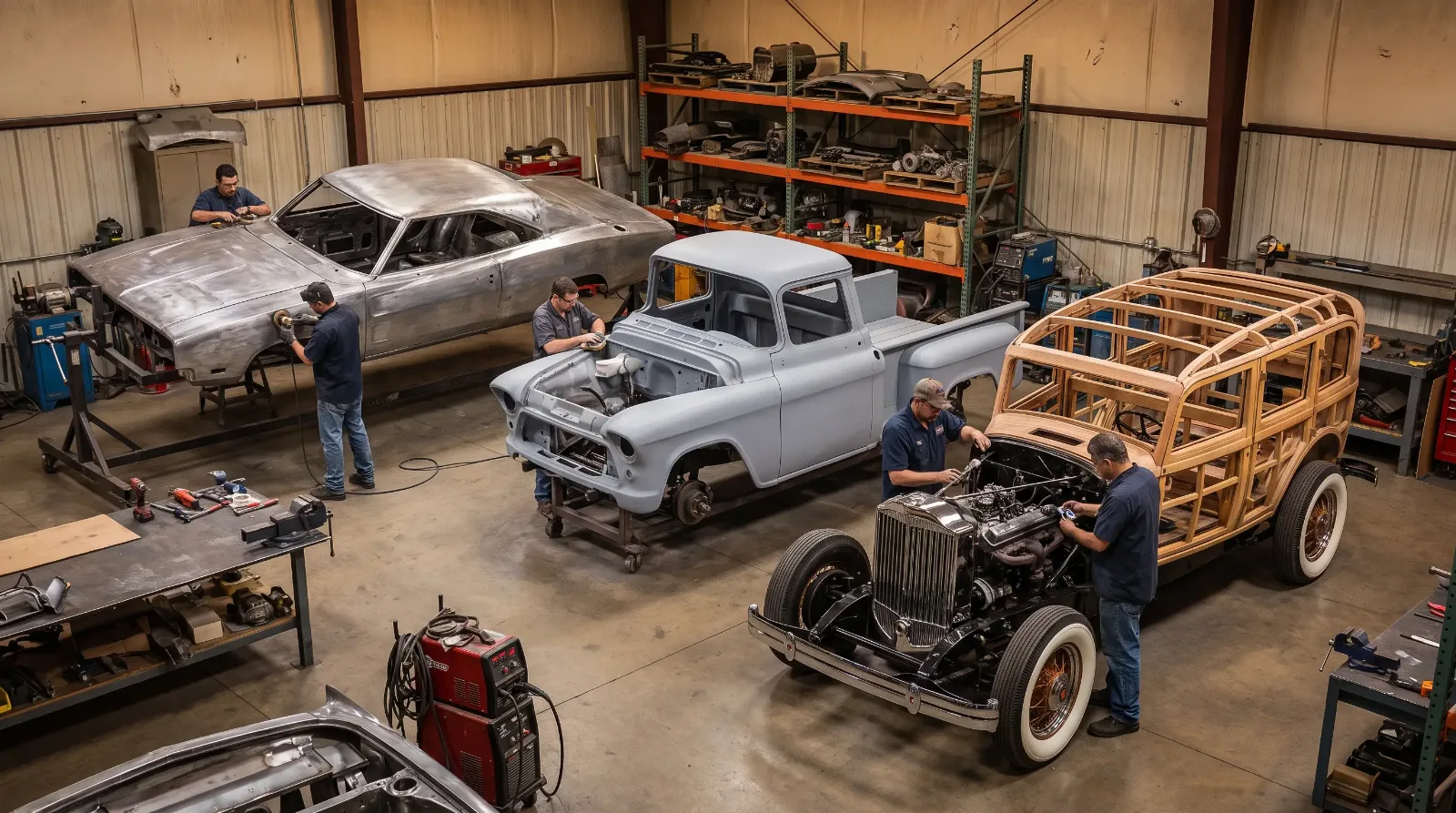
If the math says restore, the next step is matching the budget to the type of car, since a pickup, a pony car and a prewar classic have very different cost profiles. Our guide to cost by car type breaks that down. Restore for the love of the car and the process, and you will be fine. Restore as a financial move, and check the comps first.
Sources and notes
- Hagerty: What does it cost to restore my classic car?, labor charges of $70 an hour and up, hidden surprises after teardown, and restoration costs rarely being recouped
- Wikipedia: Car restoration, restorations often costing more than the finished car's value and parts for rare cars being hard to find
- Wikipedia: Classic car, how restoration quality and originality drive market value
- Wikipedia: Rust, how corrosion continues beneath surface layers and in enclosed sections
- EPA: Chromium electroplating emission standards, why chrome plating is a regulated process
Related Reading
Have a
Classic Car
for Sale?
Reach thousands of serious classic car collectors across the US.
Sell It Here →
Selling a classic? Here's how: compare the places to sell classic cars
Are You a Classic Car Dealer?
List your full inventory and connect with targeted classic car buyers.
Join as a Dealer →

About the author
Marcus Feld
Accredited collector-car appraiser who reads the market through hammer prices, condition tiers and risk.
More in Restoration & Tech
Comments (1)
K
Karen P.
1 week ago
The chromium itself is the cheap part, in my experience. The bill is copper, then nickel, then a thin chrome layer, with hours of buffing between. Is bumper straightening billed separately?
R
rustbelt_rob
1 week ago
Karen, on most estimates yes. On salt-state bumpers the plater finds rust pits on the backside, cracks at the bolt holes and bends from parking lot hits, and every one of those is welding and straightening before any copper goes on. That's billed by the hour, separately, usually after the first quote.