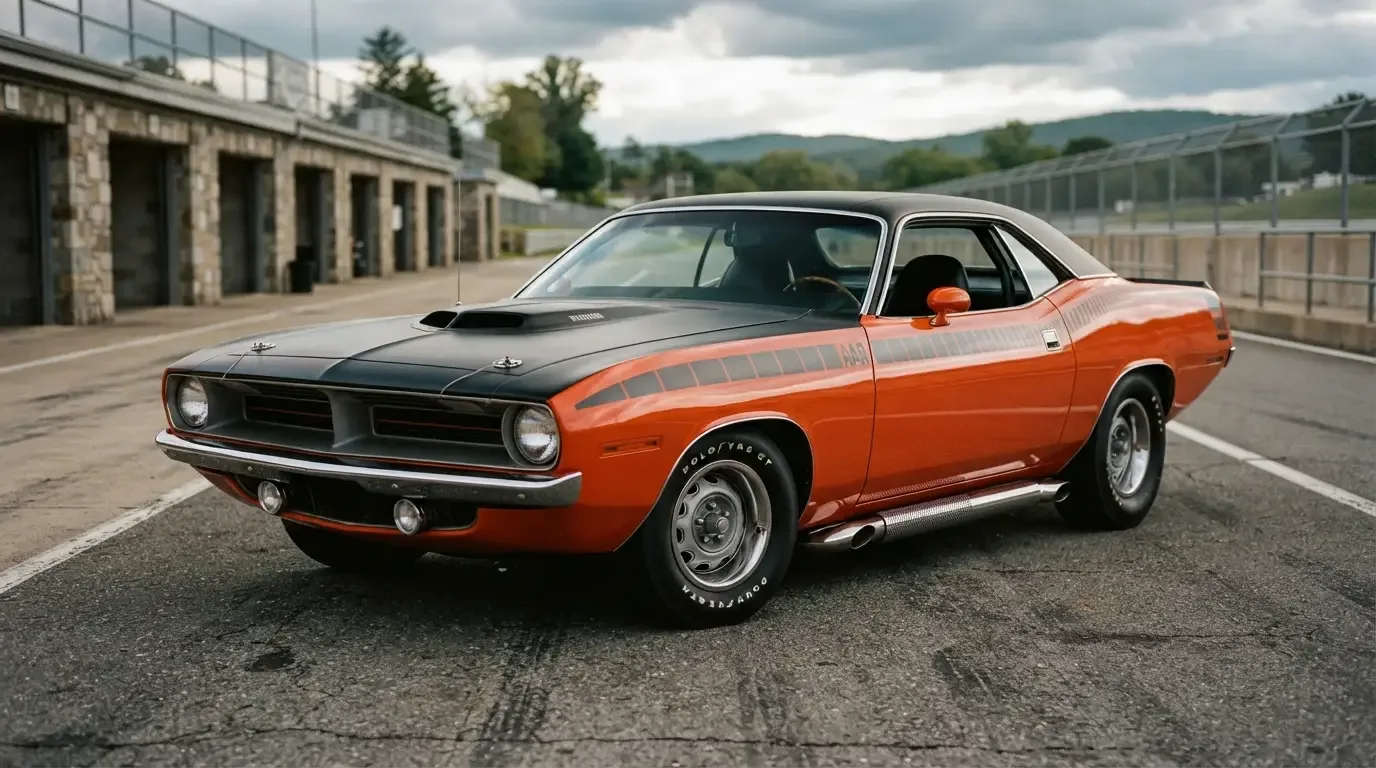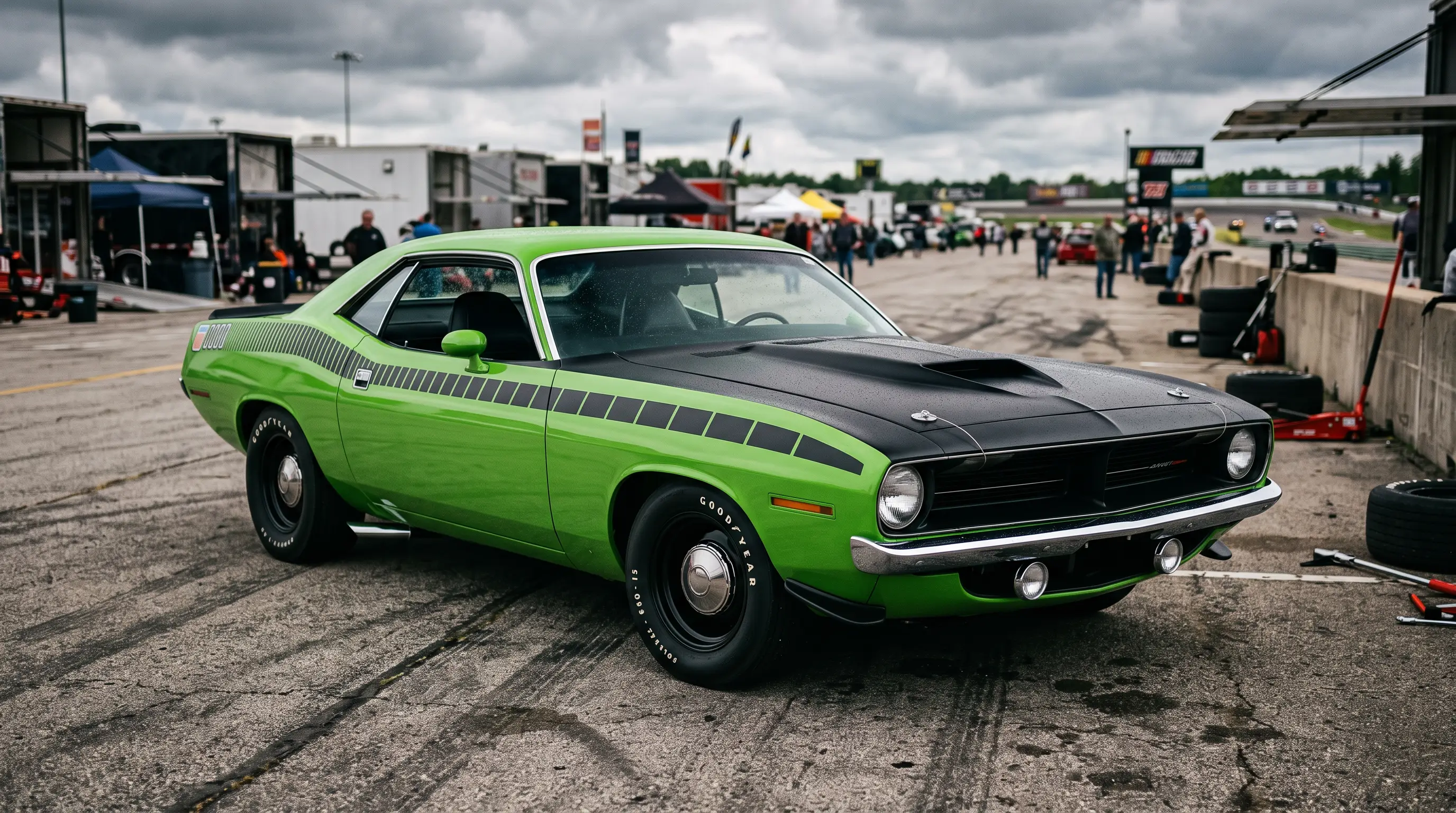
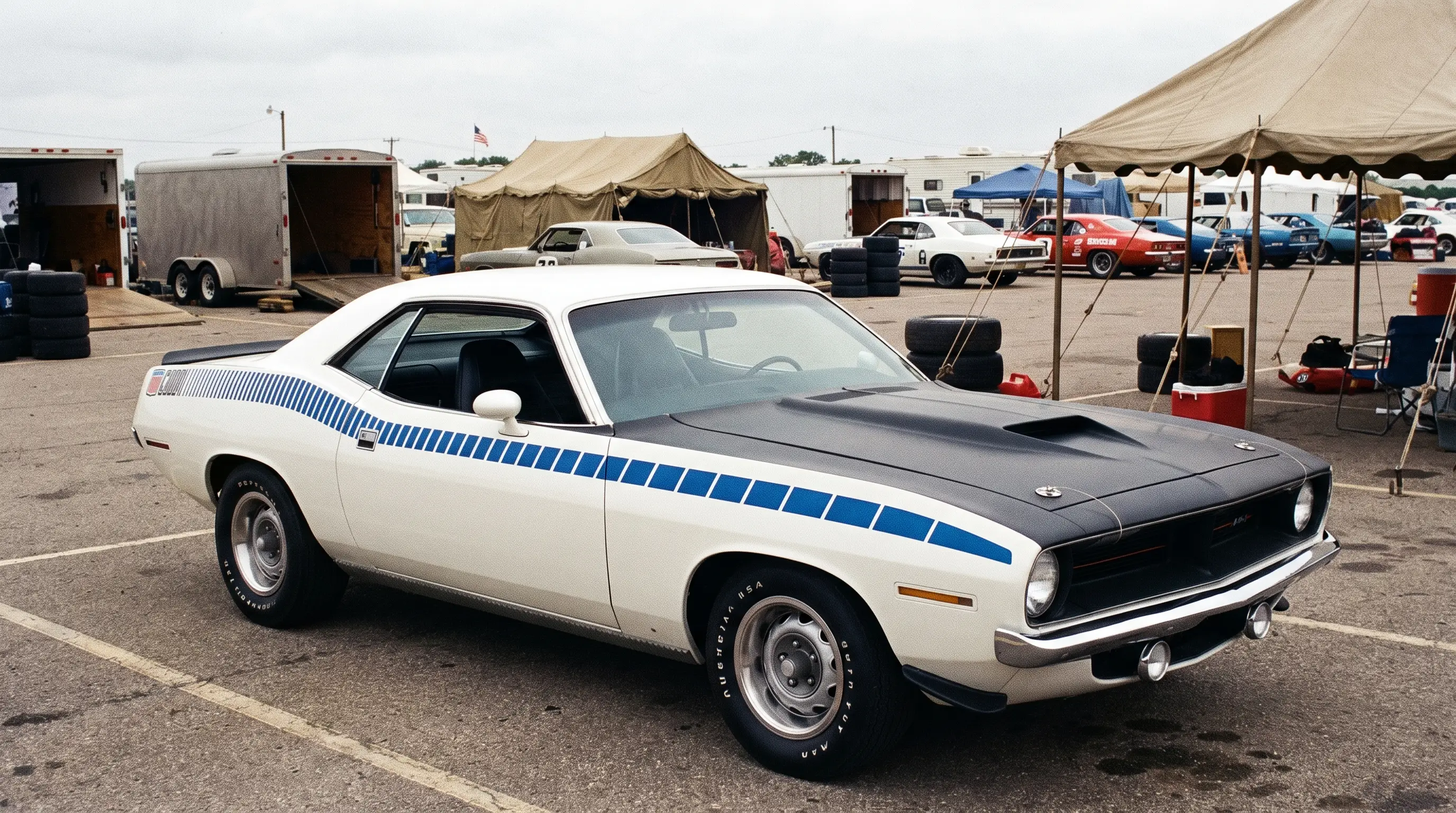
Plymouth built the 1970 AAR Cuda for one model year and one reason: to put a legal race car on Trans Am grids under Dan Gurney's All American Racers banner. Everything else about the car, the side-exit exhaust, the fiberglass hood, the strobe stripe, followed from that single requirement. The 1970 aar cuda is often lumped in with the Hemi Cuda as a headline muscle car, but its origin story is closer to a homologation special than a showroom flagship, and understanding that distinction changes how the car should be read today.
Why Plymouth needed a car like this at all
The Sports Car Club of America required manufacturers to build a minimum number of street versions of any car they wanted to race in Trans Am competition. Plymouth's factory racing effort, backed by Dan Gurney's All American Racers team, needed a Barracuda that met SCCA's homologation rules for the 1970 season, and that meant building enough street cars, 2,724 units, to satisfy the requirement. The AAR Cuda that resulted was not a slow-selling niche trim added for variety. It was a legal necessity wearing a production car's badge, built specifically so a race version could compete.
That production number, 2,724 cars for the single 1970 model year, is well documented in Chrysler's own records and has been independently confirmed against surviving registry data by marque specialists over the following decades.
The engine built specifically for this car
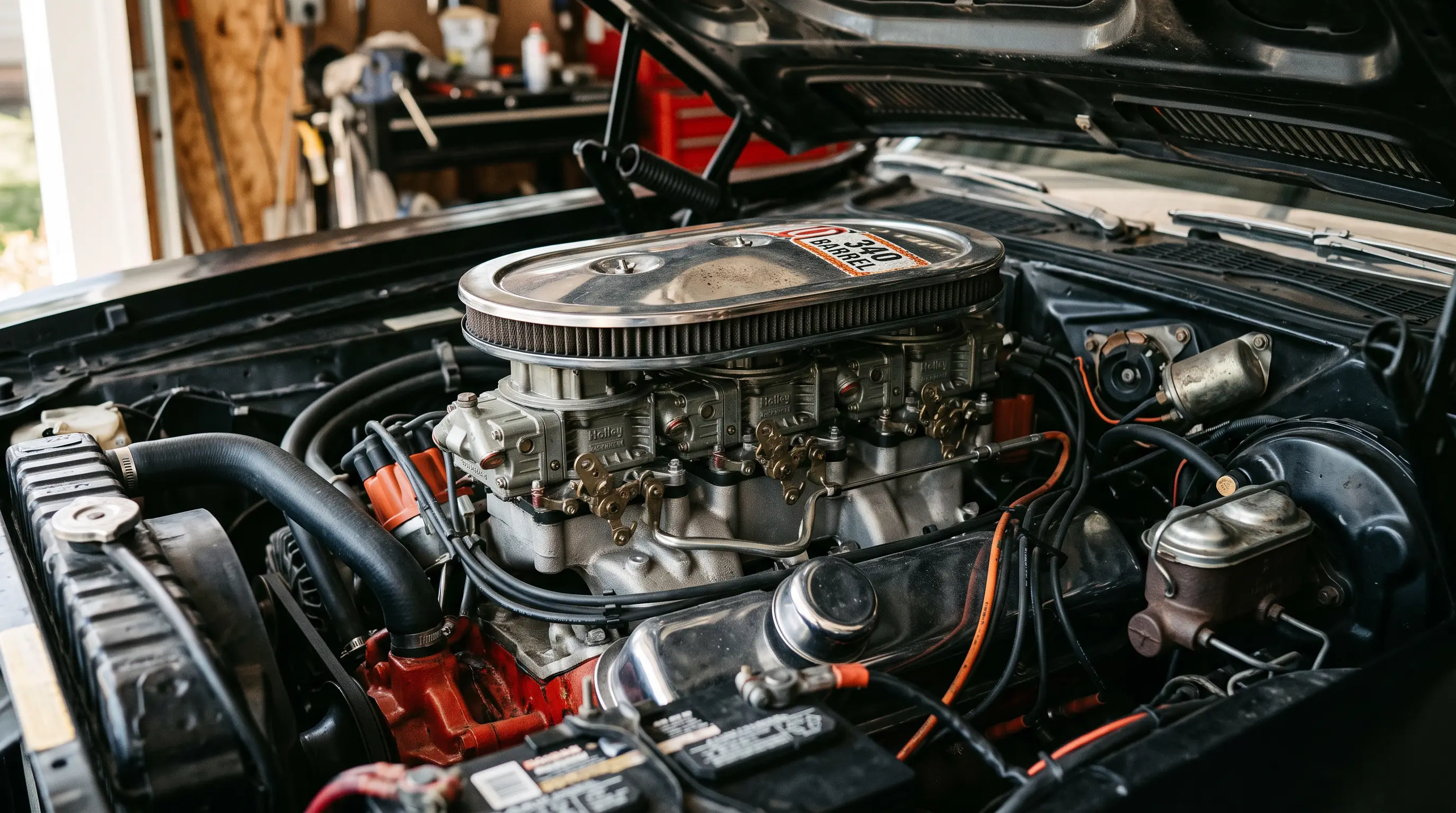
Under the AAR Cuda's fiberglass hood sat the 340 Six Barrel, a version of Chrysler's 340 small block fitted with three two-barrel carburetors instead of the standard single four-barrel. Plymouth rated it at 290 horsepower, a figure most period observers and later engineers considered conservative given how the engine actually performed on the road and at the track. The three-carburetor setup was not just a horsepower play, it was tuned specifically to meet the torque and response characteristics the AAR racing program needed from the small block that would actually compete in Trans Am trim.
The side-exit exhaust exiting just ahead of the rear wheels was similarly functional rather than decorative in intent, mirroring the exhaust routing that helped the race cars manage ground clearance and weight distribution, even though the street version's system was tuned for daily driving rather than competition.
| Spec | 1970 AAR Cuda |
|---|---|
| Engine | 340 cubic inch V8, Six Barrel induction |
| Factory rated horsepower | 290 hp at 5,000 rpm |
| Production run | Single model year, 1970 only |
| Units built | 2,724 |
| Purpose | SCCA Trans Am homologation requirement |
How a one-year special became a lasting piece of Mopar history
Most homologation specials fade into footnotes once the racing program that required them ends, and the AAR Cuda could easily have gone the same way after its single model year. Instead it became one of the most requested small block Barracudas among collectors, partly because the single-year production run created natural scarcity, and partly because the 340 Six Barrel proved to be a genuinely excellent street engine independent of its racing origins. Enthusiasts who wanted strong performance without the cost, weight, and maintenance burden of a big block found the AAR Cuda delivered a compelling combination that held up decades after the Trans Am program that created it had ended.
The racing connection also gave the car a documented, verifiable history that most muscle cars from the era lack. Because the AAR Cuda's existence is tied directly to a specific SCCA rule and a specific racing team, its story is unusually well anchored in primary sources rather than dealer folklore, which appeals strongly to buyers who value provenance over legend.
"The AAR Cuda is one of the few muscle cars where the paper trail predates the car itself. The SCCA rulebook explains why it exists before a single one ever left the assembly line."
- Tom Ramirez
How the AAR Cuda differed from a standard Barracuda underneath
Beyond the engine and exhaust, Plymouth made a handful of chassis and suspension changes to the AAR Cuda that reflected its racing-adjacent mission, including specific spring rates and shock tuning intended to sharpen handling relative to a standard 340 Cuda. None of these changes were dramatic on paper, but taken together they gave the AAR Cuda a noticeably tighter, more responsive feel on the road than its sibling trims, a detail period road testers commented on consistently even when they were less impressed by the car's straight-line numbers against bigger engine options.
That handling character, more than any single spec figure, is what many longtime owners point to as the car's defining trait. A Hemi Cuda impresses with brute force. An AAR Cuda impresses with how well it ties its power down through a corner, a quality that traces directly back to the fact that this car was built, at least in spirit, alongside an actual competition program rather than purely as a showroom trim level.
Reading the AAR Cuda correctly today
Buyers and enthusiasts sometimes approach the AAR Cuda expecting a Hemi-level performance flagship and come away thinking it underdelivers. That expectation misreads the car entirely. It was never meant to compete with the Hemi Cuda on raw output, it was meant to satisfy a racing sanctioning body's rule while delivering genuinely strong small block performance to the street buyer who wanted it. Judged on those terms, the 1970 AAR Cuda succeeds completely, and its continued collector demand more than fifty years later reflects a car that earned its reputation on its own terms rather than by borrowing the Hemi Cuda's spotlight.
For a deeper look at the specific engine that made this car work, a related story covers the 340 Six Barrel in detail, from carburetor tuning to why Plymouth chose this configuration specifically for the AAR program.
A special built by necessity, remembered by choice
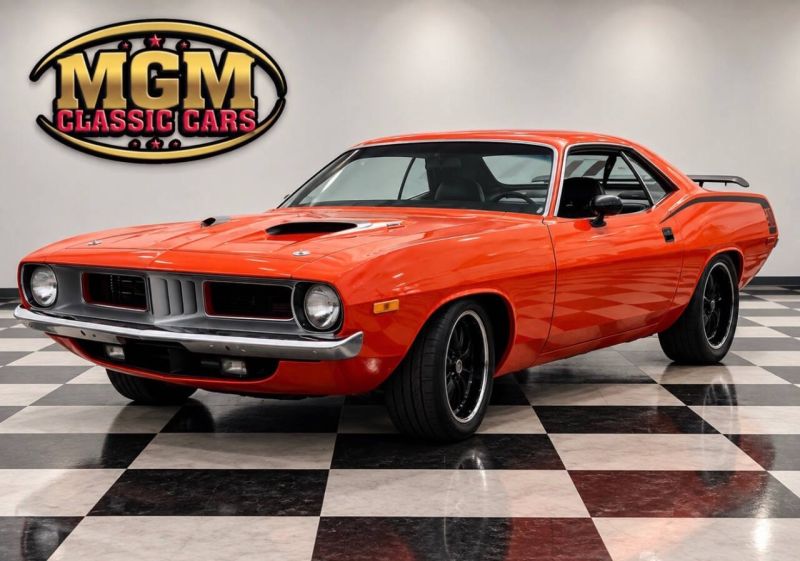
The 1970 AAR Cuda exists because a racing sanctioning body demanded it, not because Plymouth set out to build a collector icon. That accident of regulation produced one of the more interesting stories in Mopar history, a car whose entire identity traces back to a specific rule, a specific racing team, and a specific engine built to satisfy both. Readers interested in the full picture of Plymouth's E-body lineup and how the AAR Cuda fits within it should also see aar cuda history for the complete production and specification record, and anyone shopping today can check Barracudas for sale now for current listings.